Why Bogotá fabs and data halls cannot copy a sea-level design basis in 2026
Bogotá sits at 2,640 m above sea level with ambient pressure around 0.74 atm, and that single number invalidates every sea-level RO and MVC vendor curve pasted into a 2026 design basis. Annual mean wet-bulb at Bogotá is roughly 10–14 °C, and a 100 MW facility built on this profile can demand up to 2 million L/day of makeup water (IDE Water, 2026). At the basin level, Colombia uses nearly 3× the OECD average water-stress baseline, and Bogotá alone hosts 29 of the country's data centres as of 2025 (IIPP, 2025). Hyperscale AI-focused centres can exceed 100 MW, equivalent to powering 100,000 households (IIPP, 2025). TNFD 2026 reports that 45% of global data centres sit in basins at high water-disruption risk, and Lepawsky (2024) projects that more than 40% of new fabs will be in high or extremely high water-stress basins by 2030. A single fab draws around 14 billion litres of UPW per year — the same as a city of 7.5 million people (TNFD 2026, citing WEF 2025 and S&P Global 2024). The Sabana de Bogotá aquifer compounds the penalty: silica and bicarbonate dominate the dissolved load, and groundwater TDS routinely sits at 250–500 mg/L before the cooling tower concentrates it (Hydropure Bogotá, 2026). A 4,000 m³/day fab therefore draws 5,600–6,400 m³/day before any recycle, using the 1.4–1.6 m³ feed per 1 m³ UPW ratio published by IDE Technologies in 2024 (TNFD 2026). The Bogotá data-centre cooling-blowdown engineering guide walks the same chemistry at the design basis, and the broader Andean logic is covered in the Vancouver semiconductor and data hall 2026 compliance guide for a sea-level contrast case.
The three segregated wastewater streams every Bogotá fab and data hall must keep apart
Stream segregation at the headworks is the single biggest design decision for any Bogotá fab or hyperscale data hall, and the cost of getting it wrong is an MBR biomass kill or a blinded RO pre-filter set. Three segregated feed lines must be carried through the train: Stream 1 is UPW reject and general rinse, the largest by volume, low in TDS and TSS, near-neutral pH (TNFD 2026 framing). Stream 2 is the chemical-bearing line — CMP slurry with colloidal silica or ceria and surfactants, HF and NH4F rinses, IPA, acid and caustic cleaning baths, and photoresist developer waste. Stream 3 is cooling-tower and boiler blowdown plus a small scrubber-liquor sidestream from acid-gas abatement, high in TDS, silica, and residual scale inhibitors. Data halls without fab cleaning collapse to Streams 1 and 3, with blowdown TDS at 1,200–6,000 mg/L on Sabana water (Genesis Water Technologies, 2026). Two buffer tanks, each sized for ≥8 hours at peak instantaneous flow, should be specified on the chemical and cooling-tower feed lines, and a rotary mechanical bar screen on each chemical and cooling-tower feed line protects the downstream pumps from ragging and from the occasional tote bag that arrives with the waste stream. Segregation at the headworks is not optional: fluoride shocks will poison MBR biomass, and CMP slurry will blind the RO pre-filter within hours if the streams co-mingle.
| Stream | Source | Typical characterization | Primary treatment path |
|---|---|---|---|
| 1 — UPW reject / general rinse | UPW polishing loop bleed, wafer rinses | Low TDS (<50 mg/L), low TSS, near-neutral pH, largest by volume | Equalization → MMF → RO pass 1 (or 2-pass for UPW reclaim) |
| 2 — Chemical / CMP / fluoride / IPA | CMP slurry, HF/NH4F rinses, acid/caustic baths, photoresist developer | High F, high COD spikes (500–2,000 mg/L), colloidal silica, FOG | Equalization → DAF → MBR → RO; concentrate manifest as hazardous |
| 3 — Cooling-tower + boiler blowdown, scrubber liquor | Tower blowdown, boiler blowdown, acid-gas scrubber | TDS 1,200–6,000 mg/L, silica, scale inhibitors, low pH spikes from acid-gas abatement | Equalization → side-stream MMF → UF → RO (50–70% local recovery) |
Andean derates that invalidate a copied sea-level design
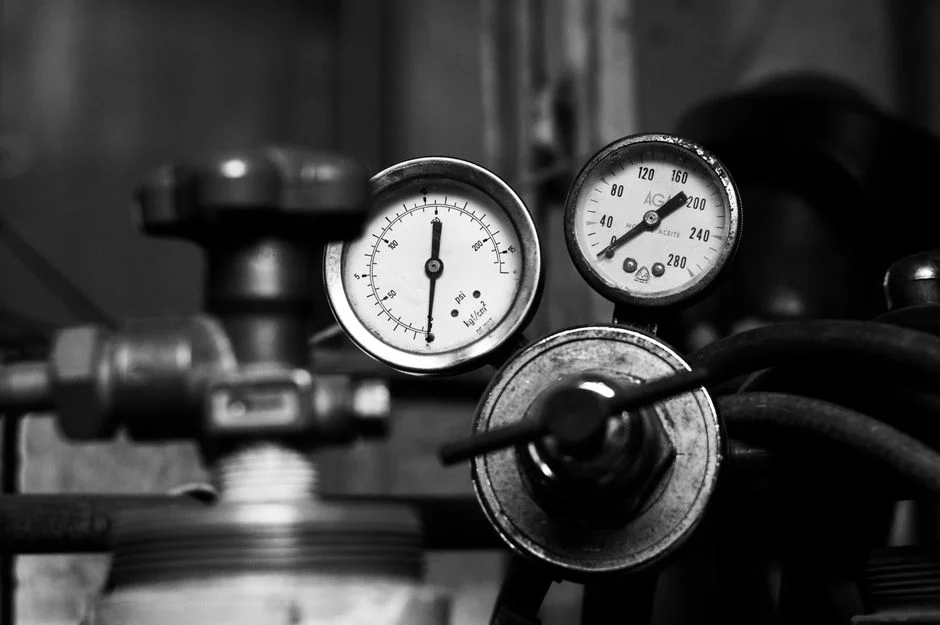
At 2,640 m, pump curves derate 10–12% per 1,000 m of elevation, and the cumulative penalty at Bogotá is roughly 25–30% versus a sea-level design (Hydropure Bogotá, 2026). The lower boiling point and 10–14 °C wet-bulb push cooling-tower cycles toward 4–5 COC, which raises silica and CaCO₃ scaling risk on the tower fill and on any downstream side-stream RO. Aeration OTE drops with air density, so DAF saturator backpressure and MBR blower sizing must be re-checked against 0.74 atm — the DAF for CMP and oily streams must be specified with a saturator re-rated for altitude. RO specific flux drops 10–20% versus sea level, so the 150–400 psi operating band is a sea-level reference and must be confirmed by an on-site pilot before procurement. MVC specific energy rises 5–15% versus sea level at Bogotá — meaningfully less than the 10–25% uplift at La Paz's 0.65 atm (Genesis Water Technologies, 2026) — so vendor guarantees are usable but the energy penalty still argues for partial reuse at 60–85% recovery before committing to a thermal stage. The Sabana de Bogotá aquifer sits at 250–500 mg/L TDS before the cooling tower concentrates it, and that low starting TDS combined with high silica is the chemistry that determines the train, not a copied Phoenix or Hsinchu recipe.
| Parameter | Sea level (~1.0 atm, ~25 °C wb) | Bogotá (~0.74 atm, 2,640 m, ~10–14 °C wb) | La Paz / El Alto (~0.65 atm, 3,640 m, ~5–10 °C wb) |
|---|---|---|---|
| RO specific flux derate | 0% (baseline) | 10–20% (on-site pilot required) | 15–30% (booster or accept lower flux) |
| MVC specific energy uplift | 0% (baseline) | 5–15% | 10–25% |
| Cooling-tower COC default | 5–7 | 4–5 | 5–7 (with side-stream RO) |
| BWRO recovery ceiling (no thermal stage) | 75–80% | 50–70% | 50–70% |
| Discharge TDS cap (typical regional limit) | Varies | <1,500 mg/L per Resolución 631/2015 | <1,500 mg/L per RAI / local norm |
Colombian compliance stack: Resolución 631/2015, Decreto 3930, and the CAR Cundinamarca permit
Resolución 631/2015, issued by the Ministerio de Ambiente y Desarrollo Sostenible, is the binding instrument for industrial discharge limits and sets caps on TDS, total suspended solids, and treatment-chemical residuals that any fab or hyperscale blowdown train has to clear before the first litre reaches the sewer. Decreto 3930/2010 and Decreto 4728/2010 govern discharge to surface water and sanitary sewer, and both require full characterization of the non-domestic load before a permiso de vertimientos is granted — not a self-declared Ficha Ambiental. CAR Cundinamarca is the regional ambient authority for projects on the Sabana de Bogotá, and the permiso de vertimientos is binding, not a regulatory formality. Concesión de aguas under Ley 99/1993 and Decreto 2811/1974 covers makeup intake from EAB, a private well, or a non-conventional source, and it has to be cleared in parallel with the discharge permit. For sustainability reporting, cite Resolución 1207/2014 and the Viceministerio de Agua Potable guidelines so that recovered blowdown qualifies as 'reuse' rather than 'internal recycling' in GRI, CDP, and ISSB disclosures — a distinction that materially changes the sustainability-committee narrative. PFAS in fab facility wastewater is a documented survey area (semiconductors.org, 2023) and should be characterized during piloting, not deferred to commissioning. None of these instruments is interchangeable with the Bolivian Ley 1333 / RAI frame, so a Bogotá EIA chapter cannot be a copy-paste of a La Paz design basis.
The defensible 2026 treatment train for a Bogotá fab or hyperscale data hall
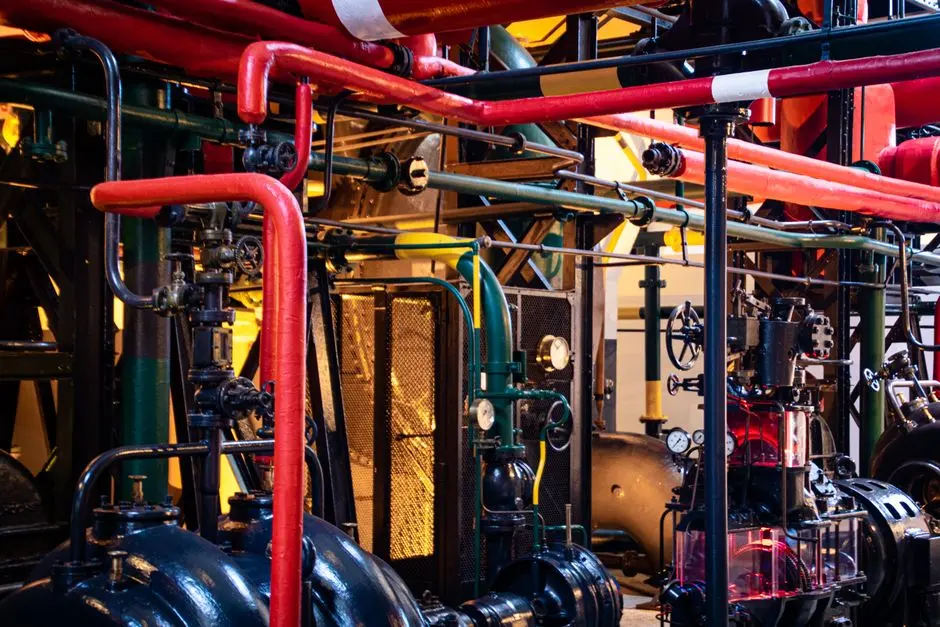
The defensible 2026 train is a six-step chain sized for the 1,000–6,400 m³/day envelope that covers a 5–20 MW data hall or a mid-scale fab on the Sabana. Step 1 — Equalization: two buffer tanks ≥8 h at peak flow with three segregated feed lines, plus a rotary mechanical bar screen on the chemical and cooling-tower feed lines. Step 2 — Pretreatment: DAF for CMP and oily streams (re-rate saturator for 0.74 atm, 2 duty + 1 standby); a lamella clarifier for high-TSS batch spikes; a multi-media filter to SDI <5 ahead of the RO — the IDE MAXH2O case explicitly flagged SDI persistently above 5 as the dominant failure trigger of a conventional RO on a fab feed. Step 3 — Biological: an integrated MBR with submerged PVDF cassettes delivering near-reuse effluent, with a blower re-rated for the altitude OTE penalty; the DF-series 0.1 µm PVDF cassettes cut footprint by roughly 60% versus activated sludge. Step 4 — Two-pass RO with energy recovery: a two-pass industrial RO with energy recovery sized to the IDE MAXH2O benchmark of ~720 GPM (~4,000 m³/day) at 54% first-pass recovery (silica-limited), climbing to 88% total when the upstream brine is sent through a second pass. Step 5 — Polishing: EDI or mixed-bed for fab UPW reclaim; UV at 40 mJ/cm² on the RO permeate line for data-hall cooling-tower reuse loops; a ClO₂ generator for residual control in long distribution lines. Step 6 — Reuse allocation: 60–80% of the treated stream to cooling-tower make-up, scrubber make-up, and toilet flushing; the remaining 20–40% discharged to the municipal sewer or a surface water body under permit. Sludge: a plate-and-frame filter press for MBR WAS at 1–500 m², with the cake manifested as hazardous industrial waste under the Colombian hazardous-waste regime.
| Step | Unit operation | Design duty / sizing anchor | Bogotá-specific note |
|---|---|---|---|
| 1 | Equalization + bar screen | ≥8 h at peak flow, three segregated lines | Mandatory for grid-event resilience |
| 2 | DAF + lamella + MMF | SDI <5 to RO; 2 duty + 1 standby DAF | Re-rate DAF saturator for 0.74 atm |
| 3 | MBR (DF-series PVDF) | 0.1 µm, 32–135 m³/day per 80–225 m² cassette | Oversize blower for altitude OTE penalty |
| 4 | Two-pass RO with ERD | ~720 GPM, 54% pass 1, 88% total | Derate specific flux 10–20% per pilot |
| 5 | UV + ClO₂ (or EDI) | 40 mJ/cm² UV; ClO₂ for long lines | EDI for fab UPW reclaim; UV for data-hall loops |
| 6 | Reuse allocation | 60–80% reuse, 20–40% discharge | Cite Resolución 1207/2014 for reuse reporting |
Decision framework: partial reuse, high-recovery CTBD, or ZLD — by site size and discharge constraint
Partial reuse at 60–85% overall recovery is the 2026 default for 5–20 MW Bogotá sites, and it is the configuration Resolución 631/2015 and CAR Cundinamarca expect when an industrial operator asks for a multi-year discharge permit (Hydropure Bogotá, 2026). High-recovery CTBD with controlled salt precipitation at ~95% recovery and ~1 mg/L silica permeate is the right upgrade for sites near the Sabana recharge zone or the Bogotá wetlands where concentrate disposal is restricted (IDE Water, 2026). Full ZLD — RO + MVC + crystallizer — reaches 95–99% overall recovery but only pencils at 20 MW with $3–8M CAPEX and $5–15/kgal OPEX, and it should be reserved for sites where CAR Cundinamarca refuses concentrate discharge or where El Niño-driven freshwater rationing is the binding constraint (Genesis Water Technologies, 2026). Discharge-only is a stopgap: Resolución 631 TDS caps plus $5–15/kgal direct discharge fees erode the savings within a year (Genesis Water Technologies, 2026). Modular UF and RO skids — including the ultrafiltration skid at 0.01–0.1 µm pore size — let the operator phase capacity in 1–2 MW increments as a data hall fills over 18–24 months, which keeps the screening-grade CAPEX bands honest in front of the sustainability committee.
| Site condition | Recommended architecture | Local recovery | Trigger to escalate |
|---|---|---|---|
| Sewer has headroom, TDS <1,500 mg/L achievable | Partial reuse (side-stream + UF + RO) | 50–70% | Dry-season freshwater rationing |
| Near Sabana recharge zone or wetlands | High-recovery CTBD (controlled salt precipitation) | ~95% | Permit restricts concentrate discharge |
| 20 MW, concentrate discharge refused, freshwater curtailed | Full ZLD (RO + MVC + crystallizer) | 95–99% | ZLD is the binding case, not the default |
CAPEX and OPEX bands by site size for a 2026 Bogotá build
A 5 MW Bogotá site on 1,000–1,500 m³/day makeup (250–450 m³/day blowdown) lands at $0.4–0.9M CAPEX and $1.50–3.00/kgal OPEX for a side-stream + UF + RO train at 50–70% local recovery (Genesis Water Technologies, 2026). A 10 MW site roughly doubles the train to $0.8–1.6M CAPEX, with OPEX in the same per-kgal band because fixed costs dilute across more volume. A 20 MW site is where ZLD becomes a real option: $3–8M CAPEX and $5–15/kgal OPEX, justified only when concentrate discharge is refused and freshwater is curtailed during the December–March dry season (Genesis Water Technologies, 2026). Side-stream MMF + UF + RO is the 2026 default train; add MVC only for the 20 MW ZLD case. These bands are screening-grade, not EPC tender numbers — adjust for Colombian import duties, IVA, and Sabana seismic and wind derating before tender. The 60–85% partial reuse framing is higher-value than ZLD for sub-20 MW sites, and the sustainability committee will usually accept that case more easily than a ZLD retrofit that pencils only at the upper end of the size band.
| Site size | Makeup (m³/day) | Train | CAPEX band | OPEX band |
|---|---|---|---|---|
| 5 MW | 1,000–1,500 (250–450 blowdown) | Side-stream + UF + RO, 50–70% local recovery | $0.4–0.9M | $1.50–3.00/kgal |
| 10 MW | ~2,000–3,000 | Side-stream + UF + RO, phased skids | $0.8–1.6M | $1.50–3.00/kgal |
| 20 MW | ~4,000–6,000 | Side-stream + UF + RO + MVC + crystallizer (ZLD) | $3–8M | $5–15/kgal |
Procurement short-list and next steps
The procurement short-list maps each unit operation to a specific equipment class and sizing rule so the engineer can request quotes against a defensible envelope. Headworks: rotary mechanical bar screen on chemical and cooling-tower feed lines. Flotation: DAF units, 4–300 m³/h, 2 duty + 1 standby for grid-event resilience. Biological: DF-series submerged MBR cassettes, 0.1 µm PVDF, 32–135 m³/day per 80–225 m² cassette, with blower re-rated for the altitude OTE penalty. RO: two-pass industrial RO with energy recovery, CIP skids, and a boron-rejection option for semiconductor-grade reuse; a PLC-controlled antiscalant and pH dosing skid in the same package. Disinfection and sludge: UV primary for cooling-tower reuse loops; ClO₂ generator for long distribution lines; plate-and-frame filter press for MBR WAS. RO and UF membrane elements should be sourced as a single lot so cleaning chemistry is consistent across stages. Lock all sizing behind a 1–3 month on-site pilot, and derate vendor curves at 0.74 atm by 10–20% on specific flux before the pilot starts.
Frequently Asked Questions
How much water does a hyperscale data centre in Bogotá actually demand in 2026?
A 100 MW facility built on Bogotá's 10–14 °C wet-bulb profile can demand up to 2 million L/day of makeup water, and a typical 5–20 MW data hall in Bogotá draws 1,000–1,500 m³/day of makeup and 250–450 m³/day of cooling-tower blowdown at 4 cycles of concentration (IDE Water, 2026; Genesis Water Technologies, 2026).
Which Colombian discharge instrument gates a fab or data-hall blowdown train?
Resolución 631/2015 (Ministerio de Ambiente y Desarrollo Sostenible) is the binding instrument and is enforced through the permiso de vertimientos issued by CAR Cundinamarca for projects on the Sabana; Decreto 3930/2010 and Decreto 4728/2010 frame the discharge regime and both must be cited in the EIA chapter (Hydropure Bogotá, 2026).
What is the real difference between a fab wastewater train and a data-hall train in Bogotá?
A fab carries three segregated streams through the headworks — UPW reject, chemical/CMP/fluoride waste, and cooling-tower blowdown — with DAF + MBR + two-pass RO sized for fluoride spikes and colloidal silica; a data hall without fab cleaning collapses to UPW reject and cooling-tower blowdown and runs the side-stream MMF + UF + RO train at 50–70% local recovery (Hydropure Bogotá, 2026; Genesis Water Technologies, 2026).
What reuse target is defensible for a 5–20 MW Bogotá site in 2026?
60–85% partial reuse is the 2026 default for 5–20 MW sites on the Sabana, with the 88% total-recovery figure from the IDE MAXH2O two-pass RO case study as the right anchor for an internal reuse business case; cite Resolución 1207/2014 and the Viceministerio de Agua Potable guidelines so the recovered blowdown qualifies as 'reuse' rather than 'internal recycling' in GRI, CDP, and ISSB disclosures (IDE Water, 2026; Hydropure Bogotá, 2026).
When does ZLD actually pencil on a 2026 Bogotá build?
Full ZLD reaches 95–99% overall recovery but only pencils at 20 MW, with $3–8M CAPEX and $5–15/kgal OPEX, and it is justified only when CAR Cundinamarca refuses concentrate discharge or El Niño-driven freshwater rationing is the binding constraint — not as a default for sub-20 MW sites (Genesis Water Technologies, 2026).