The Day-One Question: Does the Existing CTO Transfer on Closing?
A Consent to Operate (CTO) is granted to a specific legal entity under the Water (Prevention and Control of Pollution) Act, 1974 and the Air (Prevention and Control of Pollution) Act, 1981; therefore, the CTO does not transfer with shares or by operation of law during an asset transfer. UPM's acquiring entity must apply to the State Pollution Control Board (SPCB) having jurisdiction over the target plant and obtain consent in the new entity's name before any effluent is discharged under the buyer's ownership (per the consent application framework under Section 25 of the Water Act, 1974).
The application pathway requires filing Form I in the acquiring entity's name, attaching the existing CTO, the latest SPCB monitoring data, and a request that the application be treated as a 'change in name of the industry' under Section 25. The SPCB then issues either a fresh CTO or an endorsement transferring the existing one—the precise instrument varies by state, as Maharashtra, Gujarat, Telangana, and Tamil Nadu handle this differently in practice (per the spans.co.in regulatory primer, 2025).
There is a deemed-consent risk an M&A team should understand: if the SPCB does not acknowledge the application within the statutory period, the existing consent is treated as continuing. However, PCB enforcement has tightened since 2017, and Environmental Compensation orders for unauthorised operation now reach crores of rupees for large industries. The practical move is to submit the consent-in-name application at least 90 days before closing—the same window the Water Act uses for CTO renewals—so that closing day coincides with UPM holding a CTO in its own name. The same 90-day logic applies to the process described in our Samsung Electronics India plant acquisition guide.
The Three-Tier Legal Framework an Acquirer Must Map
Indian wastewater compliance operates as a three-tier hierarchy, requiring the M&A team to identify which authority controls specific rules before signing the SPA. At Tier 1, the Environment (Protection) Act, 1986 authorises the Ministry of Environment, Forest and Climate Change (MoEFCC) and the Central Pollution Control Board (CPCB) to set national standards; Schedule VI of the EPA contains the General Standards for Discharge of Environmental Pollutants, which serves as the baseline every Indian industry must meet at the discharge point (per CPCB Schedule VI, cited in spans.co.in, 2025).
At Tier 2, the Water Act, 1974 (and the Air Act, 1981) empowers State Pollution Control Boards to issue Consents to Establish (CTE) and Consents to Operate (CTO) and to impose conditions stricter than the CPCB General Standards. Most SPCBs impose tighter site-specific limits—particularly on TDS, COD, and total nitrogen—meaning the General Standard is a floor, not a ceiling. At Tier 3, the National Green Tribunal (NGT) issues orders that have the force of law and can override CTO conditions; the NGT has used this power to mandate zero liquid discharge in specific industry clusters and river catchments, a risk category that standard red-category status does not capture.
The category itself is set by CPCB's 2016 Revised Classification of Industries, which scores 17 environmental parameters to compute a Pollution Index and assigns each industry to Red, Orange, Green, or White. This category dictates consent, ETP, and OCEMS obligations and should be the first metric the due-diligence team verifies against the target plant on CPCB's Parivesh portal before opening the data room.
Industry Categorisation: Where Does a UPM Pulp & Paper Plant Land?
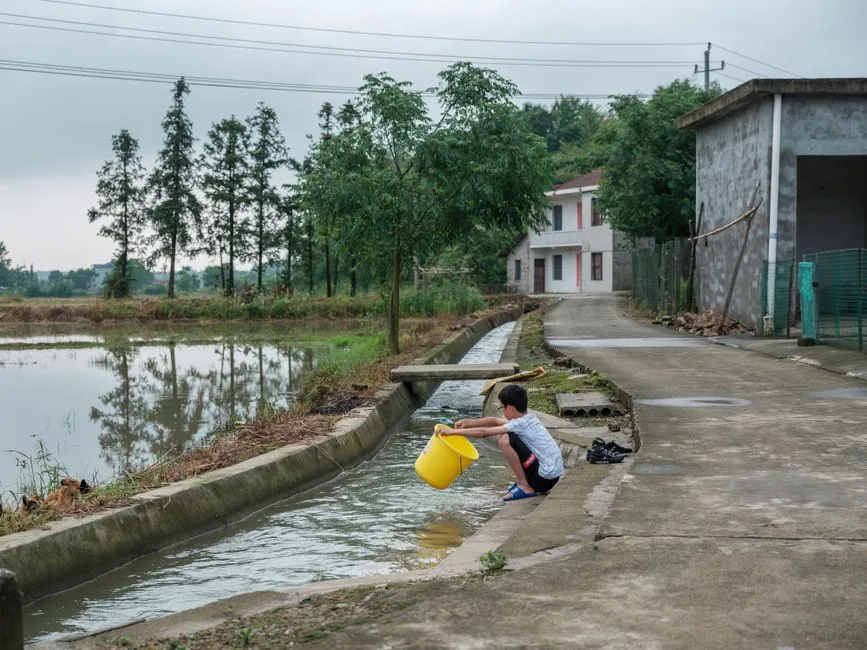
Most integrated pulp and paper mills—the type UPM is most likely to acquire in India—sit in the Red category under CPCB's 2016 classification due to high BOD/COD loadings, colour, suspended solids, and AOX. Red category triggers the full stack: CTE + CTO + mandatory ETP + OCEMS, with monthly self-monitoring at an SPCB-approved laboratory. Smaller paper-converting units without integrated pulping typically fall into the Orange category, where a CTO is required but ETP requirements are at the SPCB's discretion; a finishing or lamination line for label materials may be Green or White, though this is uncommon for UPM's scope and must be verified on the SPCB's classification letter rather than assumed from the seller's documentation.
The decision rule for the deal team is straightforward: if the target is Red, plan for OCEMS installation per CPCB's 2014 directive, a 17-parameter Pollution Index re-scoring if UPM's ownership changes the product mix, and a fresh CTO application. If the target is Orange, the CTO renewal cycle remains binding, but the ETP retrofit scope is typically lighter and OCEMS may not be required. Because the SPCB can categorise unlisted industry codes using the PI scoring methodology, the buyer should not assume the seller's classification is final or portable to UPM's product mix.
| CPCB Category (2016 PI) | Consent Required | ETP | OCEMS | Typical Pulp & Paper Fit |
|---|---|---|---|---|
| Red (PI ≥ 60) | CTE + CTO | Mandatory | Mandatory above CPCB flow thresholds | Integrated mills, large pulp lines, recovery-boiler plants |
| Orange (PI 41–59) | CTO | At SPCB discretion | Generally not required | Paper-converting units without pulping, some laminating lines |
| Green (PI 21–40) | Self-declaration / CTO in some states | Not mandatory | Not required | Standalone label finishing, small packaging lines (rare for UPM scope) |
| White (PI ≤ 20) | Exempted in most states | Not required | Not required | Not applicable to a UPM acquisition profile |
CPCB General Standards vs. SPCB CTO Conditions: What the New Owner Is Actually Bound By
The CPCB General Standards under EPA 1986 Schedule VI are the minimum compliance target for inland surface water discharge. Key parameters include pH (6.0–8.5 for most sectors), BOD (typically 30 mg/L for general industry, though stricter under sector rules), COD, total suspended solids, oil and grease, and a list of specific toxic pollutants. While the General Standard acts as the floor, the binding design basis for any retrofit is the text of the CTO itself, which can be materially tighter (per the spans.co.in regulatory primer, 2025).
Pulp and paper effluent combines high BOD/COD with colour and AOX loading that the General Standard alone does not adequately constrain. Most SPCBs add colour, chloride, residual chlorine, and AOX limits to the CTO for paper units, and many specify a TDS cap even where the General Standard for inland surface water does not. For land discharge (irrigation), the General Standard applies a TDS limit of ≤2,100 mg/L and pH 6.0–8.5; for marine discharge, no General TDS limit exists, but CTOs frequently specify one. The M&A team must request the existing CTO text and the last two years of SPCB inspection notes or show-cause correspondence during due diligence, as a CTO containing an unacknowledged non-conforming parameter is a value-shifting discovery.
| Parameter | CPCB General Standard (inland surface water) | Typical SPCB CTO for Pulp & Paper | Engineering Implication |
|---|---|---|---|
| pH | 6.0–8.5 | 6.5–7.5 (often tighter) | Neutralisation stage mandatory |
| BOD (3-day, 27°C) | 30 mg/L | 20–30 mg/L | Biological stage sized for >95% removal |
| COD | 250 mg/L | 150–250 mg/L | Aeration + clarifier or MBR; verify with MBR membrane bioreactor system sizing |
| TSS | 100 mg/L | 50–100 mg/L | Primary clarification + secondary settling |
| Colour (Pt-Co) | Not specified in general standard | 100–400 units (state-specific) | Often the binding parameter for paper units |
| AOX | Not specified in General Standard | 1–2 mg/L in stricter states | Triggers activated carbon or enhanced biological treatment |
| TDS | Not specified for inland surface water | Often ≤2,100 mg/L by SPCB analogy | Drives RO consideration and ZLD cost |
OCEMS, ETP Performance and the Documentation Bundle for CTO Renewal
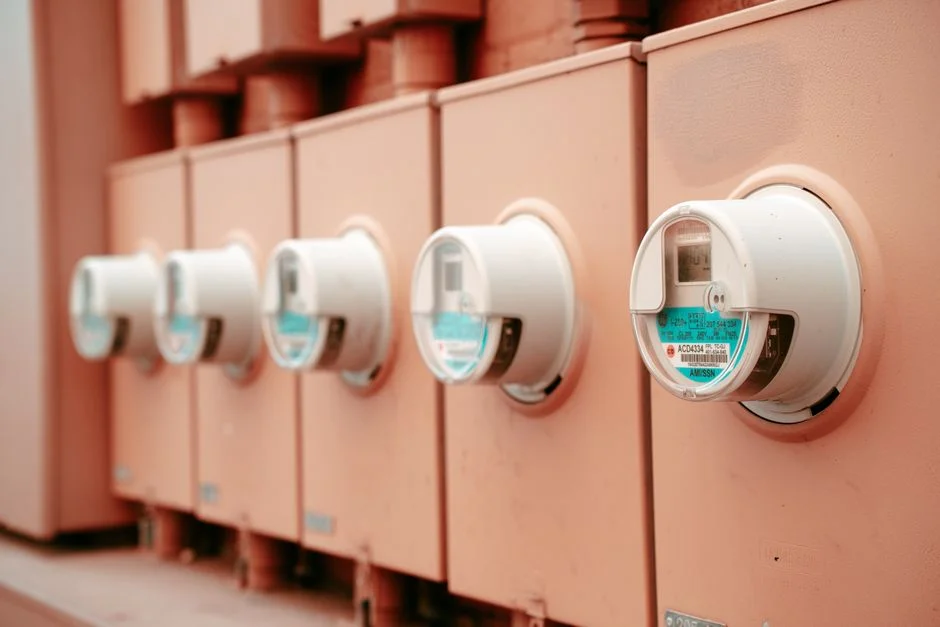
OCEMS scope is set by CPCB's 2014 directive mandating Online Continuous Effluent Monitoring Systems for Red category industries above specified flow thresholds, with parameters typically including flow, pH, COD, and TSS. Data is transmitted to SPCB and CPCB servers, and calibration records must be produced at every CTO renewal; an OCEMS that is installed but uncalibrated, or transmitting incomplete data, frequently triggers show-cause notices (per the spans.co.in regulatory primer, 2025).
ETP performance verification precedes the initial CTO, as the SPCB issues the consent after the unit demonstrates ETP commissioning with typically 1–3 months of effluent monitoring data from an approved lab. CTO renewal is annual or multi-annual depending on the state, with the documentation bundle typically comprising monthly monitoring results, hazardous waste management records, OCEMS calibration records, fee payment, and an ETP operation log summary. A seller unable to produce this bundle signals a compliance posture the acquirer will inherit. Engineering-wise, an OCEMS-credible retrofit for a paper mill typically combines a primary dissolved air flotation system for fibre and filler recovery with a downstream biological stage, a comparison detailed in our DAF vs clarifier for pulp & paper wastewater engineering note.
Enforcement escalation moves through show-cause notice, direction, Environmental Compensation (EC) order, and potential closure. EC orders have been increasingly used since 2017, calculated per the NGT's formula, and for large industries in protracted non-compliance, the amounts can reach crores of rupees. Because of this, an ETP retrofit designed only to the General Standard is under-scoped; the design basis must be the CTO conditions, the SPCB inspection history, and any NGT cluster order binding the catchment.
NGT, ZLD and the Cluster Exposure UPM Must Diligence
NGT orders have the force of law and can override CTO conditions, making cluster exposure a category of acquisition risk independent of the plant's Pollution Index score. NGT and CPCB have issued cluster-level zero liquid discharge (ZLD) directions in pulp and paper catchments including the Ganga, Yamuna, and Cauvery basins, and any target plant in a notified catchment inherits those obligations upon closing regardless of the existing CTO text (per the spans.co.in regulatory primer, 2025).
Zero liquid discharge requires that every litre of effluent is recovered, treated, and reused within the plant boundary, prohibiting discharge to streams or sewers. The engineering consequence is an additional RO or multiple-effect evaporator stage downstream of the existing ETP, with a crystalliser handling the reject brine, representing a step-change in both CapEx and energy operating costs. For a paper mill, ignoring the ZLD requirement during valuation is a common M&A error because the cost delta compounds across the plant's life.
Diligence involves mapping the target's coordinates against notified NGT/CPCB cluster orders, requesting the seller's NGT-correspondence file, and asking the SPCB directly whether any ZLD direction is pending or in force for that industry code in that district. The same scoping logic is used in the parallel Samsung Electronics India plant acquisition guide for the electronics sector, and the M&A team should perform this cluster check before signing the SPA.
Frequently Asked Questions
Does a Consent to Operate transfer automatically on a share purchase in India?
No. A CTO is granted to a specific legal entity under the Water Act, 1974 and the Air Act, 1981; the acquirer must file a fresh
Frequently Asked Questions
Does the existing CTO automatically transfer to UPM when it acquires an Indian plant?
No, the Consent to Operate (CTO) is not automatically transferable. Under the Water (Prevention and Control of Pollution) Act, 1974, a CTO is granted to a specific legal entity. Upon a change in ownership or management, the acquirer must file an application for a transfer of consent or a fresh CTO with the respective State Pollution Control Board (SPCB) within 30 days of the acquisition.
Failure to initiate this transfer can result in the plant being classified as operating without valid authorization, leading to potential closure notices or heavy environmental compensation fines under the "polluter pays" principle enforced by the SPCB.
What is the difference between CPCB General Standards and SPCB CTO conditions?
The Central Pollution Control Board (CPCB) General Standards are the baseline national effluent discharge limits (e.g., pH 5.5–9.0, BOD 30 mg/l, COD 250 mg/l) applicable to all industries. These serve as the minimum threshold for environmental protection across India.
State Pollution Control Boards (SPCBs) have the authority to impose stricter conditions in the specific CTO based on local environmental sensitivity, the carrying capacity of the receiving water body, or specific industrial cluster requirements. If SPCB conditions are more stringent than CPCB standards, the plant must strictly adhere to the SPCB limits to remain compliant.
When is OCEMS mandatory for an Indian Red category industry?
Online Continuous Effluent Monitoring Systems (OCEMS) are mandatory for all "Red" category industries, including pulp and paper mills, as per CPCB guidelines. This requirement applies if the plant discharges effluent into a water body or drain, regardless of the volume.
The system must be capable of real-time monitoring of critical parameters including pH, Total Suspended Solids (TSS), Chemical Oxygen Demand (COD), and Biological Oxygen Demand (BOD). Data must be transmitted directly to the CPCB and SPCB servers via the web portal without manual intervention.
Can the NGT force a pulp & paper plant to operate as Zero Liquid Discharge?
Yes, the National Green Tribunal (NGT) has the legal authority to mandate Zero Liquid Discharge (ZLD) for industrial units, particularly if a plant is located in a critically polluted area or is causing significant degradation to local groundwater and river ecosystems.
While ZLD is typically a condition for new projects in sensitive zones, the NGT often orders existing plants to upgrade to ZLD systems if they fail to consistently meet discharge standards or if the local environmental impact assessment indicates that the receiving water body has reached its maximum pollutant assimilation capacity.
What is the 90-day pre-closing compliance checklist for an Indian acquisition?
The 90-day checklist must include a comprehensive audit of all valid environmental clearances (EC) and CTOs, verification of the latest OCEMS data logs for the past 24 months, and confirmation of hazardous waste authorization under the Hazardous and Other Wastes Rules, 2016.
Additionally, the acquirer must conduct a site inspection to confirm the operational status of the Effluent Treatment Plant (ETP), review any pending litigation or show-cause notices from the SPCB or NGT, and verify the status of "Consent Fees" payments to ensure there are no outstanding arrears that could lead to permit revocation post-closing.