The 30-day clock that decides whether closing is a clean transfer or a CWA violation
When International Paper takes ownership of an Arizona pulp or paper mill, the federal Clean Water Act does not pause for the deal: AZPDES individual permits require a 30-day administrative name change on Form 2A or 2S under 40 CFR § 122.61, the Aquifer Protection Permit re-issues under Ariz. Admin. Code tit. 18 ch. 9 with a possible 180-day pre-construction notice, the Multi-Sector General Permit must be re-NOIed under the new operator name, and any POTW Industrial Wastewater Discharge Permit does not transfer at all. Missing the 30-day clock auto-terminates the underlying permit and is a strict-liability CWA violation regardless of the facility's compliance history on the day of closing (per the four-trigger framework in the Arizona plant wastewater acquisition compliance guide).
The 30-day window runs from the ownership-change date, not from the date counsel opens the diligence file. That distinction is the single most underestimated item on a mill acquisition, because integration workstreams routinely consume the first two weeks on data-room access and rep-and-warranty insurance, leaving a narrow window for the Form 2A or 2S filing. The same operator-specific logic drives the MSGP re-NOI: MSGP coverage is operator-specific, not facility-specific, so the new legal entity must file its own Notice of Intent under the current MSGP. A lapsed MSGP in the gap between close and re-NOI is a separate Clean Water Act violation that the AZPDES administrative amendment will not cure (per the same AZ-side framework, 2026).
Four state-level permits that activate the moment the asset transfers
The four state-level triggers below do not behave the same way at closing. The distinction between a true administrative transfer and a re-issuance event is the most common diligence gap in industrial buyouts: treating the APP as a simple name change is a recurring source of post-close enforcement risk in Arizona kraft and recycled-fiber deals (per the same Arizona framework).
| Permit | Action at closing | Authority / citation | Day-one consequence if missed |
|---|---|---|---|
| AZPDES individual permit | Administrative name change via Form 2A or 2S within 30 days of ownership change | 40 CFR § 122.61; ADEQ | Permit auto-terminates; discharge without authorization is a strict-liability CWA violation |
| Aquifer Protection Permit (APP) | Re-issuance event: new BMP plan, financial-assurance review, and 180-day pre-construction notice if any treatment-train change is contemplated | Ariz. Admin. Code tit. 18 ch. 9 | Discharge under prior operator's APP is unauthorized; ADEQ can require new technical review before reactivation |
| Multi-Sector General Permit (MSGP) for industrial stormwater | Re-NOI under new operator name within the timeframe specified by the current MSGP | EPA 2015 MSGP (current cycle); 40 CFR § 122.26 | Stormwater discharges become unpermitted; separate CWA violation that the AZPDES filing does not cure |
| POTW Industrial Wastewater Discharge Permit (IWWD) | New application to local sewer authority (Phoenix, Tucson, or Mesa); does not transfer at all | Local ordinance; 40 CFR Part 403 | Sewer authority can reject application; discharge without permit is a local ordinance violation independent of AZPDES status |
| Advanced Water Purification (AWP) — optional | Full application to ADEQ; issued to an AWPRA before aquifer recharge or surface-water augmentation | § R18-9-C816; § R18-9-E828 | Reuse or recharge under prior AWPRA is unauthorized; ADEQ can require fresh validation before reactivation |
The fifth row is conditional: if on-site reuse, aquifer recharge, or surface-water augmentation is in scope, an AWP permit under § R18-9-C816 opens in parallel with the AZPDES and APP tracks, and the AWTF TOC ceiling of ≤2 mg/L is the binding design parameter under the standard approach. Deal counsel should treat each row as a separate workstream with a named owner, because the four triggers run on independent clocks and the failure modes are not offsetting (per the AZ-side framework, 2026).
Why a paper-mill envelope is sharper than the pharma guide's envelope
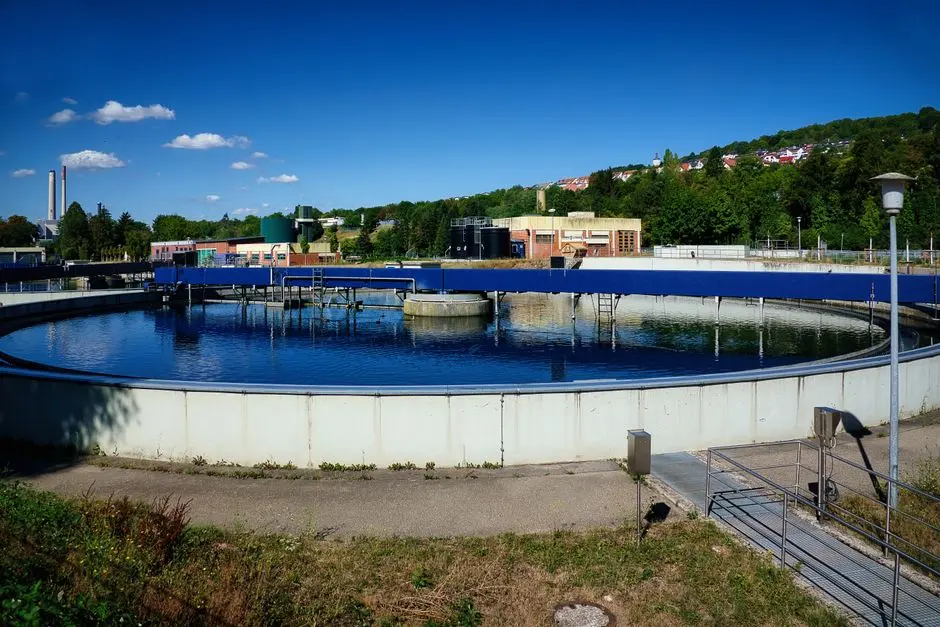
An EHS team cannot lift a pharmaceutical-style diligence checklist onto a kraft or recycled-fiber mill and expect the local POTW or ADEQ to accept the new IWWD application. The parameter mix is fundamentally different, and the only overlap is one of the most heavily regulated parameters in either industry. A kraft or recycled-fiber process streams digester blowdown, weak and strong black liquor, evaporator condensate, bleach plant effluent (where bleaching remains), paper machine white water, and cooling tower blowdown — each contributing a distinct parameter set that local limits and the APP technical review will key on.
The paper-mill-specific parameters the local limits and APP technical review will flag are high BOD and TSS from pulper dumps and paper machine white water, high TDS and sulfate from acid neutralization of black liquor, AOX and chlorate from chlorine dioxide bleaching, dioxin and furan congeners where elemental chlorine or hypochlorite stages remain, color, and resin acids. The RCRA overlay is sharper than a pharma site: F019 (other landfill leachate) and F020 (tri-, tetra-, or pentachlorophenol production waste) are typically not the right codes for kraft operations, but DAF skimmings, fiber-recovery sludges, and spent bleach effluent can classify as K-listed (acute hazardous) or U-listed depending on the feedstock, and K-listed is strict-liability by definition under RCRA.
The contrast against a pharma envelope is explicit: a pharma process profile drives AOX, sulfate, silver, and total nitrogen, while a paper mill drives AOX, chlorate, dioxin, color, and TDS. The overlap on AOX is the main reason a pharma diligence guide applied unmodified will miss the chlorate, dioxin, and color parameters that ADEQ and the local POTW will read first on a new IWWD application (per the analogous envelope analysis in the pulp and paper pretreatment limits compliance guide).
Local POTW limits and the dilution factor in Phoenix, Tucson, and Mesa
Standard local limits across the Phoenix, Tucson, and Mesa service areas cap BOD at <250 mg/L, TSS at <250 mg/L, pH at 5–11, and oil & grease at <100 mg/L (per the AZ-side framework, 2026). For a kraft or recycled-fiber mill, the IWWD application will be defended on a sharper set of parameters: higher TSS and BOD peaks from pulper dumps, elevated sulfate and TDS from acid neutralization, color and AOX/chlorate from bleach plant streams, and any condensates routed to sewer rather than recycled back into the process.
| Parameter | Typical local limit (Phoenix / Tucson / Mesa) | Paper-mill-specific overlay |
|---|---|---|
| BOD | <250 mg/L | Peaks from pulper dumps and machine white water |
| TSS | <250 mg/L | Fiber and filler loss from the wet end; DAF skimmings loading |
| pH | 5–11 | Acid neutralization swings from black liquor chemistry |
| Oil & grease | <100 mg/L | Generally low at a paper mill; condensate carryover is the main source |
| Sulfate / TDS | Site-specific | Elevated from acid neutralization of black liquor |
| AOX / chlorate | Site-specific; increasingly common | Bleach plant effluent (ClO₂ stages); ADEQ will flag on first review |
| Color | Site-specific | High in unbleached and bleach-stage streams; difficult to remove without DAF or chemical precipitation |
A POTW can reject the new application outright if the proposed discharge loads the plant beyond design capacity, which is a real risk for high-strength pulp effluent at sites with no primary equalization. 2026 POTW re-issuances can shift the envelope even if the underlying plant is unchanged, so design assumptions should leave headroom rather than sit at the limit, and a 90-day diligence review of the existing local limits against the current treatment-train performance is the cheapest insurance available (per the AZ-side framework, 2026).
Federal overlays: ESA § 7, Section 401, and the AFFF/PFAS diligence flag
Three federal overlays ride on top of the AZPDES envelope and an AZPDES administrative amendment alone will not cure any of them. First, an Endangered Species Act § 7 consultation often rides on a federal NPDES authorization in Arizona, particularly where discharge reaches habitat for listed species — this is a separate diligence item, not an automatic transfer, and a mill discharging to a tributary that supports listed fish or riparian species will need a renewed consultation before reactivation under the new operator. Second, a Section 401 state water-quality certification that supports the existing permit must be reviewed for continued applicability under the new operator and is not auto-transferred (per the AZ-side framework, 2026).
Third, AFFF/PFAS diligence: legacy mill sites may have used AFFF in fire-suppression systems, and EPA's 2022 PFAS wastewater guidance is not yet a numeric effluent limit. ADEQ has signaled that it will require source-control evaluations during APP re-issuance, and any confirmed AFFF release can expect site-specific PFAS monitoring layered on top of the standard APP (per the same AZ-side framework). The recommendation is straightforward: pull the Phase I and any AFFF inventory before signing, because the forward-looking PFAS monitoring risk is not curable at closing and rides into the next permit cycle regardless of how clean the day-one discharge profile looks.
Kraft-mill treatment train for Class A+ reuse or AWP discharge
If the long-term plan is on-site reuse, aquifer recharge, or surface-water augmentation, the asset will need a treatment train that defends both the Class A+ envelope and the AWP log-reduction targets (LRTs) that ADEQ actually enforces. Class A+ reclaimed water under Ariz. Admin. Code § 18-11 requires turbidity ≤2 NTU as a 24-hour average and ≤5 NTU at any time, 0 organisms/100 mL total coliform in 4 of the last 7 daily samples with a single-sample maximum of ≤23 organisms/100 mL, and a fecal coliform geometric mean <10 mg/L across five samples (per the AZ-side framework, 2026). The AWP framework under § R18-9-E828 sets LRTs of 13-log enteric virus, 10-log Giardia lamblia, and 10-log Cryptosporidium from raw wastewater to finished water, based on a QMRA benchmark of 1 infection per 10,000 people per year at 2.5 L/day ingestion; each barrier is credited with a minimum 0.5 and a maximum 6.0 validated log-reduction value per pathogen, blending is not eligible for credit, and the AWTF TOC ceiling is ≤2 mg/L under the standard approach.
For a kraft-mill envelope, the recommended train starts with a dissolved air flotation (DAF) system ahead of the biological step to strip suspended solids, color, and resin acids from the primary effluent before the secondary system ever sees it — protecting the upstream load profile is the cheapest way to keep the MBR inside its design flux range. A submerged PVDF MBR membrane bioreactor wastewater treatment system handles mixed-liquor separation, then a 0.03 μm hollow-fiber ultrafiltration system polish locks the turbidity envelope. The train finishes with a chlorine dioxide (ClO₂) generator or UV barrier for the coliform and viral limits; chlorination alone will not hold the Class A+ envelope at the cell densities typical of secondary effluent (per the AZ-side framework, 2026). ADEQ is still in the AWP rule's implementation phase as of October 2025 and additional compliance-demonstration guidance may be issued, so design to the ≤2 mg/L TOC ceiling as a hard target while keeping rule-revision flexibility.
Briefing box: what the deal team has to lock before signing
Lock the 30-day Form 2A or 2S clock in the closing checklist with a named owner, because the deadline runs from the ownership-change date, not from when the file is opened. Run a 90-day POTW local-limits review against current treatment-train performance, leaving headroom rather than sitting at the limit, because 2026 re-issuances can shift the envelope even if the underlying treatment plant is unchanged. Trigger the APP re-issuance track early with a new BMP plan, a financial-assurance review, and the 180-day pre-construction notice if any process or treatment-train change is contemplated.
Pull the Phase I and the AFFF inventory before signing; a legacy AFFF release is a forward-looking PFAS monitoring risk layered on top of the standard APP. Confirm Section 401 and ESA § 7 status on the existing NPDES — neither transfers automatically, and an AZPDES administrative amendment will not cure either gap. Finally, scope the AOX, chlorate, dioxin, color, and TDS envelope before the IWWD application is filed, because the local POTW will read those parameters first on a kraft or recycled-fiber mill (per the AZ-side framework, 2026).
Frequently Asked Questions
What is the first wastewater filing International Paper must make after closing on an Arizona mill?
The AZPDES individual permit name change must be filed within 30 days of the ownership change under 40 CFR § 122.61 using Form 2A or 2S. The permit auto-terminates if the deadline is missed, which is a strict-liability CWA violation regardless of the facility's compliance history (per the Arizona plant wastewater acquisition compliance guide).
Does the Aquifer Protection Permit transfer with the asset?
No. The APP under Ariz. Admin. Code tit. 18 ch. 9 must be re-issued, not transferred, because Arizona treats a controlling-entity change as a re-issuance event. The new operator must submit a new BMP plan, pass a financial-assurance review, and provide 180-day pre-construction notice if the treatment train is being modified (per the same AZ-side framework).
Which wastewater parameters make a kraft or recycled-fiber mill different from a pharmaceutical site?
A kraft or recycled-fiber mill drives AOX, chlorate, dioxin, color, and TDS, with elevated sulfate from acid neutralization. A pharmaceutical site drives AOX, sulfate, silver, and total nitrogen. The overlap on AOX is the main reason a pharma diligence guide applied unmodified will miss the chlorate, dioxin, and color parameters the local POTW and ADEQ will read first (per the envelope analysis in the pulp and paper pretreatment limits compliance guide).
Can a local POTW reject the new Industrial Wastewater Discharge Permit application?
Yes. POTW IWWD permits are issued to a specific discharger and do not transfer with the asset, so a new application is required to the City of Phoenix, Tucson Water, or the City of Mesa. The sewer authority can reject the application if the proposed discharge would load the plant beyond design capacity, which is a real risk for high-strength pulp effluent at sites with no primary equalization (per the AZ-side framework, 2026).
Related equipment and engineering reading
- What Wastewater Requirements Apply When International Paper Acquires a Plant in Vietnam? 2026 Guide
- Wastewater Requirements When International Paper Acquires an India Plant (2026 Guide)
- What Wastewater Requirements Apply When Rio Tinto Acquires an Arizona Plant? 2026 Regulatory & Treatment Guide
- Wastewater Requirements for Panasonic's Malaysia Plant Acquisition (2026 Guide)