
Reno's 2026 Compliance Box: Federal Tier Stack Meets Nevada NDEP and TMWRF
Plastics and rubber plants near Reno, NV meet 2026 sewer pretreatment limits by mapping each waste stream to 40 CFR Part 414 (plastics/resins) or Part 463 (rubber), then running a DAF → equalization → MBR → polishing train sized with a 1.2–1.5× safety factor to keep TSS below 30–60 mg/L, oil and grease below 10–50 mg/L, and BOD below 25–50 mg/L at the designated sampling point set by the local Control Authority (TMWRF or equivalent Nevada NDEP-approved POTW).
The U.S. National Pretreatment Program runs on a three-tier hierarchy, and getting the order wrong is the single most common reason a categorical industrial user ends up with a Notice of Violation (NOV) in the Truckee Meadows. Tier 1 is 40 CFR Part 403, the general pretreatment framework that defines pass through, interference, and the role of the Control Authority. Tier 2 is the categorical standard: 40 CFR Part 414 for plastics, resins, and synthetic resins, and 40 CFR Part 463 for rubber manufacturing, each dividing into subcategories with their own numeric pollutant limits. Tier 3 is the individual discharge permit issued by the Control Authority — typically the receiving POTW or a Nevada Division of Environmental Protection (NDEP)-authorized pretreatment program — and it is the binding document because the most stringent applicable limit always controls (per EPA's National Pretreatment Program overview, retrieved 2026-02).
For a plastics or rubber plant in the Reno–Sparks industrial corridor, the receiving POTW is most often the Truckee Meadows Water Reclamation Facility (TMWRF) or an adjacent Nevada NDEP-authorized system such as the City of Sparks. Site-specific limits are commonly written into local permits in the 30–60 mg/L TSS, 10–50 mg/L O&G, and 25–50 mg/L BOD bands, with pH held in a 5.0–10.0 instantaneous range (6.0–9.0 in stricter local permits). A categorical standard lower than the local limit does not give automatic relief; the permit ceiling still wins. Pass-through and interference prohibitions under 40 CFR 403.2 are the enforcement hooks when categorical compliance is technically met but TMWRF or Sparks operations are still disrupted — the same legal frame referenced in the plastics and rubber pretreatment playbook for Corry, PA.
The 2026 Nevada-specific wrinkle is that NDEP has been accelerating permit-renewal cycles and writing PFAS monitoring into 2025–2026 renewal drafts even where no federal categorical limit exists. Plants in the Reno basin that renewed permits in 2022–2023 should expect PFAS and 1,4-dioxane language to appear on the 2026 cycle. Reno's elevation (~4,500 ft) and sub-freezing winter influent temperatures also add a sizing factor that lower-altitude reference documents ignore — a 1.2–1.5× hydraulic and load safety factor covers both the snowmelt dilution events of March–April and the spring temperature depression that slows biological kinetics.
Map Every Stream to the Right Subcategory Before You Size a Pump
Before any equipment is sized, every waste stream on the site has to be mapped to the correct subcategory under Part 414 or Part 463, because the categorical limits differ by subpart and the wrong box produces an undersized or oversized train. The table below is the practical decision tool a plant engineer can run in 30 minutes against a wastestream inventory; it covers the subcategories that show up most often in the Reno–Sparks corridor.
| Subcategory (40 CFR) | Typical Reno Stream | Key Parameters Driving the Limit |
|---|---|---|
| 414.11 — Contact cooling and process water | Non-contact cooling tower blowdown, mold-chilling loops | TSS, temperature, trace monomers |
| 414.21 — Emulsion polymerization wastewater | SBR, latex, PVC latex reactor washdowns | O&G, TSS, residual surfactant, BOD |
| 414.30s — Resin finishing subparts | Urea, melamine, polyester finishing rinses | TSS, BOD, residual formaldehyde |
| 414 + state screening — Fluoropolymer line (PTFE, PVDF, fluoroelastomer) | Fluoropolymer reactor venting, coagulation baths | PFAS (4–10 ng/L action), 1,4-dioxane |
| 463 — Tire production | Tread cooling water, mold release wash | TSS, O&G, zinc, priority organics |
| 463 — Latex-based processes (dipped goods, foam) | Latex compounding dip tanks, foam line rinse | O&G, TSS, ammonia, surfactants |
| 463 — General rubber products (mechanical, molded, extruded) | Mold-release baths, extruded-goods trim rinse | TSS, O&G, zinc, priority organics |
The most common Reno-area mistake is blending a polymer kettle cleaning stream with a contact-cooling stream upstream of treatment, which lifts a low-load stream into a higher categorical subpart and pulls the permit ceiling down. Keep streams segregated until after the designated sampling point where the binding permit allows blending, and treat the kettle cleaning batch as a separate equalized load. Plants that handle a fluoropolymer line (PTFE, PVDF, fluoroelastomer molding) sit under Part 414 plus state PFAS and 1,4-dioxane screening — the 2026 risk profile is materially different from a commodity molding line, and the permit draft from NDEP will reflect that. For a peer comparison on how the same mapping exercise plays out in a different state, the Noble County plastics and rubber compliance guide walks through the same subcategory logic.
The Six Parameter Families Driving 2026 Discharge Monitoring Reports

Discharge monitoring report (DMR) excursions at plastics and rubber facilities cluster into six parameter families, and recognizing which family is driving the NOV is the fastest path to a fix. The first three are the workhorses: total suspended solids (TSS), oil and grease (O&G), and biochemical oxygen demand (BOD) — these are the parameters an undersized equalization basin or a bypassed DAF will push over limit in a single shift. Typical categorical and local permit limits land at 30–60 mg/L TSS (monthly average; 100–150 mg/L daily max), 10–50 mg/L O&G (100 mg/L daily max), and 25–50 mg/L BOD (100–200 mg/L daily max) per EPA's Introduction to the National Pretreatment Program (2023).
The fourth family, pH, is the easiest to control with inline NaOH/H₂SO₄ dosing, but the 5.0–10.0 instantaneous and 6.0–9.0 stricter local bands leave little room for an unmonitored batch dump from polymer kettle cleaning. The fifth family is priority pollutants specific to polymerization chemistry — styrene, acrylonitrile, vinyl chloride, benzene, ethylbenzene (40 CFR Part 122 Appendix D volatiles), plus the semi-volatile anthracene and phenanthrene, and metal catalysts (zinc, chromium, lead from stabilizers). These analytes are what turn a routine renewal into an enforcement file when a quarterly scan returns a hit.
The sixth family is the 2026 newcomer: PFAS and 1,4-dioxane. State action levels for PFOA/PFOS are now in the 4–10 ng/L range in leading states (Michigan, North Carolina, New England), and 1,4-dioxane is being treated as a fluoropolymer breakdown product. NDEP is tracking that trend in 2026 and writing PFAS monitoring into renewal drafts. Polymer-coagulant emulsions and latex finishing residues are particularly hard on conventional gravity separation because droplet sizes sit below 100 μm and surfactants keep them mechanically and chemically stabilized — which is exactly why DAF is the standard workhorse in the train (HydropureWater field data, 2026).
The 2026 Equipment Train: DAF, Equalization, Biological, and Polish
Once streams are mapped, the unit operations line up in a sequence that brings 90% of polymer-bearing discharges under their permit ceiling in 2026. The order matters. Dissolved air flotation goes first, using a polymer emulsion to break emulsions and lift oil and grease before biological treatment is overloaded; coagulant dosing destabilizes the emulsion, recycle-water pressurization generates the microbubble cloud, and the floated layer is skimmed to sludge handling. DAF typically achieves 60–90% O&G removal and 50–80% TSS removal on polymer-bearing streams in a single pass.
Equalization comes second and is sized for the kettle-cleaning and mold-release batch spikes that are the most common root cause of NOVs in rubber molding. An undersized or bypassed equalization basin is the recurring failure mode flagged in 2026 enforcement trends. Biological treatment comes third: activated sludge for conventional flows (BOD removal 85–95%) or an integrated MBR membrane bioreactor for tighter effluent and smaller footprint (BOD 95–98%, TSS 95–99%, sludge yield cut sharply). MBR also reduces hydraulic sensitivity to Reno winter freeze-thaw swings on the equalization stage. Polishing is fourth — multi-media filtration, UF, or GAC for residual TSS, color, and priority organics — and an 0.03 μm PVDF ultrafiltration polisher (2,000–40,000 L/h) brings effluent to <5 mg/L TSS, the standard target for plants planning reuse.
The Reno-specific sizing note is the 1.2–1.5× safety factor on hydraulic and load basis, designed to keep margin against winter snowmelt dilution events that shift grit load and the spring temperature depression that slows biological kinetics. For the PFAS stage where applicable, GAC followed by ion exchange is the standard train (empty bed contact time 10–20 minutes on PFOA/PFOS lead parameters), with reverse osmosis reserved for 1,4-dioxane below 1 μg/L or total PFAS below 10 ng/L. Carbon and resin beds should be sized at 1.5× calculated bed-life to keep margin against concentration excursions. The table below pairs typical categorical or local limits against the unit process that does the work and the removal bands engineers use to size each stage.
| Parameter | Typical Limit (mg/L unless noted) | Unit Process Pairing | Removal Band |
|---|---|---|---|
| TSS | 30–60 monthly avg.; 100–150 daily max | DAF + biological + multi-media/UF | DAF 50–80%, MBR 95–99%, polish <5 mg/L |
| O&G | 10–50 monthly avg.; 100 daily max | DAF (primary), biological polishing | DAF 60–90%, combined >95% |
| BOD | 25–50 monthly avg.; 100–200 daily max | Equalization + activated sludge or MBR | AS 85–95%, MBR 95–98% |
| pH | 5.0–10.0 instantaneous; 6.0–9.0 stricter locals | Inline NaOH/H₂SO₄ dosing | Maintains 6.5–8.5 to biological stage |
| Priority organics (styrene, acrylonitrile, vinyl chloride, benzene) | Permit-specific | Air/steam strip + GAC adsorption | Strip 60–80%, GAC to |
| PFAS / 1,4-dioxane | 4–10 ng/L PFOA/PFOS; 1,4-dioxane fluoropolymer breakdown product | GAC + ion exchange; RO for tightest targets | 1.5× bed-life safety factor |
Sampling Point, DMRs, and the Documentation Chain That Wins an Inspection
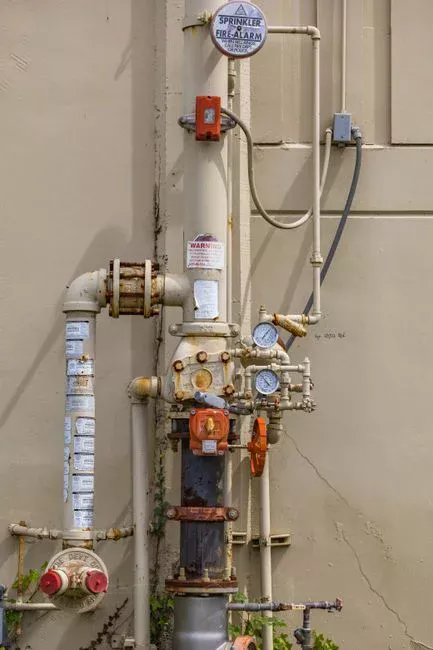
The equipment investment only translates into defensible compliance if the documentation chain holds up at the designated sampling point. Under 40 CFR Part 403, the sampling point is the representative location in the wastestream where the Control Authority (TMWRF or the authorized Nevada NDEP POTW) collects samples to determine compliance — for most categorical industrial users, that point is downstream of all in-plant treatment but upstream of any recycle or zero-discharge return, so the sample represents what actually leaves the site.
Categorical industrial users typically submit 24-hour flow-proportional composite samples on a frequency set by the permit, commonly twice per year to quarterly for routine parameters and monthly during permit-renewal monitoring windows; priority pollutant scans are usually annual — confirm against the binding permit, which overrides any general guidance. Online TSS, pH, and conductivity probes tied to the plant SCADA give continuous trend visibility and reduce the chance a single bad shift shows up unannounced in a quarterly composite. For priority pollutant scans, use a third-party lab holding state and NELAP accreditation, document the chain of custody on every sample, and retain raw data for the full period required by the permit. The DMR, the lab certificate, the calibration logs, and the maintenance records together are what an inspector reaches for first.
2026 Cost Reality: CAPEX, OPEX, and the Reuse Payoff
Pretreatment capital is most usefully framed as U.S. dollars per cubic meter of treated flow, because that is the number a procurement or plant manager can compare against an operating budget. The membrane-based train (MBR + UF) typically runs 20–40% higher in CAPEX than a conventional activated sludge + multi-media train, but 15–25% lower in annual OPEX because of lower sludge yield, tighter effluent, and reduced chemical consumption. Where the local utility (TMWRF or Truckee Meadows Water Authority) accepts reclaimed water for cooling-tower make-up or process rinse reuse, the reuse offset can drop effective water cost by 50–80% relative to fresh purchase — and on a typical 50 m³/h plant, that reuse credit is what brings the membrane upgrade into a 2–4 year payback window. The table below gives the 2026 CAPEX and OPEX bands an engineer should be quoting internally before going to bid; site-specific values depend on influent characterization, local power cost, and the binding permit.
| Equipment Train | CAPEX Band (USD per m³/h treated) | OPEX Band (USD per m³ treated) |
|---|---|---|
| DAF + activated sludge + multi-media | Baseline | Baseline |
| DAF + MBR + UF + GAC/IX (PFAS-ready) | +20–40% | −15–25% |
| Reuse credit (50 m³/h plant) | — | −50–80% on purchased water |
| Payback window (membrane upgrade with reuse) | — | 2–4 years |
Lamella clarifier retrofits are a common lower-CAPEX alternative for facilities that need to drop TSS but are not ready to commit to a full MBR build; the comparison framework in this 2026 packaged MBR selection guide walks through the sizing tradeoffs in a comparable reuse-driven context. The 2026 enforcement trend to budget for: EPA and state PFAS action levels for PFOA, PFOS, and HFPO-DA are tightening, and fluoropolymer processors are the most exposed. Allocate for monitoring and a contingency GAC changeout in the 2026–2027 OPEX line, and weigh the option of performance-based wastewater O&M contracts to keep the documentation chain tight without adding headcount.
Frequently Asked Questions
What federal regulations apply to a plastics or rubber plant near Reno, NV discharging to the sewer?
Plastics, resin, and synthetic resin manufacturers follow 40 CFR Part 414, which sets subcategory-specific categorical pretreatment standards for contact cooling, emulsion processes, and resin finishing. Rubber manufacturers follow 40 CFR Part 463, which sets limits for the tire, latex, and general rubber products subcategories. Both sit underneath the general framework of 40 CFR Part 403, and the local Control Authority's permit is the binding document because the most stringent applicable limit always controls (per EPA's National Pretreatment Program overview, retrieved 2026-02).
Which Control Authority handles a plastics or rubber discharge in the Reno–Sparks area?
For a plastics or rubber plant in the Reno–Sparks industrial corridor, the receiving Control Authority is most often the Truckee Meadows Water Reclamation Facility (TMWRF) or an adjacent Nevada NDEP-authorized POTW such as the City of Sparks. The Control Authority issues the individual permit, sets site-specific limits, conducts compliance sampling at the designated sampling point, and can escalate from a warning letter to administrative orders, civil penalties, and ultimately permit suspension or termination under 40 CFR Part 403.
What is the standard 2026 equipment train for a polymer-bearing discharge?
The standard train is DAF first (50–80% TSS, 60–90% O&G removal) to break emulsions and lift oil and grease, followed by equalization, then biological treatment — activated sludge for conventional flows (BOD removal 85–95%) or MBR for tighter effluent or smaller footprints (BOD 95–98%, TSS 95–99%) — and a polishing step such as multi-media filtration, UF, or GAC for residual TSS, color, and priority organics. A 1.2–1.5× design safety factor on hydraulic and load basis is standard practice in the Reno basin.
Are PFAS limits part of the 2026 Nevada permit renewal for plastics and rubber plants?
There is no federal categorical PFAS limit under 40 CFR Part 414 or 463 as of 2026, but state-level PFAS and 1,4-dioxane action levels are tightening rapidly in 2025–2026. PFOA/PFOS action levels in leading states are in the 4–10 ng/L range, and NDEP is writing PFAS and 1,4-dioxane monitoring into 2025–2026 Nevada renewal drafts — particularly for facilities that process fluoropolymers or use PFAS-treated feedstocks. The typical control train is GAC followed by ion exchange, with RO reserved for the tightest 1,4-dioxane targets, sized at 1.5× calculated bed-life.