
Why a Pfizer Hungary acquisition is a permit event, not just a closing event
The IPPC-style operating permit is issued to a named operator under Hungarian Government Decree 314/2005 (XI. 25.) on environmental impact assessment and the integrated (egyesített) environmental permitting procedure, rather than to a legal entity in the abstract. A share deal — the most common structure for a Pfizer Hungary acquisition — does not automatically transfer that permit. The new operator must file a "change of operator" (üzemeltető-váltás) notification with the competent county government office (megyei kormányhivatal) and, depending on the materiality of the change, apply for a permit modification or full re-issuance. An asset deal, by contrast, terminates the old permit and forces a fresh application on the new entity's track record.
The parent instrument is the EU Industrial Emissions Directive 2010/75/EU, transposed into Hungarian law principally through Act CLXXXV of 2012 on waste and Act LIII of 1995 on the general rules of environmental protection. Once Pfizer's Hungarian subsidiary is registered as operator, the site's discharge consent, air permit, and waste-handling licence all align against the Directive's BAT-AEL ceiling. The competent authority's expectation is a 30-day notification window post-closing; deal teams should confirm the exact clock with the relevant megyei kormányhivatal (Baranya, Fejér, or Pest depending on site location) before signing. A late or incomplete filing is treated as operating without a valid permit, which under Hungarian law carries suspension risk and per-day administrative fines.
These regulatory requirements establish a parallel clock that must be managed alongside the M&A transaction timeline. Legal, EHS, and integration PMO leads need a single owner for that 30-day window, starting on day one of signing.
The compliance stack: EU IED, Hungarian IPPC, and the CWW/CAK BREF ceiling
Hungarian permit numbers originate in Brussels and are refined through three layers before they bind a discharge.
Layer 1 — EU IED 2010/75/EU and the BREF ceiling. The Directive forces application of BAT conclusions drawn from the Common Waste Water and Waste Gas Treatment/Management Systems in the Chemical Sector BREF (CAK) and the Common Waste Water BREF (CWW). The CWW BREF entered its 2024 update cycle; conclusions are being transposed into Hungarian competent-authority practice, with tighter COD, TSS, and AOX ceilings applied from 2025 onward (verify transposition date with the authority at writing).
Layer 2 — Hungarian implementing acts. Act CLXXXV of 2012 governs waste; Government Decree 220/2004 (VII. 21.) sets surface-water quality and industrial emission limit values (ELV) for direct and indirect dischargers. The National Energy and Climate Plan (NEKT) commitments for 2024–2030 add a water-reuse and circular-economy overlay that increasingly appears in permit conditions for large industrial sites.
Layer 3 — Site-specific permit. The integrated permit crystallises the BAT-AEL ranges into binding ELVs, sets monitoring frequency (typically 24-h composite sampling, monthly or quarterly self-monitoring reports), and ties the operator to a five-year permit review cycle. For sites discharging to the Danube or Tisza catchments, additional river-basin-specific limits under the Water Framework Directive 2000/60/EC can sit on top of the ELVs and push the binding number lower than the BAT-AEL range alone would suggest. A 2024 update to the CWW BREF also brought an emerging-contaminants watchlist — PFAS, certain antibiotics, and specific API residues — into the scope of what authorities expect to see in a baseline monitoring campaign.
The legal hierarchy is therefore: IED → BREF BAT-AEL → Hungarian decree → site permit → discharge consent. Each layer can tighten; none can loosen without a formal derogation.
Pharma wastewater benchmarks a Hungarian site will be measured against
Discharge consents are drafted against specific numeric limits that serve as the engineering target.
| Parameter | CWW BREF BAT-AEL range | Typical Hungarian Decree 220/2004 surface-water ELV | Pharma site-specific risk |
|---|---|---|---|
| COD | 20–160 mg/L | 75–150 mg/L | High — multi-product API streams drive spikes |
| TSS | 5–60 mg/L | ~50 mg/L | Moderate — biological floc carryover |
| AOX | 0.5–8 mg/L | 0.5–8 mg/L (sector-specific) | High — frequent deal-breaker in DD |
| Total nitrogen | 5–60 mg/L | 20–60 mg/L | Moderate — fermentation residues |
| Total phosphorus | 0.5–10 mg/L | 2–10 mg/L | Low to moderate |
| Heavy metals (Cu, Zn, Ni, Hg) | Trace-level, BREF-specific | Site-specific | Variable — catalyst residues |
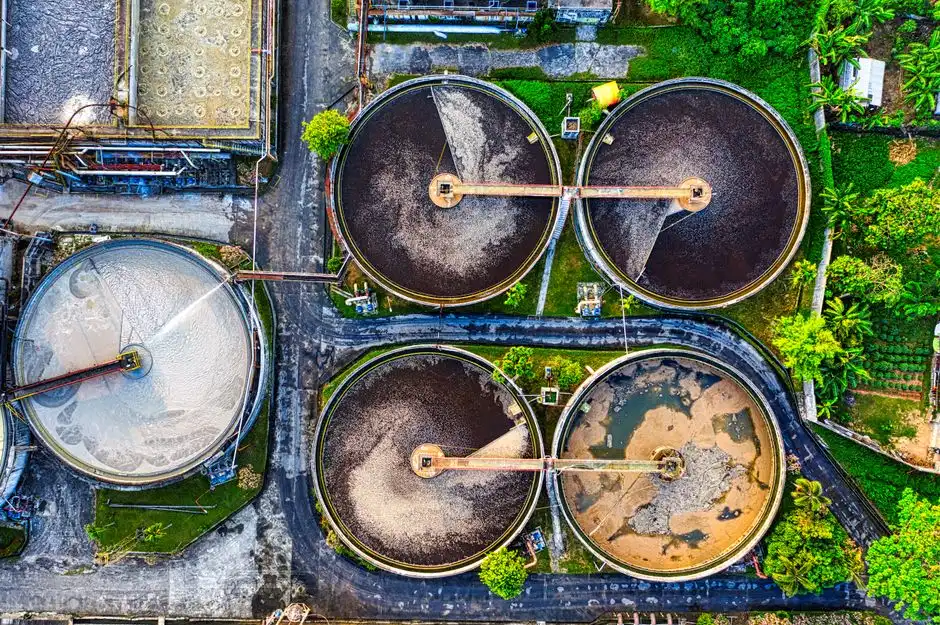
Pharma site-characteristic wastewater is dominated by API residues, high-strength fermentation broth carryover, solvent traces, and elevated temperature. Equalisation is mandatory; without 24–48 hours of flow and pH dampening, downstream biological stages lose removal efficiency.
The AOX parameter requires dedicated attention. Adsorbable organically bound halogens sit in a 0.5–8 mg/L BAT-AEL band, but legacy Hungarian sites built before BAT-AEL tightening frequently run above 8 mg/L without a dedicated AOX stripper or activated-carbon polish step. In due-diligence terms, AOX is the most common reason a pharma plant flags as a compliance risk on day one, and it drives most of the capex variance in a Hungarian brownfield acquisition. Typical Hungarian municipal POTW discharge consent baselines sit at COD 1,000–1,500 mg/L at the inlet, so a pharma site usually pre-treats to below 500 mg/L COD before municipal acceptance — but a direct-discharge site to surface water must hit the BAT-AEL band directly.
Standard treatment train for a Hungarian pharma site after acquisition
Compliance numbers translate into a conventional pharma treatment train that focuses on robustness for variable multi-product loading and polishing for AOX.
Stage 1 — Equalisation and neutralisation. Flow and pH dampening over 24–48 h HRT protects downstream processes and allows for the skimming of oils and floatables.
Stage 2 — DAF pre-treatment. DAF pre-treatment removes suspended solids, oil and grease, and API precipitates before they overload the biological stage. Typical HydropureWater DAF units run 4–300 m³/h with micro-bubble generation and automatic skimming, sized to handle peak-shift flows characteristic of a multi-product pharma campaign.
Stage 3 — Biological stage. Either conventional activated sludge (CAS) or an MBR membrane bioreactor system. MBR delivers sub-micron filtration on the same footprint and tolerates the variable load a Hungarian brownfield will experience as the product mix shifts post-acquisition. For sites targeting direct discharge to surface water under tight BAT-AEL ceilings, MBR is the BAT-compliant default.
Stage 4 — Polishing. Ozonation or UV for trace organics, with chlorination/dechlorination for microbiological control. The AOX stage is the key decision point: a dedicated AOX stripper, granular activated carbon, or an advanced oxidation process. Sites near sensitive receiving waters may also need a tertiary nutrient-removal step.
Stage 5 — Sludge handling. Plate-and-frame filter press dewatering to 25–35% DS, with off-site incineration as the common Hungarian route. Hazardous-waste classification must be confirmed under Act CLXXXV of 2012 waste codes.
BAT-compliant design is moving toward MBR plus RO, or MBR plus ozone, for sites targeting water reuse to align with NEKT targets and the emerging-contaminants watchlist in the 2024 CWW BREF update. This architecture mirrors the Novo Nordisk Hillerød 50% water-cut pilot.
The 90-day post-close action sequence
A steering committee can adopt this calendar to convert legal exposure into a scoped treatment-train capex before the integration PMO locks its first budget cycle.
| Window | Action | Owner | Output |
|---|---|---|---|
| Days 0–30 | File operator-change notification with the megyei kormányhivatal; engage Hungarian environmental counsel; lock the existing monitoring data and the legacy permit file | Legal / EHS | Valid permit continuity; baseline data preserved |
| Days 30–60 | Baseline monitoring campaign: 24-h composite sampling, 7-day rolling, all CWW BREF parameters including AOX, total nitrogen, and the 2024 CWW watchlist (PFAS, antibiotics, API residues) | EHS / process engineering | Verified actual discharge vs permitted numbers |
| Days 60–90 | Gap analysis vs BAT-AEL; treatment-train scope and capex envelope; engagement with vendor for DAF / MBR sizing | EHS / process engineering / PMO | Capex submission to integration PMO; permit-modification scoping note |
Days 30–60 represent the highest-leverage window for the project team. Legacy permitted numbers are often optimistic relative to actual discharge on a multi-product pharma site; the baseline campaign reveals whether the integration team faces a permit-tightening exercise or a full treatment-train retrofit. AOX, total nitrogen, and PFAS are the three parameters that most often move the requirement from "minor upgrade" to "full retrofit" — and they should be reported to the deal team before capex is signed off. For sites targeting water reuse, the same baseline feeds the reuse feasibility case and aligns the engineering scope with NEKT-aligned circular-economy targets documented in the pharmaceutical wastewater treatment guide.
Frequently Asked Questions
Is the existing Hungarian environmental permit automatically valid after a share deal?
No. Under Government Decree 314/2005, the IPPC-style integrated permit is issued to a named operator. A share deal requires a "change of operator" filing with the megyei kormányhivatal; an asset deal requires a fresh application. The existing permit typically remains valid during a 30-day post-closing window provided the notification is in place, but the new operator should treat the modification as urgent.
What is the binding effluent limit for COD at a typical Hungarian pharma site in 2026?
Limits are site-specific, but the BAT-AEL ceiling under the CWW BREF sits at 20–160 mg/L. The 2024 CWW update is tightening pressure on the upper end, and Hungarian Decree 220/2004 surface-water ELVs typically run 75–150 mg/L for industrial direct dischargers. The binding number is written into the site permit, which must be requested from the operator's records and verified at writing.
How long does permit re-issuance take in Hungary?
Re-issuance typically takes 60–180 days from filing, depending on whether the competent authority triggers an EIA screening under Government Decree 314/2005. Material changes in production volume, product mix, or discharge composition can push the timeline toward the longer end.
Does Pfizer need a new environmental impact assessment (EIA) for the acquisition?
The transaction itself is not a "project" under the EIA Directive. However, the competent authority can require a screening review of the integrated permit as part of the operator-change process, particularly if the new owner's product mix, capacity, or management system