Why Ozone Generator Maintenance Prevents System Failure
Ozone generator maintenance keeps corona discharge output within design dose, limits dielectric damage, and prevents purity loss in industrial and municipal water treatment. Uncleaned corona cells can cut ozone production efficiency by up to 30% within one year. Contaminant films also raise nitrogen byproducts and can push product-gas purity below the >90% threshold used in medical and municipal duty.
Field audits attribute roughly 68% of industrial ozone system failures to skipped filter and diffuser service rather than sudden electrical faults. Dirty cells overheat as residue creates hot spots on glass or ceramic dielectrics, raising specific energy use and shortening cell life. When ozone mass flow falls, contact CT drops and residual pathogen risk rises, which is the compliance failure plant managers actually face.According to the US EPA Alternative Disinfectants and Oxidants Guidance Manual, generators should be checked daily when in operation, and dielectric tubes should be cleaned when generator efficiency drops 10–15%. Earlier vendor guidance often used a fixed annual cell clean; the EPA criterion adds an output-based trigger plants can log against baseline grams-per-hour readings. The capital cost of a proactive schedule remains small next to emergency cell replacement, lost production, and regulatory exposure.
How Does an Ozone Generator Treat Water?
An ozone generator for water treatment splits oxygen in a high-voltage corona gap, dissolves O3 into water, and oxidizes organics, metals, and pathogens in a contact tank or sidestream injector. Feed gas is dried air or high-purity oxygen. Dry gas crosses a dielectric gap of roughly 0.3–3 mm while cooling water or air removes heat. Product gas then feeds diffusers or venturi injectors so mass transfer can meet the design CT.
Working principle details drive the maintenance list. Moisture in feed gas forms nitric acid on dielectrics, cuts output, and etches surfaces. Check valves stop water backflow into the generator; a failed valve can flood the cell in minutes. Plants that skip air-prep filter and desiccant service see the failure pattern EPA described for air-fed systems: rising dew point, falling ozone yield, then dielectric damage.
Transfer hardware fails as often as the generator cabinet. Fouled diffusers or weak injectors waste whatever ozone the cell still makes. For tank and loop sterilization packages, an Ozone Generator & Water Tank Sterilization System still depends on dry feed gas, intact check valves, and clean transfer points, not on nameplate grams-per-hour alone.
Which Ozone Generator Specifications Affect Maintenance?
Ozone generator specifications that drive service intervals include feed-gas type, rated g/h output, cooling method, and whether drying uses desiccant, refrigerant, or a UV lamp assembly. Air-fed units need tighter filter and dryer attention than oxygen-fed skids. Medium-frequency oxygen-fed machines often run higher product-gas concentration, so gasket and seal integrity becomes the purity control point. UV-assisted air dryers need lamp replacement on a calendar basis even when the lamp still lights.
Large-volume water treatment trains also add diffuser count, contact volume, and residual analyzer range to the maintenance list. Spec sheets that omit dew-point targets or spare dielectric counts leave operators guessing during the first alarm event. Record baseline ozone concentration, feed pressure, and cooling temperature at commissioning so later alarms have a numeric reference instead of a guess.
Master Maintenance Schedule for Industrial Ozone Systems
A unified, time-based maintenance schedule makes output and spare parts predictable across shifts. Align filter, valve, cell, lamp, and diffuser tasks on one calendar, then tighten intervals when inlet air is dirty or water mineral load is high. The first two weeks after startup set the real filter loading rate; that measured loading is more useful than a generic OEM table alone.
At six months, pressure-test check valves and inspect air intake filters. Replace filters when differential pressure exceeds 5 psi, and replace valves that weep or stick. Annual corona discharge cell cleaning or replacement remains the main efficiency reset for most industrial corona units. Keep a spare dielectric set on site if lead times exceed a few days.
UV lamp assemblies in air-prep trains should be replaced every 18–24 months even if they still illuminate, because ozone-producing UV output falls while visible light remains. Triple-O service data show output near 80% of new after 12 months on UV systems, then 50–65% at 18 months, which is why calendar replacement beats “lamp still glowing” logic. Quarterly diffuser inspection closes the delivery loop before backpressure trips the compressor.
OEM manuals remain the first authority for torque, gasket part numbers, and solvent limits. A planned $500 service visit often prevents a $5,000 repair plus multi-day downtime on a production line. High dissolved solids or high ambient humidity both shorten the intervals in the table below; treat the table as the starting control plan, not a fixed lifetime warranty.
| Frequency | Task | Component(s) | Notes/Criteria |
|---|---|---|---|
| Week 1–2 (Post-Startup) | First Filter Cleaning & Interval Assessment | Pre-treatment Filter | Assess loading to establish future cleaning intervals (per RevolutionOzone & Triple-O guidelines). This initial assessment is crucial for determining the optimal replacement or cleaning schedule for subsequent periods. |
| Month 6 | Inspect and Test | Check Valves, Air Intake Filters | Replace if pressure drop exceeds 5 psi. Verify proper sealing and no signs of wear or degradation. |
| Year 1 (Annually) | Clean or Replace | Corona Discharge Cell | Essential for maintaining efficiency (per Ozotech). Look for signs of scaling, discoloration, or micro-cracks. |
| Every 18–24 Months | Replace | UV Lamp Assembly | Output degrades beyond 24 months, even if functional (per Triple-O). Consider replacement if ozone output has noticeably decreased. |
| Quarterly | Inspect and Clean | Ozone Diffuser | Clean with 10% citric acid soak if bubble size increases >2 mm or pressure increases by 10%. Ensure even bubble distribution and no signs of blockage. |
How to Clean the Corona Discharge Cell Properly
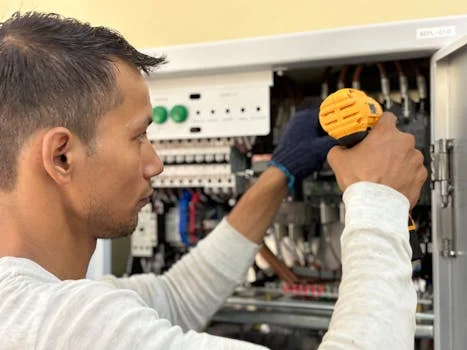
Corona discharge cell cleaning starts with a locked-out generator and disconnected gas lines. Wipe dielectrics with a lint-free cloth dampened with isopropyl alcohol. Never submerge the cell or use abrasives; both destroy the discharge surface. Inspect for micro-cracks during every service.
Hairline fractures alone can cut efficiency 15–20% and usually mean replacement, not another wipe-down. Reassemble only with OEM gaskets. Poor seals leak oxygen, form NOx, and degrade purity in oxidation and disinfection duty. If light mineral scale remains, a dilute acetic acid wipe followed by distilled water and isopropyl alcohol is sometimes acceptable, but only when the OEM allows that chemistry on the dielectric material.
Let alcohol evaporate fully before restart so moisture does not enter the gap. EPA guidance treats dielectric cleaning as a delicate, skilled task because tubes are fragile and costly, and it ties cleaning to a measured 10–15% efficiency drop rather than cosmetics alone. Annual cleaning still works as a calendar backstop when plants lack continuous output metering.
For high-purity medical loops, a compact ozone disinfection system for medical facilities needs the same cell discipline, because trace NOx and under-dose events show up in validation samples. Borescope checks help when the OEM design allows internal viewing. Shorten the cleaning interval when feed-gas quality is poor or grams-per-hour trend down without other explanations. Cell replacement cost is often a large share of generator value, so careful handling during each service protects both output and capital.
Filter and Diffuser Maintenance: Avoid Flow Blockages
Clogged filters and diffusers cause more industrial ozone downtime than power electronics. Hose filter pleats top to bottom with clean water only. Do not scrub and do not use detergents, matching Triple-O and RevolutionOzone service practice. Pleat staining is normal and does not justify bleaching or aggressive cleaning agents.
Set the interval from measured loading. Clean at 10–14 days after startup, again near day 30, then extend to 60 and 90 days only if pleats stay less than half filled. Never exceed 90 days between cleanings. That stepped schedule matches Triple-O maintenance guidance and prevents both over-cleaning and plugged intakes.
For diffusers, bubble diameters above 1–2 mm or a 10% rise in operating pressure usually mean a soak in 10% citric acid for about 2 hours, then a full rinse. Smaller, uniform bubbles keep mass transfer high; blocked pores force large bubbles and compressor strain. Stubborn mineral scale may need a second soak, but stay inside OEM concentration limits.
Upstream solids control lengthens every interval downstream. A dedicated pre-treatment filter to protect ozone systems from particulates removes grit and iron floc before fine generator filters see them. Iron-rich or high-hardness sources load media faster, so trending differential pressure after each clean tells you when media, not just rinsing, is due. Biofilm-prone wastewater contactors may need disinfection steps beyond citric soaks; confirm chemistry with the diffuser OEM first.
Troubleshooting Low Ozone Output and System Alarms
Low ozone output alarms need a fixed diagnostic order, starting with power, feed-gas flow, and the last maintenance dates. Confirm the corona cell cleaning date and UV lamp age before ordering boards or transformers. A cell overdue for annual service, or a UV lamp past 18 months, explains many dose shortfalls that look like control faults.
High filter differential points to overloaded pleats; clean immediately and review pre-treatment if loading returns within days. Uneven diffuser bubbles point to pore blockage or manifold imbalance. Citric soaking usually restores pattern; persistent dead zones mean replacement. Room ozone odor is a leak event: shut down, ventilate, and inspect seals, fittings, and Norprene hose for cracks before restart.
Ambient humidity and heat can also depress air-cooled cell output, so log room conditions with each alarm. Compare live analyzer readings to commissioning baselines at the generator outlet and after contact. Self-diagnostic codes help on newer skids, but only if sensors stay calibrated. Root-cause work matters more than clearing the alarm: a filter that plugs every two weeks is a water-quality or pre-treatment problem, not a generator defect.
| Symptom | Likely Cause | Action / Fix |
|---|---|---|
| Low Ozone Concentration | Dirty Corona Cell or Aged UV Lamp | Clean corona discharge cell annually. Replace UV lamp every 18–24 months. Consider checking feed gas purity. |
| High Pressure Drop Across Filter | Overloaded Filter Pleats | Clean filter immediately. Reassess and potentially shorten cleaning interval based on loading. Inspect pre-filtration. |
| Uneven Bubble Distribution from Diffuser | Diffuser Clogging / Biofilm Accumulation | Soak diffuser in 10% citric acid solution. Inspect for and remove biofilm. Consider diffuser replacement if persistent. |
| Noticeable Ozone Smell in Room | Gas Leak at Seal or Hose Connection | Thoroughly inspect all connections and hoses. Replace Norprene hose if any cracks or degradation are visible. Ensure proper gasket seating during reassembly. |
| System Alarm: Low Ozone Output | Combination of above issues, or air intake blockage. | Systematically check corona cell, UV lamp, filter, and diffuser. Ensure air intake is clear and unobstructed. Verify feed gas supply pressure and flow. |
What Drives Industrial Ozone Generator Cost?
Industrial ozone generator water treatment cost is driven by feed-gas choice, spare dielectric inventory, dryer service, and downtime risk more than by the sticker price of the cabinet. Oxygen-fed systems cut specific energy but add LOX or PSA upkeep. Air-fed systems look cheaper until wet feed gas destroys cells. Labor for skilled cell cleaning, gasket kits, and calibrated residual meters belongs in the annual OPEX model from day one.
Selection checklist before you lock a maintenance contract or spare-parts buy:
- Feed gas: dry air, PSA oxygen, or LOX, with a stated dew-point target.
- Cooling: air or water, plus maximum inlet cooling temperature.
- Output metering: continuous g/h or concentration at generator outlet.
- Spare dielectrics, OEM gaskets, and check valves on the shelf.
- Diffuser material rated for ozone and local hardness or fouling.
- Documented daily checks plus annual cell service in the CMMS.
- Pre-treatment capacity matched to solids and iron load.
Daily Operating Checks That Catch Failures Early
Daily operating checks catch most ozone failures before a residual alarm trips the process train. Record feed-gas pressure, generator power draw, cooling temperature, and outlet ozone concentration on every production day. Compare each reading to the commissioning band, not to memory from the prior shift.
Purge with dry feed gas after any shutdown before re-energizing electrodes, especially on air-fed skids. EPA notes that post-shutdown drying can take up to 12 hours after long downtime, and longer when air is the feed gas. A small standby dry-gas flow keeps dielectrics ready without a full cold start delay.
Walk the generator room for ozone odor, oil mist from compressors, and blocked cabinet intake screens. Most plants we support find cabinet filter mats and intake screens neglected long before the corona cell is due for cleaning. Replace foam mats when dust loading raises internal temperature or fan current.
Keep one calibrated handheld ozone meter for leak surveys around flanges and hose barbs. Potassium iodide solution checks remain useful on metal joints when electronic sensors are offline. Log every leak find with the gasket or hose lot replaced so repeat failures are visible in the CMMS history.
Feed-Gas Dryness and Cooling Limits
Feed-gas dryness sets dielectric life as much as cleaning frequency does. Keep dew point at or below the OEM limit for long dielectric life, while wetter gas raises nitric acid formation and cleaning demand. Change desiccant and air-prep filters on hours-run, not only on calendar days.
Cooling water or air must stay inside the nameplate temperature band during peak summer load. High coolant temperature lowers ozone yield and can look like a dirty cell on the residual chart. Verify cooler approach temperature before opening the generator cabinet. Compressors and LOX tanks need their own service intervals so the generator is not blamed for upstream faults. After any long shutdown, purge dry gas through the cell before applying high voltage, and hold that purge until dew-point readings stabilize inside the OEM band.
Document coolant inlet temperature, dew point, and outlet ozone together on one sheet. That trio separates a true cell-fouling problem from a hot cooler or wet dryer in under one shift.
Who This Is For / Next Step
This protocol fits plant engineers and EPC teams running industrial or municipal ozone for disinfection, reuse, or process water oxidation. Operators who only need a small spa or pool ozonator without a residual CT target should use a lighter residential schedule instead. If you are sizing or refitting an Ozone Generator & Water Tank Sterilization System and need interval review against your water quality, send operating data through our request-quote form for a maintenance-focused equipment check.
Frequently Asked Questions
How often should you clean an ozone generator filter?
Clean first at 10–14 days after startup, then every 30–90 days based on pleat loading, and never exceed 90 days. Triple-O service guidance uses that stepped interval so operators extend cleaning only when pleats stay less than half filled. High solids or iron shortens the cycle. Log differential pressure after each clean to prove the interval still fits the source water.
When should you replace the UV lamp in an ozone generator?
Replace the UV lamp assembly every 18–24 months even if the lamp still lights. Triple-O data show ozone output falling to about 80% of new at 12 months, 50–65% at 18 months, and 25–40% at 2 years as the lamp glass solarizes. Visible glow is not proof of ozone-producing UV output. Schedule replacement on calendar hours, not on the indicator window alone.
Can you use chemicals to clean ozone system filters?
No. Hose filters with water only; do not scrub or apply detergents. RevolutionOzone and Triple-O both warn that cleaning agents leave residues that can affect generation or contaminate treated water. Stained pleats are normal after service. If pressure drop stays high after a proper rinse, replace the element instead of washing harder.
What causes low ozone output in water treatment systems?
The most common causes are a dirty corona discharge cell, an aged UV lamp, a clogged diffuser, or a blocked air intake. Low feed-gas pressure and high moisture content produce the same symptom on residual meters. Walk the troubleshooting matrix in order and compare outlet concentration to the commissioning baseline. Fix the root loading or leak issue so the alarm does not return on the next shift.
Is ozone generator maintenance required for medical wastewater systems?
Yes. Medical and clinic wastewater ozone loops need high purity and tight dose control, so use the 90-day maximum filter interval and annual cell inspection at minimum. Pair that schedule with the 12-step O&M protocol for clinic-scale ozone systems. For non-ozone oxidant trains, see industrial O&M protocols for alternative disinfection systems. Keep ozone sensor calibration current so reported dose matches the true residual.