What Is a Water Purification System in Industrial Context?
Industrial water treatment systems operate at scales ranging from 10 to 2,000 m³/day, whereas residential systems typically process less than 1 m³/day. In an industrial facility, a water purification system is not a simple point-of-use filter but a comprehensive engineering solution designed to meet specific process water requirements or stringent environmental discharge permits. While consumer-grade filters focus on aesthetics like taste and odor, industrial purification targets high-load contaminants including Total Suspended Solids (TSS), Chemical Oxygen Demand (COD), and heavy metals (HydropureWater field data, 2025).
Unlike standard water softeners that exclusively utilize ion-exchange resins to remove Calcium (Ca²⁺) and Magnesium (Mg²⁺), industrial purification involves multi-stage physical and chemical barriers. These systems often integrate coagulation, flocculation, sedimentation, and high-precision filtration into a single automated workflow. In sectors such as pharmaceuticals, electronics, and food processing, the purification process must ensure compliance with international standards including EPA guidelines, EU 98/83/EC, and WHO drinking water quality benchmarks. Modern installations are increasingly governed by ISO 14001 environmental management protocols, requiring precise tracking of energy consumption and chemical usage per cubic meter of treated water.
The core objective of these systems is to convert raw influent—whether from municipal sources, surface water, or recycled process streams—into a predictable, high-purity output. This involves the removal of dissolved solids, pathogenic microorganisms, and colloidal matter that would otherwise cause scaling, corrosion, or biofouling in downstream industrial equipment. A water purification system vs alternatives like simple mechanical filtration offers a significantly higher level of protection for sensitive infrastructure, such as high-pressure boilers and cooling towers.
How Industrial Water Purification Systems Work
The industrial water purification process involves several key steps to ensure high-purity output.Integrated purification units consolidate coagulation, flocculation, sedimentation, and filtration to reduce influent turbidity from 3,000 mg/L to less than 3 mg/L in a single pass. The compact all-in-one water purification unit for surface water (JY Series) utilizes hydraulic energy to facilitate the mixing of chemicals, creating dense "flocs" that settle rapidly. This gravity-driven sedimentation phase removes the bulk of suspended solids before the water passes through a multi-media filter bed, typically composed of anthracite and quartz sand, to achieve final clarity.
For applications requiring the removal of dissolved ions and molecular-level contaminants, industrial Reverse Osmosis (RO) systems are the industry standard. A high-recovery RO system for ultra-pure process water utilizes high-pressure pumps to force water through semi-permeable membranes with pore sizes as small as 0.0001 μm. This physical barrier rejects 95–99% of Total Dissolved Solids (TDS), including salts and organic molecules, making it indispensable for semiconductor manufacturing and pharmaceutical compounding where water conductivity must remain near zero.
In wastewater-to-reuse scenarios, Membrane Bioreactors (MBR) represent the peak of biological purification. By combining aerobic digestion with 0.1 μm PVDF membrane filtration, MBR systems eliminate the need for secondary clarifiers while producing effluent that is virtually free of bacteria and viruses. To ensure complete biological safety, these systems are often paired with Chlorine Dioxide (ClO₂) generators. According to EPA standards, ClO₂ achieves a 99%+ microbial kill rate even in the presence of high organic loads, providing a more stable residual disinfectant than traditional liquid bleach. For more on maintaining these complex systems, see our industrial RO system maintenance best practices.
Comparison: Water Purification vs DAF Systems
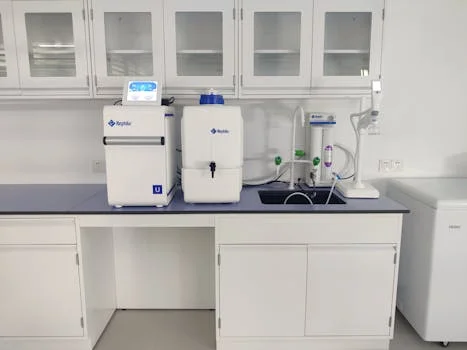
Dissolved Air Flotation (DAF) achieves 90–95% removal of fats, oils, and grease (FOG) by leveraging micro-bubbles to float light particulates, a mechanism physical filtration systems cannot replicate without frequent membrane fouling. While a standard water purification system excels at removing heavy minerals and dissolved ions, it often struggles with the high-buoyancy contaminants found in food processing, slaughterhouse, and petrochemical effluents. The dissolved air flotation (DAF) machine operates at flow rates of 4–300 m³/h, making it a high-capacity alternative for pre-treating industrial wastewater before it enters a secondary purification stage.
The fundamental difference lies in the particle separation method: DAF uses air-assisted flotation for low-density solids, while purification systems typically use sedimentation and filtration for high-density solids. In many industrial sites, these technologies are used in series. A DAF unit removes the bulk of oils and grease to prevent the clogging of downstream sand filters or RO membranes. However, DAF alone cannot reduce TDS or achieve the ultra-low turbidity required for boiler feed water. Procurement managers must evaluate the specific gravity of their contaminants; if the waste stream contains emulsified oils or light fibrous material, a DAF system is the superior primary treatment choice.
| Parameter | Industrial Purification (JY/RO) | DAF Systems |
|---|---|---|
| Primary Target | TSS, TDS, Bacteria, Turbidity | FOG, Oil, Light Suspended Solids |
| TSS Removal Efficiency | 99% (down to <1 mg/L) | 85–95% (down to 30–50 mg/L) |
| FOG Removal | Low (requires pre-treatment) | 90–98% |
| Energy Consumption | High (especially RO) | Moderate (Air saturation energy) |
| Effluent Quality | Potable or Process Grade | Discharge Grade (Pre-treatment) |
Purification vs MBR Membrane Bioreactors
MBR systems provide a high level of purification, making them suitable for specific industrial applications.Membrane Bioreactors (MBR) provide an absolute barrier to particles larger than 0.1 μm, resulting in an effluent footprint 60% smaller than conventional clarification-based purification systems. While traditional purification relies on chemical settling tanks that require significant land area, an MBR integrated wastewater treatment system replaces the secondary clarifier with a membrane module submerged directly in the biological tank. This setup allows for a much higher Mixed Liquor Suspended Solids (MLSS) concentration, which significantly increases the organic loading rate the system can handle.
The choice between conventional purification and MBR often comes down to the desired end-use of the water. If the goal is simple discharge to a municipal sewer, a conventional JY-series purification unit is often more cost-effective due to lower membrane replacement costs. However, if the facility aims for "Zero Liquid Discharge" (ZLD) or internal water reuse for irrigation or cooling towers, MBR is the preferred alternative. MBR effluent consistently shows turbidity levels below 0.2 NTU, meeting the strictest reuse standards globally. Advanced MBR DF Series systems have been engineered to use 10–20× less energy than older cross-flow membrane designs, narrowing the operational cost gap between biological purification and physical-chemical alternatives. For a deeper dive into these options, consult our data-backed comparison of compact treatment technologies.
| Feature | Conventional Purification | MBR Systems |
|---|---|---|
| Footprint Requirement | 100% (Baseline) | 40% (Highly Compact) |
| Filtration Precision | 5–10 μm (Sand/Multi-media) | 0.03–0.1 μm (Membrane) |
| Sludge Production | High (due to chemical flocs) | Low (extended sludge age) |
| Automation Level | Moderate | Full PLC Control Required |
| Initial CapEx | Lower | Higher |
When to Use Chemical Dosing Instead of Physical Purification
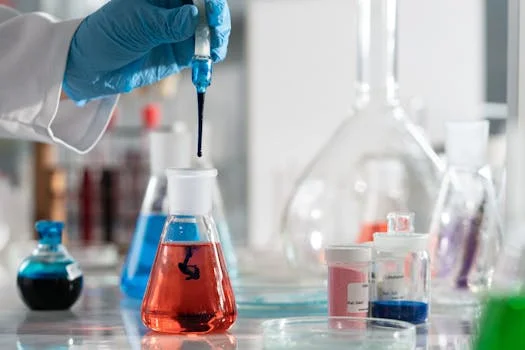
Automated chemical dosing systems maintain effluent pH within ±0.2 units and achieve 95% accuracy in coagulant delivery, serving as a critical precursor to physical separation phases. In certain low-volume industrial applications, chemical dosing might be proposed as a standalone alternative to a full purification plant. For example, if the only requirement is to neutralize acidic wastewater or to precipitate specific heavy metals before discharge, an automatic chemical dosing system can achieve compliance without the need for complex RO or MBR infrastructure.
However, chemical dosing alone cannot remove TSS or pathogens; it merely changes the state of the contaminants (e.g., from dissolved to particulate). Without a subsequent physical separation stage like a filter press or a sedimentation tank, the "treated" water still contains all the original mass of the contaminants. In modern industrial procurement, dosing is viewed as an optimization tool rather than a replacement. By precisely dosing Polyaluminum Chloride (PAC) or Polyacrylamide (PAM), engineers can increase the efficiency of a physical purification system by 30–50%, reducing the frequency of backwashing and extending membrane life. For high-organic wastewater, dosing combined with simple filtration may suffice, but for high-purity process water, it remains a supporting technology.
Decision Framework: Choosing the Right System for Your Facility
Selecting the right purification technology involves analyzing several factors.Selecting a purification technology requires a trade-off analysis between Total Dissolved Solids (TDS) removal requirements and the Total Suspended Solids (TSS) loading of the influent water. Procurement managers should begin by auditing their raw water quality and their end-use specifications. If the influent is surface water with high seasonal turbidity (above 1,000 mg/L), an integrated JY purification unit is the most resilient choice. Conversely, if the influent is relatively clear but has a high salt content (TDS > 500 mg/L), a Reverse Osmosis system is mandatory to prevent equipment scaling.
Operational costs (OpEx) also dictate the choice of technology. While MBR systems offer the highest effluent quality, they require skilled labor and periodic membrane cleaning. Conventional purification systems are more "forgiving" of operational errors and have lower consumable costs (sand vs. membranes). However, the labor savings from a fully automated, PLC-controlled MBR or RO system can often offset the higher initial investment within 24 to 36 months, especially in regions with high labor costs or strict non-compliance penalties. Use the following matrix to narrow your procurement options based on primary site constraints.
| If your priority is... | And your water has... | The recommended system is... |
|---|---|---|
| Ultra-pure process water | High dissolved salts (TDS) | Reverse Osmosis (RO) |
| Water reuse/Irrigation | High organic load/Bacteria | Membrane Bioreactor (MBR) |
| High-volume pre-treatment | Oils, grease, or FOG | Dissolved Air Flotation (DAF) |
| Remote/Surface water supply | High turbidity/Silt | Integrated Purification (JY) |