Understanding Hospital Wastewater Challenges in Minas Gerais
Hospital wastewater treatment in Minas Gerais, Brazil, requires specialized systems to address a complex mix of pathogens, pharmaceuticals, and chemical waste, often exceeding the capabilities of conventional municipal treatment. Effective solutions combine pre-treatment, advanced biological processes, and disinfection, ensuring compliance with evolving Brazilian environmental regulations and safeguarding public health. For instance, studies in Belo Horizonte show ARB abundance in hospital wastewater around 5.7 ± 0.7-log CFU mL⁻¹.
The composition of hospital effluent in Minas Gerais is significantly more hazardous than standard domestic sewage due to the presence of recalcitrant organic compounds. Medical facilities discharge a "cocktail" of pollutants, including antibiotics, analgesics, cytostatic drugs used in chemotherapy, and various disinfectants like quaternary ammonium compounds. Unlike residential waste, hospital wastewater also contains heavy metals from diagnostic reagents and, in some cases, radioactive isotopes from oncology and imaging departments. These substances are often resistant to biodegradation, meaning they can pass through standard municipal plants and enter the Velhas or Grande river basins, posing long-term ecological risks.
Public health risks in the region are exacerbated by the presence of multi-drug resistant organisms. Research conducted in the Belo Horizonte metropolitan area confirms that hospital sewers serve as primary reservoirs for Antibiotic-Resistant Bacteria (ARB) and Antibiotic-Resistant Genes (ARGs). When these are discharged without specific treatment, they contribute to the "environmental plastome," facilitating the horizontal gene transfer of resistance to local aquatic microbiota. This makes the implementation of a dedicated hospital wastewater treatment plant not just a regulatory requirement, but a critical barrier against the spread of superbugs within the Minas Gerais healthcare network.
Minas Gerais is currently experiencing a modernization of its healthcare infrastructure, with major hubs like Juiz de Fora, Uberlândia, and Belo Horizonte expanding their clinical capacities. This growth places immense pressure on existing sanitation frameworks. Because many hospitals in the state are located in dense urban areas with limited space, traditional large-scale lagoons are impractical. Consequently, there is an urgent need for compact, high-efficiency technologies that can handle high hydraulic loads and complex chemical profiles while fitting within the physical constraints of a medical campus.
Brazilian and Minas Gerais Regulations for Hospital Effluent
CONAMA Resolution No. 430/2011 serves as the primary federal mandate in Brazil, establishing the conditions and standards for the discharge of effluents into receiving water bodies. For hospital administrators in Minas Gerais, compliance is further overseen by the State Council for Environmental Policy (COPAM) and the Minas Gerais Institute for Water Management (IGAM). These bodies enforce strict limits on biochemical oxygen demand (BOD), chemical oxygen demand (COD), and total suspended solids (TSS), while specifically mandating the elimination of pathogenic microorganisms before discharge.
In Minas Gerais, the COPAM/CERH-MG Joint Normative Instruction No. 01/2008 provides the state-level framework for classifying water bodies and defining effluent discharge standards. For healthcare facilities, the regulation emphasizes that wastewater must not alter the quality of the receiving water body beyond its designated class. This often necessitates a wastewater treatment plant for hospitals that includes tertiary treatment stages, especially if the facility is not connected to a robust municipal sewer system. Even when connected to a public network, municipal operators in cities like Belo Horizonte (COPASA) may require pre-treatment to prevent the inhibition of their own biological processes by hospital-derived disinfectants and antibiotics.
Non-compliance with these regulations carries heavy financial and legal penalties under the Brazilian Environmental Crimes Law (Law No. 9.605/1998). Administrative sanctions can include daily fines, suspension of activities, and the withholding of environmental licenses necessary for hospital operation. To ensure environmental compliance for Brazil hospitals, facility managers must maintain rigorous monitoring logs and conduct periodic laboratory analyses of their treated effluent. The following table outlines the typical parameters required for hospital effluent discharge in Minas Gerais:
| Parameter | Standard (CONAMA 430/COPAM) | Monitoring Frequency (Typical) |
|---|---|---|
| Hydrogen Potential (pH) | 5.0 to 9.0 | Daily/Continuous |
| Temperature | < 40°C | Daily |
| Biochemical Oxygen Demand (BOD₅) | Minimum 60% removal or < 120 mg/L | Monthly |
| Chemical Oxygen Demand (COD) | Site-specific (typically < 250 mg/L) | Monthly |
| Total Suspended Solids (TSS) | < 100 mg/L | Monthly |
| Thermotolerant Coliforms | < 1,000 MPN/100 mL (for direct discharge) | Monthly |
| Oils and Greases | < 20 mg/L (mineral) / < 50 mg/L (vegetable) | Quarterly |
Given the high concentration of pharmaceuticals, some local environmental agencies in Minas Gerais are beginning to request additional screenings for specific "emerging contaminants." While not yet a universal federal limit, the trend toward stricter healthcare wastewater regulations in Minas Gerais suggests that hospitals investing in advanced treatment today will be better protected against future regulatory shifts. Robust hospital effluent management in Brazil must therefore account for both current biological standards and the increasing scrutiny of chemical residues.
Advanced Technologies for Hospital Wastewater Treatment
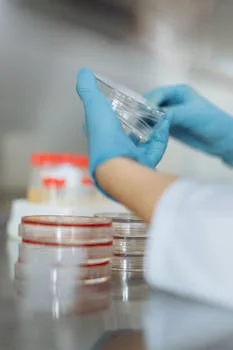
Membrane Bioreactor (MBR) technology represents the current gold standard for hospital wastewater treatment in Brazil, offering a compact footprint and superior effluent quality compared to traditional systems. While anaerobic reactors like the UASB (Upflow Anaerobic Sludge Blanket) are common in general wastewater treatment across Minas Gerais, they are largely insufficient for hospital applications because they cannot effectively remove micropollutants or achieve the high levels of pathogen log-reduction required for medical environments. An integrated MBR membrane bioreactor system combines aerobic biological treatment with membrane filtration, resulting in an effluent that is virtually free of suspended solids and significantly reduced in viral and bacterial load.
For the removal of complex pharmaceuticals and persistent organic pollutants (POPs), Advanced Oxidation Processes (AOPs) are increasingly integrated into hospital treatment trains. AOPs utilize powerful oxidants like ozone (O₃) or hydrogen peroxide (H₂O₂) in combination with UV light to generate hydroxyl radicals. These radicals break down the molecular structures of antibiotics and endocrine disruptors that biological processes alone cannot degrade. This is particularly vital in Belo Horizonte hospital wastewater management, where the high density of specialized clinics leads to elevated concentrations of chemotherapy agents and contrast media.
Disinfection is the final and most critical barrier in medical wastewater treatment. While chlorine gas has been used historically, modern facilities are shifting toward more stable and effective alternatives. A Chlorine Dioxide Generator is highly effective for hospital applications because chlorine dioxide (ClO₂) remains active over a wider pH range and does not produce harmful trihalomethanes (THMs) to the same extent as liquid bleach. ClO₂ is particularly adept at penetrating biofilms and neutralizing resistant pathogens like Cryptosporidium and Giardia, which are often found in medical facility sewage treatment.
| Technology | BOD/TSS Removal | Pathogen Removal | Pharmaceutical Removal | Footprint |
|---|---|---|---|---|
| Conventional Activated Sludge | 85-90% | Moderate | Low | Large |
| MBR (Membrane Bioreactor) | >98% | Very High | Moderate-High | Compact |
| AOP (Ozone/UV) | N/A | High | Very High | Small |
| Chlorine Dioxide (ClO₂) | N/A | Excellent | Low-Moderate | Small |
A typical integrated process flow for a Minas Gerais hospital begins with fine screening and oil separation to protect downstream equipment. This is followed by an equalization tank to buffer the highly variable flows typical of hospital shifts. The core treatment occurs in the biological reactor (either MBR or an aerobic tank), followed by advanced disinfection. For many facilities, a Medical Wastewater Treatment System provides a pre-engineered, modular solution that incorporates these stages into a single, automated package, simplifying both installation and operation.
Key Factors for Selecting a Hospital Wastewater Treatment System in Minas Gerais
Capital expenditure (CAPEX) for a modular hospital wastewater treatment plant in Brazil typically ranges from R$ 250,000 to over R$ 1,500,000 depending on flow rate and required effluent quality. When evaluating these costs, hospital administrators must look beyond the initial purchase price and consider the Total Cost of Ownership (TCO). In Minas Gerais, electricity tariffs and the cost of chemical reagents for disinfection can significantly impact operational expenditure (OPEX). Selecting an energy-efficient wastewater treatment plant for hospitals, such as those utilizing low-pressure membranes or automated dosing systems, can result in substantial long-term savings.
Space availability is a primary constraint for many established hospitals in urban centers like Contagem or Betim. Traditional treatment plants require large land areas for sedimentation tanks and clarifiers. In contrast, an WSZ series underground package sewage treatment plant allows the facility to utilize the space above the unit for parking or green areas, maximizing the hospital’s real estate value. These modular units are designed for "plug-and-play" installation, which also reduces the civil engineering costs and the duration of on-site construction, minimizing disruption to hospital operations.
The specific contaminant load of the hospital must dictate the system's design. A general hospital with a large laundry and kitchen will have high BOD and grease loads, requiring robust primary treatment. Conversely, a specialized oncology or infectious disease center will require a higher emphasis on pharmaceutical removal wastewater technologies and advanced pathogen disinfection hospital protocols. Decision-makers should utilize the following framework during the procurement process:
- Influent Analysis: Conduct a 7-day composite sampling to determine peak loads of BOD, COD, and specific medical contaminants.
- Discharge Destination: Confirm whether the effluent will enter a municipal sewer (requiring pre-treatment) or a local river (requiring full tertiary treatment).
- Automation Level: Prioritize systems with PLC (Programmable Logic Controller) integration to ensure consistent performance without needing a full-time chemist on-site.
- Sludge Management: Evaluate the volume of biological sludge produced and the local costs for its transport and disposal as hazardous waste (Class I or II).
- Future Scalability: Choose modular systems that can be expanded if the hospital adds new wings or increases bed capacity.
For more insights into global standards that can be applied locally, facility managers can consult a comprehensive guide to hospital wastewater treatment systems, costs, and compliance. While the regulatory specifics differ, the technical challenges of pharmaceutical and pathogen removal remain consistent across borders. Similarly, one can discover hospital wastewater treatment in Pune or navigate hospital wastewater treatment in Queensland, Australia to compare how different regions handle high-strength medical effluents.
Implementing and Maintaining Your System for Long-Term Compliance
Proactive maintenance of disinfection units and membrane modules can extend the service life of a hospital wastewater system by 5 to 10 years. In Minas Gerais, the environmental licensing process (Licenciamento Ambiental) requires hospitals to demonstrate not only that they have a system, but that it is consistently operational. This necessitates a structured Operation and Maintenance (O&M) protocol. Facility managers should ensure that their staff is trained to master medical wastewater treatment system maintenance, focusing on sensor calibration, membrane cleaning cycles (CIP), and pump lubrication.
A typical implementation timeline for a new system in Brazil involves 2-3 months for design and permitting, followed by 3-4 months for manufacturing and installation. During the commissioning phase, it is vital to perform "stress tests" to ensure the system can handle the peak flows associated with hospital laundry and sterilization cycles. Working with a manufacturer that provides local technical support in Minas Gerais is a significant advantage, as it ensures rapid access to spare parts and expert troubleshooting. hospitals should establish a relationship with a certified laboratory for monthly effluent testing to maintain a "clean" regulatory record with IGAM and COPAM. Effective hospital effluent management in Brazil is a continuous process of monitoring and optimization, not a one-time equipment purchase.
Frequently Asked Questions
How is hospital wastewater treated?
Hospital wastewater is typically treated through a multi-stage process: primary treatment (screening/equalization), secondary biological treatment (such as MBR or activated sludge), and tertiary treatment (advanced oxidation or filtration), followed by rigorous disinfection using chlorine dioxide or UV to eliminate pathogens and pharmaceuticals.
What is an effluent treatment plant for hospitals?
An effluent treatment plant (ETP) for hospitals is a specialized facility designed to remove medical-specific contaminants like antibiotics, radioactive isotopes, and multi-drug resistant bacteria, which standard municipal plants are not equipped to handle.
What are the typical costs for hospital wastewater treatment in Minas Gerais, Brazil?
CAPEX for a hospital ETP in Minas Gerais ranges from R$ 250,000 for small clinics to over R$ 1.5 million for large hospitals. OPEX depends on energy use and chemical consumption, often averaging R$ 2.00 to R$ 5.00 per cubic meter treated.
What are the main regulatory bodies for hospital wastewater in Brazil?
The primary federal body is CONAMA (Resolution 430), while in Minas Gerais, the state-level oversight is provided by COPAM, IGAM, and local municipal sanitation departments like COPASA in Belo Horizonte.
Further Reading

Explore these in-depth articles on related wastewater treatment topics: