
Why Detergent Wastewater Is a Hard Problem for Conventional Activated Sludge
Detergent and personal-care manufacturing effluents routinely arrive at the biological stage with COD of 1,500-8,000 mg/L, BOD/COD ratios of 0.4-0.6, LAS (linear alkylbenzene sulfonate) loads of 100-600 mg/L, and oil & grease between 200-800 mg/L, while saponification sidestreams push pH to 9-12 before neutralization. These are typical industrial surfactant-stream ranges drawn from general surfactant-industry references, as no public 2026 plant-specific benchmark was located in the research.
Three failure modes occur. First, high LAS generates a stable foam blanket on the aeration basin that strips biomass into the foam phase and collapses MLVSS within 24-72 hours of a slug load. Second, LAS and alcohol ethoxylate surfactants are directly toxic to nitrifiers, with EC50 values for ammonia-oxidizing bacteria reported in the 50-200 mg/L LAS range across multiple hybrid biofilm studies. Third, the low N:P ratio of detergent streams (often below 5:1) and the high fraction of non-biodegradable COD from sulfated surfactants mean that the BOD/MLSS-day loading on a CAS train routinely exceeds 0.3-0.5 kg BOD/kg MLSS-day, which is the empirical bulking threshold.
The combined result is filamentous bulking, foam-blanket washout, and chronic failure to meet LAS discharge limits of 5-15 mg/L typically written into indirect discharge permits. IFAS retrofits are now a default evaluation path for surfactant, soap, and personal-care plants in 2026.
What IFAS Is and Why It Works on Surfactant Streams
IFAS (Integrated Fixed-film Activated Sludge) is a hybrid biological process that runs suspended-growth activated sludge and attached-growth biofilm on free-floating carriers inside a single aeration tank, with four core process elements: suspended biomass, fixed-film media, an aeration tank, and a downstream settling tank (IJSAT, Vol. 16, Issue 3, July-September 2025).
The mechanism that solves the detergent problem is biofilm shielding. Nitrifiers and heterotrophs colonize the carrier surface at thicknesses of 50-300 micrometers, so the inner biofilm layers are exposed to LAS concentrations orders of magnitude lower than the bulk liquid. In a moving bed biofilm reactor (MBBR) variant, the protected biomass contributes 3-5 g/L of additional active biomass per m³ of carrier-filled reactor volume on top of the 4,000-6,000 mg/L MLSS in suspension. That effectively raises the system's SRT without raising the wasted sludge rate, which is the key lever against surfactant toxicity.
Originally developed to upgrade nitrification and BOD capacity in overloaded municipal plants, the technology transfers directly to industrial surfactant loads because the engineering bottleneck remains the same: protect slow-growing nitrifiers from toxic or washout conditions while pushing organic loading higher than CAS can handle alone (IJSAT, 2025).
IFAS Process Design Parameters for a Detergent Plant
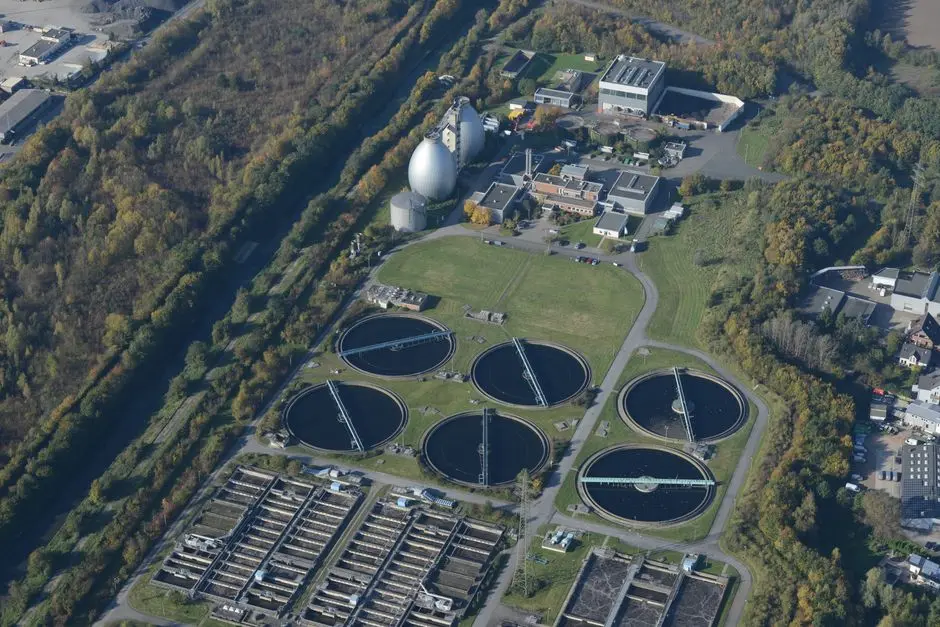
IFAS design for a typical 500-2,000 m³/day detergent, soap, or personal-care effluent falls within an HRT of 6-10 hr, SRT of 15-25 days, MLSS of 4,000-6,000 mg/L, dissolved oxygen of 2-3 mg/L, pH of 6.5-8.0, and mixed-liquor temperature of 20-35°C. These are typical industrial IFAS design ranges, not site-specific guarantees, and no 2026 plant benchmark was available in the research to refine the windows further.
Media fill is set at 30-50% of the aeration tank volume. Free-floating high-density polyethylene chips at 30-40% fill are the most common choice for surfactant streams because they handle the higher aeration mixing energy required for high COD and tolerate the 50-80 mm/s upflow velocities used to keep carriers fluidized. Sponge or foam-cube carriers (typically polyurethane, 10-25 mm cubes) give higher specific surface area (3,000-5,000 m²/m³ versus 500-1,200 m²/m³ for PE chips) but require gentler aeration and are more prone to fouling when FOG carryover exceeds 100 mg/L.
The pretreatment sequence that protects the IFAS basin is equalization (24-48 hr hydraulic residence) → DAF pre-treatment ahead of the IFAS basin tuned to 50-80% oil and grease removal → pH adjustment to 6.5-8.0 → IFAS aeration → secondary clarification → optional MBR polish for reuse water.
Expected performance after IFAS alone: COD removal 85-95%, BOD removal greater than 95%, and LAS removal 60-80%. These are performance ranges from hybrid biofilm literature, not vendor guarantees; site values depend on influent LAS speciation, temperature, and SRT.
| Parameter | Typical IFAS design range | Notes |
|---|---|---|
| HRT (hr) | 6-10 | Driven by influent COD and target effluent quality |
| SRT (days) | 15-25 | Long SRT protects nitrifiers from LAS toxicity |
| MLSS (mg/L) | 4,000-6,000 | Plus 3-5 g/L fixed biomass on carriers |
| DO (mg/L) | 2-3 | Higher end for high-COD streams |
| pH | 6.5-8.0 | Neutralization upstream of basin |
| Temperature (°C) | 20-35 | Detergent effluent is typically warm |
| Media fill (% of tank volume) | 30-50 | 30-40% for PE chips, up to 50% for sponge |
| Media retention sieve aperture (mm) | 10-12 | Cylindrical, airlift-driven |
| COD removal (%) | 85-95 | After IFAS alone |
| BOD removal (%) | >95 | After IFAS alone |
| LAS (MBAS) removal (%) | 60-80 | After IFAS alone |
IFAS vs MBR vs Conventional Activated Sludge: Choosing the Right Train
The procurement decision usually comes down to three numbers: target effluent TSS, influent LAS, and how much existing aeration tank volume can be repurposed. Use the table below as the decision frame, then apply the rule that follows.
| Criterion | IFAS | MBR | Conventional AS |
|---|---|---|---|
| HRT (hr) | 6-10 | 8-14 | 8-12 |
| SRT (days) | 15-25 | 20-40 | 5-12 |
| MLSS (mg/L) | 4,000-6,000 | 8,000-12,000 | 2,500-4,000 |
| Effluent TSS (mg/L) | 50-100 | <5 | 50-150 |
| LAS / MBAS removal (%) | 60-80 | 80-95 | 40-60 |
| Footprint relative to CAS | 0.5-0.7x | 0.4-0.6x | 1.0x baseline |
| Aeration energy (kWh/m³) | 0.4-0.7 | 1.0-1.8 | 0.3-0.5 |
| Greenfield CAPEX (relative) | Medium | High | Low |
| Retrofit CAPEX into existing basin | Low-Medium | High (new membranes) | Lowest |
Decision rule: choose IFAS when the goal is to upgrade an existing aeration tank and you can tolerate 50-100 mg/L TSS in the clarified effluent. Choose MBR when reuse water, sub-5 mg/L TSS, or surfactant discharge below 5 mg/L is mandatory, and pair it with MBR polish stage after IFAS using DF-series flat sheet MBR modules. Choose CAS only for low-LAS streams below 100 mg/L where foam control is manageable.
MBR delivers tighter solids and 15-25 percentage points more LAS removal than IFAS alone, but consumes 2-3x more aeration energy and adds membrane replacement at 5-7 year intervals. IFAS plus MBR polish is the dominant high-strength train for personal-care and soap plants in 2026 because it lets the IFAS stage absorb the COD/LAS shock load while the MBR delivers the polishing TSS that reuse customers require.
Retrofit Economics in 2026: What an IFAS Upgrade Actually Costs
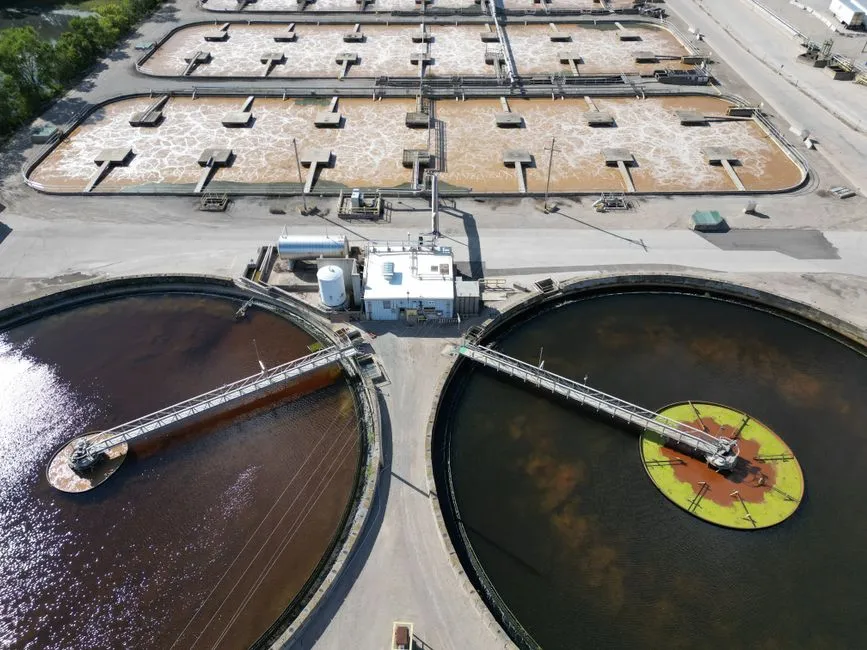
A 2026 IFAS retrofit into an existing aeration basin is typically an add-on scope: media retention sieves at the tank outlet, free-floating PE or sponge carriers at 30-50% fill, and a coarse-bubble aeration upgrade sized to maintain DO at 2-3 mg/L under the higher mixed-liquor loading. That keeps CAPEX below a greenfield MBR, where the membrane cassette, permeate suction system, and chemical clean-in-place skid drive 50-80% of the budget.
No public 2026 USD/m³ benchmark for IFAS retrofits was found, so the discussion is qualitative: CAPEX scales with basin retrofit scope (sieve installation, baffle modifications, aeration grid), media fill volume, and aeration upgrade. Plants in the 500-2,000 m³/day range typically see total IFAS retrofit CAPEX inside the same envelope as 1-2 years of operating cost on a struggling CAS train.
Operational savings are where IFAS pays back. Foam-control chemical use typically drops 40-70% once the biofilm carriers absorb the LAS shock, MLSS tolerance rises from 4,000 mg/L in CAS to 6,000 mg/L in IFAS, and nitrification is more robust against slug loads. For plants currently running polymer and defoamer hand-feeds to keep a CAS train online, those line items often cover the IFAS retrofit financing inside the first 18-24 months.
Operational Tips: Foaming, Media Loss, and Aeration Tuning
Anti-foam dosing at the head of the IFAS tank, not inside the basin, is the standard rule for LAS streams. Silicone emulsions (typically 5-50 mg/L active) handle persistent foaming at high LAS, while polyalcohol defoamers (10-100 mg/L) work better on protein-stabilized foam from saponification streams. Injecting at the influent well keeps the silicone or polyalcohol off the carrier surface, where fouling would reduce the protected biofilm area.
Media retention sieves at the outlet of the aeration zone are non-negotiable. Use 10-12 mm aperture cylindrical sieves driven by the airlift pump; anything tighter than 8 mm plugs on rags and FOG mats, and anything looser than 15 mm starts losing carriers. A failed sieve will empty the basin of carriers within 24-48 hours of a hydraulic surge, and the recovery cost is full media replacement.
Watch for the high-FOG failure mode. When FOG carryover into the IFAS tank exceeds roughly 100-150 mg/L, the oil coats the carrier surface and blinds the biofilm. The fix is upstream: tune the DAF pre-treatment ahead of the IFAS basin for 50-80% oil and grease removal with air-to-solids ratio of 0.02-0.05 and polymer dose of 5-15 mg/L, and re-baseline FOG after any change to the upstream surfactant batch process.
Frequently Asked Questions
What HRT and SRT should I design for IFAS on a detergent effluent?
For a typical 500-2,000 m³/
Frequently Asked Questions
What is IFAS and how does it treat detergent wastewater?
Integrated Fixed-Film Activated Sludge (IFAS) combines suspended growth biomass with biofilm attached to submerged plastic media within the same aeration tank. For detergent wastewater, this hybrid approach provides a specialized niche for slow-growing nitrifying bacteria and surfactant-degrading microorganisms to persist on the media surface, while suspended flocs handle bulk organic carbon removal.
The high surface area of the media allows for a higher concentration of biomass, which is essential for managing the high Chemical Oxygen Demand (COD) and inhibitory concentrations of surfactants typically found in detergent manufacturing effluents.
How much LAS (linear alkylbenzene sulfonate) can IFAS remove?
IFAS systems are highly effective at treating LAS, consistently achieving removal efficiencies between 92% and 98% when operating at optimal Food-to-Microorganism (F/M) ratios. These systems can handle influent LAS concentrations ranging from 50 mg/L to over 200 mg/L without significant biomass inhibition, provided the system is properly acclimated.
The biofilm component is particularly critical for LAS degradation, as the fixed-film environment protects specialized bacteria from the detergent's emulsifying effects, which often cause sludge bulking in conventional activated sludge systems.
IFAS vs MBR for a detergent plant — which is better in 2026?
As of 2026, IFAS is generally preferred for large-scale detergent plants requiring cost-effective capacity upgrades or those dealing with high variability in influent toxicity. IFAS offers significantly lower operational expenditures (OPEX) due to reduced membrane scouring energy requirements and the absence of periodic chemical cleaning cycles required by Membrane Bioreactors (MBR).
MBR remains the superior choice only when extremely high-quality permeate is required for direct water reuse or when the footprint is severely constrained. For standard discharge compliance, IFAS provides a more robust and energy-efficient solution for the recalcitrant nature of surfactant-heavy wastewater.
What HRT and media fill does an IFAS reactor need for surfactant wastewater?
For detergent wastewater, Hydraulic Retention Time (HRT) typically ranges from 8 to 16 hours, depending on the influent surfactant concentration and the required degree of nitrification. Shorter HRTs are possible if the media fill fraction is optimized to support the necessary biomass density.
Media fill percentages for surfactant applications are typically set between 30% and 50% of the total reactor volume. Using a high-density polyethylene (HDPE) media with a protected surface area of 500 to 800 square meters per cubic meter is standard practice to ensure adequate biofilm development while preventing media clogging from surfactant-induced foam.
Can IFAS be retrofitted into an existing activated sludge tank?
Yes, IFAS is one of the most common retrofit solutions for existing activated sludge plants struggling with capacity or surfactant-related sludge settleability issues. The process involves installing media retention screens at the outlet and filling the aeration basin with media, often requiring minimal civil engineering modifications.
Retrofitting allows plants to increase their organic loading capacity by 30% to 50% without expanding the tank footprint. The key engineering requirement for a successful retrofit is ensuring the existing aeration system can provide sufficient oxygen transfer to support the increased biomass density and the potential head loss across the retention screens.