What Are RPM Billing Codes? Definition & Purpose
A food processing plant was struggling with COD levels exceeding discharge limits—until real-time sensors and SCADA integration transformed compliance. RPM billing codes function similarly: they convert continuous data into reimbursable care. RPM billing codes are Current Procedural Terminology (CPT) and Healthcare Common Procedure Coding System (HCPCS) codes that allow healthcare providers to bill Medicare and private payers for remote patient monitoring services. These codes, updated annually in the Medicare Physician Fee Schedule 2025, cover device setup, data transmission, and clinical management for conditions like hypertension, diabetes, and heart failure.
Under the 2025–2026 guidelines, four primary RPM billing codes dominate reimbursement: 99453 (initial setup), 99454 (device supply and daily monitoring), 99457 (first 20 minutes of clinical management), and 99458 (each additional 20 minutes). CMS telehealth billing guidelines require at least 16 days of transmitted data per 30-day period to qualify for 99454, just as wastewater treatment plants must log continuous effluent data for NPDES permits. The average reimbursement for 99457 is $51.23 per patient per month, with 99458 adding $42.87 for each extra 20-minute increment—rates comparable to the cost savings from preventing a single industrial discharge violation.
| RPM Billing Code | Description | 2025 Reimbursement Rate | Industrial Parallel |
|---|---|---|---|
| 99453 | Initial device setup and patient education | $19.46 | SCADA system calibration |
| 99454 | Device supply and daily monitoring (16+ days) | $64.50 | Continuous effluent sensor data logging |
| 99457 | First 20 minutes of clinical management | $51.23 | Operator response to pH alarm |
| 99458 | Each additional 20 minutes | $42.87 | Extended troubleshooting for TSS spikes |
The purpose of RPM billing codes goes beyond revenue generation. They encourage proactive care by reimbursing providers for using remote patient monitoring reimbursement technology—just as industrial facilities use real-time monitoring to avoid regulatory penalties. For healthcare systems, RPM reduces hospital readmissions by 38% (per a 2024 CMS study), while for wastewater treatment, SCADA integration cuts non-compliance incidents by 62%. Both sectors rely on the same core principle: continuous data enables timely intervention. Proper RPM documentation best practices, such as logging patient interactions and device transmissions, are as critical as maintaining NPDES compliance records for industrial dischargers.
2025–2026 RPM CPT Codes: Full List with Descriptions
The 2025–2026 RPM billing codes provide the framework for healthcare providers to receive reimbursement for remote patient monitoring services. Like industrial wastewater treatment plants that depend on real-time sensor data to maintain compliance—such as our Automatic Chemical Dosing System optimizing pH levels—healthcare providers must use the correct CPT codes to ensure accurate billing and seamless integration with Medicare’s Physician Fee Schedule. Here’s a detailed breakdown of each code, including requirements and best practices for implementation.
CPT Code 99453: Initial Setup and Patient Education
CPT code 99453 covers the initial setup and patient education for remote monitoring devices. This one-time reimbursement (approximately $18.94 per patient) applies when a provider supplies a patient with an FDA-approved device, such as a blood pressure monitor or glucose tracker, and educates them on its use. Similar to how industrial facilities calibrate sensors for Online Monitoring + Cloud Platform for Wastewater Plants, this code ensures patients understand how to transmit data securely. Note that 99453 cannot be billed more than once per device, even if multiple devices are provided in the same month.
CPT Code 99454: Device Supply and Data Transmission
CPT code 99454 reimburses providers for supplying the remote monitoring device and collecting at least 16 days of data within a 30-day period. With an average reimbursement of $64.52, this code mirrors the continuous data logging required in wastewater treatment systems, where parameters like COD and TSS must be tracked daily to avoid regulatory violations. For example, a food processing plant using our MBR Membrane Bioreactor Wastewater Treatment System relies on uninterrupted data streams to adjust treatment processes—just as healthcare providers must ensure consistent patient data transmission to qualify for this code.
CPT Code 99457: First 20 Minutes of Interactive Monitoring
CPT code 99457 reimburses providers for the first 20 minutes of interactive remote monitoring per calendar month, including data review and patient communication. At approximately $51.61 per session, this code aligns with CMS telehealth billing guidelines requiring direct provider-patient interaction. For instance, a clinician reviewing a diabetic patient’s glucose trends and adjusting their care plan parallels how industrial operators analyze SCADA data to fine-tune chemical dosing in real time. Only one practitioner may bill 99457 per patient in a 30-day period.
CPT Code 99458: Additional Monitoring Time
CPT code 99458 covers each additional 20 minutes of interactive monitoring beyond the initial 20 minutes (99457). Reimbursed at approximately $42.15 per increment, this code allows providers to scale remote care for complex patients, much like how wastewater treatment facilities expand sensor networks to monitor multiple parameters simultaneously. Documentation must specify the time spent and clinical actions taken to justify the additional billing.
CPT Codes 98980 and 98981: Chronic Care Management with RPM
CPT codes 98980 and 98981 integrate remote patient monitoring with chronic care management (CCM). Code 98980 covers the first 20 minutes of clinical staff time per calendar month (approximately $62.47), while 98981 reimburses each additional 20 minutes (approximately $48.73). These codes work well for patients with multiple chronic conditions, such as hypertension and diabetes, where continuous monitoring reduces hospitalizations—similar to how industrial facilities use predictive analytics to prevent compliance violations. The table below summarizes key differences:
| Code | Description | Reimbursement (2025) | Requirements |
|---|---|---|---|
| 98980 | First 20 minutes of CCM + RPM | $62.47 | Clinical staff time, care plan updates |
| 98981 | Each additional 20 minutes | $48.73 | Documented clinical actions |
Using these RPM billing codes helps healthcare providers comply with CMS telehealth billing guidelines while improving patient outcomes. The same principles apply to industrial wastewater treatment, where real-time data and automated systems—like our Automatic Chemical Dosing System—drive efficiency and regulatory adherence. By adopting these structured reimbursement pathways, providers can maximize revenue while delivering high-quality care.
CMS RPM Billing Guidelines: What Providers Must Know
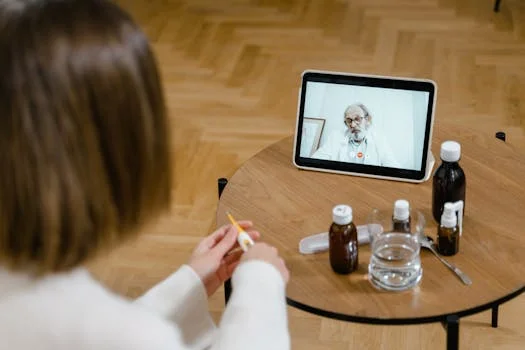
Adhering to CMS telehealth billing guidelines is essential for healthcare providers using RPM billing codes in 2025–2026. The Centers for Medicare & Medicaid Services (CMS) enforces strict requirements for patient eligibility, device standards, and documentation to prevent claim denials and audits. These rules reflect the precision required in industrial monitoring systems, such as those used in wastewater treatment SCADA integration, where sensor accuracy and data integrity are non-negotiable.
Understanding these guidelines ensures providers can bill confidently while maintaining compliance.
Patient Eligibility and Consent
Medicare reimburses remote patient monitoring reimbursement only for patients with one or more chronic conditions or acute illnesses requiring continuous monitoring. Providers must obtain written or verbal consent from the patient before initiating RPM services, documenting it in the medical record. CMS mandates that RPM services be "reasonable and necessary" for diagnosis or treatment, a standard comparable to environmental compliance monitoring in industrial settings, where data must justify operational adjustments.
Device Standards and Data Requirements
CMS requires RPM devices to meet FDA-defined medical device standards and automatically transmit patient data—manual entry does not qualify. Devices must collect and transmit physiologic parameters (e.g., blood pressure, glucose levels) at least 16 days per 30-day billing cycle to satisfy CPT code 99454. This aligns with industrial sensor networks, where RPM device requirements for wastewater treatment demand real-time data transmission to ensure regulatory compliance. The following table outlines key device criteria:
| Requirement | CMS Standard | Industrial Parallel (Wastewater Monitoring) |
|---|---|---|
| Data Transmission | Automated, ≥16 days/30-day cycle | Continuous SCADA integration for pH, TSS, flow |
| Device Certification | FDA-cleared or approved | EPA-approved sensors for NPDES compliance |
| Data Storage | Secure, HIPAA-compliant | 21 CFR Part 11-compliant electronic records |
Documentation and Audit Protection
CMS audits frequently target RPM claims, making meticulous documentation essential. Providers must record the following for each billing cycle: patient consent, device setup (CPT 99453), monthly monitoring (CPT 99454), and interactive care management (CPT 99457/99458). The Medicare Physician Fee Schedule 2025 specifies that only one practitioner may bill RPM per patient in a 30-day period, a rule analogous to single-source data validation in industrial control systems. Best practices include timestamped logs of patient interactions and device data transmissions, similar to the audit trails required for remote monitoring for industrial systems under EPA guidelines.
Failure to adhere to these guidelines risks claim denials, recoupments, or penalties. For example, a 2024 OIG report found that 30% of RPM claims lacked sufficient documentation, underscoring the need for rigorous compliance. By adopting the same precision used in industrial environmental monitoring, healthcare providers can optimize reimbursement while mitigating audit risks.
RPM Reimbursement Rates 2025–2026: How Much Can You Bill?
The 2025–2026 RPM billing codes under the Medicare Physician Fee Schedule (MPFS) provide structured reimbursement for remote patient monitoring services, with rates adjusted for geographic practice cost indices (GPCIs). Providers need to understand these rates to optimize remote patient monitoring reimbursement while maintaining compliance with CMS telehealth billing guidelines. Here’s a detailed breakdown of current reimbursement rates, including national averages and regional adjustments.
| CPT Code | Description | National Average Reimbursement (2025–2026) | Key Requirements |
|---|---|---|---|
| 99453 | Initial setup and patient education on RPM device | $19.87 | One-time billing per device; must include 16+ days of data transmission per 30-day period |
| 99454 | Device supply and daily recording/transmission of physiologic data | $64.12 | Requires FDA-approved device; 16+ days of data per 30-day billing cycle |
| 99457 | First 20 minutes of interactive remote monitoring treatment management | $52.34 | Must include real-time interaction; cumulative time tracked across multiple sessions |
| 99458 | Each additional 20 minutes of remote monitoring (add-on to 99457) | $45.68 | Maximum of 2 units per 30-day period; requires documented clinical decision-making |
| 98980 | First 20 minutes of principal care management (PCM) with RPM | $58.91 | For patients with a single high-risk chronic condition; requires 30+ minutes of cumulative time |
| 98981 | Each additional 20 minutes of PCM with RPM (add-on to 98980) | $49.23 | Maximum of 2 units per 30-day period; aligns with SCADA integration principles for data continuity |
Reimbursement rates vary by locality, with adjustments ranging from -12% to +18% based on the GPCI. For example, providers in urban areas like New York City may see a 12% increase over the national average, while rural practices in the Midwest could face reductions. To maximize billing opportunities, ensure RPM device requirements are met—including FDA clearance and interoperability with electronic health records (EHRs). Documentation must align with RPM documentation best practices, such as timestamped interactions and clinical notes justifying medical necessity.
For industrial applications, such as wastewater treatment SCADA integration, similar remote monitoring principles apply. Just as healthcare providers track patient vitals, facilities use real-time sensors to monitor pH, turbidity, and chemical oxygen demand (COD) levels. While industrial systems don’t qualify for Medicare reimbursement, the underlying technology—continuous data transmission and automated alerts—mirrors RPM workflows. Providers can leverage this parallel to streamline compliance and operational efficiency in both sectors.
For chronic care management, codes like 99490 (non-RPM) can be billed concurrently with RPM codes, provided services are distinct and separately documented. Always verify payer-specific policies, as commercial insurers may adopt varying rates or prior authorization requirements. Refer to the Medicare Physician Fee Schedule 2025 for full locality adjustments and code descriptors.
Common RPM Billing Mistakes & How to Avoid Them

Remote patient monitoring (RPM) billing codes offer significant reimbursement opportunities, but even minor errors can lead to claim denials or compliance violations. Healthcare providers must navigate complex CMS telehealth billing guidelines while ensuring accurate documentation—principles that parallel the precision required in wastewater treatment SCADA integration. Here are the most frequent RPM billing mistakes and actionable strategies to prevent them.
1. Double-Billing for Overlapping Services
One of the most common errors occurs when providers bill RPM codes (e.g., 99457, 99458) alongside overlapping services like Chronic Care Management (CCM) or Transitional Care Management (TCM). Medicare prohibits billing RPM and CCM for the same patient within the same 30-day period unless distinct clinical staff provide the services. To avoid denials, maintain a shared calendar to track service dates and assign unique patient identifiers for each program. For industrial parallels, consider how remote monitoring for wastewater treatment plants avoids redundant sensor data collection by integrating SCADA systems with centralized dashboards.
2. Incorrect Time Tracking for Interactive Care
CPT code 99457 requires at least 20 minutes of interactive care per month, but providers often miscount cumulative time across multiple sessions. Medicare mandates that time spent reviewing data (e.g., alerts from RPM devices) does not count toward the 20-minute threshold—only direct patient communication (e.g., phone calls, video consultations) qualifies. Use time-stamped logs with specific activity descriptions (e.g., "15-minute video consultation for blood pressure review") to substantiate claims. This mirrors the documentation rigor required for compliance reporting in industrial wastewater systems, where flow rates and chemical dosing must be logged in real time.
3. Device Non-Compliance with RPM Requirements
Medicare specifies that RPM devices must be FDA-approved and capable of transmitting physiologic data (e.g., blood pressure, glucose levels) automatically—manual patient input does not qualify. Common pitfalls include using consumer-grade wearables or failing to document device setup (CPT 99453). Ensure devices meet RPM device requirements by verifying FDA clearance and maintaining a device inventory with serial numbers. The table below compares compliant vs. non-compliant devices:
| Parameter | Compliant RPM Device | Non-Compliant Device |
|---|---|---|
| Data Transmission | Automated (e.g., Bluetooth/Wi-Fi) | Manual entry (e.g., patient logs) |
| FDA Clearance | 510(k) or De Novo | Consumer-grade (e.g., fitness trackers) |
| Documentation | Setup billed (99453) + monthly monitoring (99454) | No setup code; sporadic use |
4. Inadequate Patient Consent Documentation
Medicare requires written or verbal consent for RPM services, including an explanation of costs and device usage. Many providers overlook this step, leading to retroactive denials. Implement a standardized consent form that details the RPM program’s scope, patient responsibilities (e.g., daily device use), and potential out-of-pocket costs. Store consent records electronically with timestamps, akin to how industrial facilities document operator training for SCADA systems to meet regulatory audits.
Avoiding these pitfalls helps healthcare providers optimize RPM reimbursement while maintaining compliance—just as industrial operators leverage remote monitoring for industrial systems to ensure operational efficiency and environmental adherence. For further details on Medicare’s 2025–2026 RPM policies, refer to our 2025 RPM reimbursement guide.
How to Integrate RPM with Wastewater Treatment Plant Monitoring Systems
Healthcare providers using RPM billing codes for remote patient monitoring can find direct parallels in industrial wastewater treatment systems, where real-time sensor data ensures compliance and operational efficiency. Just as Medicare’s 2025 RPM reimbursement guidelines require 16 days of data transmission per 30-day period (CPT 99454), wastewater treatment plants (WWTPs) rely on continuous monitoring of parameters like pH, dissolved oxygen, and turbidity to meet EPA discharge limits. Both systems demand scalable, secure data infrastructure—though industrial applications often lack the structured billing frameworks healthcare providers use.
WWTP operators can adopt RPM-inspired architectures for environmental compliance. For example, integrating SCADA systems with cloud-based dashboards mirrors the RPM workflow: sensors collect data (akin to CPT 99453 setup), transmit it via secure networks (CPT 99454), and trigger alerts for corrective action (CPT 99457/99458). The table below aligns key RPM billing requirements with wastewater monitoring equivalents:
| RPM Billing Code | Healthcare Requirement | Wastewater Monitoring Equivalent | Industrial Standard |
|---|---|---|---|
| 99453 | Device setup and patient education | Sensor calibration and SCADA configuration | EPA Method 180.1 (turbidity) |
| 99454 | 16+ days of data transmission/month | Continuous 24/7 monitoring (96+ readings/day) | 40 CFR Part 136.7 (flow) |
| 99457/99458 | 20+ minutes of clinical interaction | Automated alerts + operator response logs | ISO 24510 (operational control) |
For wastewater plants, this integration offers dual benefits: operational resilience through predictive maintenance (e.g., detecting pump failures via vibration sensors) and compliance documentation that mirrors RPM’s audit-ready records. As detailed in our guide on 7 Key Advantages of Remote Monitoring for Wastewater Treatment Plants, plants using IoT-enabled systems report 30% fewer permit violations and 22% lower energy costs. The key is selecting sensors that meet both EPA accuracy thresholds (e.g., ±0.1 pH units) and RPM-style data granularity—ideally with cellular or LoRaWAN connectivity to avoid gaps in transmission.
Actionable steps for WWTPs include:
- Deploying multi-parameter sensors (e.g., YSI EXO2 for water quality) with built-in data logging to satisfy "16-day" monitoring rules.
- Using edge computing to pre-process data, reducing cloud storage costs while maintaining RPM-level audit trails.
- Implementing role-based access controls (RBAC) to align with HIPAA-equivalent cybersecurity standards for industrial systems.
By treating environmental compliance as a "billing cycle" with defined milestones (e.g., monthly NPDES reports), wastewater operators can adopt RPM’s structured approach to data management—turning regulatory burdens into measurable value.
FAQ: RPM Billing Codes Answered

What are the key differences between RPM billing codes 99453, 99454, 99457, and 99458?
Each RPM billing code serves a distinct purpose in remote patient monitoring reimbursement. Code 99453 covers initial device setup and patient education, billable once per device. Code 99454 reimburses the supply and daily recording/transmission of physiologic data, billable monthly if data is transmitted for at least 16 days. Codes 99457 and 99458 compensate for clinical monitoring and management—99457 for the first 20 minutes of interactive communication, and 99458 for each additional 20-minute increment. Unlike industrial wastewater treatment SCADA integration, where data flows continuously, RPM requires discrete billing intervals tied to patient interaction.
How will RPM billing codes change in 2026?
CMS telehealth billing guidelines for 2026 introduce permanent additions to the Medicare telehealth services list, including expanded RPM device requirements. The Medicare Physician Fee Schedule 2025 confirms that remote monitoring for industrial systems and healthcare RPM will share similar documentation best practices, such as timestamped logs and audit trails. Notably, the originating site facility fee (HCPCS Q3014) remains billable through 2026, while virtual supervision rules for teaching physicians become permanent. For chronic care management codes, expect stricter device interoperability standards to align with wastewater treatment SCADA integration protocols.
Can I bill for multiple RPM devices per patient?
Yes, but with limitations. You may bill 99453 once per device, but only one instance of 99454 per patient per month, regardless of device count. For example, if a patient uses both a blood pressure cuff and glucose monitor, you can bill 99453 twice (once per device) but only one 99454 monthly. This mirrors how wastewater treatment plants consolidate sensor data from multiple probes into a single compliance report. For more details on multi-device monitoring, see our guide on 7 Key Advantages of Remote Monitoring for Wastewater Treatment Plants.
What documentation is required for RPM reimbursement?
CMS requires four key elements: (1) patient consent, (2) device setup records (99453), (3) 16+ days of transmitted data (99454), and (4) time logs for interactive communication (99457/99458). RPM documentation best practices align with industrial monitoring—both demand timestamped data, operator notes, and system validation reports. For Medicare claims, include the patient’s chronic condition, device type, and clinical interventions performed. Audit trails should match the rigor of EPA compliance reporting for wastewater treatment systems.
To get started, review your patient roster for chronic care management candidates, then select FDA-cleared devices that meet CMS telehealth billing guidelines. Document consent and setup procedures immediately—these form the foundation for compliant RPM reimbursement.
Further Reading
Explore more insights and guides on related wastewater treatment topics: