
What Is a Primary Clarifier and How Does It Work?
Primary clarifiers remove settleable solids and floating scum from raw wastewater via gravity sedimentation before biological treatment. This initial primary treatment system is crucial for reducing the organic and solids load on subsequent treatment stages, preventing equipment damage, and lowering overall operational costs. The process leverages the density difference between water and suspended particles, allowing heavier solids to settle to the bottom and lighter materials (like oils, greases, and some plastics) to float to the surface.
Key operational parameters for effective sedimentation tank design include detention time, flow velocity, and sludge blanket control. Typical detention times in primary clarifiers range from 1.5 to 2.5 hours, providing sufficient time for gravitational settling. To minimize turbulence that could re-suspend settled solids, the average flow velocity within the tank should remain below 0.3 meters per minute. careful control of the sludge blanket depth is essential to prevent solids from being carried over into the secondary treatment stage. While conventional primary clarifiers achieve TSS removal efficiency between 50–70%, high-rate designs with optimized inlet baffles and outlet weirs can reach 90–95% TSS removal, significantly enhancing wastewater solids separation.
Circular Clarifiers: Design, Performance, and Industrial Applications
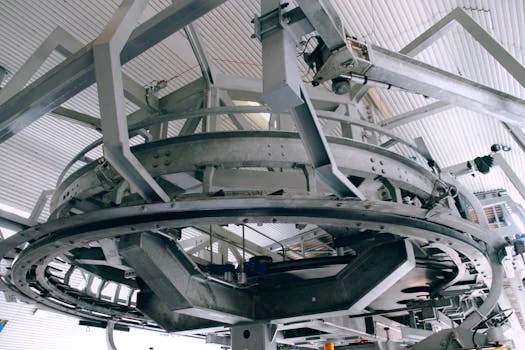
Circular clarifiers typically employ peripheral or center-feed mechanisms combined with rotating scraper arms to facilitate continuous sludge removal. In a center-feed design, influent enters a central well, distributing flow radially outwards, while peripheral-feed systems introduce influent along the tank's edge. Advanced designs, such as Evoqua's Rim-Flo®, introduce feed at the rim to minimize turbulence and improve hydraulic efficiency by maintaining a more uniform flow pattern across the settling zone, leading to higher TSS removal efficiency.
The performance of a circular industrial wastewater clarifier is often characterized by its surface loading rate. Conventional circular clarifiers operate efficiently at surface loading rates of 15–25 m³/m²/day. However, optimized high-rate versions can achieve up to 30 m/h by improving inlet hydraulics and sludge withdrawal mechanisms. These systems are ideally suited for large municipal plants and industrial sites with relatively steady flow rates and lower concentrations of fats, oils, and grease (FOG), such as large-scale food processing facilities and pulp & paper mills.
While robust, circular clarifiers do present specific maintenance challenges. The rotating drive mechanism and scraper arms are subject to wear, requiring regular inspection and lubrication. Scraper alignment is critical to ensure complete sludge removal from the tank floor, and sludge hopper plugging can occur if solids are not withdrawn consistently. These factors contribute to the operational expenditure of maintaining a circular sedimentation tank design.
Lamella Clarifiers: High-Rate Sedimentation for Compact Footprints
Lamella clarifiers utilize inclined plates to dramatically increase the effective settling area within a smaller physical footprint, achieving high-rate sedimentation. This design principle allows for significantly higher clarifier surface loading rates compared to conventional tanks, typically ranging from 20–40 m/h. The inclined plates create a series of shallow settling zones, reducing the distance a particle must fall to settle, thereby accelerating the clarification process. This makes lamella clarifiers a superior choice when space is a primary constraint.
HydropureWater’s High-Efficiency Sedimentation Tank (Lamella Clarifier) is engineered for optimal performance, reducing chemical consumption by up to 30% through integrated flocculation and sludge recirculation capabilities. This integration enhances particle aggregation, leading to faster and more complete solids separation. The concentrated sludge withdrawn from lamella clarifiers also simplifies downstream sludge handling, further reducing operational costs.
Lamella clarifiers are best suited for industrial wastewater clarifier applications characterized by variable flows, high solids loads, or limited available space. Industries such as chemical plants, metal finishing operations, mining, and compact package plants frequently benefit from their efficiency and smaller footprint. Their modular design also allows for easier expansion and integration into existing systems, positioning them as a versatile high-rate clarifier solution.
Primary Clarifier Performance Metrics: TSS, BOD, and Hydraulic Load
Effective primary clarification is quantified by key performance metrics including Total Suspended Solids (TSS) removal, Biochemical Oxygen Demand (BOD) reduction, and hydraulic loading parameters. These metrics are critical for evaluating the efficiency of a primary treatment system and ensuring it meets downstream requirements.
Typical TSS removal in conventional primary clarifiers ranges from 50–70%. However, optimized high-rate clarifier systems, particularly those with advanced inlet/outlet designs or lamella plates, can achieve 85–95% TSS removal efficiency. This high level of wastewater solids separation significantly reduces the load on subsequent biological treatment stages. Additionally, primary clarifiers typically achieve a BOD reduction of 25–40% due to the settling of organic solids. This reduction is vital for lowering the energy demands and chemical requirements of secondary treatment.
Hydraulic retention time (HRT) for primary clarifiers is generally maintained between 1.5–2.5 hours. However, poor inlet design can lead to short-circuiting, where wastewater bypasses significant portions of the settling volume, reducing efficiency by up to 30%. The overflow rate, or clarifier surface loading rate, is another critical parameter. For conventional tanks, the overflow rate should not exceed 1.25 m/h to ensure adequate settling. In contrast, lamella systems can effectively handle overflow rates up to 40 m/h due to their increased effective settling area, making them suitable for higher flow applications.
| Performance Metric | Conventional Primary Clarifier | Optimized High-Rate/Lamella Clarifier |
|---|---|---|
| TSS Removal Efficiency | 50–70% | 85–95% |
| BOD Reduction | 25–40% | 30–45% |
| Hydraulic Retention Time (HRT) | 1.5–2.5 hours | 0.5–1.5 hours (effective HRT) |
| Overflow Rate (Surface Loading) | Up to 1.25 m/h | Up to 40 m/h |
| Short-Circuiting Impact | Up to 30% efficiency reduction | Minimized by design |
Circular vs Lamella Clarifiers: Technical Comparison and Selection Guide
Selecting between circular and lamella primary clarifiers requires a detailed technical comparison across critical parameters such as footprint, capital expenditure (CAPEX), operational expenditure (OPEX), and application suitability. For industrial plant engineers and procurement managers, this decision framework is essential for justifying CAPEX approval and ensuring long-term system performance.
One of the most significant differences is footprint: lamella clarifiers require 60–70% less space than circular tanks for the same hydraulic flow capacity. This compact design is a major advantage for sites with limited real estate or for modular installations. Regarding CAPEX, circular clarifiers typically cost $120–180 per cubic meter of capacity (HydropureWater estimates, 2025), while lamella systems range from $150–220 per cubic meter. However, the higher unit cost of lamella systems is often offset by substantial savings in civil works (excavation, concrete), especially for larger projects, due to their smaller physical size.
Operational expenditure (OPEX) also differs between the two types. Lamella systems generally incur lower sludge pumping costs because they produce a more concentrated sludge, requiring less volume to be handled. In contrast, circular tanks, with their moving mechanical components, tend to have higher mechanical maintenance costs associated with drive mechanism wear and scraper alignment. The choice between a lamella vs circular clarifier often boils down to site-specific constraints and the long-term cost of ownership.
The decision framework for selecting an industrial wastewater clarifier can be summarized as follows: choose circular clarifiers for large industrial sites with ample space, stable flow rates, and lower suspended solids concentrations. Opt for lamella clarifiers for applications where space is limited, flows are highly variable, or high solids loads are present, such as in metal finishing, mining, or chemical processing. HydropureWater offers both high-efficiency lamella clarifiers and optimized circular designs, ensuring a tailored solution for diverse industrial needs.
| Feature | Circular Clarifier | Lamella Clarifier |
|---|---|---|
| Footprint | Large, requires significant space | Compact, 60–70% less space for same flow |
| CAPEX (per m³ capacity) | $120–180 (HydropureWater estimates, 2025) | $150–220 (HydropureWater estimates, 2025) |
| OPEX | Higher mechanical maintenance (drive, scrapers) | Lower sludge pumping costs (concentrated sludge) |
| Ideal Applications | Large flows, steady influent, low FOG, ample space (e.g., municipal, pulp & paper) | Variable flows, high solids load, limited space, modular needs (e.g., chemical, metal finishing, package plants) |
| Sludge Concentration | Lower (typically 1–3% solids) | Higher (typically 3–6% solids) |
| Maintenance Complexity | Moderate to high (mechanical drive, scrapers) | Low to moderate (minimal moving parts, plate cleaning) |
Integrating Primary Clarifiers with Full Treatment Trains
Primary clarifiers function as critical pre-treatment units, significantly enhancing the overall efficiency and cost-effectiveness of integrated wastewater treatment trains. Their role extends beyond simple wastewater solids separation, impacting downstream processes by reducing loads and extending equipment lifespan, thereby improving overall plant ROI.
For industrial influents with high concentrations of fats, oils, and grease (FOG) or colloidal solids, primary clarifiers are often paired with Dissolved Air Flotation (DAF) systems. The clarifier effectively removes settleable solids, reducing the load on the DAF unit, which then excels at polishing the water by removing FOG and finely dispersed suspended solids. This combination ensures comprehensive removal of diverse contaminants. For instance, in meat processing or dairy industries, a primary clarifier might remove heavier food particles, while a DAF system handles the emulsified fats and proteins.
As pre-treatment for Membrane Bioreactor (MBR) systems, primary clarifiers are indispensable. By significantly reducing the TSS load, they can decrease membrane fouling by 30–50%, substantially extending cleaning intervals and the overall operational life of expensive membranes. This pre-clarification step directly translates to lower maintenance costs and higher MBR system uptime, making it a critical component in advanced industrial treatment plants.
Downstream sludge thickening is also greatly influenced by the primary clarifier. Primary sludge, typically withdrawn with 3–6% solids concentration, is ideal for direct thickening processes. This relatively high solids content from the clarifier makes it suitable for dewatering via gravity belt thickeners or centrifuges, reducing the volume of sludge requiring further stabilization and disposal. HydropureWater offers integrated solutions for efficient sludge dewatering, ensuring that the entire treatment train operates with maximum efficiency.
Frequently Asked Questions
Industrial plant engineers and procurement managers often have specific questions regarding the long-term performance, space requirements, and operational considerations of primary clarifier systems.
What is the typical lifespan of a primary clarifier?
Well-maintained steel or concrete clarifiers typically last 25–30 years. Stainless steel lamella units, with their minimal corrosion potential, can last 20+ years with proper care.
How much space does a primary clarifier need?
A conventional 500 m³/day circular clarifier requires approximately 200 m² of footprint. A lamella clarifier equivalent designed for the same flow needs only 60–80 m², offering significant space savings.
Can primary clarifiers handle industrial wastewater with oil and grease?
Primary clarifiers are effective for settleable solids. For wastewater with significant oil and grease, pre-screening is essential. Otherwise, they must be combined with a DAF system for >90% FOG removal to prevent operational issues and ensure effective treatment.
What maintenance do primary clarifiers require?
Maintenance typically involves monthly inspection of scrapers, weirs, and sludge pumps for wear or blockages. Annual cleaning of the tank and alignment checks of mechanical components, particularly for circular clarifiers, are also crucial. For detailed guidance, refer to industrial DAF clarifier maintenance protocols.
Are modular primary clarifiers available?
Yes, HydropureWater offers skid-mounted lamella clarifiers for flows ranging from 10–300 m³/h. These modular units enable fast deployment, reduced civil works, and flexibility for various industrial setups or temporary treatment needs, as detailed in our guide on compact sewage treatment unit maintenance.