Why 2026 Is a Tipping Point for Wastewater-to-Biogas
A 2024 bibliometric review of 23 years of Web of Science data (2000–2023) on wastewater-to-energy research pinpoints three accelerating research themes: biogas production through anaerobic digestion of sewage sludge, methane generation from microbial wastewater treatment, and hydrogen from biomass (Springer, Environmental Science and Pollution Research, 2024-03). The same review flags biomethane, biogas upgrading, and circular-economy energy recovery as the keywords gaining the most citation momentum heading into 2026. In industrial terms, that academic signal translates into capex commitments: wastewater plants are no longer treatment endpoints, they are energy biorefineries, and the procurement window is now.
Three policy levers are converging in 2026 to make that shift bankable. The EU Renewable Energy Directive III (RED III) sets a binding 42.5% renewable target by 2030 with explicit sub-targets for biomethane grid injection. China has extended its 14th Five-Year Plan renewable-gas incentives through 2026, with provincial feed-in tariffs for grid-connected biomethane in the CNY 0.45–0.75/m³ range. In the US, the Renewable Fuel Standard (RFS) RNG pathway continues to issue D3 cellulosic RINs, and the IRA Section 45V hydrogen-production credit is pulling investment into adjacent biogas-to-hydrogen pilot projects. The reference plant is real: Stockholm Water Company (Viva) feeds upgraded biogas from its Henriksdal facility into the Scandinavian gas grid, a commercial-scale proof point industrial plants are now trying to replicate.
The 2026 Wastewater-to-Biogas Technology Stack
Every biogas-from-wastewater project breaks into four stages: pre-treatment, anaerobic digestion, upgrading, and end use. Stage 1 pre-treatment typically runs screening, grit removal, equalization, and DAF pre-treatment for FOG and suspended solids. Sludge pretreatment before digestion — thermal hydrolysis at 150–170 °C / 6 bar, ultrasound at 20–40 kHz, or ozonation at 0.05–0.2 g O₃/g TSS — improves methane yield by 15–30% (Bioresource Technology, 2020-06). For industrial facilities with high oil/grease loadings (dairy, edible-oil, food processing), DAF ahead of the digester is the single highest-ROI pre-treatment step.
Stage 2 is the digester itself. Mesophilic operation at 35–38 °C remains the 2026 default for mixed industrial-sludge streams, with thermophilic operation at 50–55 °C reserved for pathogen kill or higher kinetics. Hydraulic retention time (HRT) typically lands at 15–30 days for conventional digesters and 4–24 hours for high-rate reactors. Raw biogas exits at 55–75% CH₄, 25–45% CO₂, and trace H₂S / siloxanes. High-rate anaerobic designs — UASB and EGSB — dominate the 2026 industrial specification because they handle soluble high-COD effluent without mechanical mixing and at a fraction of the footprint.
Stage 3 upgrades raw biogas to biomethane (>97% CH₄, <2% CO₂) using pressure-swing adsorption (PSA), membrane separation, water scrubbing, or amine scrubbing. End-use decisions then split: biomethane that meets ISO 13686 / EN 16723-1 specification goes to grid injection as renewable natural gas (RNG); biogas at 55–65% CH₄ is sufficient for on-site combined heat and power (CHP) or boiler firing. The 2026 trend is hybrid trains — water scrubbing for bulk CO₂ removal followed by membrane polishing — that hit 98%+ CH₄ recovery with lower methane slip than either technology alone.
Reactor Comparison: Which Anaerobic Digester Fits Your Wastewater
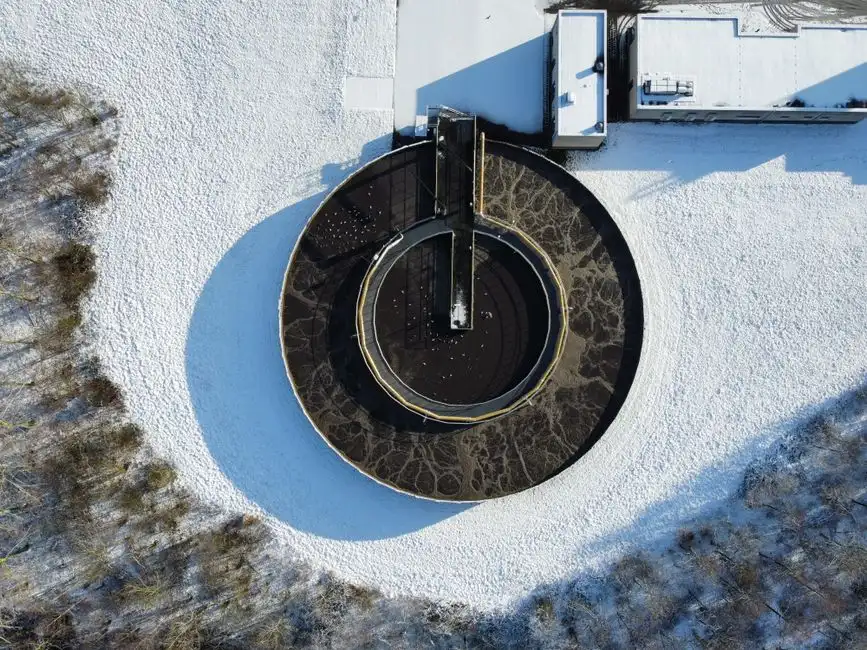
Reactor selection is the single highest-impact decision in any 2026 biogas project. The right family depends on influent COD strength, flow continuity, and whether the plant digests sludge or soluble industrial effluent. CSTR digesters suit mixed sewage sludge and low-strength waste because they handle total solids up to 10–12% with full mechanical mixing. High-rate anaerobic reactors — UASB, EGSB, and IC — suit soluble high-strength industrial effluent (brewery, distillery, pulp & paper, food processing) because granular sludge blankets process 5–35 kg COD/m³·d in a footprint 4–10× smaller than a CSTR.
| Reactor | OLR (kg COD/m³·d) | HRT | CH₄ Yield (m³/kg COD removed) | Best-fit influent |
|---|---|---|---|---|
| CSTR | 1–4 | 20–40 d | 0.10–0.25 | Municipal sewage sludge, low-strength waste |
| UASB | 5–15 | 6–24 h | 0.20–0.35 | High-strength soluble industrial effluent |
| EGSB | 10–25 | 4–12 h | 0.25–0.35 | High-strength, low-SS industrial effluent |
| IC Reactor | 20–35 | 2–6 h | 0.30–0.40 | Brewery, potato-starch, distillery strength |
For high-rate reactors, a polishing step downstream is often necessary to meet discharge limits. Many 2026 brewery and food-processing plants pair an EGSB or IC reactor with MBR polishing downstream of the digester, or stage a sidestream MBR membrane module on the digester supernatant to recover residual organics before dewatering. Methane-yield ranges above reflect typical operating windows; specific yields vary with temperature, influent biodegradability (BOD₅/COD ratio), and sulfate concentration.
Biogas Upgrading in 2026: PSA, Membrane, Water Scrubbing
Biomethane specification per EN 16723-1 and ISO 13686 calls for >97% CH₄, <2% CO₂, <20 mg/Nm³ H₂S, and siloxane levels below 0.3 mg/Nm³ for grid injection. Choosing the upgrading train is a function of biogas flow rate, desired methane recovery, and the H₂S variability of the feed. Water scrubbing remains the simplest and most H₂S-tolerant option, with methane loss of 1–2% and operating pressures of 4–10 bar in a packed countercurrent column. It suits small-to-medium plants (500–5,000 Nm³ biogas/h) where operational simplicity outweighs footprint.
Membrane separation uses polyimide hollow-fiber cascades, typically 2 or 3 stages, to deliver 90–98% CH₄ recovery in a skid-mounted footprint roughly 30% the size of a water-scrubbing tower. PSA delivers the highest purity — >99% CH₄ at 96–98% recovery — by adsorbing CO₂ onto activated carbon or carbon molecular sieve at 4–10 bar with cyclic regeneration. PSA is the 2026 default for plants feeding RNG into a pipeline because the purity headroom simplifies gas-quality compliance audits. Two hybrid trends to track: water-scrubbing + membrane combinations that push methane recovery above 98.5%, and cryogenic upgrading for high-flow plants (>10,000 Nm³/h) where CO₂ can be sold as a byproduct rather than vented.
Industrial CAPEX, OPEX & ROI: 2026 Benchmarks
The numbers below are 2026 industrial-feasibility ranges, not quotes; they vary by region, influent, and whether the project includes a CHP or grid-injection tie-in. AD-only systems typically run $800–$2,500 per m³/d of installed digester capacity. Adding upgrading to biomethane-grade output pushes the figure to $1,200–$4,500 per m³/d because of the compressor, H₂S scrubber, and membrane/PSA skid. OPEX is dominated by three line items: electricity at 30–45% (pumping, mixing, compression), sludge management at 20–30% (dewatering, haulage), and chemicals plus membrane replacement at 10–20%. For a parallel benchmark on DAF-side operating costs, the DAF OPEX breakdown for 2026 gives a comparable allocation structure.
| Cost line | 2026 industrial range | Notes |
|---|---|---|
| AD-only CAPEX | $800–$2,500 / m³/d capacity | CSTR or UASB, no upgrading |
| AD + upgrading CAPEX | $1,200–$4,500 / m³/d capacity | Includes upgrading to >97% CH₄ |
| OPEX — electricity | 30–45% of OPEX | Pumping, mixing, compression |
| OPEX — sludge handling | 20–30% of OPEX | See dewatering levers below |
| OPEX — chemicals/membranes | 10–20% of OPEX | Scubber chemicals, membrane replacement |
| Energy value | 1 m³ biogas ≈ 6 kWh thermal / 2 kWh electric (CHP) | Assumes 60% CH₄, 35% electrical efficiency |
| Payback (AD + CHP) | 4–8 years | Industrial self-use displaces grid kWh |
| Payback (AD + grid RNG) | 5–10 years | Requires renewable-gas tariff or RINs/RFCs |
Energy-recovery math is straightforward: 1 m³ of raw biogas at 60% CH₄ yields roughly 6 kWh thermal or ~2 kWh electric in a CHP unit at 35% electrical efficiency. A 10,000 m³/d UASB at a brewery running at 12 kg COD/m³·d can produce 8,000–14,000 m³ biogas/d, equivalent to 16–28 MWh thermal/d. Payback compresses fast when an industrial plant already has a heat sink (steam boiler, absorption chiller, kiln) to absorb the thermal output. Sludge handling is the most controllable OPEX line — pairing the digester with a plate-and-frame filter press for digested sludge dewatering and an automatic chemical dosing system for H₂S scrubbers and pH control is the 2026 default configuration. For broader context on the membrane market pulling this technology forward, see the 2026 membrane market drivers analysis.
2026 Selection Framework: When Biogas Is — and Isn't — Worth It
Use this three-tier decision before committing capex. GO if influent COD is above 3,000 mg/L, flow exceeds 500 m³/d, the site has a heat sink for CHP, and the jurisdiction offers a renewable-gas tariff (EU RED III feed-in, China provincial biomethane tariff, or US RFS D3 RINs). At these conditions, payback for AD + CHP typically lands at 4–6 years, and AD + grid-injection RNG at 5–8 years. MAYBE if influent COD sits in the 1,000–3,000 mg/L range or flow is small, but co-digestion with food waste, FOG, or manure is feasible — co-digestion typically lifts methane yield 20–50% by improving the C/N ratio and buffering capacity. NO if influent COD is below 1,000 mg/L, flow is intermittent, and there is no off-take path for either CHP heat or grid-quality RNG — the capex does not amortize and the better answer is biological polishing via activated sludge or MBR.
Regardless of tier, every AD project needs upstream FOG and suspended-solids control — a DAF unit for FOG and suspended solids — and downstream digested-sludge dewatering to keep the digester hydraulically stable. Solids recycle from a high-efficiency sedimentation tank can also recover residual organics back to the digester head, raising gas yield. For facilities already running activated sludge, the sludge disposal cost optimization levers piece is a useful adjacent read because it quantifies how much dewatering efficiency alone moves the OPEX needle.
Frequently Asked Questions
How much biogas can 1 m³ of industrial wastewater produce? It depends on COD removed, not flow alone. Typical methane yield runs 0.20–0.35 m³ CH₄ per kg COD removed for UASB and EGSB reactors, and 0.30–0.40 m³ CH₄ per kg COD removed for IC reactors on high-strength soluble effluent (HydropureWater field data, 2026). A brewery wastewater with 8,000 mg/L COD at 90% removal yields roughly 1.4–2.5 m³ CH₄ per m³ of wastewater treated.
What is the difference between biogas and biomethane? Biogas is the raw product of anaerobic digestion at 55–75% CH₄, suitable for on-site CHP or boiler firing. Biomethane is upgraded biogas at >97% CH₄, <2% CO₂, meeting ISO 13686 / EN 16723-1 for grid injection as renewable natural gas. Upgrading costs typically add $400–$2,000 per m³/d of capacity to the project.
Which wastewater produces the most biogas? High-strength soluble streams from breweries, distilleries, pulp & paper mills, and food processing consistently show the highest per-volume methane yield because influent COD routinely exceeds 5,000–20,000 mg/L with BOD₅/COD ratios of 0.5–0.7. The Springer 2024 bibliometric review confirms these industries dominate AD research output through 2023, and the trend continues in 2026 commercial deployments.
Is anaerobic digestion worth it for small factories? Only if influent COD exceeds 3,000 mg/L and flow exceeds 500 m³/d, or if co-digestion with external food waste or FOG is logistically feasible. Below those thresholds, the capex does not amortize within the 4–10 year payback window typical of AD + upgrading projects, and MBR polishing is usually the better capex target.
What policy incentives exist for biomethane in 2026? Three are material: EU RED III mandates a 42.5% renewable energy share by 2030 with explicit biomethane sub-targets and grid-injection guarantees; China's 14th Five-Year Plan extension supports provincial biomethane feed-in tariffs in the CNY 0.45–0.75/m³ range through 2026; and the US RFS D3 cellulosic pathway plus IRA Section 45V hydrogen credits continue to underwrite RNG and emerging biogas-to-hydrogen projects.