Why MABR for Commercial Laundry Beats Drain-Only Treatment
MABR for commercial laundry wastewater in 2026 typically costs $180,000–$1,100,000 CAPEX at about 200 m³/day, with OPEX $0.12–$0.28/m³. Surfactant-rich laundry streams run 1,500–4,500 mg/L COD at pH 9–12 and 30–60°C. Counter-diffusion MABR biofilms often reach 80–95% COD removal on LAS loads while cutting aeration energy 60–80% versus submerged MBR.
Hotel linen, healthcare textile, and uniform-rental plants discharge concentrated wash liquor. Influent COD is commonly 1,500–4,500 mg/L, pH 9–12 from alkaline chemistries, and temperature 30–60°C. Linear alkylbenzene sulfonate (LAS) and nonionic APEO loads make conventional activated sludge struggle (Springer 2019 GC-MS characterization of anaerobic FBR feed). Foam from anionic surfactants destabilizes floc. Surfactant toxicity often holds conventional COD removal below 70% in full-scale plants. Lint, microfibers, and FOG from softeners push TSS above 800 mg/L on a typical weekday.
Sewer surcharges in Bangladesh, Vietnam, Türkiye, Portugal, and the Carolinas raise drain costs. Freshwater scarcity in the western U.S., the Gulf, and southern Europe pushes 50–90% on-site reuse. The cost benchmark remains the 2014 Nicolaidis submerged MBR (9 m³ unit, hotel and healthcare laundry). That plant reported 99% turbidity removal, 99% total solids removal, and >70% COD removal at about €4.40 per m³ (2014 EUR, ScienceDirect). Freshwater savings were €1.13 per m³ reused, with roughly 6-year payback. Any MABR design in 2026 economics has to underbid that reference.
How Counter-Diffusion Biofilms Treat Surfactant-Rich Streams
A membrane aerated biofilm reactor (MABR) supplies oxygen bubblelessly from the lumen of a hollow-fiber or flat-sheet membrane. Biofilm grows on the outside face in contact with bulk wastewater. Substrate (COD, LAS, APEO) diffuses inward from the liquid. Oxygen diffuses outward from the membrane wall. The two profiles meet inside the biofilm. That geometry differs from a submerged MBR, where bubbles scour the membrane and surfactants cut cake-layer permeability.
Counter-diffusion geometry favors slow growers such as Acinetobacter calcoaceticus and Pantoea agglomerans. The 2019 Springer FBR study characterized the same surfactant-degrading consortium. Those organisms lose out in suspended-growth basins but persist in a thick, stratified biofilm. Typical 2026 hollow-fiber MABR settings are dissolved oxygen 4–8 mg/L at the membrane wall and biofilm thickness 200–500 µm. Hydraulic retention time is usually 4–8 hours. Solids retention time is effectively infinite because the biofilm is attached. Most plants we size for hotel and uniform laundry run at the lower end of that HRT band once equalization and DAF cut peak surfactant load. Equalized wash liquor at 25–40°C and pH 6.5–9 after correction rarely triggers the foam events that shut down air-scour MBR trains.
Membrane replacement cycles run 8–10 years in current MABR installations, versus 3–5 years for submerged MBR membranes (HydropureWater field comparison, 2026). Without bubble scour across the membrane face, cyclic aeration shear is absent. Surfactant-driven cake compaction is handled by the biofilm rather than by membrane rejection. Coagulation-flocculation data on commercial laundry COD and surfactants still guide pretreatment design when biology is MABR rather than activated sludge.
MABR vs MBR vs Anaerobic FBR: Side-by-Side for Laundry Service
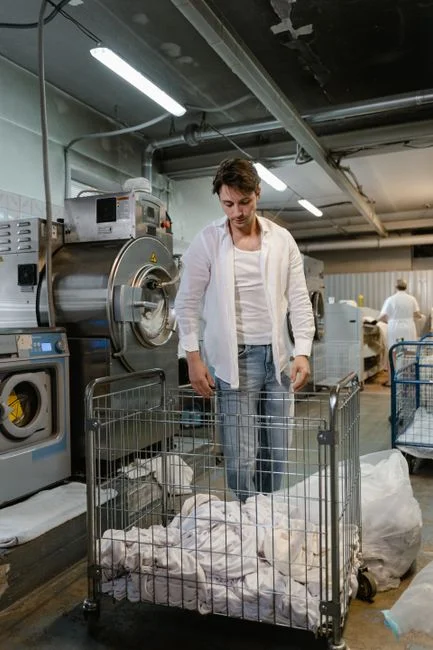
Procurement managers usually defend capital intensity per m³/day, OPEX per m³, aeration energy, surfactant COD removal, and module service life. The table below uses the 2014 Nicolaidis MBR as the cost benchmark. MABR pricing reflects the 2024–2026 hollow-fiber module band.
| Technology | CAPEX ($/m³/day) | OPEX ($/m³) | Aeration Energy | Surfactant (COD) Removal | Membrane/Module Life |
|---|---|---|---|---|---|
| MABR (hollow fiber) | $900–$5,500 | $0.12–$0.28 | 60–80% below MBR | 80–95% on LAS streams | 8–10 years |
| Submerged MBR (Nicolaidis 2014 baseline) | ~$1,200–$2,500 | ~$5.10 (€4.40, 2014 → 2026 USD) | $18,000/month reference (200 m³/day) | 70–85% | 3–5 years |
| Anaerobic FBR + aerobic polish | $700–$1,800 (FBR only) | $0.18–$0.40 with polish | Low electrical, but methane handling required | 60–80% pre-polish; >90% with MBR polish | Carrier media 10+ years; downstream MBR 3–5 years |
Energy is the MABR line item that usually wins the budget. At a 200 m³/day plant, MABR aeration runs about $5,000/month against roughly $18,000/month for a comparable submerged MBR (HydropureWater field comparison, 2026). That gap is about $156,000/year on aeration alone, before avoided membrane replacements and lower foam-control chemicals. Plants that want a wider head-to-head should read the MBR vs MBBR engineering comparison. A submerged MBR alternative for high-reuse polish remains defensible when the discharge permit is strict and reuse grade is non-negotiable.
2026 CAPEX and OPEX: A Worked Example at 200 m³/day
Budget-grade builds for MABR for commercial laundry at 200 m³/day and 80% reuse use the line items below. The base case is wash-water to wash-water reclaim, with optional RO for the rinse loop. All figures are 2026 USD.
| Line Item | Low | High |
|---|---|---|
| MABR hollow-fiber module train | $90,000 | $260,000 |
| Equalization tank + DAF system for FOG and lint pretreatment | $35,000 | $70,000 |
| PLC-controlled pH correction and coagulant dosing skid | $15,000 | $30,000 |
| PLC, instrumentation, SCADA | $25,000 | $45,000 |
| Installation, piping, civil works | $30,000 | $80,000 |
| Post-polish (MMF + UV or ClO₂); add RO for closed-loop rinse reclaim | $25,000 | $220,000 |
| Total CAPEX (no RO / with RO) | $180,000 | $1,100,000 |
OPEX at the same flow, normalized per m³ of treated water:
| OPEX Component | Low ($/m³) | High ($/m³) |
|---|---|---|
| Aeration energy | $0.04 | $0.08 |
| Membrane replacement (amortized) | $0.02 | $0.05 |
| Chemicals (coagulant, pH, nutrient) | $0.02 | $0.06 |
| Labor + maintenance | $0.04 | $0.09 |
| Total OPEX | $0.12 | $0.28 |
| Add-on: RO polish (closed-loop rinse) | $0.15 | $0.25 |
The 2014 Nicolaidis MBR OPEX of €4.40/m³ converts to roughly $5.10/m³ in 2026 USD. That uses cumulative Eurozone CPI inflation of about 16% from 2014 to 2026. Upper-band MABR OPEX of $0.28/m³ remains an order of magnitude lower. That gap compresses the MBR-class 6-year payback into a 3.5–5.5-year MABR payback. RO for a wash-to-rinse loop adds $0.15–$0.25/m³. It can displace freshwater purchase at $1.50–$4.00/m³ in water-stressed textile hubs such as Bangladesh, inland Portugal, and the U.S. Southwest.
Freeze CAPEX only after a short selection checklist.
- Weekday COD and LAS peaks after equalization
- Reuse grade: 50% wash-to-wash versus 90% wash-to-rinse
- Local freshwater and sewer surcharge tariffs
- Membrane life and aeration kWh assumptions in the vendor bid
- FOG and lint pretreatment capacity
- Whether staff or guest potable water stays on a separate Commercial Direct Drinking Water System
- Lead time for hollow-fiber trains above your design flow
Pretreatment and Reuse Configuration: How to Get MABR to Pay Back
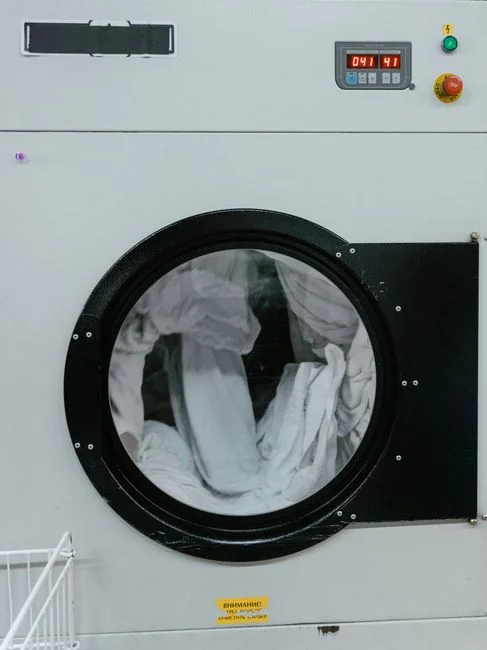
Standalone MABR modules miss payback when they are fed raw laundry wastewater. The supporting train unlocks the cost case. The reference 2026 configuration starts with a rotary bar screen for lint capture at 2–3 mm aperture. Equalization is sized for 6–12 hours of flow with diffused aeration to dampen pH (9–12 → 7–8.5) and temperature (60°C → 30–35°C). A DAF unit then removes FOG and microfloc ahead of MABR and post-polish. Post-MABR polish typically combines a multi-media filter for residual TSS with ClO₂ or UV disinfection. An optional high-efficiency sedimentation tank sits ahead of RO when a 90% closed-loop rinse train is specified.
Two reuse targets dominate the commercial decision. A 50% recycle (wash-to-wash) is achievable with MABR + MMF + disinfection at $180,000–$300,000 CAPEX. That band usually pays back in 3.5–4.5 years in 2026 cost cases. A 90% recycle (wash-to-rinse) needs RO and roughly doubles CAPEX. It also multiplies freshwater offset in water-stressed regions and can clear a five-year ROI hurdle for operations directors. The 2014 Nicolaidis 6-year submerged MBR payback is now the high-water mark. Lower MABR energy and longer membrane life typically land equivalent payback inside 5.5 years on the conservative side. Adsorption and photo-process polish studied for pre-treated laundry effluent can still sit after biology when color or residual surfactant limits are tighter than MABR alone can meet.
Market Timing and Sourcing: Why 2026 Is a Buyer's Window
The global MABR market was valued at $2.8 billion in 2025 and is forecast to reach $5.9 billion by 2034 at a compound annual growth rate of 8.7% (MABR Market Research Report 2034, published 2025). Demand concentrates in EU textile reuse mandates, China's industrial parks, and Gulf hospitality laundry. Module pricing is unlikely to soften under that pull. Hollow-fiber MABR supply has consolidated around four to six major vendors globally. Flat-sheet MABR remains a fragmented buyer's market in 2026, where multi-train orders can still negotiate 12–18% off list.
Two timing points matter for 2026 procurement. First-half 2026 still captures pre-tariff module pricing on membrane-grade PVDF before late-2026 supply-chain adjustments. Lead times for MABR trains above 500 m³/day run 16–24 weeks in 2026. A Q1 or Q2 purchase order lines up Q4 commissioning for the 2027 reuse-reporting cycle. If procurement slips to 2027, expect 6–10% module price inflation and a 4–8 week lead-time extension. Both weaken the ROI line.
Who This Is For / Next Step
This guide is for hotel, healthcare, and uniform-rental laundry operators sizing on-site reuse between 50 and 500 m³/day. It also helps EPC teams comparing MABR against submerged MBR on surfactant COD. Plants that only need drain compliance with low surcharge may still prefer a simpler aerobic train. Broader industrial process trade-offs are covered in the MBR vs MBBR engineering comparison. If you have weekday flow, COD, and reuse targets, request a budget MABR train quote with pretreatment and polish scoped to your tariff case.
Frequently Asked Questions
What does a 200 m³/day MABR system cost for a commercial laundry in 2026?
Capital cost lands between $180,000 and $1,100,000 depending on reuse grade. A wash-to-wash 50% recycle configuration sits at $180,000–$300,000. A closed-loop wash-to-rinse 90% recycle with RO sits at $600,000–$1,100,000. OPEX runs $0.12–$0.28 per m³ of treated water under 2026 HydropureWater field bands. Those ranges assume equalization, DAF pretreatment, and either MMF/UV or RO polish as listed in the CAPEX table above.
How much energy does MABR save compared to a submerged MBR on laundry wastewater?
Aeration energy drops by 60–80% relative to a submerged MBR on the same surfactant stream. At 200 m³/day, MABR aeration runs about $5,000/month against $18,000/month for an equivalent submerged MBR. That is roughly $156,000/year on the aeration line alone (HydropureWater field comparison, 2026). Avoided membrane replacements and lower foam-control chemicals add further OPEX relief beyond power.
What COD removal can MABR achieve on surfactant-rich laundry wastewater?
MABR typically reaches 80–95% COD removal on LAS- and APEO-laden streams. Submerged MBR usually lands at 70–85%, and anaerobic FBR at 60–80% before aerobic polishing. The counter-diffusion biofilm supports slow-growing surfactant-degrading genera such as Acinetobacter and Pantoea agglomerans (Springer 2019). Equalization and DAF ahead of the modules keep those removal bands repeatable on weekday peaks.
What pretreatment does MABR need for laundry wastewater?
Lint removal by rotary bar screen, equalization for pH and temperature, then a DAF system for FOG and lint pretreatment and pH correction to 7–8.5 before the MABR feed are the reference steps. Skipping that train is the usual reason standalone modules miss payback. For pretreatment energy benchmarking, see the DAF energy consumption benchmarks.
What is the realistic payback period for a 2026 MABR retrofit on a commercial laundry?
Payback typically lands at 3.5–5.5 years for a 50% recycle configuration, depending on local freshwater and sewer tariffs. That range compresses the 2014 Nicolaidis 6-year submerged MBR payback by about 10–40% in 2026 economics. A 90% wash-to-rinse loop with RO raises CAPEX but can still clear a five-year hurdle where freshwater costs $1.50–$4.00/m³.