What Defines a Qualified Wastewater Treatment Plant Supplier in Mexico
A qualified wastewater treatment plant supplier in Mexico must demonstrate depth across four engineering pillars — process coverage, regulatory literacy, in-country support, and documentation quality — before a procurement manager should put them on a shortlist. Process coverage is the first filter: confirm the vendor manufactures or integrates at least three of the four core stages in-house, namely physical (screening, DAF pre-treatment, sedimentation), biological (A/O, SBR, MBR, MBBR), chemical (pH adjustment, coagulation, ClO2 disinfection), and membrane (RO). A vendor who only assembles skids and outsources membranes or controls will fail FAT traceability and inflate lead times by 4–8 weeks.
Regulatory familiarity is the second pillar and the one most Mexican suppliers fail. The shortlist should only contain vendors who can cite NOM-001-SEMARNAT-2021 numerical limits by parameter — BOD ≤75 mg/L, TSS ≤75 mg/L, fecal coliforms ≤1,000 NMP/100 mL for surface-water discharges — and explain how their proposed train hits each value. Vague references to "Mexican environmental standards" are a disqualification. The third pillar is in-country support: regional offices or authorized service partners in Monterrey, Guadalajara, and Mexico City, Spanish-language O&M manuals, and 24–48 hour spare-parts dispatch are baseline expectations; a vendor with no LATAM service footprint should be flagged.
The fourth pillar is documentation. Standard deliverables must include P&IDs, electrical drawings, FAT protocols, CE/NOM certifications, and a Spanish-language operator training program. Suppliers who deliver English-only manuals force the buyer to pay for translation and lengthen commissioning by 2–3 weeks. Cross-reference these four pillars against the scorecard in section five before issuing the RFQ.
NOM-001-SEMARNAT-2021 Discharge Limits Every Supplier Must Hit
NOM-001-SEMARNAT-2021 is the binding discharge standard for wastewater in Mexico, and every supplier proposal should map its treatment train to specific numerical limits. The table below consolidates the parameter ceilings a qualified vendor must hit for the two most common discharge routes.
| Parameter | Surface water (cuerpo receptor) | Sewer (alcantarillado) | Stricter zones (coastal, coral, coffee) |
|---|---|---|---|
| BOD₅ | ≤75 mg/L | ≤150 mg/L | ≤30 mg/L |
| TSS | ≤75 mg/L | ≤150 mg/L | ≤30 mg/L |
| Fecal coliforms | ≤1,000 NMP/100 mL | ≤1,000–10,000 NMP/100 mL | ≤240 NMP/100 mL |
| pH | 6.0–9.0 | 6.0–9.0 | 6.0–9.0 |
| Fats & oils (FOG) | ≤25 mg/L | ≤50 mg/L | ≤15 mg/L |
| Total nitrogen | ≤40 mg/L (flows >500 m³/d) | Site-specific per POT | ≤20 mg/L |
| Total phosphorus | ≤30 mg/L (flows >500 m³/d) | Site-specific per POT | ≤15 mg/L |
| Heavy metals (Cd, Cr, Pb, Hg, As) | Site-specific; per NOM-001 Table 2 | Site-specific per POT | Site-specific |
Site classification must be confirmed before sizing, because coastal waters, coral reefs, and coffee-growing regions drop BOD/TSS ceilings to 30 mg/L and fecal coliforms to 240 NMP/100 mL (per NOM-001-SEMARNAT-2021, Tables 1–2). A vendor who quotes one set of numbers without asking for the receiving body classification is not yet qualified. The compliance matrix — a one-page document mapping each treatment stage to the specific NOM-001 parameter it controls — should be a non-negotiable RFQ deliverable.
Matching Process Technology to Mexican Industrial Effluents
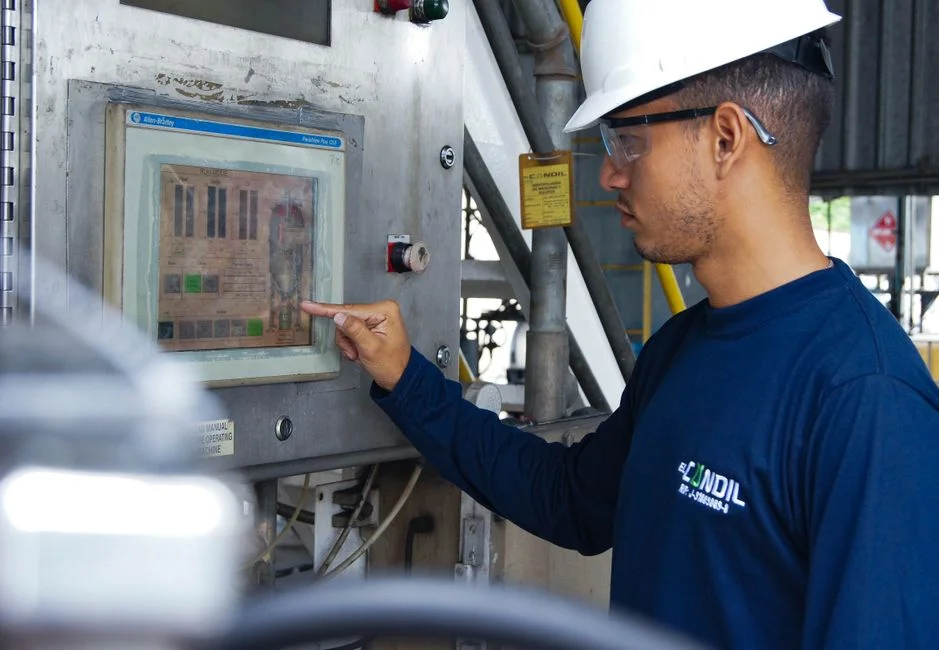
Process selection in Mexico is driven by influent characteristics, not by what the supplier happens to stock. The matrix below pairs the dominant Mexican industrial segments with the process train that hits NOM-001-SEMARNAT-2021 at the lowest lifecycle cost, based on 2026 field data from industrial wastewater treatment Mexico installations.
| Industry | Influent signature | Recommended process train | Typical removal / output |
|---|---|---|---|
| Food & beverage (dairy, meat, beverage) | BOD 1,500–5,000 mg/L, FOG 200–800 mg/L, TSS 500–2,000 mg/L | Screening → DAF pre-treatment → A/O or SBR → ClO2 disinfection | DAF removes 90–95% FOG/TSS; biological stage cuts BOD below 75 mg/L NOM-001 ceiling |
| Electronics & semiconductor | Low BOD, high conductivity, trace heavy metals, fluorides | Chemical precipitation → two-stage industrial RO system for water-reuse loops → ion exchange polish | RO recovery 95%, permeate conductivity <10 µS/cm; 60–80% reuse rate |
| Battery recycling (Li-ion, NMC cathodes) | Acidic/alkaline pH swings, Ni/Co/Mn/Li 50–500 mg/L, COD 500–2,000 mg/L | pH adjustment → chemical precipitation → MBR package plant for 10–2,000 m³/day → RO for reuse | Heavy metals <1 mg/L; COD >95% removal; reuse loop eligible under CONAGUA permit |
| Metalworking & electroplating | Cr(VI) 10–200 mg/L, Ni/Cu/Zn 20–100 mg/L, TSS 100–500 mg/L | Cr(VI) reduction (NaHSO₃) → lime/soda precipitation → lamella clarifier → plate-and-frame filter press for sludge dewatering | Total metals <5 mg/L; sludge cake 25–30% dry solids |
| Pharma & hospital | BOD 300–1,500 mg/L, antibiotic residues, pathogens | Screening → MBR → ozone or ClO2 disinfection | COD >95% removal; pathogen log-5+ reduction; meets NOM-001 and hospital effluent guidelines |
For battery recycling wastewater Mexico, the reduction → precipitation → MBR → RO train has become the de-facto standard through 2025–2026, driven by stricter CONAGUA water-rights enforcement and the growth of Mexico's lithium supply chain. International benchmarks to cross-reference during vendor evaluation include EPA effluent guidelines and the EU Urban Waste Water Directive 91/271/EEC for pathogen and nutrient removal.
2026 CAPEX and OPEX Benchmarks for Mexico WWTPs
2026 installed-cost bands for Mexican WWTP projects let a procurement manager sanity-check any quote within minutes. The numbers below are drawn from comparable industrial wastewater treatment Mexico projects shipped in the last 12 months and exclude civil works, taxes (IVA 16%), and import duties.
| Plant scale | Configuration | CAPEX (USD) | OPEX (USD/m³ treated) | Key cost drivers |
|---|---|---|---|---|
| Package plant 10–500 m³/day | Skid-mounted, biological + chemical | 25,000–250,000 | 0.08–0.22 | Aeration energy 40–60% of OPEX; sludge hauling |
| Mid-scale MBR 500–2,000 m³/day | Containerized or site-built MBR | 250,000–1,200,000 | 0.15–0.35 | Membrane replacement every 5–8 years adds 8–12% to lifecycle |
| Containerized / mobile plant | ISO-container plug-and-play | 30–50% CAPEX premium vs skid | Comparable to skid | 30–50% faster install; ideal for remote mining or construction sites |
| Sludge dewatering add-on | Plate-and-frame filter press for sludge dewatering | 15,000–80,000 | Cuts sludge volume 75–80% | Major OPEX lever: sludge-haul cost reduction |
Two practical rules of thumb: (1) for a 1,000 m³/day MBR package plant in central Mexico, budget USD 600,000–900,000 turnkey excluding civil works, with OPEX around USD 0.20–0.30/m³ once membrane cleaning chemicals and sludge disposal are included; (2) containerized/mobile WWTP Mexico deployments command a 10–15% CAPEX premium but cut installation labor by 30–50%, which matters on greenfield sites without permanent infrastructure. A detailed engineering guide for DAF pricing is available in the Mexico DAF system engineering guide.
Supplier Evaluation Scorecard for Mexico WWTP Procurements
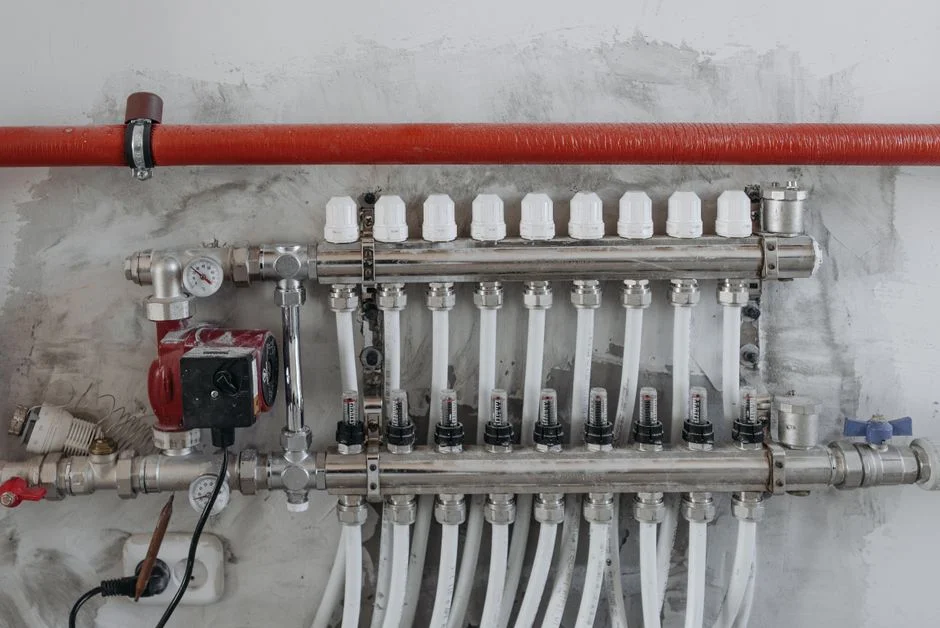
The scorecard below assigns weights that reflect what typically determines a project's outcome in Mexico: technical fit dominates, but commercial terms and in-country service capability are decisive when two vendors are otherwise equal. Score each candidate 1–5 per criterion, then multiply by the weight to produce a 100-point total.
| Criterion | Weight | What to verify | Red flag |
|---|---|---|---|
| Process fit to effluent target | 10% | Proposed train covers all NOM-001 parameters for site classification | Generic "biological treatment" without stage detail |
| Effluent performance guarantee | 10% | Contractual removal rates backed by liquidated damages | "Expected" performance without remedy clause |
| Equipment list & P&ID quality | 5% | Brand-named pumps, blowers, membranes; full P&ID at proposal stage | "Or equivalent" substitutions without prior approval |
| Automation (PLC/SCADA) | 5% | PLC with Spanish-language HMI, remote telemetry option | Hard-wired only, no SCADA; English-only HMI |
| Membrane warranty & life | 5% | ≥5-year pro-rata warranty, 8-year design life stated | ≤3-year warranty or "subject to operating conditions" |
| NOM-001 compliance matrix | 10% | One-page matrix mapping each stage to a specific parameter | Verbal compliance only |
| CONAGUA water-rights / reuse support | 5% | Supplier has prior SEMARNAT permit references | No Mexican reference list |
| CAPEX + OPEX + payment terms | 20% | Line-item pricing, OPEX breakdown, LC acceptance | Single lump-sum, no OPEX |
| In-country commissioning crew | 10% | Mexican-based commissioning engineers, FAT witness option | China/Europe-only crew, no Mexico presence |
| Spanish O&M + spare-parts SLA | 10% | Spanish O&M manual, ≤48 h spare-parts dispatch from a Mexican hub | English-only manuals, no SLA |
Typical Mexican payment terms are 30% advance, 60% on FAT, 10% on SAT, and any deviation should be priced into the bid comparison. Hard disqualifications: no FAT offered, no reference list in Mexico, vague NOM-001 answers, English-only documentation, or membrane lead times exceeding 12 weeks. For a deeper look at controls selection, the PLC control supplier buyer's guide pairs with this scorecard; for biological-stage decisions, the MBR vs MBBR comparison documents the trade-offs.
6-Step RFQ Workflow for Sourcing a WWTP in Mexico
Procurement teams that skip influent characterization before issuing the RFQ waste 6–10 weeks in clarification cycles. Use the six steps below to compress a 5-month procurement into a 3-month track.
- Characterize the influent. Run a 7-day composite sampling campaign for COD, BOD₅, TSS, FOG, pH, temperature, and target heavy metals; identify peak-to-average flow ratios (typically 1.5–2.5× for food, 2–4× for metal finishing).
- Set effluent targets against NOM-001-SEMARNAT-2021. Lock in the receiving-body classification (surface water, sewer, coastal zone) and the corresponding parameter ceilings before approaching suppliers.
- Pre-select 3–5 suppliers. Apply the scorecard above; request P&ID-level proposals with line-item CAPEX and OPEX breakdowns, including a PLC-controlled chemical dosing skid where pH correction is required.
- Run a 60:40 technical-commercial weighting. Shortlist the top two for FAT and commercial negotiation; reject any vendor that refuses to break out membrane replacement cost over a 10-year horizon.
- Witness or run a virtual FAT. Non-negotiable for plants above USD 100,000; include a 2-hour performance test at design load with simulated influent.
- Negotiate SAT and warranty terms. Require a ≥95% removal performance warranty, a 12-month defect liability period, and clear SAT pass/fail criteria tied to commercial retention.
For reuse projects, fold the CONAGUA water-rights permit timeline into the schedule — permit review typically runs 60–120 days, and an early application avoids a 3–4 month plant idle period after SAT.
Frequently Asked Questions
What is the typical cost of a wastewater treatment plant in Mexico in 2026? Package plants of 10–500 m³/day range from USD 25,000–250,000 in CAPEX, while mid-scale MBR systems of 500–2,000 m³/day run USD 250,000–1,200,000. OPEX bands are USD 0.08–0.22/m³ for package plants and USD 0.15–0.35/m³ for MBR, with membrane replacement every 5–8 years adding 8–12% to lifecycle cost.
What are the NOM-001-SEMARNAT-2021 surface-water discharge limits? BOD ≤75 mg/L, TSS ≤75 mg/L, fecal coliforms ≤1,000 NMP/100 mL, pH 6.0–9.0, and FOG ≤25 mg/L; stricter zones drop BOD/TSS to 30 mg/L and fecal coliforms to 240 NMP/100 mL.
How long does delivery and commissioning take? Standard delivery is 8–14 weeks for skid-mounted systems and 14–22 weeks for containerized MBR units, followed by 2–6 weeks of on-site commissioning and SAT, for a typical 3–6 month total project duration.
What documentation should a Mexican supplier provide in Spanish? O&M manuals, HMI screens, electrical drawings, PLC ladder logic, and the NOM-001 compliance matrix must all be delivered in Spanish; the 24–48 h spare-parts SLA should also be contractually binding.
What is the standard process train for battery-recycling wastewater in Mexico? pH adjustment → chemical precipitation for Ni/Co/Mn/Li → MBR for residual organics → RO for water reuse; this train delivers >95% COD removal and a reuse loop eligible under CONAGUA water-rights permitting.