Why the UAE Tightens Ammonia Nitrogen Limits in 2026
Federal Law No. 24 of 1999 was repealed and replaced by Federal Law No. 24 of 2025, whose implementing regulations took effect for the 2026 permit cycle and reset industrial discharge thresholds for ammonia nitrogen (NH3-N) across the federation. NH3-N is the sum of unionized ammonia (NH3) and ionized ammonium (NH4+); the toxic fraction is NH3, and that fraction climbs sharply as pH and temperature rise — at pH 8.0 and 30 °C (typical of Gulf receiving water and process streams) approximately 5% of the total ammonia nitrogen (TAN) sits in the unionized form, versus less than 1% at pH 7.0 and 15 °C. That shift is the reason NH3-N, not just COD or BOD, has become a non-negotiable compliance parameter for refineries, fertilizer plants, power stations, and food processors discharging to marine outfalls or reuse networks. The 2025 framework explicitly aligns with UAE Vision 2031 and the National Strategy for Water Security 2036, both of which call for protected marine-water quality and a higher share of treated effluent reused in industry and irrigation. As parallel precedent, the US EPA's 2020 Total Ammonia Nitrogen Criteria Implementation Guidance documents a global regulatory drift toward tighter NH3-N caps in surface-water discharge permits; the UAE is tracking the same trajectory, but from a stricter starting point.
UAE Ammonia Nitrogen Discharge Limits by Sector
Three regulatory layers govern an industrial discharger in the UAE, and the most restrictive applicable clause always controls. The first layer is Federal Law No. 24 of 2025 and its 2025 Ministerial Decision, which set 10 mg/L NH3-N for industrial discharge to a marine outfall and 5 mg/L for inland discharge, reuse schemes, or sensitive receiving environments. The second layer is the FOCP Cooling Water Order (originally issued by Fujairah Municipality in 2016 and updated in 2021), which caps once-through cooling blowdown at 2 mg/L NH3-N within the Fujairah industrial zone. The third layer is the Federal Environment Department (FED) sector annexes, which apply tighter or sector-specific numbers: 5 mg/L for food and beverage, 10 mg/L for petrochemical, and 5 mg/L for fertilizer production. The compliance test method is APHA 4500-NH3 — either the Nesslerization or phenate method for grab and composite samples, with an on-line ion-selective electrode (ISE) probe for continuous monitoring. For context, the US §53.08 municipal threshold is 25 mg/L, which makes the UAE framework 2.5–12.5× stricter depending on the sector. The table below summarizes the binding numbers a compliance manager will be measured against.
| Authority / Instrument | Applies To | NH3-N Limit | Test Method |
|---|---|---|---|
| Federal Law 24/2025, Ministerial Decision (2025) | Industrial discharge to marine outfall | 10 mg/L | APHA 4500-NH3 (Nessler / phenate) |
| Federal Law 24/2025, Ministerial Decision (2025) | Inland / reuse / sensitive receivers | 5 mg/L | APHA 4500-NH3 + on-line ISE |
| FOCP Cooling Water Order 2016, updated 2021 | Once-through cooling blowdown (Fujairah) | 2 mg/L | APHA 4500-NH3 |
| FED Sector Annex — Food & Beverage | F&B effluent | 5 mg/L | APHA 4500-NH3 |
| FED Sector Annex — Petrochemical | Refinery / petrochemical effluent | 10 mg/L | APHA 4500-NH3 |
| FED Sector Annex — Fertilizer | Urea / ammonia plant effluent | 5 mg/L | APHA 4500-NH3 |
How Ammonia Nitrogen Behaves in Industrial Wastewater
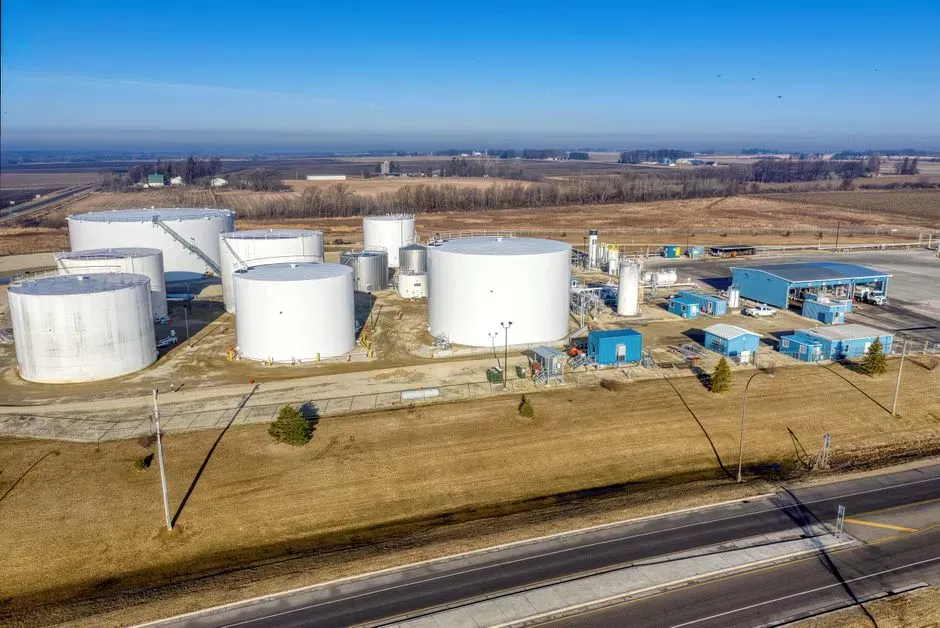
The NH4+ ↔ NH3 + H+ equilibrium is the single most important piece of chemistry for designing a UAE NH3-N removal system. At pH 8.0 and 30 °C, about 5% of TAN is unionized NH3; at pH 9.0 and 35 °C the share climbs to roughly 20%, which is why air-stripping and off-gassing (EBH Engineering, 2018) work only when the operator can sustain pH above 9 — usually with lime dosing — and why the pH-controlled pathway is rarely the primary treatment in a high-flow industrial train. Nitrification to nitrate, followed by denitrification to nitrogen gas, is the practical removal route. The Gulf's high salinity adds a second design constraint: total dissolved solids (TDS) in UAE industrial influent commonly runs 2,000–15,000 mg/L, and chloride above 5,000 mg/L inhibits the nitrifying genera (Nitrosomonas, Nitrobacter) enough to push the required solids retention time (SRT) from a freshwater 10–15 days up to 25–40 days. Industrial sources in the UAE include refinery sour-water stripper bottoms (50–200 mg/L NH3-N), food and dairy protein breakdown (10–80 mg/L), fertilizer plants (often above 500 mg/L), and landfill leachate (200–1,000 mg/L). An MBR membrane bioreactor system is sized against these loads by fixing SRT first and HRT second.
Treatment Technologies That Hit the UAE NH3-N Limit
Four unit processes deserve serious consideration for a 2026 UAE plant, plus two polishing options. The first three are biological, and the choice between them is driven by influent load, flow, salinity, and footprint rather than by effluent quality alone — all three can hit the 10/5 mg/L federal numbers with the right design. The table below consolidates the operating envelope; the rest of this section explains when each option wins.
| Technology | NH3-N Removal | Effluent NH3-N | HRT | SRT | Footprint vs. CAS | Best Fit |
|---|---|---|---|---|---|---|
| MBR (Membrane Bioreactor) | 95–99% | < 1 mg/L | 6–10 h | 20–30 days | ~40% of CAS | Space-constrained, > 50 m³/day |
| SBR (Sequencing Batch Reactor) | 70–95% | 1–5 mg/L | 24 h (batch) | 15–25 days | ~70% of CAS | < 50 m³/day, intermittent |
| A/O + MBBR hybrid | 85–95% | 1–3 mg/L | 10–14 h | 20–30 days | ~60% of CAS | Refinery / fuel, salinity > 5,000 mg/L |
| Breakpoint chlorination (polish) | Residual only | < 0.5 mg/L | 15–30 min contact | n/a | Tank + dosing skid | Final polish to FOCP 2 mg/L |
| Clinoptilolite ion exchange | Spike capture | < 1 mg/L | BV 5–10 min | n/a | Two columns + NaCl regen | Upset / shock load |
The MBR membrane bioreactor system is the high-performance default for industrial sites above 50 m³/day because it holds 20–30 day SRT inside a small tank and the DF series MBR flat sheet membrane module cuts effluent suspended solids below the 1 µm threshold, which protects downstream RO units and stabilizes the on-line NH3-N reading. SBR is the lower-CAPEX option for sub-50 m³/day flows with intermittent operation; a packaged WSZ underground package sewage treatment plant built around SBR logic can be buried beneath a parking apron and is a frequent choice for satellite sites. The A/O + MBBR hybrid, with anoxic and aerobic moving beds in series, is the workhorse at refineries and fuel terminals because the biofilm carriers absorb salinity shocks that would slow a suspended-growth system. UAE ambient temperature of 22–35 °C actually favors year-round biological nitrification — directly counter to the US lagoon data (EBH Engineering, 2018), where winter ice cover suppresses performance. For FOCP cooling-water blowdown that has to hit 2 mg/L, breakpoint chlorination at a Cl2:N weight ratio of 8:1 to 10:1 drops residual NH3-N from 1–2 mg/L to below 0.5 mg/L for roughly $0.04–$0.08 per cubic metre of OPEX; clinoptilolite ion exchange is kept on standby for fertilizer-plant ammonia spikes.
MBR vs SBR vs A/O: Process Comparison for NH3-N Removal
Procurement-grade side-by-side numbers, anchored to the catalog specs the reader can actually order against. The MBR figures are taken from the integrated MBR unit (10–2,000 m³/day, < 1 µm filtration) and the SBR/WSZ figures from the underground packaged plant (1–80 m³/h). The A/O + MBBR column is a typical refinery package. Use the decision rule at the bottom of the table to defend the vendor choice in front of a plant manager or auditor.
| Parameter | MBR (HydropureWater Integrated) | SBR (WSZ Packaged) | A/O + MBBR |
|---|---|---|---|
| Effluent NH3-N (typical) | < 1 mg/L | 1–5 mg/L | 1–3 mg/L |
| HRT | 6–10 h | 24 h (batch cycle) | 10–14 h |
| SRT | 20–30 days | 15–25 days | 20–30 days |
| Footprint (m² per m³/day) | 0.05–0.08 | 0.10–0.15 | 0.07–0.12 |
| CAPEX band (USD per m³/day) | $350–$900 | $180–$450 | $300–$700 |
| OPEX (USD per m³ treated) | $0.22–$0.45 | $0.18–$0.35 | $0.20–$0.40 |
| Salinity tolerance (Cl⁻) | Up to 6,000 mg/L | Up to 4,000 mg/L | Up to 10,000 mg/L |
| Operator skill required | Medium (membrane care) | Low (timer-driven) | Medium-High (biofilm control) |
| Best-fit flow range | 50–2,000 m³/day | 1–80 m³/h packaged | 100–5,000 m³/day |
Decision rule: choose MBR for flows above 50 m³/day or any site where footprint or effluent quality is constrained; choose SBR for flows below 50 m³/day with intermittent operation and a price-sensitive CAPEX ceiling; choose A/O + MBBR when influent salinity exceeds 5,000 mg/L or when the load profile includes fuel, sulfide, or other refinery-derived inhibitors. A more detailed head-to-head between biofilm and membrane options sits in our MBR vs MBBR comparison.
Cost to Comply: CAPEX and OPEX Ranges for 2026
Budget bands for a 2026 industrial NH3-N compliance build, expressed per cubic metre of daily treatment capacity for CAPEX and per cubic metre treated for OPEX. MBR CAPEX spans USD 350–900 per m³/day for industrial plants in the Gulf, driven mainly by membrane surface area and stainless-steel tankage; SBR CAPEX lands at USD 180–450 per m³/day because there is no membrane stack. OPEX for both trains clusters in the USD 0.18–0.45 per m³ treated band, with aeration energy 60–70% of the total and membrane replacement (MBR only) at the 5–7 year interval adding roughly 10–15% to lifetime OPEX. Sludge handling is the line item most budgets miss: MBR and SBR both produce wasted-activated sludge at 0.15–0.30 kg dry solids per m³ treated, and that sludge needs to be dewatered to roughly 22–28% dry solids before disposal. A packaged plate and frame filter press sized to the biological waste rate is the standard downstream unit. For a 100 m³/day plant, expect CAPEX of USD 35,000–90,000 for an SBR and USD 55,000–130,000 for an MBR, with OPEX of USD 0.18–0.40 per m³.
UAE Compliance Checklist for Ammonia Nitrogen Discharge
Five steps a UAE EHS manager can paste into the management system and tick off before the 2026 permit cycle closes.
- Identify the binding clause. Map the discharge route to the correct row: Federal Law 24/2025 (10 mg/L marine, 5 mg/L inland), FOCP Cooling Water Order 2016/2021 (2 mg/L Fujairah cooling blowdown), or the FED sector annex (5/10 mg/L by industry).
- Lock the analytical method. Specify APHA 4500-NH3 (Nessler or phenate) for laboratory confirmation and an on-line ion-selective electrode (ISE) probe for continuous monitoring at the permitted sampling point.
- Characterize the influent. Use sector-typical UAE ranges — refinery 50–200 mg/L NH3-N, food and dairy 10–80 mg/L, fertilizer above 500 mg/L — to size the biological train and confirm the SRT envelope.
- Select the treatment train. Apply the MBR / SBR / A/O decision rule from the comparison table, and add breakpoint chlorination when the binding limit is 2 mg/L.
- Install continuous monitoring. Fit an on-line NH3-N ISE on the treated-effluent line, log to the SCADA, and set the alarm at 80% of the permit limit so the operator has time to react before a non-compliance event.
Frequently Asked Questions
What is the maximum ammonia nitrogen allowed in UAE industrial wastewater discharge? The tiered structure is 10 mg/L for industrial discharge to a marine outfall under Federal Law 24/2025, 5 mg/L for inland discharge, reuse, or sensitive receivers, and 2 mg/L for once-through cooling blowdown in Fujairah under the FOCP Cooling Water Order 2016/2021. FED sector annexes tighten some industries further (5 mg/L for food and beverage, 5 mg/L for fertilizer).
Which UAE law governs ammonia nitrogen in industrial effluent? Federal Law No. 24 of 2025, supported by the 2025 Ministerial Decision and the implementing regulations, is the primary instrument. The FOCP Cooling Water Order (2016, updated 2021) and the FED sector annexes add layer-specific obligations.
How is ammonia nitrogen measured for UAE compliance? The reference method is APHA 4500-NH3 — Nesslerization or the phenate method — for grab and composite samples. On-line monitoring is done with an ion-selective electrode (ISE) probe, and the two methods are cross-checked at the frequency written into the permit.
Can MBR alone meet the FOCP 2 mg/L cooling-water limit? Yes. A correctly sized MBR membrane bioreactor system routinely delivers NH3-N below 1 mg/L, so the FOCP 2 mg/L threshold is met without tertiary polishing in most cases. Breakpoint chlorination is kept as a standby rather than a permanent polish.
What is the cost to install an ammonia-nitrogen treatment system for a 100 m³/day UAE plant? Expect CAPEX of USD 35,000–90,000 for an SBR and USD 55,000–130,000 for an MBR, with OPEX of USD 0.18–0.40 per m³ treated over a 5–7 year membrane cycle. For pH-related compliance costs at the same site, the UAE pH discharge limit guide covers the parallel parameter.