What Actually Drives Oxidation Ditch Spare Parts and Consumables Cost
Oxidation ditch spare parts and consumables cost in 2026 averages $0.04–$0.16 per gallon per day (gpd) of installed treatment capacity, or roughly $0.016–$0.056 per m³ treated once normalized to flow. The figure is driven by three buckets: aerator drivetrain wear parts (bearings, seals, couplings, belts), brush/rake wear parts, and process consumables (DO probe consumables, defoamer, polymer). Mechanical parts account for 60–80% of the line, and chemical/analytical consumables account for 20–40%, with the mix shifting toward consumables on plants that run brush or jet aeration because of higher replacement frequency on wear-intensive parts. The breakdown below is consistent with the EPA comparison of oxidation ditch plants to competing processes and field data summarized in the Westech OxyStream oxidation ditch product literature. For a plant-level view of how these line items roll up, see the companion oxidation ditch maintenance cost 2026 OPEX breakdown.
Aerator Drivetrain Spare Parts: Bearings, Seals, Couplings, Belts
Aerator bearings are the single largest mechanical line in any oxidation ditch, at $180–$650 per unit depending on housing style and dynamic load rating. A 4-unit mammoth rotor plant typically carries 8–12 bearings (drive-end and non-drive-end on each rotor plus gearboxes), so a single bearing replacement event lands at $1,440–$7,800. Service life is 36,000–60,000 hours on municipal load, dropping to 18–30 months on industrial ditches with high TDS or temperature swing.
Mechanical seals for the aerator shaft run $120–$420 each, with an 18-month to 3-year service life. Cartridge-style seals command a premium ($260–$420) but reduce installation labor by 30–45% versus component seals, which is why most 2026 rebuild specs now call for cartridge. Flexible, gear, and chain couplings ($80–$350 each) are typically replaced alongside the bearing job, because misalignment and torsional shock that destroy a bearing usually damage the coupling as well. V-belt and synchronous belt drives on lower-horsepower brush aerators add a smaller line at $25–$95 per belt, replaced every 12–18 months on average.
Gearbox oil and seals represent a hidden cost line: $45–$110 per oil change and $160–$380 for a seal kit, typically serviced annually on horizontal-shaft aerators. Skipping oil service is the single fastest path to a catastrophic gearbox rebuild ($4,500–$11,000), so this line is best treated as non-discretionary.
| Drivetrain Part | Unit Cost (USD) | Typical Service Life | Annualized Cost per Aerator |
|---|---|---|---|
| Aerator bearing (drive-end or non-drive-end) | $180–$650 | 36,000–60,000 h (municipal); 18–30 mo (industrial) | $240–$870 |
| Mechanical seal (component) | $120–$260 | 18–30 months | $160–$350 |
| Mechanical seal (cartridge) | $260–$420 | 24–36 months | $260–$420 |
| Flexible / gear / chain coupling | $80–$350 | Co-replaced with bearing | $110–$470 |
| V-belt / synchronous belt | $25–$95 | 12–18 months | $50–$190 |
| Gearbox oil change | $45–$110 | 12 months | $45–$110 |
| Gearbox seal kit | $160–$380 | 24–36 months | $90–$210 |
Brush and Rake Wear Parts: The Hidden High-Frequency Line Item
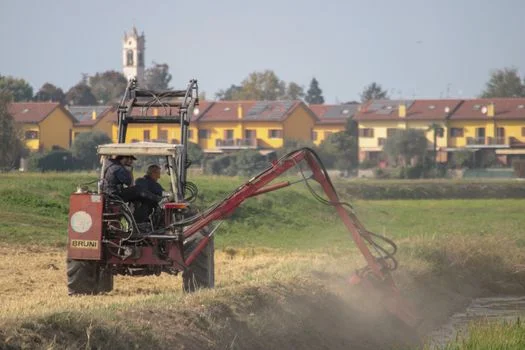
Brush bundles for horizontal rotor brush aerators cost $1,200–$4,500 per complete set, with each rotor carrying 8–16 bundles depending on diameter and length. Service life is 3–5 years under typical municipal load, but drops to 12–24 months in industrial ditches with high surfactant or oil loading, because FOG and detergents strip bristle material and unbalance the rotor. Individual bundle replacement is the norm, with full-set replacement reserved for rotors neglected until bristle length drops below 50%.
Rake teeth and scrapers for bridge-type or cage aerators run $35–$180 per tooth, replaced in sets of 8–24. Hardened alloy teeth last 18–36 months; standard carbon steel drops to 9–18 months in grit-laden influent. Splines, hubs, and drive pins ($60–$260 per assembly) fail under shock load when a rag or solid passes through the rotor, which makes keeping the upstream rotary mechanical bar screen in spec the cheapest insurance against this line.
This annualized brush parts cost of $800–$3,200 per unit means a 4-unit plant spends $3,200–$12,800 annually. Consequently, brush plants often show a lower mechanical-share ratio than mammoth rotor plants, as frequent brush replacement shifts spend toward the consumables-adjacent mechanical line.
Process Consumables: DO Probes, Defoamer, and Polymer
Dissolved oxygen probe membranes, defoamers, and sludge polymers form the steady monthly consumables expense for oxidation ditches. The consumables bucket is smaller per line item but compounds relentlessly month over month.
Dissolved oxygen probe membrane caps and electrolyte run $90–$220 per cap, replaced every 2–4 months depending on fouling load and cleaning frequency. A 4-probe basin carries $1,080–$5,280/year on membranes alone, before the cost of the benchtop dissolved oxygen meter calibration solution ($35–$90 per bottle, quarterly). Defoamer / silicone antifoam for foaming oxidation ditches costs $3.50–$7.80 per kg, dosed at 0.5–3 mg/L depending on FOG and surfactant loading. A 5 MGD plant in chronic foam uses 8–45 kg/month, or roughly $336–$4,212/year on defoamer alone.
Cationic or anionic polymer for RAS/WAS thickening in the sludge return loop costs $1.80–$4.20 per kg active, dosed at 3–10 mg/L, which is the highest-volume consumable line in plants running mechanical thickening. pH probe electrolyte and reference solution runs $40–$110 per refill at a 3–6 month interval. ORP probe refill / cleaning solution at $30–$85 on a similar cadence is covered in detail in the ORP sensor cost 2026 pricing guide. MLVSS control has no direct consumable, but the analytical lab reagents (COD vials, TSS cones) add $0.0008–$0.0024 per m³ monitored.
Stacking the consumables line across a 5 MGD plant gives a total consumables cost of $0.008–$0.022 per m³ treated, or roughly $45K–$125K annualized at 19,000 m³/day. Dosing is typically handled by an automatic chemical dosing system tied to flow pacing, which keeps consumption within the ranges above. For process economics at the broader plant level, the AAO process operating cost 2026 OPEX breakdown provides a useful cross-reference.
Cost per m³ Treated: 2026 Benchmark Table by Aerator Type
Oxidation ditch spare parts and consumables cost ranges from $0.016 to $0.056 per cubic meter treated in 2026, depending on aerator technology. Mammoth rotor plants carry the highest mechanical cost ($0.018–$0.038/m³ parts, $0.009–$0.018/m³ consumables) because large bearings, gearboxes, and oil changes dominate. Disc aerators sit mid-range ($0.012–$0.024/m³ parts) with disc membranes and hubs as the primary wear items. Brush aerators post the lowest mechanical cost ($0.006–$0.014/m³ parts) but the highest consumables ratio because frequent brush and rake replacement shifts spend into the wear-intensive mechanical line. Jet aerators have the lowest consumables ($0.006–$0.012/m³) but carry high energy cost, which is outside this article's scope but worth flagging because a maintenance-only view understates their total OPEX.
| Aerator Type | Spare Parts Cost (per m³) | Consumables Cost (per m³) | Total 2026 Range (per m³) | Primary Wear Drivers |
|---|---|---|---|---|
| Mammoth rotor (horizontal shaft) | $0.018–$0.038 | $0.009–$0.018 | $0.027–$0.056 | Large bearings, gearbox seals, shaft seals |
| Disc aerator | $0.012–$0.024 | $0.008–$0.016 | $0.020–$0.040 | Disc membranes, hubs, shaft bearings |
| Brush aerator | $0.006–$0.014 | $0.010–$0.020 | $0.016–$0.034 | Brush bundles, rake teeth, splines, DO probes |
| Jet aerator | $0.008–$0.018 | $0.006–$0.012 | $0.014–$0.030 | Nozzle jets, pumps, check valves |
Total 2026 oxidation ditch spare parts and consumables cost across all four aerator types: $0.016–$0.056/m³ treated, with mammoth rotor at the top of the range and brush/jet at the bottom. Plants that benchmark above $0.06/m³ treated should re-audit bearing service intervals, defoamer dose rates, and polymer active content before approving the next spend cycle.
Procurement Tactics That Cut the 2026 Spare Parts Bill by 15–25%
Plants can reduce oxidation ditch spare parts and consumables cost by 15–25% through three proven procurement strategies. Each tactic is defensible to a finance team with a payback worksheet, and none requires capital beyond a standard maintenance budget reallocation.
- Consolidate to one bearing and seal supplier per aerator brand. Volume rebates on SKF, FAG, NSK, or John Crane typically net 8–14% off list, and standardizing on a single part number per position reduces MRO inventory carrying cost by 18–25%. For a $200K/year mechanical line, this single move returns $16K–$28K annually.
- Switch from calendar-based to condition-based DO probe replacement. Membrane cap replacement driven by response-time and zero-current checks (rather than a fixed 90-day swap) extends average cap life from 75 days to 110–130 days, cutting membrane spend by 25–35%. The benchtop calibration interval is unchanged.
- Move brush bundle and rake tooth replacement to a 2-year scheduled shutdown tied to MLVSS season. Bundling the labor with already-scheduled basin dewatering work avoids the 20–35% standby premium that emergency-call brush jobs command, and lets the plant negotiate one labor mobilization instead of three or four.
Variable-frequency drives on fixed-speed aerator motors reduce mechanical shock at start-stop, cut average RPM during off-peak loading, and extend bearing and seal life by 30–50%. Over a 5-year horizon this translates to a 15–25% reduction in the largest mechanical line and a payback inside 36 months on plants above 2 MGD. Smaller plants that cannot justify a VFD retrofit should at minimum move aerator motors across-the-line starters to soft-starters, which deliver roughly 40–60% of the bearing-life benefit at one-third the cost. Combined, the three procurement moves plus the soft-starter upgrade routinely deliver the 15–25% spare parts reduction benchmarked above, and they preserve the consumables line at the same time, because the EPA oxidation ditch comparison data confirms that well-maintained aerators also stabilize DO readings and reduce defoamer demand in the basin.
Frequently Asked Questions on Oxidation Ditch Spare Parts and Consumables Cost
What is the average oxidation ditch spare parts and consumables cost per m³ treated in 2026?
The 2026 benchmark is $0.016–$0.056 per m³ treated, with mammoth rotor plants at the high end and brush or jet aerator plants at the low end. The range covers all four major aerator technologies and assumes a typical municipal load profile.
Which spare part line typically drives the highest annual spend?
Aerator bearings, at $240–$870 per aerator per year on a 4-unit plant, are the single largest mechanical line. Combined with seals, couplings, and gearbox service, the drivetrain bucket accounts for 45–60% of total oxidation ditch spare parts spend.
How often should DO probe membranes be replaced?
Every 2–4 months in typical municipal service, or whenever the probe response time drifts above 90 seconds or zero current exceeds 5% of full scale. Industrial ditches with high surfactant loading may need monthly membrane swaps.
What is the biggest cost-saving lever for an oxidation ditch in 2026?
Consolidating bearing and seal supply to a single vendor per aerator brand, combined with a soft-starter or VFD upgrade on the aerator motor. The combined effect cuts the mechanical line by 15–25% with payback inside three years on most plants above 1 MGD.
Do brush aerator plants spend more on consumables than rotor plants?
Yes. Brush aerator plants show a higher consumables-to-parts ratio because brush bundles and rake teeth are replaced more frequently than mammoth rotor bearings. The total spend per m³ is usually lower, but the mix shifts toward wear-intensive mechanical line items.
How do jet aerator maintenance costs compare to mechanical aerators?
Jet aerators have the lowest spare parts and consumables cost per m³ in this benchmark ($0.014–$0.030/m³), but they carry significantly higher energy cost due to motive-water pumping. A maintenance-only view understates their true OPEX, so jet plants should benchmark on a total-cost basis rather than parts only.