Sewage Treatment Plant Price in Argentina: 2026 Price Bands
Sewage treatment plant price in Argentina in 2026 typically runs USD 8,000–50,000 for small packaged units (≤50 m³/day), USD 50,000–250,000 for mid-size MBR or SBR systems (50–500 m³/day), and USD 250,000–1.2 million for large municipal or industrial plants (>500 m³/day). Costs are driven by process type (MBR commands a 25–40% premium over WSZ/SBR), compliance targets under Resolución 336/2003 and provincial Ley 11.720, and inland logistics from the port of Buenos Aires. Buyers should treat the figures below as 2026 USD-denominated FOB-equivalent project ranges, not firm quotes, and validate each band against an itemized RFQ before issuing a purchase order (HydropureWater field benchmarks, 2026).
| Plant capacity | Typical process | 2026 CAPEX range (USD, FOB-equivalent) | Best-fit application in Argentina |
|---|---|---|---|
| ≤50 m³/day | WSZ buried, packaged SBR | $8,000–$50,000 | Hotels, rural clinics, small residential clusters, rural municipalities |
| 50–500 m³/day | MBR, SBR, packaged AAO | $50,000–$250,000 | Industrial parks, hospitals, mid-size real estate developments |
| 500–5,000 m³/day | MBR, conventional activated sludge, AAO | $250,000–$1,200,000 | Municipal works, large food/beverage, mining camps |
| >5,000 m³/day | Custom engineered CAS/MBR | $1.2M+ (engineered estimate) | City of Buenos Aires concessions, large industrial basins |
The three largest negotiable cost drivers inside each band are process type (a MBR integrated wastewater treatment system runs 25–40% above a comparable SBR), automation level (PLC-only vs SCADA with remote telemetry adds 5–12%), and skid pre-assembly (a single-skid MBR cuts 1–2 weeks of on-site erection). On top of FOB unit price, Argentine importers pay 0–14.4% import duty depending on NCM classification, plus provincial VAT of 21% — buyers should always request an itemized line for these and confirm current ARCA rates at the quote date rather than assume the prior year (ARCA published schedules, 2026). For low-flow, low-footprint sites the WSZ underground integrated sewage treatment plant is the most common reference design and typically anchors the bottom of the ≤50 m³/day band.
How Capacity and Influent Load Reshape the Price
Two plants quoted at the same nominal m³/day can differ by 2–3× once influent strength, peak factor, and discharge end-use are factored in. Domestic sewage in Argentina typically arrives at the headworks with BOD 200–350 mg/L, COD 400–600 mg/L, TSS 200–400 mg/L, and total nitrogen 30–60 mg/L; under Resolución 336/2003, effluent to a watercourse must reach BOD ≤30 mg/L, TSS ≤60 mg/L, and fecal coliforms ≤2,000 NMP/100 mL, which a basic WSZ handles in two stages. Industrial sites in Buenos Aires Province that discharge to soil or industrial collectors must additionally meet Ley 11.720 limits — heavy metals, hydrocarbons, and pH bands that can push a basic WSZ spec up to an MBR or a DAF+biological configuration (ACUMAR and OPDS guidance, 2025-09).
Peak flow factor is the most common reason mid-size plants are sized 20–30% below what operations actually demand. Municipal collection networks in Argentina routinely hit a peak factor of 2.0–2.5× average dry-weather flow; industrial sites with upstream equalization typically run 1.5–1.8×. A 200 m³/day average flow at 2.5× peak is a 500 m³/day hydraulic plant — the same project number, but the equipment list, blower sizing, and membrane area all change. For high-strength waste streams with fats, oils, and suspended solids — common in food, dairy, and slaughterhouse operations — pre-treatment with a dissolved air flotation (DAF) system ahead of the biological stage typically adds 12–18% to the CAPEX but cuts biological-stage OPEX by protecting the aeration basin from slug loads. WSZ underground units cover 1–80 m³/h on the standard product spec, which corresponds to the 24–1,920 m³/day sub-tier — a useful sanity check when vendors quote a small plant against this reference design (HydropureWater WSZ spec sheet, 2026).
MBR vs SBR vs WSZ vs Conventional Activated Sludge: Process Comparison
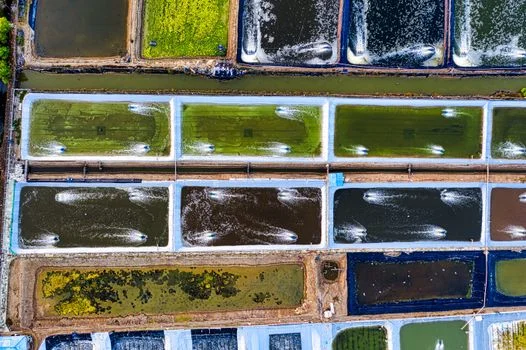
Process choice is the single largest CAPEX lever after capacity, and the MBR premium is the most misunderstood. The table below puts the four common configurations side-by-side on effluent, footprint, and price premium so a buyer can defend the choice in a design review.
| Process | Effluent COD (mg/L) | Relative footprint | CAPEX premium vs WSZ | Operator skill required |
|---|---|---|---|---|
| MBR (submerged PVDF flat-sheet, 0.1 μm) | <30 (near-reuse quality, <1 μm turbidity) | 0.6–0.8× | +25–40% | Medium (membrane CIP, aeration tuning) |
| SBR (batch activated sludge) | 40–60 | 1.0–1.1× | +10–20% | Medium (cycle timing, decant control) |
| WSZ buried (A/O contact oxidation) | 40–70 | Buried — no surface building | Baseline | Low–medium |
| Conventional Activated Sludge (CAS) | 40–60 (with clarifier) | 1.2–1.5× | +5–15% | Medium–high (sludge recycle, RAS/WAS) |
The MBR premium is justified by membrane specification. Submerged PVDF flat-sheet modules run 0.1 μm nominal pore size, which physically retains almost all suspended solids and most bacteria — the effluent is suitable for irrigation reuse, cooling-tower makeup, and toilet flushing in water-stressed regions such as Mendoza and the wider Cuyo basin. Energy consumption is 10–20× lower than cross-flow membrane systems because suction drives flow, not recirculation pumps, and standard modules deliver 80–225 m² of membrane area per cassette, so a 200 m³/day MBR typically fits on 4–6 cassettes rather than a building-sized rack. Where the discharge target is a surface watercourse under Resolución 336/2003 and reuse is not a project driver, an SBR or WSZ will land 20–35% under an MBR on the same influent — but the SBR will not deliver the <1 μm filtrate that Mendoza, San Juan, and parts of Córdoba are increasingly requiring for new industrial permits (HydropureWater MBR module datasheet DF series, 2026; provincial water authority guidance, 2025-11). The DF-series MBR membrane module spec sheet lists the cassette area and aeration demand that anchor these comparisons.
OPEX Breakdown: What the Buyer Pays After the Sticker Price
Sticker CAPEX is only 50–60% of lifetime cost over a 20-year horizon — energy, chemicals, membrane replacement, and sludge handling consume the rest, and they are the lines that decide whether a project is financeable. The benchmark OPEX for a mid-size biological plant in 2026 is USD 0.18–0.55 per cubic metre treated, varying with influent strength and discharge targets (HydropureWater field data, 2026; cross-referenced with the oxidation ditch maintenance cost 2026 OPEX breakdown).
| OPEX line | Share of annual OPEX | Typical 2026 range | Notes |
|---|---|---|---|
| Energy (aeration dominates) | 30–40% | $0.06–$0.20/m³ | Blower kWh and grid tariff in AR$ are the main swing factors |
| Chemical dosing (P removal, pH, disinfection) | 40–50% | $0.08–$0.28/m³ | Phosphorus precipitation is the largest line when required |
| Membrane replacement (MBR only) | 5–8% | Modules every 5–8 years | PVDF flat-sheet modules last longer than hollow-fibre in typical sewage duty |
| Sludge handling (dewatering + disposal) | 10–20% | Polymer $3–$8/kg, energy $0.02–$0.05/m³ | One-line CAPEX adder for the dewatering unit |
| Labor + maintenance | 10–15% | Operator FTE + spares | Skid plants often run single-shift unattended |
Sludge dewatering is the OPEX line most often missed in early budgets. A packaged plant quote rarely includes a sludge press, and a small-to-mid size site typically adds a one-line CAPEX of $8,000–$85,000 for a screw press or a plate-and-frame filter press sized to the wet-sludge mass. Polymer dosing for conditioning is continuous; an automatic chemical dosing system tied to a feed-forward signal on sludge flow typically cuts polymer consumption 10–20% versus timer-based dosing. The full OPEX math, including aeration tuning and sludge mass balance, is detailed in the AAO process operating cost 2026 OPEX breakdown.
Logistics and Site Costs in Argentina
A CFR Buenos Aires price is not a CIF Córdoba price, and a quoted unit price almost never includes civil works — the most common reason 'real' installed cost lands 20–35% above the original quote. The standard cost stack the buyer should demand line by line is FOB unit price → maritime freight → port handling and customs → inland trucking → civil works → erection and commissioning. Maritime freight for packaged wastewater plants from major Asian manufacturing ports to Buenos Aires runs USD 1,500–$4,500 per 20-ft container in 2026 depending on lane, fuel, and seasonality — verify at quote date, not at budget date (Freightos Baltic Index, 2026-02).
Inland trucking from Buenos Aires to Córdoba, Rosario, or Mendoza adds 6–12% on top of the FOB unit price, driven by kilometre, fuel, and return-load availability; a 50 m³/day MBR on a single skid typically ships in one 40-ft container plus one flat rack for the membrane cassettes, so a buyer should plan two trucking legs. Civil works are the largest hidden line item for buried configurations: excavation, reinforced concrete, backfill, and landscaping typically run USD 200–$600 per cubic metre of plant footprint, and a buried WSZ at 1–80 m³/h is 80–95% below grade. Pre-fabricated skid-mounted designs — an MBR or SBR delivered on a single process skid — cut on-site erection to 1–2 weeks versus 4–6 weeks for stick-built, which compresses the general contractor's prelims and is a real saving on EPC programmes (HydropureWater project delivery benchmarks, 2026).
Choosing an Argentina Wastewater Treatment Plant Supplier
Price comparison is only meaningful between suppliers of the same tier. The shortlist checklist below filters out catalog resellers, translation-only exporters, and engineering shops that have never commissioned in South America.
| Criterion | What to verify | Why it matters |
|---|---|---|
| Documented regional references | Operating plants in AR/BR/CL/UY, with client contact and year | Confirms commissioning capability, not just fabrication |
| Named compliance standards | Resolución 336/2003, Ley 11.720, EPA 40 CFR 133, EU 91/271/EEC | Filters vendors who cannot anchor their design basis |
| Scope of supply clarity | Pumps, blowers, control panel, instrumentation included | "Lowest" quotes routinely exclude 10–25% of total equipment value |
| Process guarantee in writing | BOD, COD, TSS, NH3-N at design influent | Removes ambiguity when commissioning fails a parameter |
| Skid FAT photos and P&ID | Real factory acceptance test images, full P&ID, single-line E&IC | Catches scope gaps before shipment |
| Pre-treatment included | Bar screen, grit removal, flow equalization | Missing screen risks downstream pump and blower damage |
A self-cleaning bar screen on the inlet — for example a rotary mechanical bar screen — is the cheapest insurance on the project: it protects blowers, membrane cassettes, and UV or chlorine dioxide disinfection downstream from ragging and grit. For sites under Resolución 336/2003 that need fecal-coliform compliance, a chlorine dioxide generator typically gives more stable residual than sodium hypochlorite in warm Argentine summers and avoids the bromate formation risk of bulk chlorine on high-bromide industrial water. Suppliers that name these components line by line in their proposal are usually the suppliers that have actually commissioned in the region.
Frequently Asked Questions
What is the price of a packaged sewage treatment plant in Argentina in 2026?
USD 8,000–50,000 covers ≤50 m³/day WSZ or SBR units, USD 50,000–250,000 covers 50–500 m³/day MBR systems, and USD 250,000–1.2 million covers municipal or industrial plants above 500 m³/day — all FOB-equivalent 2026 ranges (HydropureWater field data).
How much does an MBR system cost in Argentina compared to a conventional SBR?
An MBR integrated wastewater treatment system runs 25–40% above a comparable SBR on the same influent, justified by 0.1 μm effluent, 0.6–0.8× footprint, and irrigation-reuse capability for Mendoza and Cuyo sites.
What effluent limits apply to sewage discharge in Argentina under Resolución 336/2003?
Discharge to a watercourse must meet BOD ≤30 mg/L, TSS ≤60 mg/L, and fecal coliforms ≤2,000 NMP/100 mL; Buenos Aires Province industrial sites must additionally meet Ley 11.720 limits on metals, hydrocarbons, and pH (per Resolución 336/2003 and Ley 11.720).
What are typical 2026 OPEX numbers for a mid-size biological plant?
USD 0.18–0.55 per cubic metre treated, of which 30–40% is energy (aeration) and 40–50% is chemical dosing, with membrane replacement adding 5–8% on MBR plants every 5–8 years.
How do I shortlist sewage treatment plant suppliers for an Argentine project?
Demand documented South American references, named compliance standards (Resolución 336/2003, Ley 11.720), a written process guarantee at design influent, and skid FAT photos — the full checklist is in the Argentina wastewater treatment plant supplier buyer's guide.