What Oxidation Ditch Maintenance Cost Actually Includes in 2026
Oxidation ditch maintenance cost in 2026 typically runs $0.08–$1.00 per gallon-per-day (≈$0.02–$0.26 per m³) in total operating expense, with utility costs alone of $0.04–$0.16/gpd (≈$0.01–$0.04/m³) per EPA benchmarks. Energy for brush aerators typically represents 50–70% of OPEX, followed by sludge handling, labor, and spare parts such as aerator bearings and DO probes. The EPA's 2000-era ranges in Fact Sheet 832-F-00-013 remain the most-cited US baseline: capital cost $1.61–$9.99/gpd, total O&M $0.08–$1.00/gpd, utilities $0.04–$0.16/gpd. For international plants, the conversion is straightforward — 1 US gallon per day ≈ 0.003785 m³/day, so a 1 MGD (3,785 m³/day) plant sits at the upper end of the benchmark window where fixed costs amortize across a larger volume.
The problem for operators in 2026 is that those EPA ranges were published in September 2000, before the 2008–2022 electricity price spikes and before most states deregulated their industrial kWh rates. Published benchmarks should be escalated 35–50% for the energy line item and 25–35% for skilled wastewater labor to reflect current pricing (HydropureWater field data, 2026). Defoamer and polymer chemical costs have moved 40–60% above 2000 baselines. The table below translates the EPA ranges into the six line items every plant should be tracking on its own P&L.
| Cost Category | EPA 2000 Range (USD/gpd) | EPA 2000 Range (USD/m³) | 2026 Escalation Factor | 2026 Indicative Range (USD/m³) |
|---|---|---|---|---|
| Utilities (energy) | $0.04–$0.16 | $0.011–$0.042 | ×1.35–1.50 | $0.015–$0.063 |
| Labor (operations + maintenance) | embedded in O&M | embedded in O&M | ×1.25–1.35 | $0.008–$0.045 |
| Spare parts (bearings, probes, belts) | embedded in O&M | embedded in O&M | ×1.20–1.30 | $0.004–$0.022 |
| Chemicals (defoamer, polymer, carbon) | embedded in O&M | embedded in O&M | ×1.40–1.60 | $0.003–$0.020 |
| Sludge handling (dewatering, hauling) | embedded in O&M | embedded in O&M | ×1.30–1.45 | $0.010–$0.060 |
| Instrumentation & sensor maintenance | embedded in O&M | embedded in O&M | ×1.15–1.25 | $0.003–$0.015 |
| Total O&M | $0.08–$1.00 | $0.021–$0.264 | — | $0.043–$0.225 |
Source: US EPA Fact Sheet 832-F-00-013 (Sept 2000), escalated by HydropureWater field data 2026.
Line-Item OPEX Breakdown: Where the Money Goes
Energy dominates oxidation ditch OPEX because brush and rotor aerators run 24/7 to maintain both dissolved oxygen and horizontal velocity. Specific energy demand for a properly loaded municipal oxidation ditch sits in the 0.3–0.6 kWh/m³ band; older ditches running above 0.7 kWh/m³ are over-aerated and are the first place to look for savings. At an industrial kWh rate of $0.10–$0.14, energy alone runs $0.03–$0.08 per m³ treated, which is 50–70% of total O&M in most municipal plants and 40–55% at larger industrial sites with cheaper power.
Labor is the second-largest line item at 15–25% of O&M. Oxidation ditches are marketed as "operator-friendly" — and they are, relative to MBR or SBR — but they still require daily MLSS and DO checks (≈30 min/shift), weekly wasted activated sludge (WAS) adjustment, and monthly brush aerator inspections. Two operators per shift at a 10 MLD plant translates to roughly $0.015–$0.035/m³ in labor OPEX at 2026 fully loaded rates of $35–$55/hr.
Spare parts run 5–10% of O&M and are where the budget surprises live. The recurring big-ticket items are brush aerator bearings ($400–$1,800 each, replaced every 8,000–12,000 hours), rotor cage corrosion repair and recoating ($8,000–$25,000 per aerator on a 5–7 year cycle), gearbox oil and seal kits, drive belts, motor rewinds ($3,000–$7,000), and DO probe membranes at $80–$300 each. Plants that skip predictive replacement on bearings pay 3–5× more in emergency repair labor and downstream damage.
Chemicals consume 2–5% of O&M but punch above their weight on process stability. The three line items are defoamer (silicone or alcohol-based, dosed at 0.5–5 mg/L), supplemental carbon (methanol or acetate for denitrification — see carbon source dosing cost optimization), and polymer for sludge thickening prior to dewatering. An automatic chemical dosing system typically reduces chemical OPEX 10–20% by eliminating overdosing from manual adjustment.
Sludge handling eats 8–15% of O&M, which is why it gets its own row. WAS is typically wasted to a thickener (gravity or dissolved air flotation) and then to a dewatering device — and the downstream dewatering cost is exactly why the filter press maintenance cost conversation is inseparable from oxidation ditch OPEX. Instrumentation and sensor maintenance, the last 3–7%, is small in dollars but large in process risk: a fouled DO probe causes the aeration control loop to either over-aerate (energy waste) or under-aerate (effluent violation).
| Line Item | % of Total O&M | Typical Range (USD/m³) | Primary Cost Driver | 2026 Reduction Lever |
|---|---|---|---|---|
| Energy (aeration + mixing) | 50–70% | $0.030–$0.080 | Brush aerator kWh | NH3-based aeration control, VFD on rotor |
| Sludge handling | 8–15% | $0.010–$0.060 | Dewatering device OPEX | Raise MLSS to 4,000–5,000 mg/L, plate-and-frame press |
| Labor (ops + maintenance) | 15–25% | $0.015–$0.045 | Skilled operator hours | Predictive maintenance scheduling |
| Spare parts | 5–10% | $0.004–$0.022 | Bearings, rotor recoating, probes | Vibration monitoring, scheduled rebuilds |
| Chemicals | 2–5% | $0.003–$0.020 | Defoamer, carbon, polymer | Automatic dosing, MLSS control |
| Instrumentation & sensors | 3–7% | $0.003–$0.015 | DO probe cleaning frequency | Float-mounted self-cleaning sensor holders |
Annual Maintenance Task Schedule and Cost by Frequency
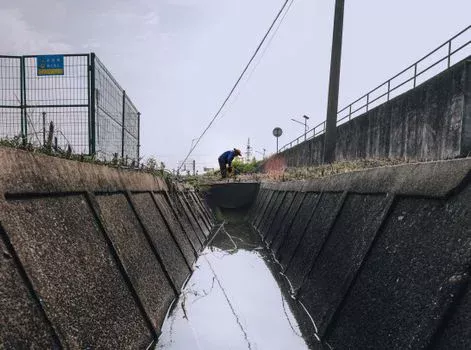
The cheapest way to defend a 2026 maintenance budget is to attach a dollar figure to every recurring task. Most oxidation ditch plants run on an implied schedule — "we check it when we get to it" — which is exactly how unplanned downtime grows to 8–15% of annual capacity at older ditches. The matrix below ties each task to a frequency, an estimated labor hour load, and a $/year cost at $45/hr fully loaded labor. Quarterly and annual tasks dominate the dollar value; daily and weekly tasks dominate the labor hours.
| Frequency | Task | Labor (hrs/yr) | Consumables (USD/yr) | Estimated Annual Cost (USD) |
|---|---|---|---|---|
| Daily | DO/MLSS check, flow verification, visual scum/foam walk | 180 | $0 | $8,100 |
| Weekly | WAS adjustment, scum removal, brush aerator visual | 104 | $0 | $4,680 |
| Monthly | Aerator bearing temp check, DO probe calibration, belt tension, pump packing | 48 | $200 | $2,360 |
| Quarterly | Gearbox oil change, DO probe membrane replacement, bolt torque check | 32 | $900 (probes) | $2,340 |
| Annual | Brush aerator bearing replacement, motor insulation test, full DO probe replacement | 60 | $2,200 (bearings + probes) | $4,900 |
| 5–7 year cycle | Rotor cage recoating or replacement, motor rewind, gearbox overhaul | 120 (amortized) | $12,000 (amortized) | $5,400/yr |
| Total per aerator train | — | 544 | $15,300 | $27,780/yr |
For a 4-aerator 10 MLD plant, scale the totals accordingly: roughly $110,000/yr in scheduled maintenance labor and consumables, before any unplanned repair events. Chemical dosing tasks (defoamer, supplemental carbon, polymer) sit on top of this and are best managed through a single automatic chemical dosing system tied to the SCADA — manual adjustment is the single largest source of chemical OPEX variance.
The Top Five Maintenance Cost Drivers and How to Cut Each
Knowing the line-item breakdown only matters if it points to where the dollar savings live. Five cost drivers account for roughly 80% of variance between a well-run oxidation ditch and one bleeding OPEX. Treat these as a decision framework, not a menu.
- DO probe fouling. The single biggest recurring instrumentation cost. A conventional membrane DO probe in an oxidation ditch needs cleaning every 1–2 weeks, costing 30–45 minutes of labor per cleaning plus membrane replacement every 2–3 months. Yokogawa's 2022 field test with PB350G float-mounted holders on DO402 sensors extended the cleaning interval from 2 weeks to 6+ months at near-identical measurement accuracy over a six-month comparison (Yokogawa Application Note, 2022-04). Net savings at a typical 4-probe plant run $4,000–$7,000/yr in labor plus membrane cost avoidance.
- Brush aerator bearing failure. The single most expensive unplanned repair event in an oxidation ditch. Run-to-failure replacement costs $2,500–$5,000 per event in emergency labor and downstream damage. A vibration-monitoring retrofit ($1,500–$4,000 per aerator) plus scheduled bearing replacement at 8,000–12,000 operating hours cuts unplanned bearing events by 70–90% (HydropureWater field data, 2026) and is the highest-payback mechanical upgrade available.
- Energy over-aeration. Aeration control running on a fixed DO setpoint with no ammonia-N cascade wastes 15–30% of aeration energy. An NH3-N → DO cascade ties the DO setpoint to the actual ammonia load, which varies diurnally and seasonally. Typical payback on the instrumentation and PLC work is 12–24 months at any plant spending more than $50,000/yr on aeration energy.
- Sludge handling cost. Raising MLSS from the textbook 2,500–3,500 mg/L band to 4,000–5,000 mg/L reduces WAS volume 20–35% and improves thickening, but it also concentrates the load on the downstream dewatering device. A plate-and-frame filter press sized for the higher solids load is typically the lowest-cost dewatering option at flows above 5 MLD — see the filter press maintenance cost breakdown for the OPEX math on the dewatering side.
- Defoamer overuse. Foam is almost always a symptom — high MLSS, young sludge, or surface-mixer imbalance — not a chemical problem. Plants dosing defoamer as a standing cost line item can typically cut consumption 40–60% by tuning surface mixers, adjusting F/M ratio, and tightening MLSS control around 4,000 mg/L. For plants running parallel anoxic zones where foaming is structural, an on-site chlorine dioxide generator can also reduce filamentous foam at lower cost than continuous defoamer.
Oxidation Ditch vs. Alternative Processes: Lifecycle OPEX Comparison
For consultants specifying a new plant or operators justifying capacity expansion, the relevant question is whether the oxidation ditch still wins on lifecycle O&M in 2026. The answer depends almost entirely on flow scale and discharge limits. At municipal scale (5–20 MLD) with standard BOD/TSS limits, the oxidation ditch remains the lowest-OPEX biological process available; above ~50 MLD the footprint-driven capex advantage shifts to compact high-rate processes like MBR.
| Process | 2026 OPEX Range (USD/m³) | Footprint | Sludge Yield | Effluent Quality | Lifecycle Sweet Spot |
|---|---|---|---|---|---|
| Oxidation ditch | $0.08–$0.30 | High | Low (long SRT) | BOD/TSS to standard limits | 2–50 MLD, land-available sites |
| Conventional activated sludge (CAS) | $0.10–$0.35 | Medium-high | Higher than OD | BOD/TSS to standard limits | 10–100 MLD with primary clarification |
| SBR (sequencing batch reactor) | $0.09–$0.28 | Medium | Comparable to OD | BOD/TSS to standard limits | 1–20 MLD, variable flow |
| MBR (membrane bioreactor) | $0.18–$0.55 | Low (60% smaller than OD) | Low | Reuse-quality, low TN | 5–50 MLD, footprint-constrained, water reuse required |
For sites above 50 MLD or where discharge limits require total nitrogen below 10 mg/L or water reuse, an MBR membrane bioreactor system often flips the lifecycle math: higher OPEX per m³, but the capex savings on basin volume, secondary clarifiers, and tertiary filtration offset 3–7 years of operating-cost premium (HydropureWater field data, 2026). Below 20 MLD with land available, the oxidation ditch remains the lowest total-cost option.
Frequently Asked Questions
What is the average annual maintenance cost of an oxidation ditch in 2026?
For a 5–20 MLD municipal plant, total annual O&M runs $0.08–$0.30 per m³ treated in 2026 — equivalent to roughly $150,000–$2,200,000 per year depending on flow and influent strength, per EPA 832-F-00-013 ranges escalated to 2026 pricing.
How much does it cost to maintain a brush aerator?
Scheduled annual maintenance on a single brush aerator runs $3,000–$6,000/yr in labor and consumables, with bearing replacement at $400–$1,800 every 8,000–12,000 hours and rotor cage recoating at $8,000–$25,000 every 5–7 years (HydropureWater field data, 2026).
How often should DO probes be cleaned or replaced?
Conventional membrane DO probes in oxidation ditches foul every 1–2 weeks and need membrane replacement every 2–3 months. Float-mounted self-cleaning holders extend the cleaning interval to 6+ months at near-identical accuracy per Yokogawa's 2022 field test.
What percentage of oxidation ditch OPEX is energy?
Energy for brush and rotor aerators represents 50–70% of total O&M in municipal plants, dropping to 40–55% at larger industrial sites with lower kWh rates.
Is an oxidation ditch cheaper to operate than MBR or SBR?
Yes for plants under ~50 MLD with land available. Oxidation ditch OPEX runs $0.08–$0.30/m³ versus SBR at $0.09–$0.28/m³ and MBR at $0.18–$0.55/m³, but MBR capex savings on footprint can flip the lifecycle math at flows above 50 MLD or where effluent limits require water reuse quality.