What "Spare Parts" and "Consumables" Actually Include in an NF System
Industrial nanofiltration spare parts and consumables typically run 8–15% of system CAPEX per year. A 50 m³/h NF system spends roughly USD $18,000–$45,000 annually on NF membrane replacements (every 3–5 years), cartridge prefilters (every 2–4 weeks), CIP chemicals, high-pressure pump seals, and instrumentation — driven primarily by feedwater SDI, organics, and recovery rate. Most procurement teams lump these costs into a single "maintenance" line and never see where the money actually goes.
For budgeting purposes, the parts list breaks into three distinct buckets. (1) Wear parts replaced on calendar — pump mechanical seals, cartridge prefilters, bag filters, solenoid valves, and instrument probes all have predictable service intervals measured in weeks, months, or operating hours. (2) Lifetime parts — NF membrane elements (3–5 years typical), FRP pressure vessels (10–15+ years), and high-pressure pump bodies (15+ years). These are capital spares you stockpile or order against a known failure mode. (3) Consumables exhausted in process — CIP chemicals (caustic, acid, surfactant), antiscalant, and CIP rinse water. These are invoiced in dollars-per-m³-permeate and scale with uptime.
Crystal Quest's industrial NF catalog notes that nanofiltration "enhances the performance of reverse osmosis and other filtration systems by reducing contaminant loads, extending membrane life" — a useful framing because it positions NF consumables as cost-reducing on the wider plant water budget, not just a cost center of their own. To anchor the percentages above, SAMCO's published benchmark for a 100 GPM (≈23 m³/h) commercial NF/RO system is roughly $250,000 CAPEX; scaling to 50 m³/h puts installed CAPEX in the $450,000–$650,000 range, against which 8–15% OPEX/yr = $36,000–$97,500 — and the lower end of that range is what the rest of this article defends.
Membrane brand selection moves the per-element price by 2–4×. The Tier 1 names any qualified supplier can quote are Dow/Filmtec, Hydranautics, Toray, Koch, TriSep, Desal, and Osmonics (per the waterstuff replacement-parts catalog). Knowing the brand slate upfront lets you benchmark OEM-equivalent offers against it.
NF Membrane Elements: The Single Largest Spare-Part Line Item
NF membrane elements drive 40–60% of 5-year NF spare-part spend, which is why vendor selection matters more here than anywhere else. Per-element pricing for the standard 8-inch (8040) spiral-wound element sits at USD $400–$1,800, with thin-film composite polyamide NF (the workhorse for divalent removal and partial softening) priced at $600–$1,200 and specialty solvent-resistant NF reaching $1,500–$1,800. A typical 50 m³/h industrial NF train running two stages holds 12–24 elements per stage, so a full changeout is $7,200–$43,200 per stage before labor.
Replacement triggers follow the standard membrane autopsy protocol, not the calendar: a normalized permeate flow decline of ≥10%, a salt passage increase of ≥15%, or a transmembrane differential pressure rise of ≥15% from clean-baseline values, all measured at standardized conditions (25 °C, 0 psi permeate backpressure, design recovery). Hitting any one trigger means the element is fouled beyond recoverable CIP — change it out.
NF sits in a deliberate selectivity window — it removes divalent ions (Ca²⁺, Mg²⁺, SO₄²⁻) and larger monovalent species while retaining most sodium, chloride, and mineralization, per the Crystal Quest engineering overview. That selectivity is the economic justification for choosing NF over RO on water-reuse duties: lower operating pressure (10–30 bar vs. 15–40 bar for brackish RO), partial mineral passage, and meaningfully lower pumping OPEX.
Feedwater quality is the dominant driver of membrane life. Three regimes cover most industrial sites:
| Feedwater SDI₁₅ | Typical Service Life | Operating Implication |
|---|---|---|
| < 3 | 5+ years | Light pre-treatment load; cartridge life stretches to 6–8 weeks |
| 3–5 | 3–5 years | Standard industrial duty; CIP every 8–12 weeks |
| > 5 | 18–36 months | Pre-treatment upgrade required; expect CIP every 4 weeks |
Antiscalant dosing is the cheapest way to extend element life — typically $0.05–$0.25 per m³ of permeate, a fraction of the cost of premature membrane changeout. A correctly dosed automatic chemical dosing skid upstream of the NF train is almost always the highest-ROI consumable spend on the plant.
Cartridge Prefilters, Bag Filters, and Security Filtration

5-micron PP pleated cartridges are the highest-frequency, lowest-unit-cost line item on the NF consumables ledger. Each element runs USD $8–$35 and is replaced every 2–4 weeks on industrial feedwater with turbidity in the 1–10 NTU band. A 50 m³/h system typically runs 8–12 cartridges per changeout in parallel housings, which is why the annual number is meaningful even though the per-part price is small. Bag filters (1–25 micron rated, $5–$25 each) handle higher-solids influents on longer intervals — sometimes 6–12 weeks between changes.
The economic logic of cartridges is asymmetric: a single torn cartridge releases particulates that foul or scale an entire membrane train, with replacement costs in the tens of thousands. The $1,800–$6,500 annual cartridge spend is essentially insurance on the membrane CAPEX, and skimping here is the most common root cause of premature NF failure documented in plant audits.
An upstream multi-media filter is the single most effective way to extend cartridge life — pushing service intervals from 2–4 weeks to 8–12 weeks on most surface and well-water sources, and dropping annual cartridge spend by 40–60%. This is one of the few places where a small CAPEX addition reliably pays back in under 18 months on consumable savings alone.
For textile, food & beverage, and pharmaceutical waste streams with high organic load, expect shorter cartridge cycles (7–14 days) and budget accordingly. The 2–4 week assumption above applies to clarified, low-organic feeds.
High-Pressure Pump, Valves, and Instrumentation Wear Parts
The mechanical and control-side OPEX is the line item most plant budgets forget until something fails. Centrifugal high-pressure pump mechanical seals run USD $200–$900 per set with a service life of 8,000–18,000 operating hours, which on continuous-duty NF translates to 2–4 years between rebuilds. Plan on one seal change per pump per major overhaul cycle.
FRP pressure vessels (the membrane housings) are USD $1,200–$4,500 each with a 10–15+ year service life. They are not a recurring OPEX line, but they are a sparing consideration: for parallel NF trains, holding one spare vessel on-site cuts membrane-swap downtime from days to hours and is standard practice on plants running continuous-process recovery loops.
Instrumentation and valves split into three tiers. Solenoid valves, check valves, and pressure regulators cost $150–$500 each and fail unpredictably on a 3–7 year cycle. Pressure transmitters, flow meters, and conductivity probes sit at $400–$2,500 depending on spec, with 5–10 year service life. pH, ORP, and conductivity probe replacement plus annual calibration runs $400–$1,800/yr for a typical NF skid — small in dollar terms, large in downtime impact when a CIP trigger is missed because a probe drifted out of spec.
For potable-water, food & beverage, or pharmaceutical reuse duties, specify NSF/ANSI 61-rated or equivalent wetted components. This adds 10–25% to the instrumentation line but is non-negotiable on regulated end-uses, and retrofitting after the fact is materially more expensive than specifying correctly at purchase.
CIP Chemicals, Antiscalant, and Cleaning Water
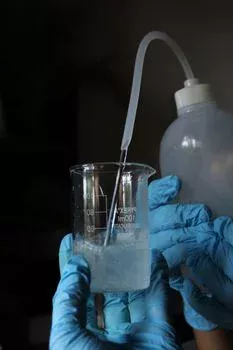
Chemical OPEX is the line item that swings most violently with feedwater variability and is consistently underestimated in first-pass budgets. A full industrial CIP cycle combines caustic (NaOH at pH 11–12) for organic and biological foulant removal, acid (citric preferred for Ca-based scale, HCl at pH 2–3 for metals) for inorganic scale, and an optional surfactant for emulsified foulants. Per-cycle chemical cost at industrial scale is USD $1,200–$3,500 for a 50 m³/h train.
CIP frequency depends almost entirely on feedwater chemistry. The following thresholds cover most industrial NF installations:
| Feedwater Profile | Typical CIP Frequency | Annual CIP Cycles (50 m³/h) |
|---|---|---|
| Low-organic, conductivity < 1,000 µS/cm | Quarterly | 4 |
| Moderate organics or conductivity 1,000–3,000 µS/cm | Monthly | 8–12 |
| High-organics (textile, food, pharma effluent) | 2–4 weeks | 12–24 |
Antiscalant is the largest single chemical line item annually. Dosing rates of 1–5 mg/L of permeate at $0.05–$0.25 per m³ of permeate put annual antiscalant spend at $2,000–$10,000/yr for a 50 m³/h system running 8,000 hours. Generic commodity antiscalants work on most feeds; proprietary membrane-maker formulations (Koch, Hydranautics) run 2–3× the cost but can restore flux on foulants a generic cleaner cannot touch. The ROI calculation is simple: proprietary CIP saves a $7,200–$43,200 membrane changeout, generic CIP saves a 2×/yr chemical line.
Cleaning water is the invisible multiplier. NF CIP uses 1.5–3× the system permeate volume per cycle, and that water typically goes to drain. At CIP water + wastewater disposal rates of $1–$4/m³, this adds $500–$2,500/yr to the chemical line and is the figure most budgets forget. Pre-heating CIP water to 35 °C cuts chemical dose by 20–30% and is the cheapest energy upgrade available.
5-Year Lifecycle Cost Model for a 50 m³/h Industrial NF System
The summary table below is the article's take-away artifact. It assumes a 50 m³/h industrial NF train operating 8,000 hr/yr at 75% recovery, feedwater SDI in the 3–5 range, and moderate-organics influent. Replace the per-line values with site-specific numbers and the model scales linearly with system size and uptime.
| Cost Category | Unit Cost (USD) | Replacement Frequency | Annualized OPEX (USD) | 5-Year Total (USD) | % of 5-yr OPEX |
|---|---|---|---|---|---|
| NF membrane elements (8040, 24 per stage × 2 stages) | $600–$1,200/element | Every 3–5 years | $7,200–$14,400 | $36,000–$72,000 | 30–35% |
| 5-µm PP cartridges (8–12 per changeout) | $8–$35 each | Every 2–4 weeks | $1,800–$6,500 | $9,000–$32,500 | 10–15% |
| Bag filters (backup) | $5–$25 each | Every 6–12 weeks | $300–$900 | $1,500–$4,500 | 1–2% |
| High-pressure pump seals | $200–$900/set | Every 8,000–18,000 hr | $300–$1,000 | $1,500–$5,000 | 2–3% |
| FRP pressure vessels (spare) | $1,200–$4,500 each | 10–15+ years | $200–$500 (sparing) | $1,200–$2,400 | 1% |
| Instrumentation (valves, transmitters, probes) | $150–$2,500 each | 3–10 years | $1,500–$3,500 | $7,500–$17,500 | 6–8% |
| CIP chemicals (caustic + acid + surfactant) | $1,200–$3,500/cycle | 4–12 cycles/yr | $7,000–$25,000 | $35,000–$125,000 | 25–30% |
| Antiscalant | $0.05–$0.25/m³ permeate | Continuous | $2,000–$10,000 | $10,000–$50,000 | 10–15% |
| CIP water + disposal | $1–$4/m³ | 1.5–3× permeate per cycle | $500–$2,500 | $2,500–$12,500 | 2–4% |
| Miscellaneous (gaskets, gauges, fasteners) | — | Annual | $500–$1,500 | $2,500–$7,500 | 2–3% |
| Total | — | — | $21,300–$65,800 | $106,500–$329,000 | 100% |
Two patterns are worth flagging for finance. First, on a per-year basis consumables (CIP, antiscalant, cartridges) outweigh capital spares (membranes, vessels) by roughly 60/40 — a reversal of the intuition that "spares" is the big-ticket line. Second, the per-m³-permeate OPEX metric is $0.04–$0.18/m³, which is the number a finance team can plug into a unit-cost model without re-deriving the math. Against a 50 m³/h train producing 300,000 m³/yr at 75% recovery, the lower end of the range implies ~$12,000/yr in consumables; the upper end implies ~$54,000/yr.
Sourcing risk is the procurement-side lever that doesn't show in the unit cost. Tier 1 NF membrane brands (Filmtec, Hydranautics, Toray, Koch) carry 6–12 week lead times from ex-works Asia or US inventory. OEM-equivalent elements ship in 2–4 weeks at 20–40% lower cost. For plants running just-in-time replacement, lead time on the critical path matters as much as unit price, and this is the trade-off the next section turns into an action plan.
3-Step Procurement Checklist to Control NF Spare-Part Spend

Step 1 — Map your feedwater variability against the 5-year model. Pull 12 months of feedwater SDI, turbidity, conductivity, and organics (COD/TOC) data, then score your site against the SDI table in the membrane section above. If you sit in the SDI 3–5 band with moderate organics, the model above is a defensible baseline. If you sit in SDI > 5 or in a high-organics textile/food/pharma stream, multiply the CIP and cartridge lines by 1.5–2.5× before presenting to finance. The cost model only defends well when the input feedwater data is on the same page as the spend forecast.
Step 2 — Qualify two vendors minimum for each critical spare. For membranes, hold one Tier 1 brand (Filmtec, Hydranautics, Toray, or Koch) and one qualified OEM-equivalent on your approved-vendor list. For cartridges, CIP chemicals, and pump seals, the same rule applies: never single-source any part whose failure stops the train. The qualification cost is small; the downtime cost of a single-source runout is measured in lost permeate production, not in spare-part dollars.
Step 3 — Maintain a 10% critical-spares inventory on-site. For a 50 m³/h train, that means 2–3 spare membrane elements, a full cartridge changeout set, one pump seal kit, and one set of critical instrumentation probes on the shelf. Plants that hold this buffer consistently report 60–80% reductions in unplanned downtime events versus just-in-time spares programs. Bundling the initial spare-parts order with the original equipment purchase typically secures 8–15% discount versus aftermarket reorder — a discount that is also the easiest line item to defend in front of procurement.
Frequently Asked Questions
How often do NF membranes need to be replaced in industrial service?
Industrial NF membrane service life is 3–5 years under standard feedwater conditions (SDI 3–5, moderate organics, correct antiscalant dosing). On clean feeds with SDI < 3, expect 5+ years. On high-organic or high-SDI feeds without pre-treatment upgrade, life drops to 18–36 months, and pre-treatment CAPEX is usually justified inside 24 months on membrane savings alone.
What is the typical annual OPEX of running a 50 m³/h NF system?
A 50 m³/h industrial NF system spends USD $21,000–$66,000 per year on spare parts and consumables combined, with a 5-year lifecycle total in the $106,500–$329,000 range. Per-m³-permeate OPEX sits at $0.04–$0.18/m³, and consumables (CIP chemicals, antiscalant, cartridges) outweigh capital spares on a per-year basis by roughly 60/40.
How much do 8040 NF membrane elements cost?
Standard 8-inch (8040) thin-film composite polyamide NF elements cost USD $600–$1,200 each, with specialty solvent-resistant NF at $1,500–$1,800. A 50 m³/h two-stage industrial NF train holds 12–24 elements per stage, so a full changeout is $7,200–$43,200 per stage depending on element specification and brand.
How often should 5-micron cartridge prefilters be changed on an NF skid?
5-micron PP pleated cartridges on industrial NF feedwater (turbidity 1–10 NTU) need replacement every 2–4 weeks. Adding an upstream multi-media filter extends cartridge life to 8–12 weeks and cuts annual cartridge spend by 40–60%, typically paying back the pre-filter CAPEX inside 18 months on consumable savings alone.
What is the typical CIP chemical cost for an industrial NF system?
A full industrial CIP cycle (caustic + acid + optional surfactant) costs USD $1,200–$3,500 for a 50 m³/h train, and most sites run 4–12 cycles per year depending on feedwater conductivity and organic load. Annual CIP chemical spend typically falls in the $7,000–$25,000 range, making CIP the largest single consumable line item on the NF OPEX ledger.
Can I use OEM-equivalent NF membranes instead of OEM brands?
Yes. OEM-equivalent NF elements from qualified Asian manufacturers ship in 2–4 weeks at 20–40% lower cost than Tier 1 brands (Filmtec, Hydranautics, Toray, Koch), which carry 6–12 week lead times. Most OEM-equivalent elements meet the same performance specifications, but verify the manufacturer's ISO 9001 certification, element traceability documentation, and reference installation list before substitution on a critical-process NF train.
Related Equipment
- industrial RO system used downstream of NF pre-treatment — view specifications, capacity range, and technical data
Need a customized solution? Request a free quote with your specific flow rate and pollutant parameters.