In Hanoi, industrial wastewater treatment must achieve QCVN 40:2011 limits (COD ≤ 150 mg/L, BOD ≤ 50 mg/L, TSS ≤ 100 mg/L) to avoid fines up to VND 1B (~$42K) under Decree 40/2019/ND-CP. With only 23.2% of Hanoi’s wastewater currently treated, factories face urgent compliance deadlines. MBR systems deliver 95%+ COD removal for high-organic effluents (e.g., textile, food processing), while DAF systems excel at TSS reduction (92–97%) for metalworking or electronics plants. Local CAPEX ranges from $50K (chemical dosing) to $2M (MBR), with OPEX driven by energy costs (0.8–1.5 kWh/m³) and chemical consumption (30–50% of total OPEX).
Why Hanoi Factories Are Failing QCVN 40:2011 Compliance in 2026
Decree 40/2019/ND-CP mandates that industrial facilities in Hanoi exceeding a discharge volume of 1,000 m³/day must install continuous automatic monitoring systems, yet many plants still rely on outdated batch processing that fails during peak loads. Recent enforcement actions by the Ministry of Natural Resources and Environment (MONRE) have highlighted critical gaps; for instance, a textile factory in Gia Lam was recently fined VND 800M after its effluent exceeded COD limits by 130%. Similarly, a food processing facility in Hoai Duc faced a 30-day mandatory shutdown because its Total Suspended Solids (TSS) reached 150 mg/L, far exceeding the QCVN 40:2011 Class B limit of 100 mg/L.
Hanoi’s industrial effluent presents unique challenges compared to southern provinces due to the high concentration of organic matter in the textile and food sectors. Average influent COD ranges from 800 to 1,200 mg/L in textile clusters, while food processing plants often see BOD levels between 400 and 600 mg/L. When compared to the strict QCVN 40:2011 limits (COD ≤ 150 mg/L for Class B), these factories require a 90% removal efficiency that conventional activated sludge systems struggle to maintain consistently.
Seasonal monsoon impacts further complicate treatment stability in Hanoi. Data from the Hanoi Water Supply Company indicates that between May and October, influent TSS can spike by 30–50% due to rainwater infiltration and higher sediment loads in the municipal supply. Factories in land-constrained zones like Thang Long, Quang Minh, and Noi Bai often lack the buffer capacity to handle these surges. Currently, while 92% of industrial zones (IZs) have centralized systems, only 68% of individual factories possess the on-site pre-treatment necessary to prevent overwhelming these centralized plants (such as Yen So or Kim Lien), leading to shared liability and fines.
| Industrial Sector (Hanoi) | Typical Influent COD (mg/L) | Typical Influent TSS (mg/L) | QCVN 40:2011 Class B Limit | Compliance Gap (Removal Needed) |
|---|---|---|---|---|
| Textile (Gia Lam) | 800–1,200 | 300–500 | 150 (COD) / 100 (TSS) | 82–88% COD Removal |
| Food Processing (Hoai Duc) | 1,000–1,500 (BOD) | 400–600 | 50 (BOD) / 100 (TSS) | 95–97% BOD Removal |
| Electronics (Noi Bai) | 200–400 | 200–400 | 150 (COD) / 100 (TSS) | 50–75% TSS Removal |
Hanoi’s Wastewater Treatment Regulations: QCVN 40:2011, Decree 40/2019, and Zero-Risk Compliance Checklist
QCVN 40:2011 categorizes industrial wastewater into three classes (A, B, and C), with Hanoi factories typically required to meet Class B for discharge into the city’s combined sewer system or Class A for direct discharge into sensitive water bodies like the To Lich River basin. Under Decree 40/2019/ND-CP, the regulatory burden has shifted from periodic sampling to real-time accountability. Factories must now maintain detailed documentation of quarterly effluent testing performed by MONRE-approved laboratories, with failure to disclose violations resulting in fines ranging from VND 500M to 1B.
To achieve zero-risk compliance, engineers must implement a multi-stage treatment strategy. This begins with robust pre-treatment, specifically utilizing rotary screens to manage the high-TSS loads common in Hanoi’s food and textile sectors. Following primary solids removal, pH adjustment to the 6.5–8.5 range is mandatory to protect downstream biological processes. For facilities targeting Class A standards for water reuse, a secondary biological stage such as MBR is necessary to reduce COD to below 50 mg/L, followed by tertiary disinfection.
Compliance verification in Hanoi must be conducted through certified third parties. Leading MONRE-approved labs, including the Vietnam Environment Administration (VEA) and Vinacontrol, offer testing services with turnaround times of 3 to 7 days. A standard comprehensive test suite for industrial effluent typically costs between VND 2M and 5M per sample. Maintaining a "Zero-Risk" status requires a digital log of these reports and an automated bypass system that prevents non-compliant water from leaving the site during system upsets.
| Compliance Requirement | Regulation Reference | Technical Target (Hanoi) | Penalty for Non-Compliance |
|---|---|---|---|
| Effluent COD Limit | QCVN 40:2011 (Class B) | ≤ 150 mg/L | VND 100M – 500M |
| Automatic Monitoring | Decree 40/2019/ND-CP | Real-time COD/TSS/pH/Flow | VND 500M – 1B + Shutdown |
| Testing Frequency | Circular 10/2021/TT-BTNMT | Quarterly (min) | Operational suspension |
| Disinfection | QCVN 40:2011 | Coliform < 5,000 MPN/100mL | Environmental remediation costs |
Engineering Specs for Hanoi’s Industrial Effluents: COD, BOD, TSS, and Heavy Metals

Designing an effective system for Hanoi requires precise influent characterization, as textile plants in the region often exhibit COD levels of 1,200 mg/L with significant color concentrations, while electronics plants in Noi Bai deal with heavy metals like Copper (10–30 mg/L) and Nickel (5–15 mg/L). To ensure Vietnam-wide compliance standards and equipment selection are met, engineers must account for the strict local amendments governing the To Lich River basin, which often demand Class A standards even for smaller discharge volumes.
The engineering specifications for biological systems in Hanoi must prioritize hydraulic retention time (HRT). For the high organic loads of food processing, an HRT of 8 to 12 hours is recommended for anaerobic stages, followed by aerobic treatment with a membrane flux of 15–25 LMH when using MBR systems for Hanoi’s high-COD effluents (COD removal 95%+, QCVN 40:2011 Class A compliance). This ensures that even during peak production cycles, the system maintains sufficient contact time to break down complex organic chains.
Heavy metal removal in Hanoi’s electronics zones requires a specific chemical precipitation approach. By utilizing chemical dosing systems for Hanoi’s low-flow/high-variability effluents (CAPEX $50K–$200K), operators can precisely adjust pH to 9.0–10.0 to precipitate metal hydroxides. For TSS-heavy industries, the use of Polyaluminum Chloride (PAC) at dosages of 200–300 mg/L is standard for effective flocculation before clarification or flotation stages. These parameters are critical for preventing the clogging of downstream membranes and ensuring the longevity of the equipment.
| Parameter | Textile Effluent Spec | Electronics Effluent Spec | Food Processing Spec |
|---|---|---|---|
| Design HRT (Hours) | 10 – 14 | 4 – 6 (Chemical) | 12 – 18 |
| PAC Dosage (mg/L) | 250 – 400 | 150 – 250 | 200 – 300 |
| Membrane Flux (LMH) | 12 – 18 | N/A (Typically DAF) | 15 – 22 |
| Sludge Yield (kg/kg COD) | 0.3 – 0.5 | 0.5 – 0.8 (Metal sludge) | 0.4 – 0.6 |
MBR vs DAF vs Chemical Dosing: Head-to-Head Comparison for Hanoi’s Factories
Choosing the right technology for a Hanoi factory involves balancing the high cost of land in industrial zones against the long-term operational costs of chemicals and energy. Membrane Bioreactors (MBR) offer the smallest footprint (0.5–1 m²/m³/day) and the highest effluent quality, making them the preferred choice for food processing wastewater treatment best practices where water reuse is an objective. However, MBR systems carry a higher CAPEX, ranging from $1.2M to $2M for large-scale installations, and require skilled labor to manage membrane fouling.
For industries with high oil, grease, or suspended solids—such as metalworking or electronics—DAF systems for Hanoi’s high-TSS effluents (TSS removal 92–97%, ideal for electronics/metalworking) provide a more cost-effective CAPEX ($300K–$800K). DAF systems excel at removing 92–97% of TSS but struggle with dissolved organic matter. In Hanoi, DAF is often paired with a biological stage to ensure full compliance with QCVN 40:2011. The main drawback for DAF in the Hanoi market is the sensitivity to monsoon-related TSS spikes, which can require rapid adjustments in air-to-solids ratios to prevent carryover.
Chemical dosing remains the entry-level solution for low-flow factories or those with highly variable effluents. While the CAPEX is the lowest ($50K–$200K), the OPEX is significantly higher due to the constant consumption of coagulants and flocculants, which can account for 30–50% of total operating costs. chemical dosing alone rarely meets Class A standards without significant post-treatment. To ensure safety and regulatory compliance, many factories complement these systems with chlorine dioxide generators for Hanoi’s QCVN 40:2011-compliant disinfection (99%+ pathogen kill), which provides more stable pathogen removal than traditional liquid chlorine in varying water temperatures.
| Feature | MBR System | DAF System | Chemical Dosing |
|---|---|---|---|
| COD Removal Rate | 95% – 99% | 70% – 85% | 60% – 80% |
| TSS Removal Rate | > 99% | 92% – 97% | 85% – 90% |
| CAPEX Range (USD) | $1.2M – $2.0M | $300K – $800K | $50K – $200K |
| OPEX ($/m³) | $0.15 – $0.25 | $0.08 – $0.15 | $0.20 – $0.30 |
| Footprint Req. | Very Low | Moderate | Low (but needs tanks) |
Zero-Risk Equipment Selection Framework for Hanoi’s Factories
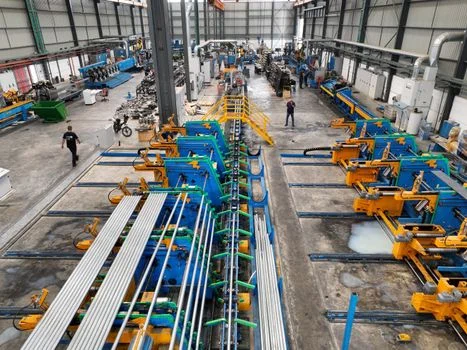
To avoid buyer's remorse and regulatory penalties, factory managers should follow a structured five-step selection framework tailored to the Hanoi industrial environment. The first step is mandatory influent characterization through a MONRE-approved laboratory like VEA. This provides the baseline data for COD, BOD, TSS, and heavy metals, typically costing VND 2M–5M. Without this data, equipment sizing is mere guesswork, often leading to system failure during the rainy season when influent characteristics shift.
The second step involves matching these influent levels against the specific discharge targets. For factories located near the To Lich River or other sensitive basins, Class A compliance is the only "zero-risk" path. Step three is the technology selection using a decision matrix: MBR for high-strength organic waste and space constraints, DAF for high-TSS and grease, and chemical dosing for smaller, variable streams. This step should include a calculated 5-year ROI that accounts for Hanoi’s specific electricity tariffs and chemical import costs.
Validation is the fourth and most critical step. Before full-scale investment, a 3-month pilot test using a containerized unit is recommended for MBR and DAF systems. This trial period allows for the fine-tuning of chemical dosages and membrane flux under actual factory conditions, including seasonal variations. Finally, the framework concludes with the preparation of compliance documentation. This includes establishing a quarterly testing schedule and ensuring the system's SCADA output is compatible with MONRE’s data transmission requirements under Decree 40/2019.
| Selection Step | Action Item | Hanoi Resource / Metric | Output |
|---|---|---|---|
| 1. Characterization | Lab analysis of raw waste | VEA / Vinacontrol Labs | Influent Baseline Report |
| 2. Target Setting | Identify discharge class | QCVN 40:2011 (Class A/B) | Regulatory Goal |
| 3. Tech Matrix | CAPEX/OPEX Comparison | Local energy/labor rates | Technology Selection |
| 4. Pilot Validation | 3-month on-site trial | Local university/provider | Process Optimization Data |
| 5. Compliance Plan | SCADA & Reporting setup | Decree 40/2019 Templates | Zero-Risk Operational Manual |
Frequently Asked Questions
What is the typical cost of a wastewater treatment system for a Hanoi textile factory?For a medium-sized textile factory in Hanoi (500 m³/day), an MBR-based system typically requires a CAPEX of $600,000 to $900,000. OPEX generally ranges from $0.18 to $0.22 per cubic meter, heavily influenced by the cost of electricity for aeration and the specialized chemicals needed for color removal. These costs are competitive when compared to potential fines of up to VND 1B for non-compliance.
How does the Hanoi monsoon season affect wastewater treatment plant performance?The monsoon season (May–October) increases influent TSS by up to 50% due to runoff. This often leads to "sludge bulking" in traditional activated sludge plants. To mitigate this, Hanoi factories should incorporate advanced disinfection and pathogen removal strategies and ensure their DAF or primary clarifiers are sized with a 20% safety factor to handle increased hydraulic loads without losing solids.
Does my factory in Thang Long Industrial Park need its own treatment system?While Thang Long has a centralized treatment plant, Decree 40/2019/ND-CP requires individual factories to pre-treat their wastewater to meet the industrial park's specific intake standards. If your effluent exceeds the park's limits for COD or heavy metals, you risk being disconnected from the central system. Most factories install a compact MBR or DAF system to ensure their discharge consistently meets these internal requirements.