Phoenix hospitals must treat wastewater to Arizona EPA discharge limits: BOD ≤30 mg/L, TSS ≤30 mg/L, fecal coliform ≤200 CFU/100mL, and chlorine residual ≤0.1 mg/L (ADEQ 2026). MBR systems achieve 99% pathogen removal but cost $1.8M–$4.5M (CAPEX), while chlorine dioxide generators ($120K–$350K) offer lower upfront cost with 99.99% kill rates for hospital-specific contaminants like pharmaceuticals and heavy metals.
Why Phoenix Hospitals Need Specialized Wastewater Treatment
Phoenix’s ambient summer temperatures, frequently exceeding 110°F, accelerate microbial metabolic rates in sanitary sewer lines, leading to a 30% increase in influent BOD and TSS loads compared to hospitals in temperate climates (ADEQ 2024 data). This thermal acceleration forces hospital facility managers to deploy cooling or high-rate aerobic treatment systems to prevent septic conditions before the effluent reaches the municipal tie-in. Beyond organic loading, hospital wastewater in the Phoenix metropolitan area contains 10–100× higher concentrations of recalcitrant pharmaceuticals, including antibiotics ranging from 50–500 µg/L, and heavy metals such as mercury (0.1–2 mg/L) originating from legacy dental amalgam and laboratory reagents (EPA Region 9 2025 study).
The Arizona Department of Environmental Quality (ADEQ) has initiated a 2026 ‘Zero Discharge’ mandate that specifically targets large-scale medical facilities for on-site pretreatment. Under this framework, hospitals discharging untreated effluent face enforcement actions and fines reaching $25,000 per day (ADEQ Enforcement Division). This regulatory pressure is compounded by Phoenix’s drought-driven water reuse mandates. As the city transitions toward advanced water purification (AWP) at the 91st Avenue and 23rd Avenue plants, hospitals are being reclassified as high-risk industrial users. This reclassification requires treatment levels that support indirect potable reuse, necessitating the removal of endocrine-disrupting compounds (EDCs) and micro-pollutants that standard municipal secondary treatment cannot effectively neutralize.
Operational risks for Phoenix engineers also include the impact of high mineral content in the local water supply. With water hardness often measuring between 300–500 mg/L as CaCO₃, scaling in onsite treatment equipment occurs at twice the national average rate. This necessitates specialized chemical conditioning and anti-scalant dosing to maintain the integrity of MBR systems for hospital wastewater treatment in Phoenix. Failure to address these localized environmental factors results in rapid membrane fouling and non-compliance with the increasingly stringent Arizona Department of Water Resources (ADWR) conservation standards.
Arizona Hospital Wastewater Discharge Limits: 2026 ADEQ vs. EPA Standards
ADEQ’s 2026 compliance framework introduces limits that are significantly more stringent than federal EPA 40 CFR Part 410 standards, particularly regarding chemical oxygen demand (COD) and disinfection byproducts. While the EPA allows a COD limit of 500 mg/L for many industrial categories, ADEQ has capped hospital effluent at 250 mg/L to protect the biological stability of Phoenix’s downstream reclaimed water infrastructure. This requires hospitals to monitor influent COD—which typically averages 800–1,200 mg/L—using real-time online sensors calibrated to EPA Method 410.3.
Disinfection requirements in Arizona also diverge from federal norms. The Phoenix chlorine residual limit is set at ≤0.1 mg/L, which is 10× lower than the EPA’s 1 mg/L threshold. This aggressive limit is designed to prevent the formation of trihalomethanes (THMs) in the city’s aquifer recharge zones. Consequently, many facilities are pivoting away from traditional sodium hypochlorite toward chlorine dioxide generators for hospital effluent disinfection or UV-based systems. ADEQ requires monitoring for silver (≤0.1 mg/L), a parameter often overlooked in federal standards but critical for Phoenix hospitals still utilizing traditional X-ray film processing or specialized silver-impregnated wound dressings.
| Parameter | EPA 40 CFR Part 410 | ADEQ 2026 Limit | Monitoring Frequency |
|---|---|---|---|
| BOD₅ (mg/L) | ≤50 | ≤30 | Weekly Composite |
| TSS (mg/L) | ≤45 | ≤30 | Weekly Composite |
| COD (mg/L) | ≤500 | ≤250 | Daily Online |
| Fecal Coliform (CFU/100mL) | ≤400 | ≤200 | Daily Grab |
| Chlorine Residual (mg/L) | ≤1.0 | ≤0.1 | Continuous |
| Mercury (mg/L) | ≤0.002 | ≤0.002 | Monthly |
| Silver (mg/L) | Not Specified | ≤0.1 | Quarterly |
Compliance with these limits requires a rigorous sampling protocol. ADEQ’s ‘Tier 2’ pretreatment requirements mandate monthly sampling for 126 priority pollutants. This is a higher standard than seen in other regions, though engineers can learn North Carolina’s approach to pharmaceutical removal in hospital effluent to understand how similar multi-barrier treatment strategies are implemented. In Phoenix, the focus remains on ensuring that hospital discharge does not interfere with the nitrification/denitrification cycles at the city’s centralized treatment plants.
Hospital Wastewater Treatment Technologies: MBR vs. DAF vs. Chlorine Dioxide Systems
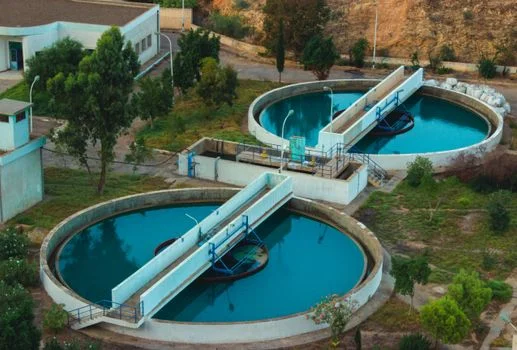
Selecting the appropriate technology for a Phoenix hospital depends on the specific contaminant profile and the available facility footprint. Membrane Bioreactor (MBR) systems represent the gold standard for high-strength medical wastewater. Utilizing 0.1 µm PVDF membranes, MBRs achieve a Log 6 reduction (99.9999%) in pathogens and 90% COD removal. However, these systems are sensitive to total suspended solids (TSS); concentrations exceeding 1,000 mg/L require 2–4 hour Clean-In-Place (CIP) cycles weekly to maintain flux. This is especially relevant when considering how Detroit hospitals adapt MBR systems for extreme temperatures, as Phoenix’s heat similarly affects membrane permeability and biological kinetics.
For facilities with high concentrations of fats, oils, and grease (FOG) from large-scale cafeterias, Dissolved Air Flotation (DAF) is the preferred primary treatment. DAF systems for hospital FOG and TSS removal operate at loading rates of 4–6 m³/h/m², removing 95% of FOG and 90% of TSS. Effectiveness in the Phoenix climate requires precise pH adjustment (typically between 6.5 and 8.5) and polymer dosing, which averages $0.15/m³ of treated water. While DAF is excellent for physical separation, it does not address dissolved pharmaceuticals or pathogens, often requiring a secondary disinfection step.
| Feature | MBR Systems | DAF Systems | Chlorine Dioxide |
|---|---|---|---|
| Footprint | Compact (High Vertical) | Moderate | Minimal |
| Pathogen Removal | 99.999% (Log 5-6) | Low (Physical only) | 99.99% (Log 4) |
| FOG/TSS Removal | Excellent | Superior | None |
| CAPEX (Avg) | $1.8M – $4.5M | $250K – $800K | $120K – $350K |
| Phoenix Compliance | Ideal for Reuse | Primary Only | Disinfection Only |
Hybrid systems are increasingly common in Phoenix. A DAF unit followed by an MBR and UV/Chlorine Dioxide polishing provides a multi-barrier defense against the diverse chemical suite found in oncology and surgical center effluent. This configuration ensures that even if one stage underperforms due to a chemical spike (e.g., a large disinfectant dump from housekeeping), the subsequent stages maintain compliance with ADEQ 2026 standards. For smaller clinics, compact hospital wastewater treatment systems for Phoenix clinics provide an integrated solution that combines these phases into a single skid-mounted footprint.
CAPEX and OPEX Breakdown for Hospital Wastewater Systems in Phoenix
Financial planning for Phoenix hospital wastewater infrastructure must account for a 20% "Phoenix Premium" on CAPEX due to specialized engineering requirements. These include seismic anchoring for equipment skids and high-ambient-temperature design modifications for control electronics and blower motors. For an MBR system with a capacity of 50–500 m³/day, CAPEX ranges from $1.8M to $4.5M. This investment is often justified by the reduction in municipal surcharges, which can exceed $500,000 annually for non-compliant high-strength discharge.
OPEX in Phoenix is heavily influenced by chemical costs and sludge management. Polymer costs for DAF systems are roughly 15% higher in Arizona ($0.15/m³ vs. $0.10/m³ nationally) due to logistics and regional demand. Phoenix’s high water hardness increases the maintenance requirement for chlorine dioxide generators by approximately 10% to manage calcium carbonate scaling. Sludge disposal is another significant variable; landfilling costs in Maricopa County range from $120–$180/ton, whereas beneficial reuse programs (where available) may reduce this to $80–$120/ton. To mitigate these costs, many hospitals integrate a plate and frame filter press to dewater sludge to 30-35% solids, significantly reducing disposal volume.
| Cost Component | MBR (500 m³/day) | DAF (200 m³/h) | ClO₂ Generator |
|---|---|---|---|
| Equipment CAPEX | $2.5M - $3.5M | $400K - $600K | $150K - $250K |
| Installation/Permits | $500K - $800K | $100K - $200K | $50K - $100K |
| Annual Chemicals | $45K - $70K | $30K - $55K | $20K - $40K |
| Annual Energy | $80K - $120K | $25K - $40K | $5K - $15K |
| Sludge Disposal | $60K - $90K | $40K - $70K | N/A |
When comparing these costs to other regions, Phoenix facility managers can reference how San Antonio hospitals meet similar EPA limits while managing comparable drought-related surcharges. The primary difference remains the energy cost for cooling high-temperature influent, which is a unique operational burden for Arizona-based facilities.
Zero-Risk Equipment Selection Framework for Phoenix Hospitals
To avoid the catastrophic failure of an undersized or technologically mismatched system, hospital engineers should follow a structured five-step selection framework tailored to the Phoenix environment.
Step 1: Comprehensive Contaminant Profiling. Do not rely on historical municipal data. Conduct 24-hour composite sampling and test for pharmaceuticals using High-Performance Liquid Chromatography-Mass Spectrometry (HPLC-MS) and heavy metals via Inductively Coupled Plasma Optical Emission Spectroscopy (ICP-OES). Understanding that Phoenix hospitals average 300–800 mg/L COD is critical for sizing aerobic digestion tanks.
Step 2: Engineering Space and Utility Audit. MBR systems require 60% less footprint than conventional activated sludge plants but need 20% more vertical clearance for membrane pull-out and cleaning. Ensure the facility can accommodate the chemical storage requirements for sodium chlorite if choosing chlorine dioxide, adhering to Phoenix Fire Department hazardous material storage codes.
Step 3: Compliance Mapping. Align the equipment specifications with ADEQ’s ‘Tier 2’ pretreatment requirements. If the hospital is located in an area designated for future indirect potable reuse, the system must be capable of achieving <1 NTU turbidity and <10 CFU/100mL fecal coliform without additional polishing stages.
Step 4: Rigorous Vendor Vetting. Require any prospective vendor to provide data from a 3-month on-site pilot trial. Request references specifically from Arizona healthcare networks, such as Banner Health or Dignity Health, to verify the equipment's performance during peak summer heat cycles.
Step 5: Future-Proofing and Modularity. Design the system for 20% capacity expansion to account for hospital growth. Modular designs allow for the addition of tertiary stages, such as UV disinfection or advanced oxidation processes (AOP), if ADEQ introduces stricter limits for specific pharmaceutical compounds like carbamazepine or diclofenac in the future.
Frequently Asked Questions
What are the biggest compliance risks for Phoenix hospitals?
The highest risks involve ADEQ’s 2026 focus on pharmaceutical micro-pollutants and the strict chlorine residual limit of ≤0.1 mg/L. Standard chlorination often fails these limits due to the formation of residuals. An MBR combined with UV disinfection is the most robust way to mitigate both risks, ensuring 99% pharmaceutical removal and zero chemical residual.
How do Phoenix’s drought conditions affect hospital wastewater treatment?
Drought conditions have led to indirect potable reuse mandates. Hospitals are now required to produce effluent that meets high-clarity standards (<1 NTU turbidity). MBR technology is uniquely suited for this as the membrane provides a physical barrier that exceeds the performance of traditional clarifiers, meeting reuse standards without secondary filtration (EPA 2025 guidelines).
What’s the most cost-effective system for a 200-bed hospital in Phoenix?
For a standard 200-bed facility, a combination of DAF for primary solids removal and a chlorine dioxide system for disinfection is often the most cost-effective approach ($450K CAPEX). However, if the hospital houses a large oncology or surgical wing with high pharmaceutical discharge, an MBR system ($2.2M CAPEX) is necessary to avoid municipal non-compliance fines.
How often do membranes need replacement in an MBR system?
In Phoenix’s high-temperature conditions, PVDF membranes typically last 5–7 years. To achieve this lifespan, facility managers must perform monthly CIP cycles using citric acid (pH 2) to remove the calcium carbonate scaling common in Arizona’s hard water (ADEQ 2024 case study).
Can hospitals discharge directly to the Phoenix sewer system?
No. Under the Phoenix Water Services 2025 policy, hospitals are classified as Significant Industrial Users (SIUs). They must pretreat effluent to ADEQ ‘Tier 2’ limits before it is accepted at the 91st Avenue or 23rd Avenue wastewater treatment plants.