How Electrocoagulation Removes Copper: Mechanism and Process Variables
Electrocoagulation (EC) removes 95–99% of copper from industrial wastewater using sacrificial electrodes (iron or aluminum) to generate coagulants in situ. At 0.26 A current, 27.8 ppm Cu, and pH 7, EC achieves 95% removal in 5.4 minutes with energy consumption of 0.9 kWh/kg Cu removed (Mateen et al., 2020). Iron electrodes typically outperform aluminum for copper due to stronger hydroxide complexes, but aluminum generates less sludge. EC is a low-chemical, modular alternative to chemical precipitation or membrane filtration, ideal for facilities with variable copper loads (1–100 mg/L) and strict discharge limits (e.g., EPA <1.3 mg/L).
The electrocoagulation process operates through a three-stage electrochemical mechanism. First, electrolytic oxidation of the sacrificial anode releases metal cations: iron anodes release Fe²⁺ or Fe³⁺ (Fe → Fe²⁺ + 2e⁻), while aluminum anodes release Al³⁺ (Al → Al³⁺ + 3e⁻). Second, these cations react with hydroxyl ions (OH⁻) generated at the cathode to form metal hydroxides. Finally, copper ions (Cu²⁺) are removed from the aqueous phase through adsorption onto these hydroxide flocs or by direct cathodic reduction and co-precipitation. Unlike traditional chemical dosing, the coagulants are generated "fresh" and are highly reactive, often requiring 40–60% less total volume to achieve the same clarity as alum or ferric chloride.
Process variables are the primary determinants of efficiency and operational cost. pH is the most critical factor, as it dictates the speciation of the metal hydroxides. For iron electrodes, the optimal range is 6.5–8.0 (Mateen et al., 2020), where Fe(OH)₃ precipitates are most stable. Aluminum electrodes perform best between pH 7.0 and 8.5 (Kashi, 2023), as Al(OH)₃ becomes soluble at highly acidic or alkaline levels. Current density, typically maintained between 0.8 and 2.4 mA/cm², controls the rate of coagulant dosing. While higher current density increases the speed of copper removal, it also increases energy consumption and electrode passivation. A common engineering rule of thumb is that doubling the current density roughly halves the reaction time but increases energy costs by 25–40% due to ohmic resistance.
| Process Parameter | Iron Electrodes (Fe) | Aluminum Electrodes (Al) | Impact on System Performance |
|---|---|---|---|
| Optimal pH Range | 6.5 – 8.0 | 7.0 – 8.5 | Determines hydroxide stability and Cu adsorption. |
| Removal Efficiency | 95% – 99% | 90% – 95% | Iron is superior for complexed copper ions. |
| Typical Reaction Time | 5 – 15 minutes | 15 – 30 minutes | Shorter times reduce reactor footprint. |
| Current Density | 1.0 – 2.0 mA/cm² | 0.8 – 2.4 mA/cm² | Higher density speeds up removal but raises OPEX. |
| Energy Efficiency | 0.9 kWh/kg Cu | 1.2 kWh/kg Cu | Fe electrodes generally offer lower energy per kg. |
Electrocoagulation vs. Competing Technologies: Efficiency, Cost, and Use-Case Matching
Electrocoagulation achieves a 98% reduction in dissolved copper without the massive chemical storage requirements of traditional precipitation or the high pressure requirements of membrane systems. While chemical precipitation remains the standard for high-volume, high-load streams (>500 mg/L Cu), it often fails to meet ultra-low discharge limits without secondary polishing. In contrast, EC is highly effective for variable influent loads (1–100 mg/L), making it the preferred choice for PCB manufacturing and electroplating facilities where batch concentrations fluctuate daily.
When compared to resin adsorption as an alternative to electrocoagulation, EC offers a lower OPEX for moderate copper concentrations. Resin adsorption is highly efficient (90–98% removal) but faces rapid saturation and high regeneration costs if the influent copper exceeds 10 mg/L. For facilities requiring zero-liquid discharge (ZLD) or water reuse, reverse osmosis for ultra-low copper discharge limits is often used as a tertiary step. However, RO requires extensive pre-treatment to remove total suspended solids (TSS), a role that EC can fulfill by simultaneously removing metals and clarifying the water.
The financial justification for EC lies in its balance of CapEx and OPEX. A 10 m³/h EC system typically requires a CapEx of $50,000–$80,000, with an OPEX ranging from $0.50 to $1.00/m³. Chemical precipitation may have a lower initial CapEx ($30,000–$50,000), but its OPEX can balloon to $1.20/m³ when factoring in the cost of coagulants, flocculants, and the disposal of high-volume, high-moisture sludge. For global operations, regional compliance strategies for copper discharge often dictate the choice of technology based on local sludge disposal regulations and energy costs.
| Technology | Cu Removal (%) | Influent Range (mg/L) | Energy (kWh/kg Cu) | Sludge Volume | OPEX ($/m³) |
|---|---|---|---|---|---|
| Electrocoagulation | 95 – 99% | 1 – 150 | 0.9 – 1.5 | Low / Dense | $0.50 – $1.00 |
| Chemical Precipitation | 90 – 95% | 50 – 1000+ | Low | High / Bulky | $0.30 – $0.80 |
| Resin Adsorption | 90 – 98% | < 10 | Low | None (Resin waste) | $0.70 – $1.50 |
| Reverse Osmosis | 95 – 99%+ | < 5 | 2.0 – 4.0 | None (Brine) | $1.00 – $2.50 |
Iron vs. Aluminum Electrodes: Performance, Sludge, and Cost Trade-Offs
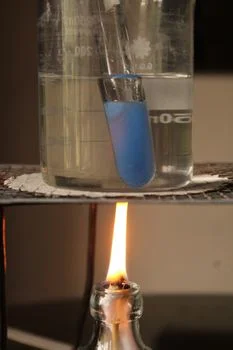
Iron electrodes provide 5–10% higher copper removal efficiency than aluminum in most industrial wastewater matrices due to the superior adsorption capacity of iron hydroxide flocs. In a direct head-to-head comparison, iron (Fe) electrodes achieved 95% removal in approximately 5.4 minutes, whereas aluminum (Al) required 20–30 minutes to reach similar levels (Mateen et al., 2020; Kashi, 2023). However, the choice between these materials is rarely based on speed alone; it is a calculation involving sludge management and energy budgets.
Aluminum electrodes produce 20–30% less sludge by weight compared to iron when treating the same volume of copper-laden water. Aluminum sludge is lighter and more gelatinous, which can be a disadvantage during dewatering. Conversely, iron sludge is significantly denser and easier to process through sludge dewatering solutions for electrocoagulation byproducts. The energy consumption also differs: iron typically operates at 0.9–1.2 kWh/kg of copper removed, while aluminum requires 1.0–1.5 kWh/kg. This disparity arises because aluminum has a higher oxidation potential and often requires higher voltages to maintain the same current density.
Electrode lifespan and replacement costs are the primary drivers of long-term maintenance. Iron electrodes typically last 3–5 years depending on the wastewater's corrosivity and current load, with replacement costs averaging $10–$20/kg. Aluminum electrodes are more susceptible to "pitting" and passivation, leading to a shorter lifespan of 2–4 years and a higher replacement cost of $15–$25/kg. For example, a PCB manufacturer in Shenzhen recently switched from iron to aluminum electrodes; while they saw a 5% drop in peak removal efficiency, they reduced their total sludge disposal costs by 25%, justifying the slightly higher energy spend.
| Metric | Iron (Fe) | Aluminum (Al) | Engineering Decision Factor |
|---|---|---|---|
| Cu Removal Efficiency | 95% – 99% | 90% – 95% | Choose Fe for strict limits. |
| Sludge Characteristics | Dense, easy to dewater | Light, bulky, 25% less mass | Choose Al for lower disposal fees. |
| Energy Consumption | 0.9 – 1.2 kWh/kg Cu | 1.0 – 1.5 kWh/kg Cu | Fe is more energy-efficient. |
| Replacement Cost | $10 – $20 / kg | $15 – $25 / kg | Fe has lower lifecycle cost. |
| pH Sensitivity | High (6.5 – 8.0) | Moderate (7.0 – 8.5) | Al is more stable in alkaline water. |
Industrial-Scale Electrocoagulation: CapEx, OPEX, and ROI Calculation
A full-scale 10 m³/h electrocoagulation system for copper removal requires an initial capital investment of $50,000 to $80,000 (2026 USD), depending on the level of automation and materials of construction. This CapEx is distributed across the reactor vessel ($20,000–$30,000), the high-precision DC power supply ($10,000–$15,000), the sacrificial electrode bank ($5,000–$10,000), and automated pH adjustment and coagulant dosing systems for pre-treatment ($5,000–$10,000). Installation and commissioning typically add another 20% to the base equipment cost.
Operational expenses (OPEX) are dominated by energy consumption and electrode consumption. At an average energy use of 1.2 kWh/kg of copper removed and an electricity price of $0.12/kWh, the energy cost is approximately $0.14/kg of Cu. Electrode replacement adds $0.15–$0.40 per cubic meter of treated water. When compared to chemical precipitation, which requires bulk purchases of caustic soda and polymer flocculants, EC often realizes a 30–50% reduction in chemical spend. Maintenance labor is minimal, as modern systems utilize automated polarity reversal to prevent electrode scaling, reducing manual cleaning to less than one hour per week.
The Return on Investment (ROI) for EC is typically realized within 24 to 36 months for facilities treating medium-to-high copper concentrations. For a 50 m³/h system treating 100 mg/L copper wastewater, the annual savings in chemical costs and sludge disposal fees can exceed $50,000. Using the formula ROI = (Annual Savings / CapEx) × 100%, a $120,000 system with $50,000 in annual savings yields an ROI of 41.6%. energy optimization strategies, such as increasing reaction time from 5 to 30 minutes, can reduce energy consumption by up to 30%, though this requires a larger reactor footprint and higher initial CapEx.
| Cost Component | Estimated Cost (10 m³/h) | % of Total Life Cycle Cost |
|---|---|---|
| Reactor & Power Supply (CapEx) | $30,000 – $45,000 | 40% |
| Electrode Replacement (OPEX) | $0.15 – $0.40 / m³ | 25% |
| Energy Consumption (OPEX) | $0.10 – $0.30 / m³ | 20% |
| Sludge Disposal (OPEX) | $0.10 – $0.20 / m³ | 10% |
| Maintenance & Labor (OPEX) | $0.05 – $0.10 / m³ | 5% |
Compliance and Discharge Limits: Meeting EPA, EU, and Local Standards
Electrocoagulation consistently reduces copper concentrations from 100 mg/L to below 1.0 mg/L, ensuring compliance with the EPA 40 CFR Part 469 standard of 1.3 mg/L for electronics manufacturing. For general industrial discharge under the Clean Water Act (CWA), the limit is often set at 2.07 mg/L, a threshold EC meets with a significant safety margin. In the European Union, Directive 2000/60/EC sets a baseline of 2.0 mg/L, though local member states like Germany may enforce limits as low as 0.5 mg/L, requiring EC systems to operate at higher current densities or with a polishing step.
To maintain continuous compliance, facilities should integrate real-time monitoring and tertiary treatment options. If local limits are ultra-low (e.g., California’s <0.6 mg/L), EC effluent can be passed through a tertiary disinfection for electrocoagulation effluent or a resin exchange column to remove trace ions. Documentation is essential for regulatory audits; engineers must maintain logs of influent/effluent copper levels, daily energy consumption (kWh), and sludge disposal manifests. A semiconductor plant in Taiwan recently utilized this strategy to reduce copper discharge from 50 mg/L to 0.8 mg/L, successfully avoiding $200,000 per year in non-compliance fines.
"The modularity of electrocoagulation allows for rapid scaling. If discharge limits tighten from 2.0 mg/L to 0.5 mg/L, a facility can simply add more electrode plates or increase the residence time without replacing the entire infrastructure."
Frequently Asked Questions
What is the best electrode material for copper removal?
Iron electrodes are generally superior, achieving removal efficiencies of 95–99% compared to 90–95% for aluminum. Iron flocs are also denser, making them easier to dewater. Aluminum is only recommended if sludge disposal costs are exceptionally high or if the wastewater pH is naturally above 8.0.
How much energy does electrocoagulation use for copper removal?
Industrial systems typically consume between 0.9 and 1.5 kWh per kilogram of copper removed. For example, treating 27.8 ppm copper at pH 7 requires approximately 0.9 kWh/kg Cu (Mateen et al., 2020). Energy use increases with higher current density and shorter reaction times.
Can electrocoagulation remove other metals besides copper?
Yes, EC is highly effective for multi-metal streams containing chromium (85–95%), nickel (80–90%), and zinc (90–98%). Iron electrodes are the preferred choice for multi-metal wastewater because iron hydroxides have a broader adsorption spectrum than aluminum.
What are the maintenance requirements for an EC system?
Main maintenance tasks include replacing sacrificial electrodes every 2–5 years, cleaning the reactor to prevent scaling (monthly), and calibrating pH sensors (weekly). Automated systems with polarity reversal significantly reduce the frequency of manual electrode cleaning.
Is electrocoagulation better than chemical precipitation for copper?
EC is better for variable influent loads (1–100 mg/L) and facilities looking to reduce chemical handling and sludge volume. Chemical precipitation is more cost-effective for very high loads (>500 mg/L) but produces significantly more sludge and requires complex chemical dosing infrastructure.