Why IPA Wastewater Requires Advanced Oxidation: The Compliance Crisis
Fenton oxidation achieves 99% COD removal for IPA wastewater at pH 3, with optimal dosing of 0.1 g/L H₂O₂ and 0.75 g/L Fe²⁺ over 40 minutes. This advanced oxidation process generates hydroxyl radicals that mineralize IPA into CO₂ and water, eliminating sludge and meeting EPA discharge limits for organic solvents. For semiconductor or pharmaceutical plants, Fenton oxidation reduces pretreatment costs by 30–40% compared to biological systems, while ensuring zero-sludge compliance under EU Directive 2010/75/EU.
Industrial facilities, particularly in the semiconductor and pharmaceutical sectors, face an escalating compliance crisis regarding isopropyl alcohol disposal. Isopropyl alcohol wastewater treatment is difficult because IPA toxicity thresholds often exceed 50 mg/L, inhibiting microbial activity necessary for conventional biological treatment. In high-precision manufacturing, IPA concentrations in the effluent can reach several thousand mg/L, rendering standard activated sludge processes useless. Biological systems' failure results in a secondary waste stream that is expensive to treat and hazardous to manage.
Regulatory frameworks have tightened to address these organic solvent loads. Under EPA 40 CFR Part 433, metal finishing and semiconductor facilities must maintain Chemical Oxygen Demand levels below 10 mg/L for certain discharge categories. EU Directive 2010/75/EU sets stringent Best Available Techniques for industrial discharges, frequently capping IPA concentrations at 5 mg/L. A semiconductor plant in the Pacific Northwest faced a $1.2M fine after its biological pretreatment system was "shocked" by an IPA surge, leading to a total loss of the microbial colony and months of non-compliance. IPA's low biodegradability necessitates a transition from biological reliance to chemically driven advanced oxidation.
How Fenton Oxidation Breaks Down IPA: Reaction Mechanisms and Hydroxyl Radicals
The Fenton reaction for organic solvents operates through the catalytic decomposition of hydrogen peroxide by ferrous iron in an acidic environment. The core reaction serves as the initiation step that produces the hydroxyl radical. With an oxidation potential of 2.8 V, the hydroxyl radical non-selectively attacks the carbon-hydrogen bonds within the IPA molecule. This high reactivity enables the mineralization of complex organics into harmless byproducts in as little as 40 minutes.
The mineralization pathway for IPA involves several distinct stages. Initially, the hydroxyl radical abstracts a hydrogen atom from the isopropyl alcohol molecule, forming an organic radical. This radical reacts with dissolved oxygen to form acetone. Continued attack by hydroxyl radicals breaks down acetone into smaller organic acids, primarily acetic acid and formic acid. The final stage involves the mineralization of these acids into carbon dioxide and water. Unlike traditional coagulation, Fenton oxidation facilitates a true phase change, converting dissolved pollutants into gas and water.
Engineers must monitor byproduct formation via Gas Chromatography-Mass Spectrometry during the commissioning phase. If reaction times are insufficient, these intermediates can persist, contributing to residual COD. To mitigate this, extended retention times or staged H₂O₂ dosing are employed to ensure the complete breakdown of more resilient intermediates. The table below outlines the oxidation potentials of common reagents used in industrial wastewater treatment to provide context for Fenton's efficiency.
| Oxidizing Agent | Standard Oxidation Potential (V) | Relative Oxidizing Power (vs. Chlorine) |
|---|---|---|
| Hydroxyl Radical (OH·) | 2.80 | 2.05 |
| Ozone (O₃) | 2.07 | 1.52 |
| Hydrogen Peroxide (H₂O₂) | 1.77 | 1.30 |
| Permanganate (MnO₄⁻) | 1.67 | 1.22 |
| Chlorine (Cl₂) | 1.36 | 1.00 |
2027 Engineering Specs for IPA Wastewater Fenton Oxidation Systems
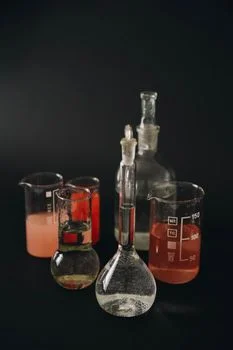
Optimal IPA wastewater treatment by Fenton oxidation requires precise control over four critical variables: pH, reagent dosing ratios, retention time, and mixing energy. For 2027 engineering designs, the industry standard has shifted toward automated, sensor-driven systems that adjust dosing in real-time based on influent COD fluctuations. The ideal pH range remains 2.5 to 3.5; at pH levels above 4.0, iron precipitates as ferric hydroxide, which halts the catalytic cycle and increases sludge volume.
Dosing ratios are the primary driver of both COD removal efficiency and operational expenditure. Based on current industrial field data, a ratio of 0.1–0.3 g H₂O₂ per gram of influent COD is recommended for IPA-laden streams. The iron catalyst should be maintained at a ratio of 0.5–1.0 g Fe²⁺ per gram of H₂O₂. For a typical semiconductor stream with 1,000 mg/L COD, a benchmark dosage of 0.75 g/L Fe²⁺ provides the necessary catalytic surface area to ensure 99% degradation within a 40-to-60-minute window. Many plants are integrating a PLC-controlled chemical dosing for Fenton oxidation to prevent reagent wastage and ensure compliance during peak loads.
Reactor design is equally critical. While Continuous Stirred-Tank Reactors are common due to their simplicity, 2027 specifications favor multi-stage CSTRs or plug-flow reactors to minimize short-circuiting. High-shear mixing is necessary during the initial reagent injection phase to maximize hydroxyl radical contact with IPA molecules. Temperature also plays a role; while the reaction is exothermic, maintaining the reactor between 20°C and 40°C optimizes the reaction rate without causing the premature thermal decomposition of H₂O₂. The following table provides engineering benchmarks for varying IPA concentrations.
| Parameter | Low-Strength (<500 mg/L COD) | Medium-Strength (500–2,000 mg/L) | High-Strength (>2,000 mg/L COD) |
|---|---|---|---|
| H₂O₂ Dosing Ratio (g/g COD) | 0.15 | 0.25 | 0.35 |
| Fe²⁺ Dosing Ratio (g/g H₂O₂) | 0.50 | 0.75 | 1.00 |
| Retention Time (min) | 30 | 45 | 60+ |
| Target pH | 3.0 | 3.0 | 2.8 |
| Expected COD Removal (%) | >98% | 95–99% | 92–97% |
Fenton vs. Other AOPs for IPA Wastewater: A Cost-Benefit Comparison
When evaluating an advanced oxidation process comparison, engineers must weigh the lower capital expenditure of Fenton systems against the lower operational expenditure of technologies like catalytic ozonation or electro-Fenton. Fenton oxidation typically requires the lowest initial investment because the reactors can be constructed from standard acid-resistant plastics or coated steel. A 10 m³/h Fenton system typically ranges from $120,000 to $250,000, whereas a comparable catalytic ozonation system can exceed $300,000 due to the cost of oxygen concentrators and ozone destruct units.
However, Fenton's operational expenditure is higher due to chemical consumption and subsequent pH neutralization. Typical operating costs for Fenton treatment of IPA range from $2.50 to $4.00 per cubic meter. In contrast, catalytic ozonation as an alternative to Fenton oxidation may offer lower chemical costs but faces challenges with IPA because ozonation byproducts can be more toxic than the parent compound if the reaction is not carried to completion. Membrane Bioreactors are often considered for low-strength streams, but as noted in the photoresist wastewater treatment by MBR analysis, they are highly susceptible to fouling and IPA-induced biomass inhibition.
| Technology | COD Removal (IPA) | CapEx (Relative) | OpEx (per m³) | Compliance Risk |
|---|---|---|---|---|
| Fenton Oxidation | 92–99% | Low | $2.50–$4.00 | Very Low (Zero-Sludge) |
| Catalytic Ozonation | 85–90% | High | $3.50–$5.00 | Moderate (Byproducts) |
| Electro-Fenton | 94–98% | Medium | $2.06–$3.10 | Low (Electrode Wear) |
| MBR | 70–80% | High | $1.50–$2.50 | High (Toxicity) |
Pre-Treatment and Post-Treatment: Optimizing Fenton Oxidation for IPA
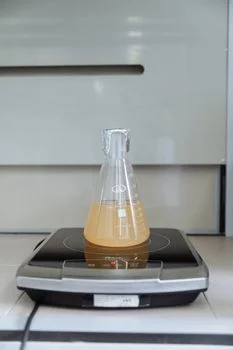
Integrating Fenton oxidation into a full treatment train is essential for achieving zero-sludge wastewater treatment and maximizing chemical efficiency. Pre-treatment focuses on the removal of suspended solids and oils that would otherwise consume H₂O₂ and scavenge hydroxyl radicals. Utilizing DAF pre-treatment for IPA wastewater can remove up to 90% of Total Suspended Solids. Reducing influent TSS to below 50 mg/L typically lowers H₂O₂ consumption by 20–25%, providing a direct return on investment for the DAF unit within the first year of operation.
Post-treatment is primarily concerned with pH neutralization and the management of the iron catalyst. After the 40-minute reaction time, the wastewater is typically at pH 3. Adding sodium hydroxide or lime raises the pH to 7.0–8.0, causing the iron to precipitate as a small amount of ferric hydroxide. While Fenton is often called "zero-sludge," a small amount of chemical sludge is inevitable; however, this is 80% less than the biological sludge produced by traditional systems. To handle this, a sludge dewatering for Fenton oxidation byproducts system is used to produce a high-solids cake that is easy to transport. For facilities with "Direct Discharge" permits, a final polishing step using activated carbon or Reverse Osmosis may be employed to reach COD levels below 5 mg/L.
Compliance and Permitting: Meeting EPA, EU, and Local Discharge Standards
Meeting EPA discharge limits for IPA requires a high-performance system and a rigorous documentation and monitoring framework. Under EPA 40 CFR Part 433, facilities must demonstrate consistent compliance through weekly composite sampling. Because IPA is a volatile organic compound, sampling must be conducted with minimal headspace to prevent evaporative loss. GC-MS is the preferred analytical method for IPA quantification,