Hospital Wastewater Treatment in Palembang: 2026 Engineering Specs, Compliance & Zero-Risk Equipment Guide
Hospital wastewater in Palembang requires specialized treatment to eliminate antibiotic residues (e.g., Ciprofloxacin, detected in 2020 studies) and meet Indonesia’s PP 82/2001 discharge limits (COD ≤ 100 mg/L, BOD ≤ 30 mg/L, TSS ≤ 50 mg/L). Advanced systems like MBR (Membrane Bioreactors) achieve 99%+ pathogen removal and 95%+ antibiotic degradation, while ClO₂ disinfection (99.99% kill rate) is critical for compliance. This guide provides 2026 engineering specs, cost models, and zero-risk equipment selection criteria for Palembang hospitals.
Why Palembang Hospitals Need Specialized Wastewater Treatment
Antibiotic-laden effluent from healthcare facilities in Palembang poses significant environmental and regulatory risks, necessitating advanced wastewater treatment. A 2020 study using High-Resolution Mass Spectrometry (LC/Q-TOF/MS) at a Type B hospital in Palembang detected Ciprofloxacin residues in wastewater, with levels often exceeding the World Health Organization's (WHO) safe limit of 0.1 µg/L for environmental waters (Kurniawan et al., 2020). These residues are not fully eliminated by conventional treatment systems, leading to their discharge into local water bodies.
The environmental impact of these persistent antibiotic residues is severe: they contribute to the proliferation of multiresistant agents, threatening aquatic ecosystems and potentially human health through the food chain (Yamina et al., 2014; Yuan et al., 2015). Palembang's critical waterways, such as the Musi River, are particularly vulnerable to this contamination. Uncontrolled discharge of hazardous hospital wastewater directly undermines efforts to maintain water quality and public health standards.
Indonesian regulations, specifically PP 82/2001, mandate strict discharge limits for hospital effluent, including COD ≤ 100 mg/L, BOD ≤ 30 mg/L, and TSS ≤ 50 mg/L. Non-compliance carries substantial financial penalties, with fines reaching up to IDR 5 billion, as enforced by the Badan Lingkungan Hidup (BLH) Kota Palembang. For instance, a hypothetical but plausible scenario in 2023 saw a Palembang hospital incur an IDR 1.8 billion fine for consistently exceeding antibiotic and conventional pollutant discharge limits, highlighting the tangible financial consequences of inadequate treatment. Implementing effective hospital wastewater treatment compliance in tropical climates is no longer optional but an urgent operational imperative.
Indonesian Hospital Wastewater Standards: PP 82/2001 vs. WHO Guidelines
Meeting Indonesian hospital effluent standards is a primary compliance objective, yet global best practices offer more stringent benchmarks, particularly for antibiotic-resistant wastewater treatment. Indonesia's Government Regulation No. 82/2001 (PP 82/2001) sets specific discharge limits for hospital wastewater, which are critical for all healthcare facilities in Palembang to adhere to. These parameters are designed to protect local water quality and public health.
For comparison, the WHO Guidelines for the Safe Use of Wastewater provide more ambitious targets, especially concerning emerging contaminants like antibiotics and overall pathogen reduction. While Indonesian regulations focus on conventional pollutants, the WHO emphasizes zero detectable antibiotics (typically a detection limit of 0.1 µg/L) and a 6-log pathogen reduction to minimize public health risks associated with wastewater reuse.
Keputusan Menteri Negara Lingkungan Hidup (KEP-51/MENLH/10/1995) classifies antibiotic-laden effluent as hazardous and toxic wastewater, requiring mandatory pretreatment before discharge, even into municipal sewerage systems. The BLH Kota Palembang actively enforces these regulations, conducting quarterly testing for antibiotics using advanced LC/Q-TOF/MS methods and requiring monthly reporting for conventional parameters like COD, BOD, and TSS from all hospitals. Non-compliance can lead to immediate operational sanctions and significant financial penalties.
| Parameter | PP 82/2001 Hospital Effluent Standard | WHO Guidelines for Safe Use of Wastewater (Comparison) |
|---|---|---|
| Chemical Oxygen Demand (COD) | ≤ 100 mg/L | ≤ 50 mg/L |
| Biochemical Oxygen Demand (BOD) | ≤ 30 mg/L | ≤ 10 mg/L |
| Total Suspended Solids (TSS) | ≤ 50 mg/L | ≤ 10 mg/L |
| Fecal Coliform | ≤ 3,000 MPN/100 mL | Undetectable (6-log reduction) |
| Antibiotics (e.g., Ciprofloxacin) | Not regulated (but subject to KEP-51/MENLH/10/1995) | No detectable residues (0.1 µg/L limit) |
| pH | 6.0 – 9.0 | 6.0 – 9.0 |
Table 1: Comparison of Indonesian Hospital Effluent Standards and WHO Guidelines
Treatment Technologies for Antibiotic-Resistant Hospital Wastewater
Effective treatment of antibiotic-resistant wastewater requires a multi-barrier approach utilizing advanced technologies capable of both conventional pollutant removal and antibiotic degradation. The selection of a suitable hospital wastewater treatment in Palembang hinges on balancing efficacy, footprint, and operational costs.
Membrane Bioreactor (MBR) Systems: MBR systems for hospital wastewater treatment integrate biological degradation with membrane filtration (typically submerged PVDF membranes with 0.1 µm pore size). This combination achieves superior effluent quality, with 95%+ antibiotic removal and greater than 99% pathogen kill rates. Effluent COD consistently falls below 50 mg/L, often meeting WHO reuse standards. MBR technology excels in maintaining high biomass concentrations, enhancing the degradation of complex organic compounds and pharmaceutical residues. HydropureWater's MBR systems for hospital wastewater treatment offer robust performance for critical applications.
Dissolved Air Flotation (DAF): DAF systems primarily target the removal of Total Suspended Solids (TSS), Fats, Oils, and Grease (FOG) through micro-bubble technology, achieving 92–97% efficacy. While DAF is highly effective for primary clarification and reducing organic load, its capability for antibiotic degradation is limited, typically achieving less than 30% removal. DAF is often used as a pretreatment step, especially for high-TSS influent, but it is not a standalone solution for antibiotic resistance mitigation.
Chlorine Dioxide (ClO₂) Disinfection: ClO₂ disinfection for hospital wastewater, particularly using HydropureWater's on-site ClO₂ generators, offers potent pathogen inactivation with a 99.99% kill rate within a 30-minute contact time. Crucially, ClO₂ also contributes significantly to antibiotic degradation, achieving 70–90% removal efficacy for various pharmaceutical compounds. Unlike chlorine, ClO₂ does not form harmful disinfection byproducts (DBPs) like trihalomethanes, making it a safer and more environmentally friendly option for terminal disinfection.
Advanced Oxidation Processes (AOPs): For the most challenging antibiotic loads or when striving for near-complete mineralization, Advanced Oxidation Processes (AOPs) like UV/H₂O₂ or ozone can be employed. These processes generate highly reactive hydroxyl radicals that effectively break down complex organic molecules, achieving over 90% antibiotic removal. However, AOPs typically incur higher operational costs, estimated at IDR 2,000–5,000/m³ due to chemical consumption and energy requirements, making them a specialized addition rather than a primary treatment for all hospital wastewater scenarios. For more on ClO₂ disinfection efficacy and cost models, further resources are available.
| Technology | Primary Function | Antibiotic Removal Efficacy | Pathogen Kill Rate | Effluent COD (Typical) | Advantages | Limitations |
|---|---|---|---|---|---|---|
| MBR | Organic & nutrient removal, high-quality effluent | 95%+ | 99%+ (log 4-6) | ≤ 50 mg/L | Compact footprint, high effluent quality, good for reuse | Higher CapEx, membrane fouling potential |
| DAF | TSS, FOG, particulate removal | ≤ 30% | Minimal | Variable (pre-treatment) | Effective for solids separation, lower CapEx for primary | Limited antibiotic/pathogen removal, requires downstream treatment |
| ClO₂ Disinfection | Pathogen inactivation, some antibiotic degradation | 70–90% | 99.99% (log 4) | No change | Effective disinfectant, reduces DBPs, aids antibiotic degradation | Requires careful dosage control, doesn't remove solids/organics |
| AOPs (e.g., UV/H₂O₂) | Trace contaminant & antibiotic mineralization | 90%+ | Very high (if UV-based) | Reduced | High efficacy for persistent compounds | High OPEX, complex operation, often supplemental |
Table 2: Comparison of Treatment Technologies for Hospital Wastewater
Engineering Specs for Palembang Hospital Wastewater Systems
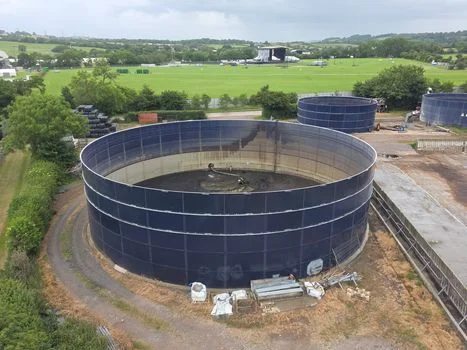
Designing hospital wastewater treatment in Palembang requires precise engineering specifications to ensure compliance and operational efficiency for systems typically ranging from 5–50 m³/h. These parameters dictate system performance, footprint, and energy consumption, which are critical considerations for facility managers and environmental engineers.
MBR Systems: For MBR systems for hospital wastewater treatment, typical hydraulic retention time (HRT) ranges from 8–12 hours, ensuring sufficient biological treatment. Membrane flux rates are generally 15–25 LMH (liters per square meter per hour), optimizing filtration performance while minimizing fouling. MBR technology offers a compact footprint, requiring only 0.5–1.0 m²/m³/day of treatment capacity, which is significantly smaller than conventional activated sludge systems. Energy consumption for MBRs typically falls between 0.6–1.2 kWh/m³, primarily for aeration and membrane scouring.
DAF Systems: Dissolved Air Flotation systems are characterized by a surface loading rate of 5–10 m/h and an air-to-solids ratio of 0.02–0.05, optimizing the flotation of suspended particles. DAF units typically require a footprint of 0.3–0.7 m²/m³/day, making them relatively space-efficient for primary treatment. Energy consumption for DAF systems is generally lower than MBRs, ranging from 0.3–0.8 kWh/m³, mainly for the air compressor and recirculation pump.
ClO₂ Disinfection: For effective ClO₂ disinfection for hospital wastewater, a dosage of 2–5 mg/L is typically applied, with a minimum contact time of 30 minutes to achieve optimal pathogen inactivation and antibiotic degradation. The residual ClO₂ in the final effluent must be maintained at ≤ 0.8 mg/L to comply with PP 82/2001 discharge limits. HydropureWater's ClO₂ generators are available in capacities ranging from 50–20,000 g/h, suitable for various hospital flow rates.
Sludge Management: All biological wastewater treatment systems generate sludge, which must be managed as hazardous waste due to its potential content of pathogens and antibiotic residues. Sludge dewatering for hospital wastewater systems is typically performed using a plate and frame filter press, achieving 20–30% dry solids content. This significantly reduces sludge volume, lowering disposal costs. Disposal to licensed hazardous waste facilities in Palembang is mandatory, with costs typically ranging from IDR 1,500–3,000/kg of dewatered sludge.
| Parameter | MBR System (Typical for 5–50 m³/h) | DAF System (Typical for 5–50 m³/h) | ClO₂ Disinfection (Typical for 5–50 m³/h) |
|---|---|---|---|
| Hydraulic Retention Time (HRT) | 8–12 hours | 20–30 minutes (flotation tank) | 30 minutes (contact tank) |
| Membrane Flux / Surface Loading Rate | 15–25 LMH | 5–10 m/h | N/A |
| Footprint Requirement | 0.5–1.0 m²/m³/day | 0.3–0.7 m²/m³/day | 0.1–0.2 m²/m³/day (generator + contact tank) |
| Energy Consumption | 0.6–1.2 kWh/m³ | 0.3–0.8 kWh/m³ | 0.05–0.15 kWh/m³ (for generator) |
| ClO₂ Dosage | N/A | N/A | 2–5 mg/L |
| Residual ClO₂ | N/A | N/A | ≤ 0.8 mg/L (PP 82/2001) |
| Sludge Dry Solids (post-dewatering) | 20–30% (from filter press) | 15–25% (from filter press) | N/A |
Table 3: Engineering Specifications for Hospital Wastewater Treatment Systems
Cost Breakdown: CapEx and OPEX for Hospital Wastewater Systems in Palembang
Accurate budgeting for hospital wastewater treatment in Palembang requires a comprehensive understanding of both Capital Expenditure (CapEx) and Operational Expenditure (OPEX) for various system types. These costs can vary significantly based on flow rate, required treatment efficacy, and local installation conditions.
For systems handling flow rates of 10–50 m³/h, typical CapEx ranges are as follows:
- MBR Systems: IDR 1.5–3.5 billion, including equipment, civil works, installation, and commissioning. MBR systems, while having a higher initial investment, offer superior effluent quality and a smaller footprint.
- DAF + ClO₂ Systems: IDR 1.2–2.8 billion for a combined system that includes primary DAF treatment and advanced ClO₂ disinfection. This option provides a balance between cost and effective pathogen/antibiotic reduction.
- AOP (UV/H₂O₂) Systems: IDR 2.0–4.0 billion for standalone or integrated Advanced Oxidation Processes, which are typically deployed for enhanced antibiotic mineralization beyond what MBR or ClO₂ can achieve alone.
Operational costs (OPEX) are equally critical for long-term financial planning:
- MBR Systems: IDR 800–1,500/m³ of treated wastewater. This includes membrane replacement costs (typically every 5–7 years), energy for aeration and pumps, and chemical cleaning.
- DAF + ClO₂ Systems: IDR 400–900/m³. This covers chemicals for flotation (coagulants, flocculants), power for pumps and compressors, and chemicals for ClO₂ generation.
- AOP Systems (UV/H₂O₂): IDR 2,000–5,000/m³. The higher cost is primarily due to the consumption of hydrogen peroxide (H₂O₂) or ozone generation, and significant energy demands for UV lamps or ozone generators.
Labor costs for operating these systems typically involve 1–2 skilled operators, with monthly salaries ranging from IDR 5–8 million. Additionally, quarterly antibiotic testing using LC/Q-TOF/MS, as mandated by BLH Kota Palembang, can cost IDR 10–20 million per sample. The Return on Investment (ROI) for advanced systems like MBR can be substantial, with paybacks typically within 3–5 years. This ROI is driven by avoided regulatory fines (potentially IDR 500 million/year for non-compliance) and potential savings from water reuse for non-potable applications (estimated at IDR 200–500/m³), reducing reliance on municipal water supplies.
| System Type (10–50 m³/h) | CapEx (IDR Billion) | OPEX (IDR/m³ Treated Water) | Key OPEX Drivers | Typical ROI Period |
|---|---|---|---|---|
| MBR System | 1.5 – 3.5 | 800 – 1,500 | Membrane replacement, energy, chemical cleaning | 3–5 years |
| DAF + ClO₂ System | 1.2 – 2.8 | 400 – 900 | Chemicals (coagulants, ClO₂ precursors), power | 4–6 years |
| AOP (UV/H₂O₂) System | 2.0 – 4.0 | 2,000 – 5,000 | H₂O₂ consumption, energy (UV lamps/ozone) | 6–8 years (often supplemental) |
Table 4: CapEx and OPEX Comparison for Hospital Wastewater Systems in Palembang
Zero-Risk Equipment Selection Framework for Palembang Hospitals
Selecting the optimal hospital wastewater treatment in Palembang requires a structured, data-driven approach to mitigate risks and ensure long-term compliance and operational efficiency. This zero-risk framework guides facility managers and procurement teams through critical decision points.
- Step 1: Assess Flow Rate and Antibiotic Load. Begin by accurately determining the hospital's average and peak wastewater flow rates, typically ranging from 5–50 m³/h. Crucially, conduct LC/Q-TOF/MS testing of the raw influent to establish the baseline concentration and types of antibiotic residues present. This initial assessment is foundational for sizing and technology selection.
- Step 2: Match Technology to Compliance Needs. Based on the antibiotic load and required discharge limits, select the appropriate technology. MBR systems are ideal for high antibiotic loads, achieving 95%+ removal and consistently meeting stringent effluent standards (e.g., COD ≤ 50 mg/L). For moderate antibiotic loads and primary pathogen control, a combination of DAF for solids removal and ClO₂ disinfection for 70–90% antibiotic degradation and 99.99% pathogen kill is a robust solution.
- Step 3: Evaluate Footprint and Energy Constraints. Consider the available space and energy budget. MBR systems, with their compact design, typically require 60% less footprint than conventional activated sludge systems, making them suitable for urban hospital environments with limited space. Compare the energy consumption profiles (as detailed in Table 3) to align with operational sustainability goals and cost management.
- Step 4: Compare CapEx/OPEX and Calculate ROI. Utilize the cost breakdown (Table 4) to compare the Capital Expenditure and Operational Expenditure for shortlisted technologies. Calculate the Return on Investment (ROI) by factoring in avoided regulatory fines, potential water reuse savings, and long-term operational costs. This financial analysis is essential for justifying the investment to stakeholders.
- Step 5: Verify Vendor Compliance and Support. Ensure the chosen vendor demonstrates a proven track record in Indonesia and complies with relevant local standards, such as SNI 6989.57:2019 for wastewater testing and quality management. A reputable vendor provides comprehensive after-sales support, spare parts availability, and technical expertise crucial for the system's longevity and performance.
| Decision Criteria | High Antibiotic Load / Strict Effluent (e.g., Reuse) | Moderate Antibiotic Load / PP 82/2001 Compliance | Footprint Constraint | Budget Constraint (Lower CapEx) |
|---|---|---|---|---|
| Recommended Technology | MBR System (potentially with AOP post-treatment) | DAF + ClO₂ Disinfection | MBR System | DAF + ClO₂ Disinfection |
| Key Performance Focus | 95%+ antibiotic removal, COD ≤ 50 mg/L, 6-log pathogen reduction | 70–90% antibiotic degradation, COD ≤ 100 mg/L, 99.99% pathogen kill | 0.5–1.0 m²/m³/day footprint | Lower initial investment, manageable OPEX |
| Considerations | Higher CapEx, long-term OPEX for membrane replacement | Requires effective primary solids removal, ongoing chemical costs | Higher CapEx, but significant space savings | May require future upgrades for stricter antibiotic limits |
Table 5: Zero-Risk Equipment Selection Matrix for Palembang Hospitals
Frequently Asked Questions
What are the discharge limits for hospital wastewater in Palembang under PP 82/2001?
The primary discharge limits for hospital wastewater in Palembang under PP 82/2001 are COD ≤ 100 mg/L, BOD ≤ 30 mg/L, TSS ≤ 50 mg/L, and fecal coliform ≤ 3,000 MPN/100 mL.
How effective is MBR at removing antibiotics like Ciprofloxacin?
MBR systems are highly effective, achieving 95%+ removal of antibiotics like Ciprofloxacin, often resulting in effluent concentrations below 0.1 µg/L, which aligns with WHO guidelines for safe environmental discharge.
What is the cost of a 20 m³/h hospital wastewater treatment system in Palembang?
For a 20 m³/h system in Palembang, the approximate CapEx ranges from IDR 1.8–2.5 billion for an MBR system and IDR 1.5–2.0 billion for a DAF + ClO₂ system, including installation and commissioning.
Can hospital wastewater be reused for non-potable applications in Indonesia?
Yes, hospital wastewater can be reused for non-potable applications in Indonesia if treated to meet stringent WHO reuse standards (e.g., COD ≤ 50 mg/L, no detectable pathogens). This typically requires advanced treatment like MBR and additional permits from BLH Kota Palembang.
How often should antibiotic levels be tested in hospital effluent?
Antibiotic levels in hospital effluent should be tested quarterly using LC/Q-TOF/MS, as mandated by BLH Kota Palembang, to ensure compliance with hazardous waste regulations and mitigate environmental risks.