A ClO2 disinfection system for food processing delivers 6-log pathogen reduction at residuals at or below 1 ppm, with 12–18 month ROI against chlorine or ozone. These specs cover FDA and EPA limits, sizing, generator choice, and costs.
ClO2 Disinfection System for Food Processing ROI: Why Plants Switch
ClO₂ generators cut Listeria, Salmonella, and E. coli by 6-log at continuous residuals often ≤1 ppm, inside FDA 21 CFR 173.300 wash-water limits and the 0.8 mg/L EPA MRDL. Chemical generators cost $15,000–$50,000; electrolytic units $30,000–$120,000 with about 40% lower OPEX. Payback typically runs 12–18 months.
ClO₂ disinfection systems for food processing deliver 6-log reduction of Listeria, Salmonella, and E. coli at continuous residuals often ≤1 ppm, while limiting biofilms and chlorine by-products. On-site generators produce 50–20,000 g/h to meet FDA 21 CFR 173.300 wash-water limits and the EPA 40 CFR 141.65 MRDL of 0.8 mg/L. Most plants see 12–18 month payback versus chlorine or ozone.
USDA 2023 recall data indicates that 42% of foodborne illness outbreaks in meat and seafood plants are linked directly to Listeria monocytogenes and Salmonella. These pathogens often find refuge in complex piping and cooling systems where traditional chlorine fails to penetrate. Biofilms, the protective matrix for these bacteria, cost the food industry an estimated $14B per year in equipment downtime, product loss, and labor-intensive sanitation cycles (Journal of Food Protection, 2022). Unlike chlorine, which is inhibited by pH fluctuations and organic loading, chlorine dioxide remains a molecular gas in solution, so it can penetrate the polysaccharide layers of biofilms that harbor pathogens.
Engineering teams increasingly view ClO₂ as a clean break for pathogen resets. When standard sanitation protocols fail to clear persistent positives in environmental swabbing, gaseous or aqueous ClO₂ resets the environment and reaches niches in conveyors, drains, and HVAC units. A seafood processing facility in Norway reported a 98% reduction in Listeria positives on its filleting line after switching from a chlorinated wash to continuous-dose ClO₂, extending fresh fillet shelf life by 2–4 days.
FDA and EPA Compliance: ClO₂ Residual Limits, Contact Times, and Kill Rates
Regulatory compliance for chlorine dioxide rests on residual limits that protect consumers while preserving kill rates. FDA 21 CFR 178.1010 authorizes ClO₂ sanitizing solutions for food-contact equipment. Earlier industry summaries often cited a 3 ppm surface residual under that section; 21 CFR 178.1010 instead sets ready-to-use available chlorine dioxide at 100–200 ppm for listed oxychloro sanitizing solutions, used on equipment followed by adequate draining before food contact.
For direct food contact such as fruit flumes or poultry chillers, 21 CFR 173.300 caps residual ClO₂ at 3 ppm, and most plants hold continuous use at or below 1 ppm to limit sensory change. In many cases, pre-treatment with DAF systems to reduce ClO₂ demand helps meet residual targets without excess chemical use.
For potable water used inside the plant, earlier citations pointed to EPA 40 CFR 141.23; that section covers inorganic chemical sampling. EPA 40 CFR 141.65 sets the chlorine dioxide MRDL at 0.8 mg/L (as ClO₂). Monitoring needs precise instruments: DPD kits for manual checks, and online amperometric sensors that feed PLC dosing loops. Field verification aligns with the regulation—21 CFR 173.300 recognizes Method 4500-ClO2 E (Amperometric Method II) or an equivalent method. The table below summarizes ClO₂ efficacy against primary foodborne pathogens based on EPA and industry benchmarks.
| Pathogen | Log Reduction | Concentration (ppm) | Contact Time (min) | Source |
|---|---|---|---|---|
| Listeria monocytogenes | 6-log | 1.0 | 5.0 | EPA 2024 Benchmark |
| Salmonella enterica | 5-log | 0.5 | 3.0 | Industry Standard Data |
| Escherichia coli (E. coli) | 6-log | 0.8 | 2.0 | FDA Compliance Guide |
| Biofilm Removal | 99.9% (3-log) | 5.0 | 30.0 | Scotmas 2024 Whitepaper |
The CT value (Concentration × Time) is the critical metric for HACCP coordinators. To achieve a 6-log reduction of Listeria, a CT of 5.0 (1 ppm for 5 minutes) is required. When flume contact time is short, raise concentration, but stay within the 21 CFR 173.300 wash-water residual of 3 ppm and typical continuous-use targets near 1 ppm. Operators pairing this with broader haccp safety systems for food processing plants typically close compliance gaps faster than single-parameter monitoring.
Chlorine Dioxide Generator Sizing for Food Plants: Dosing, Contact Time, and Specs
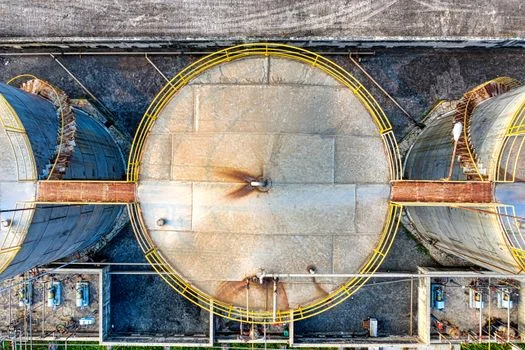
Chlorine dioxide generator sizing for food plants starts with the hydraulic profile and organic load of the site. Designing a Chlorine Dioxide (ClO₂) Generator for Water Disinfection begins with that same plant survey. Dosing splits into continuous water disinfection (0.5–1.2 ppm) and shock treatment for surface sanitization (5–10 ppm during non-production hours). Required dose equals target residual plus ClO₂ demand, which tracks Chemical Oxygen Demand (COD) and Total Suspended Solids (TSS).
System sizing follows a linear formula based on peak flow: G = Q × R, where G is generator capacity (g/h), Q is water flow (m³/h), and R is required dose (ppm or g/m³). For a plant at 100 m³/h needing 1 ppm residual, a 100 g/h generator is the theoretical minimum. Most engineers add a 20% safety margin for peak organic load, which brings the specification to 120 g/h. Plants we size for seasonal seafood runs often sit at the upper end of that margin.
| Parameter | Specification Range | Engineering Note |
|---|---|---|
| Dosing Range | 0.1 – 10.0 ppm | Automated via ORP/Residual feedback |
| Contact Tank Formula | V = Q × t | V=Volume, Q=Flow, t=Contact Time |
| Generator Purity | 95% to 99.9% | Electrolytic yields highest purity |
| Control Interface | Siemens/Allen-Bradley PLC | Integration with plant SCADA/HACCP |
| Safety Sensors | 0.1 ppm (Ambient Air) | Required for OSHA/HSE compliance |
Automation is central to modern food safety. A PLC-controlled ClO₂ dosing system for precise residuals uses a PID loop that adjusts pump frequency from real-time flow meters and downstream residual sensors. That design prevents under-dosing, which risks pathogen survival, and over-dosing, which can trigger non-compliance or sensory taints.
Commissioning closes the loop. Verify dose response across peak and minimum flow, log residual decay from injection point to flume exit, and challenge the interlocks that shut dosing on sensor fault. Plants that skip the decay profile usually discover short contact time only after the first failed swab run.
Electrolytic vs Chemical ClO2 Generator Food Processing Trade-offs: Cost, Safety, and Performance
Food processors choose between chemical generators (precursor reaction) and electrolytic generators (brine-based). Chemical units typically react sodium chlorite (NaClO₂) with hydrochloric acid (HCl) or chlorine gas. Initial CAPEX usually runs $15,000 to $50,000, which suits smaller plants or sites with limited technical staff. They carry higher operational risk from handling concentrated acids and precursors, so SDS control and spill containment remain mandatory.
Electrolytic generators sit in the premium tier. Using only food-grade salt (NaCl) and electricity, they produce ultra-pure ClO₂ gas (99.9% purity) that is vacuum-inducted into carrier water. CAPEX is higher ($30,000 to $120,000), yet OPEX is often 40% lower than chemical systems because salt costs far less than stabilized sodium chlorite. For seafood or fresh-cut produce, electrolytic systems are preferred because they cut precursor contamination risk, including chlorate or chlorite residuals in the finished product.
| Feature | Chemical Generator | Electrolytic Generator |
|---|---|---|
| Purity Level | ~95% | 99.9% |
| Precursors | NaClO₂ + HCl / Cl₂ | NaCl (Salt) + Electricity |
| Safety Risk | High (Acid handling) | Low (Closed-loop brine) |
| Maintenance | Weekly precursor refills | Annual membrane replacement |
| Best For | Small plants (<500 g/h) | Large plants (>2,000 g/h) |
Maintenance profiles also differ. Chemical systems need frequent dosing-pump calibration and reaction-chamber cleaning to limit scaling. Electrolytic systems are more mechanically complex but run closer to set-and-forget; the main annual task is membrane replacement, typically $2,000 to $5,000 depending on unit size.
ClO₂ System Costs: CAPEX, OPEX, and ROI vs. Alternatives
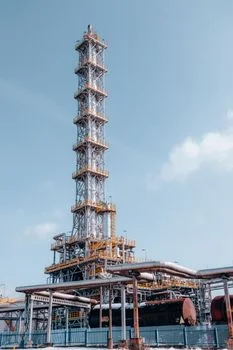
Justifying a ClO₂ system requires a side-by-side cost model against sodium hypochlorite, ozone, or peracetic acid (PAA). Chlorine has the lowest CAPEX, but high reactivity with organics forms trihalomethanes (THMs) and often needs roughly 10× higher dosages than ClO₂ in high-pH water. Ozone is a strong oxidant with high CAPEX and power cost, and its lack of residual weakens biofilm control in long piping runs.
For a typical mid-sized food plant with 100 m³/h water demand, the cost model breaks down as follows:
- CAPEX: $60,000 – $85,000 (includes generator, PLC integration, residual sensors, and installation).
- OPEX (Chemical): $0.50 – $1.20 per kg of ClO₂ produced.
- OPEX (Electrolytic): $0.30 – $0.80 per kg of ClO₂ produced.
ROI is driven by risk reduction and chemical savings. A plant switching from chlorine to ClO₂ can save roughly $45,000 per year in chemical cost and water surcharges. When factoring in the USDA 2023 average cost of a single Class I recall—estimated at $10M including logistics and brand damage—the 12–18 month payback period functions as insurance against Listeria outbreaks. ClO₂ is non-corrosive to stainless steel at operational concentrations, unlike PAA or chlorine, which extends the life of process equipment.
That is the ClO2 disinfection system for food processing ROI case in one line: chemical savings fund the hardware, and recall avoidance justifies the schedule. Teams also weighing the cost of stp for food processing plants should benchmark disinfection and wastewater budgets together, since DAF pre-treatment lowers ClO₂ demand on both sides of the plant.
| Sanitizer | Relative Cost (per kg) | Biofilm Efficacy | Equipment Corrosion |
|---|---|---|---|
| Chlorine Dioxide | Moderate | Excellent | Negligible |
| Chlorine | Low | Poor | High |
| Ozone | High | Moderate (No residual) | Moderate |
| Peracetic Acid | High | Good | Moderate/High |
7 Selection Criteria for a Food-Grade ClO₂ System
Selecting the wrong disinfection system can lead to regulatory fines or a failure in pathogen control. Use the following framework to evaluate vendors and engineering specifications:
- FDA/EPA Compliance: Verify the generator and sanitizing chemistry align with 21 CFR 178.1010 for equipment sanitizers and 21 CFR 173.300 for wash-water residuals. Request third-party data confirming chlorine-free ClO₂ production where purity matters.
- Purity Requirements: For direct contact with seafood or leafy greens, require ≥99.9% purity to avoid off-flavors from chlorite by-products.
- Automation Level: The system must include a PLC with online sensors for ORP, pH, and ClO₂ residuals. Manual dosing does not meet HACCP-level safety requirements.
- Safety Protocols: For electrolytic systems, verify closed-loop brine management. For chemical systems, insist on dual-containment tanks and vacuum-based dosing to prevent gas leaks.
- Scalability: Choose modular generators so a capacity jump from 50 m³/h to 100 m³/h does not force full replacement.
- Vendor Support: Downtime is not an option in food processing. Confirm 24/7 technical support and local inventory of critical spares such as dosing heads and sensors.
- Proven Case Studies: Request references from your food segment (poultry, dairy, seafood). Pathogen challenges in a meat plant differ from those in beverage bottling.
Who This Guide Is For and Next Steps
This guide fits plant engineers, QA managers, and EPC contractors specifying clo disinfection food processing equipment for meat, seafood, produce, or dairy lines with flow rates between 50 and 500 m³/h. If you need potable-water-only treatment at sub-10 m³/h, a simpler sodium hypochlorite skid usually suffices. If your process already runs on PAA and biofilm is under control, ClO₂ is a strategic upgrade rather than a necessity. For facilities handling hospital-grade effluents alongside food lines, our ClO₂ for high-risk wastewater disinfection guide covers elevated dosing protocols and equipment specifications for dual-use plants.
Send your peak flow (m³/h), target residual (ppm), and influent COD/TSS to our applications team for a sized generator quotation and ROI worksheet, or request a quote with your site drawings attached.
Frequently Asked Questions
Is chlorine dioxide safer than chlorine for food processing?
Yes. ClO₂ does not react with organic matter to form carcinogenic trihalomethanes (THMs) or haloacetic acids (HAAs). It works across a wide pH range (4–10), whereas chlorine efficacy drops sharply above pH 7. ClO₂ is also less corrosive to 316-grade stainless steel at the low residuals (≤1 ppm) used for food safety.
What is the FDA limit for chlorine dioxide in food wash water?
According to 21 CFR 173.300, ClO₂ may be used in poultry processing water and in water used to wash fruits and vegetables that are not raw agricultural commodities at residual levels not exceeding 3 ppm. Fruit and vegetable treatment must be followed by a potable water rinse or by blanching, cooking, or canning. Most plants hold continuous use at 0.5–1.0 ppm.
How does ClO₂ remove biofilm in food-grade piping?
Unlike liquid sanitizers, ClO₂ exists as a dissolved gas in water, so it diffuses into the porous biofilm matrix. It oxidizes the polysaccharide glue that holds the film together, kills the underlying bacteria, and lets the structure slough off during normal flow or CIP cycles.
What is the typical maintenance schedule for a ClO₂ generator?
Daily checks verify precursor levels and sensor calibration. Monthly tasks inspect injection valves and pump diaphragms for wear. For electrolytic systems, a major annual service inspects the electrolytic cell and replaces membranes if efficiency has dropped below 90%.
What are the main cost drivers when sizing a ClO₂ system for a food plant?
The five drivers are peak flow (m³/h), target residual (ppm), influent ClO₂ demand driven by COD/TSS, generator purity tier (95% chemical vs. 99.9% electrolytic), and PLC/SCADA integration scope. Together these set generator capacity (g/h), contact-tank volume, and OPEX per kilogram of ClO₂ produced.
How many grams per hour of ClO₂ does a 100 m³/h flume need?
The sizing formula G = Q × R gives 100 g/h for a 100 m³/h flume targeting a 1 ppm residual. Most engineers add a 20% safety margin for peak organic load, which brings the specification to 120 g/h. Seasonal peaks in seafood or produce runs justify sitting at the top of that margin.