Dubai hospitals must treat wastewater to DHA/DM standards requiring <10 mg/L BOD, <10 mg/L TSS, and 99.9% pathogen reduction (E. coli <10 CFU/100mL). MBR systems achieve this with a 60% smaller footprint than conventional STPs, while chlorine dioxide generators (ClO₂) provide 4-log disinfection without chemical residuals—critical for medical effluent with high antibiotic resistance. CAPEX for a 200-bed hospital STP ranges from AED 1.2M (conventional) to AED 2.8M (MBR + zero-discharge).
Why Dubai Hospitals Need Specialized Wastewater Treatment
DHA Administrative Circular No. 12/2023 mandates that all private and public healthcare facilities in Dubai treat their effluent to tertiary standards, specifically targeting <10 mg/L for both Biochemical Oxygen Demand (BOD) and Total Suspended Solids (TSS).
DHA Administrative Circular No. 12/2023 reflects the high viral and bacterial load inherent in medical waste, where E. coli concentrations must remain below 10 CFU/100mL to prevent environmental contamination. For facility managers, the risk of non-compliance is no longer theoretical; a 2025 DHA enforcement action resulted in a fine of AED 500,000 for a 150-bed hospital in Jumeirah after untreated antibiotic-resistant effluent was detected in the municipal line, leading to a temporary suspension of their discharge permit.
Dubai Municipality (DM) Local Order No. 61/2019 further complicates the engineering requirements by imposing strict heavy metal limits for hospitals exceeding 100 beds. These facilities must ensure Chromium (Cr) levels remain below 0.1 mg/L and Lead (Pb) below 0.05 mg/L. Standard municipal treatment processes are often insufficient to capture these metals, which originate from laboratory reagents and diagnostic imaging departments. Failure to remove these contaminants at the source leads to rapid biofilm accumulation in hospital drainage networks.
Operational safety is the secondary driver for specialized treatment. According to WHO 2024 data, biofilm buildup in untreated hospital effluent lines increases the risk of Healthcare-Associated Infections (HAIs) by 18%. Pathogens like Pseudomonas aeruginosa and Legionella thrive in the nutrient-rich, warm environment of Dubai’s sewer systems. By implementing on-site ClO₂ disinfection for 4-log pathogen reduction without THMs, hospitals can neutralize these risks before the effluent leaves the building footprint, protecting both the public infrastructure and the facility’s reputation.
Dubai Hospital Wastewater: Contaminant Loads and Treatment Challenges
The high contaminant loads in Dubai hospital wastewater pose significant treatment challenges.Hospital effluent in Dubai is significantly more concentrated than standard domestic sewage due to the high use of disinfectants, specialized laundry services, and laboratory activities. Per 2026 DM benchmarks, typical influent parameters for Dubai hospitals show BOD levels between 200–600 mg/L and Chemical Oxygen Demand (COD) ranging from 400–1,200 mg/L. The presence of antibiotic-resistant genes (ARGs) is a particularly acute challenge; a UAEU 2025 study identified ARG concentrations of 10^3–10^5 copies/mL in local medical effluent, which traditional biological treatments fail to eliminate entirely.
Pharmaceutical residuals present the most complex removal hurdle. Compounds such as Metronidazole (5–50 μg/L) and Ciprofloxacin (1–20 μg/L) are recalcitrant to standard aerobic digestion. Effective removal requires Advanced Oxidation Processes (AOPs), typically utilizing ozone or UV-C at specific fluences to break down the molecular rings of these antibiotics. For hospitals in high-density areas like Dubai Healthcare City, space for these systems is at a premium. The average Dubai hospital has less than 0.5 m² per bed available for utility infrastructure, necessitating an underground STP for space-constrained Dubai hospitals to maximize surface-level parking or clinical space.
| Parameter | Typical Influent (Dubai Hospital) | DM/DHA Discharge Limit | Removal Required (%) |
|---|---|---|---|
| BOD5 (mg/L) | 200 – 600 | < 10 | 95 – 98.3% |
| COD (mg/L) | 400 – 1,200 | < 50 | 87.5 – 95.8% |
| TSS (mg/L) | 150 – 400 | < 10 | 93.3 – 97.5% |
| E. coli (CFU/100mL) | 10^5 – 10^7 | < 10 | 99.999% |
| Chromium (mg/L) | 0.5 – 2.0 | < 0.1 | 80 – 95% |
To address these loads, integrated systems must combine primary physical separation, secondary biological treatment, and tertiary advanced oxidation. For smaller facilities, compact ozone-based systems for small clinics and dental offices provide a modular solution that targets pharmaceutical residues and pathogens without the need for large aeration tanks.
Engineering Specs: MBR vs. SBR vs. Conventional STPs for Dubai Hospitals
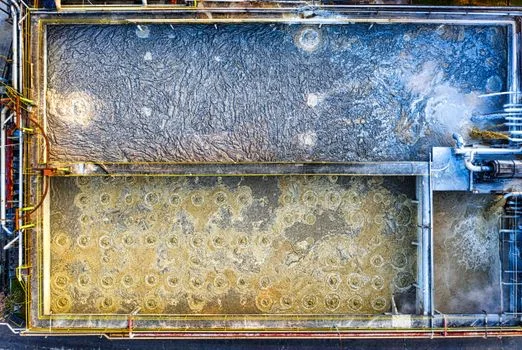
Selecting the correct treatment architecture depends on the hospital’s bed capacity, available footprint, and the intended use of the treated water. Membrane Bioreactor (MBR) systems are currently the gold standard for Dubai’s medical sector. By replacing the secondary clarifier with a microfiltration or ultrafiltration membrane, MBR systems for 99.99% pathogen removal in medical effluent produce water that is nearly ready for reuse in cooling towers or irrigation. MBRs operate at a much higher Mixed Liquor Suspended Solids (MLSS) concentration (8,000–12,000 mg/L) compared to conventional systems (2,000–4,000 mg/L), allowing for a 60% reduction in tank volume.
Sequencing Batch Reactors (SBR) offer a middle ground, particularly for hospitals with fluctuating occupancy rates. SBRs utilize a timed cycle—typically 4–6 hours of aeration followed by 2 hours of settling—within a single tank. While SBRs meet the <10 mg/L BOD/TSS requirements, they lack the physical barrier provided by MBR membranes, meaning they rely more heavily on downstream disinfection. Conventional Activated Sludge (CAS) systems, while lower in initial CAPEX, are rarely recommended for new Dubai medical facilities due to their large footprint (0.8 m²/m³/day) and the intensive sludge handling required to manage the high-volume, low-density waste produced.
| Metric | MBR System | SBR System | Conventional (A/O) |
|---|---|---|---|
| Effluent COD (mg/L) | < 30 | < 50 | < 100 |
| Pathogen Removal | 99.99% (4-log) | 99.9% (3-log) | 99% (2-log) |
| Footprint (m²/m³/day) | 0.3 | 0.5 | 0.8 |
| Energy Use (kWh/m³) | 0.8 – 1.2 | 0.5 – 0.8 | 0.3 – 0.5 |
| Sludge Yield | Low (Long SRT) | Medium | High |
Disinfection strategy is the final critical spec. Chlorine gas is increasingly discouraged in Dubai hospitals due to safety risks and the formation of Trihalomethanes (THMs). UV systems provide 3-log reduction but can be hindered by turbidity. Chlorine Dioxide (ClO₂) generators are the preferred engineering choice, providing a consistent 4-log reduction of pathogens, including antibiotic-resistant strains, while maintaining a residual that prevents regrowth in storage tanks. This is particularly relevant when compared to how UK hospitals meet stricter EA/SEPA standards using similar advanced oxidation pathways.
Dubai Compliance Checklist: Permits, Testing, and DHA/DM Requirements
The regulatory framework for hospital wastewater treatment in Dubai is stringent.Navigating the Dubai regulatory environment requires a two-tiered approach involving both the Dubai Municipality (DM) and the Dubai Health Authority (DHA). For any new hospital or major upgrade (hospitals >100 beds), a DM Environmental Impact Assessment (EIA) is mandatory. The EIA scope must include detailed effluent modeling, odor control measures (using activated carbon or bio-scrubbers), and noise attenuation specs for aeration blowers. This ensures the STP does not interfere with patient recovery areas or neighboring residential zones.
The permit application process follows a specific sequence:
- Submit Form DM-ENV-023: This is the primary application for an environmental permit to construct an STP. It must include the detailed design basis, flow calculations (average and peak), and a process flow diagram (PFD).
- Disinfection Validation: DHA requires proof that the chosen disinfection method (e.g., ClO₂ or Ozone) can achieve the 99.9% pathogen reduction target.
- Connection Permit: If the hospital intends to discharge any treated excess into the municipal sewer, a separate application must be made to the DM Wastewater Department, as detailed in the guide on how Dubai’s municipal WWTPs handle hospital effluent connections.
Once operational, hospitals must adhere to a strict testing regimen. BOD, TSS, and E. coli must be tested quarterly by DHA-accredited laboratories. Heavy metal analysis (Cr, Pb, Hg) is required annually. Non-compliance penalties under DM Local Order No. 61/2019 range from AED 10,000 for minor administrative failures to AED 500,000 for repeated discharge violations. DM has the authority to mandate immediate STP upgrades at the owner’s expense if the facility is found to be contributing to municipal sewer blockages or contamination.
Cost Breakdown: Hospital STPs in Dubai (2026 CAPEX/OPEX Models)
Budgeting for a hospital STP in Dubai must account for the high cost of land and the requirement for tertiary-grade effluent. While Conventional STPs have the lowest initial CAPEX, their inability to meet DHA <10 mg/L standards without significant add-on filtration often makes them a poor long-term investment. MBR systems, despite a 40-50% higher CAPEX, provide the lowest total cost of ownership when water reuse is factored in. In Dubai’s arid climate, the ability to reuse treated water for landscaping or cooling towers can offset potable water costs by up to AED 4.50 per cubic meter.
For a 200-bed hospital, which typically generates 100–150 m³ of wastewater daily, a full MBR and zero-discharge upgrade package costs approximately AED 2.8M. This includes the biological treatment, ultrafiltration membranes, and a reverse osmosis (RO) polishing stage. Utilizing reverse osmosis (RO) water purification as a final stage allows the hospital to achieve "Zero Liquid Discharge" (ZLD), essentially eliminating the need for municipal sewer connection fees and providing a hedge against future water price increases.