Why Stockholm’s Wastewater Treatment Costs Are Unique: 3 Local Drivers
In 2026, wastewater treatment plant costs in Stockholm range from SEK 70M for small-scale MBR upgrades to SEK 1.2B for large municipal facilities like Henriksdal. CAPEX is driven by technology choice (MBR: SEK 12,000–18,000/m³/day capacity vs. conventional: SEK 8,000–12,000/m³/day), while OPEX averages SEK 0.8–2.5/m³ treated, with energy and membrane replacement as top cost drivers. Stockholm Vatten’s 2015 Henriksdal upgrade (€70M) set a benchmark for MBR systems, achieving 34% energy savings and effluent quality meeting EU Water Directive standards.
Stockholm presents a unique set of challenges that inflate wastewater treatment budgets compared to other European capitals. The primary driver is the geological profile of the region. Most large-scale facilities, such as the Henriksdal plant, are built directly into rock. Rock excavation for underground expansion or new tank volume requires precision blasting and specialized reinforcement, which typically adds a cost multiplier of 1.3x to 1.5x to the base CAPEX. For instance, recent expansions in Stockholm’s underground facilities have recorded rock excavation costs exceeding SEK 15M for even moderate capacity increases.
Compliance with the Baltic Sea Action Plan (BSAP) and EU Water Directive 91/271/EEC further elevates costs. Stockholm’s effluent limits are significantly stricter than global benchmarks, requiring Total Nitrogen (TN) levels below 10 mg/L and Total Phosphorus (TP) below 0.3 mg/L. Achieving these levels necessitates tertiary treatment or advanced membrane bioreactors, which increases initial investment by 25–40% compared to plants designed for standard secondary treatment. This is particularly relevant when considering how to meet Stockholm’s strict TP <0.3 mg/L effluent limit through precise chemical precipitation and filtration.
Finally, Stockholm’s status as one of Europe’s fastest-growing cities places immense pressure on capacity planning. Facilities like Henriksdal, which manages 864M L/day, must balance high energy prices (averaging SEK 1.2/kWh) with the need for high-throughput efficiency. This economic environment makes OPEX-focused investments, such as high-efficiency MBR membranes, far more attractive than in regions with lower power costs, as the 34% energy savings achieved in recent municipal upgrades provide a rapid return on investment.
Stockholm Wastewater Treatment Plant Costs 2026: CAPEX Breakdown by Technology
Capital expenditure (CAPEX) for Stockholm projects is primarily dictated by the technology's ability to meet stringent environmental standards within a compact or underground footprint. Membrane Bioreactor (MBR) systems represent the high end of the spectrum, with costs ranging from SEK 12,000 to SEK 18,000 per m³/day of capacity. The Henriksdal upgrade, which totaled approximately SEK 750M (converted from the €70M project budget) for a capacity of 864M L/day, serves as a primary reference point for large-scale municipal MBR investment.
For industrial pretreatment, Dissolved Air Flotation (DAF) systems offer a more modular and cost-effective entry point. DAF systems for industrial pretreatment in Stockholm typically cost between SEK 1.5M and SEK 10M, depending on flow rates (4–300 m³/h). These systems are essential for food processing and manufacturing sectors needing to remove 95%+ of Fats, Oils, and Grease (FOG) before discharging to the municipal grid.
Sludge management is another significant CAPEX component. Implementing sludge dewatering systems to reduce Stockholm’s high disposal costs requires an investment of SEK 200,000 to SEK 2M for plate-and-frame filter presses. While the upfront cost is higher than centrifuges, the superior cake dryness significantly reduces long-term disposal fees.
| Technology Type | CAPEX Range (per m³/day) | Ideal Application | Footprint Requirement |
|---|---|---|---|
| Membrane Bioreactor (MBR) | SEK 12,000 – 18,000 | Municipal & High-Quality Reuse | Ultra-Compact (Low) |
| Conventional Activated Sludge | SEK 8,000 – 12,000 | Rural/Large Surface Area | High |
| Dissolved Air Flotation (DAF) | SEK 5,000 – 9,000* | Industrial Pretreatment | Moderate |
| SBR (Batch Reactor) | SEK 9,000 – 13,000 | Variable Flow Industrial | Moderate |
*Note: DAF costs are often calculated per m³/h for industrial applications; the range above is normalized for comparison.
OPEX in Stockholm: Energy, Chemicals, and Membrane Replacement Costs
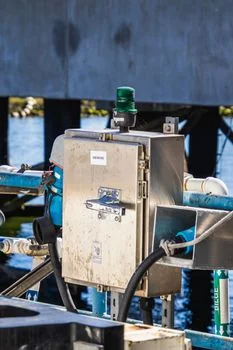
Operational expenditure (OPEX) in Stockholm is heavily influenced by Sweden’s energy market and the high cost of sludge handling. Energy consumption typically accounts for 30–50% of total OPEX. Following the Henriksdal upgrade, energy costs have stabilized at approximately SEK 0.3–0.8/m³ treated. This efficiency is achieved through advanced aeration controls and low-energy membrane designs.
Chemical dosing is the second largest variable cost. To maintain compliance with phosphorus limits, plants must utilize automated chemical dosing to cut Stockholm’s OPEX by 15–25% compared to manual or constant-rate dosing. Chemical costs (coagulants and polymers) range from SEK 0.10 to SEK 0.25/m³.
Sludge disposal in Stockholm is particularly expensive due to high landfill taxes and strict transport regulations, averaging SEK 800–1,200 per ton. This makes high-efficiency dewatering critical. labor costs in the Nordic region are significant, making fully automated systems like the WSZ series highly desirable, as they can reduce required man-hours by up to 90% through remote monitoring and PLC integration.
| OPEX Category | Estimated Cost (per m³) | % of Total OPEX | Optimization Strategy |
|---|---|---|---|
| Energy Consumption | SEK 0.30 – 0.80 | 40% | High-efficiency MBR & VFDs |
| Chemical Dosing | SEK 0.10 – 0.25 | 15% | Real-time nutrient sensors |
| Membrane Replacement | SEK 0.15 – 0.30 | 20% | Automated CIP protocols |
| Sludge Disposal | SEK 0.20 – 0.50 | 20% | High-pressure filter presses |
| Maintenance & Labor | SEK 0.05 – 0.15 | 5% | IIoT Remote Monitoring |
MBR vs. DAF vs. Conventional: Which Technology Fits Your Stockholm Project?
Choosing the right technology requires balancing Stockholm’s strict effluent standards with available space and budget. MBR is the gold standard for projects where space is at a premium—common in Stockholm’s rocky terrain—as it offers a 60% smaller footprint than conventional systems. It is the only reliable choice for meeting the most stringent TN <10 mg/L limits without extensive tertiary polishing stages. MBR systems for Stockholm’s high-efficiency effluent standards provide the highest water quality, often suitable for industrial reuse.
DAF systems are the preferred choice for industrial buyers in sectors like dairy, meat processing, or mechanical manufacturing. They excel at high-load pretreatment, protecting municipal infrastructure from grease and solids. While DAF cannot reach the nutrient removal levels of MBR on its own, it is a critical first stage in a multi-barrier treatment approach. When evaluating international standards, it is helpful to see how Berlin’s WWTP strategies compare to Stockholm’s, particularly in how they integrate DAF for heavy industrial loads.
Conventional Activated Sludge (CAS) remains viable only for rural areas outside the Stockholm city center where land is inexpensive and rock excavation is not required. However, for most urban projects, the higher OPEX and massive footprint of CAS make it less economically sustainable than modernized alternatives.
| Feature | MBR (Integrated) | DAF | Conventional Sludge |
|---|---|---|---|
| Effluent Quality | Ultra-High (Reuse) | Pretreatment Grade | Standard Discharge |
| Footprint | Minimal | Compact | Large |
| CAPEX | Highest | Moderate | Lowest |
| OPEX | Moderate (Energy) | Low (Chemicals) | High (Maintenance) |
| Best For | Strict Compliance | FOG/TSS Removal | Low-Budget Rural |
Local vs. International Suppliers: Cost and Compliance Comparison for Stockholm Buyers
Stockholm procurement managers often weigh the benefits of global heavyweights against regional or specialized international manufacturers. International Tier-1 suppliers (such as Veolia or GE) bring immense technical security and were instrumental in the Henriksdal MBR upgrade. However, they typically command a 10–20% price premium and may have complex bureaucratic lead times of 12–18 months for custom configurations.
Direct manufacturers like HydropureWater offer a competitive alternative by providing the same high-specification PVDF membranes and PLC-controlled systems at a 5–15% discount. These suppliers often provide faster on-site support and more flexible modular designs. All equipment, regardless of origin, must strictly adhere to EU Water Directive 91/271/EEC. While local Stockholm-based consultants ensure compliance, the equipment itself is increasingly sourced globally to manage CAPEX. For a broader perspective on global pricing, buyers can review how Stockholm’s costs compare to other global cities like Kathmandu, where labor and material costs create a vastly different investment profile.
| Supplier Type | Avg. CAPEX Discount | Lead Time | Service Support | Compliance Documentation |
|---|---|---|---|---|
| Global Tier-1 (GE/Veolia) | 0% (Baseline) | 12–18 Months | Global Network | Standardized EU |
| Specialized (HydropureWater) | 5–15% | 6–10 Months | Direct Engineering | Customized to BSAP |
| Local Nordic Resellers | +10% Premium | 8–12 Months | On-site (Fast) | Stockholm Vatten Specific |
5 Cost-Saving Strategies for Stockholm Wastewater Treatment Projects
Reducing the financial burden of a WWTP project in Stockholm requires a mix of engineering precision and leveraging local incentives. First, Modular Design allows industrial facilities to install capacity in stages (e.g., beginning with a 50 m³/h DAF unit), reducing initial CAPEX by up to 30%. This prevents over-investing in capacity that may not be needed for several years.
Second, Energy Efficiency is paramount. Utilizing low-energy MBR membranes can reduce power draw significantly. Stockholm Vatten’s data suggests that even a 10% improvement in aeration efficiency can save millions of SEK over the plant's lifecycle. Third, Automated Chemical Dosing prevents the "over-dosing" common in manual systems, reducing chemical spend by 15–25% through the use of PLC-controlled automated chemical dosing to cut Stockholm’s OPEX by 15–25%.
Fourth, prioritizing Advanced Sludge Dewatering is essential. Using a plate and frame filter press for sludge dewatering can achieve 35–45% solids content, compared to 20% from a centrifuge. This reduction in sludge volume directly slashes disposal fees, often paying for the equipment in less than three years. Finally, buyers should investigate Government Incentives. Stockholm Vatten and various Swedish environmental agencies offer grants ranging from SEK 500,000 to SEK 2M for projects that demonstrate significant energy savings or contribute to the Baltic Sea Action Plan's goals.
ROI Calculator: How to Justify Your Stockholm WWTP Investment
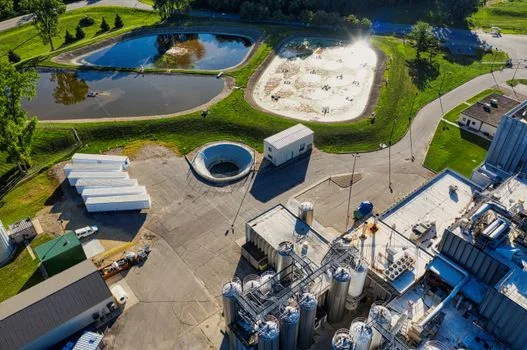
Justifying a multi-million SEK investment requires a clear Return on Investment (ROI) framework. For a typical industrial plant in Stockholm treating 10,000 m³/day, the transition from a legacy system to a modern MBR or DAF-led system can yield significant annual savings. The primary factors in the ROI equation are energy savings, reduced sludge volume, and the avoidance of environmental non-compliance fines, which in Sweden can exceed SEK 1M per year for major violations.
A standard MBR system in the Stockholm region typically sees a payback period of 5 to 8 years, while industrial DAF systems can reach parity in as little as 3 to 5 years due to the immediate reduction in municipal surcharge fees for high-TSS discharge. Sludge dewatering upgrades offer the fastest ROI, often under 36 months, due to the high cost of transport and landfilling in the Stockholm archipelago region.
| Investment Metric | MBR System (10k m³/day) | DAF + Filter Press (Industrial) |
|---|---|---|
| Initial CAPEX | SEK 140M | SEK 12M |
| Annual OPEX Savings | SEK 18M | SEK 3.5M |
| Avoided Fines/Fees | SEK 2M | SEK 1.5M |
| Estimated Payback | 7.0 Years | 2.4 Years |
| 10-Year Net Benefit | SEK 60M | SEK 38M |
Frequently Asked Questions
What is the average cost per m³ for wastewater treatment in Stockholm?
For operational costs (OPEX), expect to pay between SEK 0.8 and SEK 2.5 per m³ treated. Total lifecycle costs, including CAPEX amortization, typically range from SEK 5 to SEK 12 per m³ depending on the technology and effluent requirements.
How much does an MBR system cost for a 10,000 m³/day plant in Stockholm?
The equipment and installation for an MBR system of this size typically range from SEK 120M to SEK 180M. If the plant must be located underground, add SEK 15M to SEK 25M for rock excavation and specialized ventilation.
What are the effluent standards for Stockholm wastewater treatment plants?
Plants must comply with the Baltic Sea Action Plan (BSAP). Typical limits are Total Nitrogen (TN) <10 mg/L, Total Phosphorus (TP) <0.3 mg/L, and BOD7 <8 mg/L. Some specialized industrial permits may be even stricter.
How can I reduce energy costs in my Stockholm WWTP?
The most effective methods include using low-energy membranes (which can save 34% on energy, as seen at Henriksdal), installing Variable Frequency Drives (VFDs) on all pumps, and utilizing automated dissolved oxygen (DO) control for aeration tanks.
What are the lead times for wastewater treatment equipment in Stockholm?
Lead times vary by supplier. Major international brands often require 12–18 months. Specialized direct manufacturers like HydropureWater can often deliver integrated systems within 6–12 months, including shipping and site commissioning.