In 2026, Berlin wastewater treatment for industrial dischargers must meet EU Urban Waste Water Directive 91/271/EEC limits of COD ≤125 mg/L, BOD ≤25 mg/L, and TSS ≤35 mg/L, plus Germany’s Sewage Sludge Ordinance (AbfKlärV). Hybrid DAF-MBR-RO trains commonly deliver 99%+ TSS removal and about 95% water reuse.
Typical turnkey CAPEX for 50–500 m³/h sits at €1.2M–€4.5M, about 30% below many conventional rebuilds. Berlin sludge disposal averages €67/ton, which pushes plants toward on-site volume cut or thermal recovery.
What are Berlin wastewater discharge limits?
Berlin industrial dischargers to sewers or receiving waters must meet COD ≤125 mg/L, BOD ≤25 mg/L, and TSS ≤35 mg/L under EU Urban Waste Water Directive 91/271/EEC. Germany’s AbfKlärV sets sludge handling rules that affect residual solids paths. SenUVK enforces local permits. Berliner Wasserbetriebe (BWB) applies sampling, surcharges, and connection conditions for sewer users.
Penalties and downtime now dominate upgrade timing. German federal and state authorities, including Berlin’s Senate Department for the Environment, Urban Mobility, Consumer Protection and Climate Action (SenUVK), are tightening enforcement on outdated trains. A Berlin metalworking plant faced a €250,000 fine in 2024 for repeated COD exceedances.
Delayed upgrades often add about a 30% cost premium through emergency retrofit, higher material prices, and stacked penalties. That pattern mirrors the $1.85 million Berlin, OH wastewater treatment upgrade driven by similar compliance pressure.
Sludge rules tighten the cost picture further. With disposal near €67/ton and BWB moving toward 100% internal thermal utilization of sewage sludge under the AbfKlärV amendment, factories need a clear solids plan before they lock equipment. For the wider EU timeline and technology options, see the EU Urban Wastewater Treatment Directive compliance updates.
Operators comparing city playbooks for industrial wastewater treatment should still size Berlin trains against local BWB and SenUVK conditions, not generic catalog curves.
Hybrid DAF, MBR, and RO specs for Berlin factories
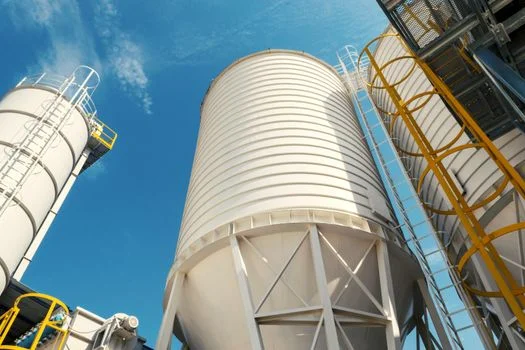
Hybrid trains that combine Dissolved Air Flotation (DAF), Membrane Bioreactors (MBR), and Reverse Osmosis (RO) are the configuration most Berlin factories select for zero-liquid discharge or high reuse. Industrial feeds often carry high TSS, oils, organics, and dissolved salts beyond conventional biological treatment alone.
A common layout starts with a high-efficiency DAF system for Berlin industrial pre-treatment, then an MBR system for near-reuse-quality effluent in Berlin, and an RO stage for ZLD or high-purity process water.
Modular skids help when a Berlin hall cannot spare a new tank farm. Pre-engineered DAF and MBR blocks shorten shutdown windows compared with cast-in-place basins. Most plants we size for food and metal finishing start with DAF+MBR for sewer compliance.
They add RO only when reuse or ZLD is written into the water balance. That staged CAPEX path keeps the first spend inside the €80K–€1.2M component bands while leaving pad space for later RO.
DAF units typically remove 92–97% TSS and cut oil and grease when floated on 30–50 μm micro-bubbles. Capacities we most often size for Berlin sites run from 4 to 300 m³/h. Many plants stay at the lower end of that band until production expands.
After DAF, DF-series MBR systems deliver effluent often below 1 μm and BOD <5 mg/L. Those MBR packages keep footprints up to 60% smaller than conventional activated sludge, which matters on crowded Berlin factory lots. Energy use for those MBRs typically ranges from 0.8–1.2 kWh/m³ (Kompetenzzentrum Wasser Berlin data).
The RO stage supports up to 95% water reuse and recovery rates up to 90% for high-purity process water in semiconductor and food plants. On a mixed industrial feed, a DAF → MBR → RO train can cut COD from 1,200 mg/L to below 50 mg/L when each stage is tuned to the audit data.
Keep RO feed SDI and hardness under control after MBR. Most membrane fouling we see on Berlin installs starts with unstable upstream coagulation, not the RO skid itself.
| System Type | Primary Function | Key Performance Metric | Typical Footprint Reduction (vs. Conventional) | Energy Consumption (Typical) |
|---|---|---|---|---|
| DAF | Pre-treatment: TSS, Oil & Grease removal | 92–97% TSS removal, 30–50 μm micro-bubbles | N/A (Pre-treatment) | 0.1–0.3 kWh/m³ |
| MBR (DF Series) | Biological treatment & solid-liquid separation | Effluent quality <1 μm, BOD <5 mg/L | 60% smaller than activated sludge | 0.8–1.2 kWh/m³ (Kompetenzzentrum Wasser Berlin) |
| RO (Reverse Osmosis) | Final polishing, desalination, water reuse | 95% water reuse, >99% dissolved solids removal | N/A (Post-treatment) | 1.5–3.0 kWh/m³ (depending on feed quality) |
Berlin wastewater treatment costs: CAPEX, OPEX, and ROI
Berlin wastewater treatment projects for 50–500 m³/h hybrid DAF-MBR-RO systems typically need €1.2 million to €4.5 million in CAPEX. Component bands remain DAF €80K–€300K, MBR €200K–€1.2M, and RO €150K–€800K. Integration and commissioning fill the rest.
Unlike municipal works that draw public funding, industrial owners must show ROI through avoided penalties, reuse savings, and stable BWB surcharge exposure.
OPEX is driven by energy, sludge, membranes, and chemicals. Large-plant energy benchmarks still cite about 1,797.5 kWh/day for a 796 million-gallon/year facility. Berlin sludge disposal averages €67/ton. Membrane replacement for MBR and RO usually costs €15–€30/m²/year.
Chemical spend for coagulation, pH control, and anti-scalants often lands between €20,000 and €100,000+ per year at the same capacity band.
Zero-discharge trains commonly pay back in 3–5 years when freshwater cuts approach 40% and penalty risk falls. Berlin sites may also pursue EU Horizon Europe support covering up to 50% of CAPEX on circular-economy reuse projects.
Build the ROI sheet on measured influent and real tariff data. Catalog average savings rarely survive BWB surcharge audits. Annual energy OPEX of €150,000–€600,000+ and sludge OPEX of €50,000–€250,000+ usually dominate the cash model once membranes are past year three.
| Cost Category | Component/Driver | Typical Range (50-500 m³/h Industrial) | Berlin Specifics & Notes |
|---|---|---|---|
| CAPEX | DAF System | €80,000 – €300,000 | Initial solids/oil removal, pre-treatment |
| MBR System | €200,000 – €1,200,000 | Biological treatment, compact footprint | |
| RO System | €150,000 – €800,000 | Water reuse, ZLD capability | |
| Hybrid DAF-MBR-RO System (Total) | €1,200,000 – €4,500,000 | Turnkey installation, engineering & commissioning | |
| OPEX (Annual) | Energy Consumption | €150,000 – €600,000+ | Dependent on flow, technology (e.g., 1,797.5 kWh/day for large plants) |
| Sludge Disposal | €50,000 – €250,000+ | Berlin average: €67/ton (incineration focus) | |
| Membrane Replacement (MBR/RO) | €15 – €30 / m²/year | Critical for long-term performance | |
| Chemical Consumption | €20,000 – €100,000+ | Coagulants, anti-scalants, pH adjustment |
Compare vendor proposals on the same basis. Align m³/h at design peak, stated effluent as COD/BOD/TSS with units, kWh/m³ by stage, and wet-ton sludge after dewatering. A lower CAPEX quote that shifts solids off-site at €67/ton without a secure outlet is not cheaper over five years.
Zero-discharge decision steps for Berlin factories
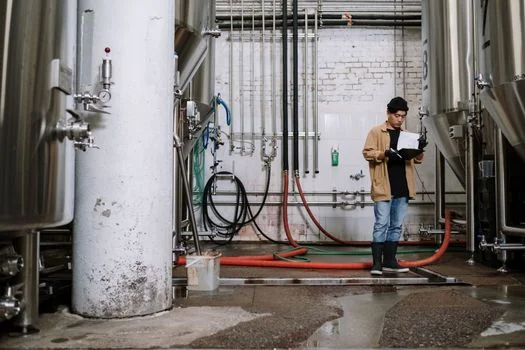
Zero-discharge compliance in Berlin still follows a four-step path: audit, select, permit, then lock the sludge route. Skipping the audit is the most common reason plants oversize RO or under-protect membranes.
For a side-by-side look at another national ZLD framing, compare Industrial Wastewater Treatment in Turkey.
- Step 1: Comprehensive Wastewater Audit. Characterize COD, BOD, TSS, heavy metals, pH, and process-specific pollutants. Use Berliner Wasserbetriebe’s 2025 sampling guidelines so the dataset matches enforcement practice. Most plants we size for Berlin run weekday peaks well above the weekly average, so grab samples alone are not enough.
- Step 2: System Selection Matrix. Match influent, reuse target, footprint, and energy to the train. Hybrid DAF-MBR-RO is usually the fit when ZLD or >90% reuse is the goal. Semiconductor lines with fluoride and silica loads should also review Wafer Fab Wastewater Resource Recovery before freezing the process design.
- Step 3: Permitting and Regulatory Submission. File engineering packages with Berlin’s Senate Department for the Environment, Urban Mobility, Consumer Protection and Climate Action (SenUVK). Show compliance with Directive 91/271/EEC, AbfKlärV, and local Berlin rules. Early pre-application talks with SenUVK and BWB cut resubmittal cycles.
- Step 4: Sludge Management Strategy. Plan dewatering, haul, or on-site recovery before commissioning. A sludge dewatering solution to cut Berlin disposal costs lowers wet tons before transport. Berlin’s Ruhleben plant has 64,000 t DM/a sewage-sludge capacity, with growing emphasis on internal thermal utilization.
| Influent Quality Challenge | Target Effluent Quality | Recommended System Type | Key Benefit |
|---|---|---|---|
| High TSS, Oil & Grease | Reduced TSS (>90%), Oil & Grease (>90%) | DAF (Dissolved Air Flotation) | Effective pre-treatment, protects downstream processes |
| High BOD, COD, Ammonia | BOD <5 mg/L, COD <50 mg/L, TN <10 mg/L | MBR (Membrane Bioreactor) | High biological treatment efficiency, compact footprint |
| High Salinity, Heavy Metals, Dissolved Organics | >99% TDS removal, high-purity water | RO (Reverse Osmosis) | Achieves water reuse/zero-discharge quality |
| Complex Industrial Wastewater (mixed pollutants) | Zero Liquid Discharge (ZLD), 95% water reuse | Hybrid DAF-MBR-RO | Comprehensive treatment for diverse contaminants, maximum recovery |
Selection checklist for Berlin plants. Confirm BWB discharge or reuse limits on the actual connection point. Lock COD, BOD, TSS, and salinity peaks from a multi-day audit. Decide among sewer discharge, 90–95% reuse, or true ZLD before you buy membranes. Reserve footprint for DAF, MBR, and RO skids plus chemical storage. Price sludge at €67/ton against Ruhleben or private thermal outlets. Model stage energy at 0.1–0.3, 0.8–1.2, and 1.5–3.0 kWh/m³. Check Horizon Europe or other circular-economy CAPEX support before the final budget.
Main cost drivers stay consistent across Berlin industrial sites. Track connected load for aeration and high-pressure pumps, wet-ton sludge haul at €67/ton, membrane replacement at €15–€30/m²/year, and coagulant or anti-scalant dose. Treat those four lines as the OPEX gate in every vendor comparison, then layer BWB surcharge scenarios on top.
Who this is for: plant engineers, EPC teams, and procurement managers sizing Berlin factory upgrades for 2026 discharge or reuse targets. Who should look elsewhere: households or small shops that only need a municipal connection with no process wastewater. Next step: if you are freezing a Berlin hybrid layout, send influent data for a DAF-MBR-RO capacity check before permitting drawings lock.
Keep drawings and sampling logs aligned with the SenUVK submission package. When influent COD drifts above the 1,200 mg/L design example used in hybrid sizing, revisit DAF polymer dose and MBR flux before blaming the RO membranes.
Frequently Asked Questions
What are the primary EU discharge limits for industrial wastewater in Berlin?
Industrial discharges in Berlin must meet EU Urban Waste Water Directive 91/271/EEC limits of COD ≤125 mg/L, BOD ≤25 mg/L, and TSS ≤35 mg/L where those values apply to the outfall class. Germany’s AbfKlärV and SenUVK permits set sludge and local conditions around that baseline. 2026 remains a critical upgrade window for plants still running legacy biological-only trains into BWB sewers.
How do hybrid DAF-MBR-RO systems reach zero-discharge in Berlin factories?
Hybrid DAF-MBR-RO systems remove solids and oils first, then biologically polish and filter, then desalinate for reuse. DAF typically cuts 92–97% TSS; MBR often yields BOD <5 mg/L; RO supports up to 95% water reuse. That staged recovery is what allows many Berlin factories to operate near zero-liquid discharge when brine and sludge paths are also contracted.
What CAPEX and OPEX should a 50–500 m³/h Berlin plant expect?
Hybrid CAPEX for 50–500 m³/h in Berlin typically ranges from €1.2 million to €4.5 million. Annual OPEX is dominated by energy, sludge at about €67/ton, membrane replacement at €15–€30/m²/year, and chemicals at €20,000–€100,000+. Payback commonly falls in 3–5 years when reuse saves up to 40% of freshwater purchase and penalty exposure drops.
What role does Berliner Wasserbetriebe play in industrial compliance?
Berliner Wasserbetriebe manages the municipal sewer network and sets discharge parameters for connected industrial users. BWB samples effluent, applies surcharges, and can escalate non-compliance. The utility’s move toward 100% internal sludge incineration also reshapes industrial sludge contracts and on-site dewatering choices across Berlin.
Are grants available for Berlin industrial wastewater upgrades?
Berlin industrial facilities can evaluate EU Horizon Europe grants that may cover up to 50% of CAPEX for circular-economy water reuse and resource-recovery projects. Eligibility depends on project scope, measurable reuse, and reporting. Pair any grant path with SenUVK permitting so funding milestones match the construction schedule.