Solar Cell Wastewater Resource Recovery: 2026 Hybrid ZLD Systems, 99.9% Fluoride Recovery & $1.8M–$8M CAPEX Breakdown
Solar cell manufacturing wastewater contains high concentrations of fluoride (500–2,000 mg/L), ammonia (100–800 mg/L), and heavy metals (e.g., nickel, copper), requiring hybrid ZLD systems to meet global discharge limits. A 2026 Gradiant case study demonstrated 85% water reuse and >99.9% fluoride recovery using a DAF-RO-MBR system, with CAPEX ranging from $1.8M (50 m³/h) to $8M (300 m³/h). Key parameters for these systems include an RO membrane flux of 15–25 LMH, MBR MLSS of 8,000–12,000 mg/L, and sludge dewatering to <10% moisture via solar thermal drying. For EHS managers, the transition from conventional chemical precipitation to resource recovery is no longer optional; it is a prerequisite for maintaining operational licenses in markets governed by stringent regulations like China’s GB 21900-2008 or the EU’s Industrial Emissions Directive.
Why Solar Cell Wastewater Demands Zero Liquid Discharge (ZLD) Systems
Fluoride discharge limits have tightened globally, with the EPA mandating 15 mg/L, the EU 10 mg/L, and China’s GB 21900-2008 setting a strict 5 mg/L threshold for sensitive areas. Non-compliance with these standards triggers severe financial penalties, including fines up to $25,000 per day under the EPA Clean Water Act, while solar PV plants in India have faced 30% production halts for ammonia violations exceeding 15 mg/L (Gradiant 2022). Beyond regulatory pressure, water scarcity has become a direct threat to production continuity. In Gujarat, India, solar manufacturers pay upwards of $5/m³ for freshwater; implementing a ZLD system can reduce freshwater intake by 85%, yielding savings of approximately $1.2M annually for a 200 m³/h facility.
Heavy metal concentrations in etching and cleaning baths often reach 5–10 times the allowable limits for nickel (2 mg/L EPA) and copper (1 mg/L EU). Conventional treatment often fails to reach these levels consistently, necessitating advanced precipitation or Selective Contaminant Extraction (SCE). corporate ESG mandates from Tier 1 buyers like Apple and First Solar now require suppliers to demonstrate ZLD compliance as a condition of contract. Failure to meet these internal standards risks total contract termination under the 2025 Apple Supplier Code of Conduct.
| Contaminant | Typical Influent (mg/L) | China GB 21900-2008 (mg/L) | EU IED Limit (mg/L) | EPA Standard (mg/L) |
|---|---|---|---|---|
| Fluoride (F-) | 500–2,000 | 5.0 | 10.0 | 15.0 |
| Ammonia (NH3-N) | 100–800 | 15.0 | 10.0 | N/A (Local POTW) |
| Nickel (Ni) | 10–50 | 1.0 | 1.0 | 2.0 |
| Copper (Cu) | 5–30 | 0.5 | 1.0 | N/A (Local POTW) |
Hybrid System Design: How DAF, RO, and MBR Work Together for 99.9% Fluoride Recovery
Dissolved Air Flotation (DAF) serves as the critical primary treatment stage, removing 92–97% of Total Suspended Solids (TSS) and up to 90% of Fats, Oils, and Grease (FOG) that would otherwise foul downstream membranes. Utilizing a high-efficiency DAF system for TSS and FOG removal in solar cell wastewater ensures that microbubbles (30–50 μm) effectively float emulsified oils from wafer cleaning processes. Engineering specs for this stage require a hydraulic loading rate of 5–10 m/h and a 20% recycle ratio to prevent DAF carryover into the RO feed tank.
The core of the recovery process lies in the Reverse Osmosis (RO) stage, where PVDF or polyamide thin-film composite (TFC) membranes are selected for fluoride rejection rates exceeding 99.5%. For solar applications, an RO system with 99.5% fluoride rejection for PV wastewater reuse must operate at a flux of 15–25 LMH. While higher recovery rates are technically possible, they are often capped at 75–85% to mitigate the risk of scaling from silica and calcium fluoride. To prevent this, antiscalant dosing at 3–5 mg/L is mandatory, specifically targeting fluorosilicates. MBR polishing follows, utilizing a submerged MBR system for ammonia and COD polishing in ZLD trains. These units achieve effluent COD <50 mg/L and ammonia <1 mg/L by maintaining a Mixed Liquor Suspended Solids (MLSS) concentration of 8,000–12,000 mg/L and a Solid Retention Time (SRT) of 20–30 days.
| System Component | Key Parameter | Design Value | Failure Mode Prevention |
|---|---|---|---|
| DAF Pretreatment | Microbubble Size | 30–50 μm | 20% recycle ratio prevents carryover |
| RO Membrane | Flux Rate | 15–25 LMH | Antiscalant dosing (3-5 mg/L) prevents silica scaling |
| MBR Polishing | MLSS Concentration | 8,000–12,000 mg/L | 10-15 min backwash cycles prevent fouling |
| SCE Unit | Resin Type | Ion-Exchange | On-site H2SO4 regeneration reduces waste |
Solar Thermal Sludge Drying: Reducing Moisture from 80% to 10% with Zero Energy Cost
Solar thermal drying utilizes Fresnel collectors to heat ambient air to 80–100°C, providing the latent heat of evaporation required to reduce sludge moisture from 80% to <10% without fossil fuel consumption. This process requires an energy input of approximately 0.8–1.2 kWh per kg of water evaporated, which is entirely offset by solar gain in suitable climates (SolarPACES 2020). Beyond volume reduction, the thermal process ensures significant pathogen reduction; maintaining 60°C for at least 30 minutes eliminates 99.9% of E. coli and Salmonella, transforming hazardous sludge into a stable byproduct suitable for construction fill or incineration per the EU Waste Framework Directive 2008/98/EC.
Comparing economics, the CAPEX for a solar thermal dryer (100 kg/h) is approximately $200,000, which is slightly higher than a standard filter press for dewatering solar thermal sludge to <10% moisture ($150,000). However, the OPEX differential is stark: $0.05/kg for solar drying versus $0.20/kg for mechanical dewatering due to polymer and electricity costs. The primary constraint is footprint; a 1,000 kg/h solar dryer requires roughly 500 m², whereas a filter press fits within 200 m². This makes solar thermal ideal for regions with high land availability and high solar irradiance, such as Arizona, Gujarat, or Western Australia.
3 Hybrid ZLD System Configurations: CAPEX, OPEX, and Recovery Rates Compared
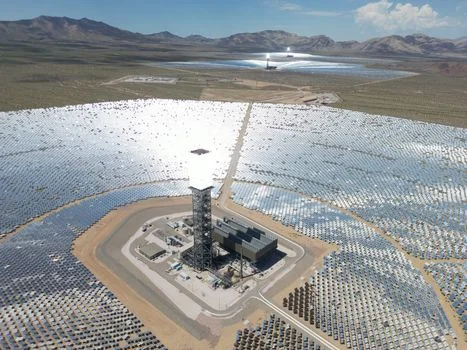
Selecting the optimal ZLD configuration depends on the influent flow rate and the required purity of the recovered water. For small-scale plants (50 m³/h), a simplified DAF → RO → Solar Thermal configuration provides a balance of low CAPEX ($1.8M) and moderate recovery (80%). The payback period for this setup is typically 4.2 years, driven primarily by the avoidance of hazardous waste disposal costs, which can exceed $150/ton. Medium-scale facilities (150 m³/h) benefit from the addition of Selective Contaminant Extraction (SCE), which targets fluoride specifically, reducing chemical sludge volume by 40% compared to traditional lime precipitation.
Large-scale manufacturing hubs (300 m³/h) require the full hybrid train: DAF → RO → MBR → Solar Thermal. While the CAPEX is significant at $8M, the OPEX is optimized through high water reuse (90%) and the recovery of fluoride as calcium fluoride (CaF₂), which can be sold for approximately $20/kg. The ROI for these large systems is often achieved in under 5.1 years. Engineering leads should also account for detailed engineering specs for photovoltaic wastewater hybrid systems when calculating long-term membrane replacement costs, which typically average $0.30/m³ of treated water.
| Configuration | Capacity (m³/h) | CAPEX ($M) | OPEX ($/m³) | Water Recovery (%) | Payback (Years) |
|---|---|---|---|---|---|
| DAF + RO + Solar | 50 | $1.8M | $0.80 | 80% | 4.2 |
| DAF + SCE + RO + MBR | 150 | $4.5M | $1.10 | 85% | 3.8 |
| DAF + RO + MBR + Solar | 300 | $8.0M | $1.50 | 90% | 5.1 |
Global Compliance Checklist: Meeting EPA, EU, and China Standards for PV Wastewater
Ensuring compliance requires a rigorous monitoring and reporting framework that aligns with the specific test methods mandated by each jurisdiction. For fluoride, the EPA requires Method 340.2 (ion-selective electrode), while the EU mandates EN ISO 10304-1 (ion chromatography). In China, compliance with GB 21900-2008 requires that ZLD systems achieve less than 1% liquid discharge, with fluoride levels strictly below 5 mg/L. Manufacturers must also consult Turkey’s ZLD compliance requirements for PV manufacturing if exporting to or operating within the EMEA region, as local regulations often mirror EU BREF mandates for 95% water reuse.
- Fluoride: Quarterly reporting via EPA Method 340.2; EU requires monthly reporting for plants under the Industrial Emissions Directive.
- Ammonia: Use EPA Method 350.1 (colorimetry) or EU EN ISO 11732. Limits range from 10 mg/L (EU) to 15 mg/L (China).
- Heavy Metals: ICP-MS (EPA Method 200.8) is the global gold standard. Ensure nickel and copper remain below 1.0 mg/L to avoid EU penalties.
- Sludge: Perform Toxicity Characteristic Leaching Procedure (TCLP) tests to determine if dried sludge meets 40 CFR Part 261 standards for non-hazardous disposal.
- ZLD Verification: Maintain a water balance log demonstrating that >95% of influent volume is either reused or evaporated.
Frequently Asked Questions
What is the typical payback period for a ZLD system in solar cell manufacturing?
The typical payback period is 3.8–5.1 years. This ROI is driven by three factors: freshwater savings (up to $5/m³), fluoride recovery ($20/kg as CaF₂), and the elimination of hazardous sludge disposal costs ($150/ton). For plants in water-stressed regions, the payback can be as short as 3 years when accounting for production uptime security.
How does Selective Contaminant Extraction (SCE) reduce chemical costs?
SCE uses specialized ion-exchange resins to target fluoride and ammonia directly. This approach reduces the need for bulk lime or caustic dosing by up to 40% compared to conventional coagulation-flocculation. Because the resins are regenerated on-site with sulfuric acid, the volume of chemical sludge generated is significantly lower, reducing downstream drying and disposal costs.
What are the effluent quality limits for solar PV wastewater under China’s GB 21900-2008?
The standard mandates Fluoride < 5 mg/L, Ammonia < 15 mg/L, Nickel < 1 mg/L, and Copper < 0.5 mg/L. For ZLD compliance, liquid discharge must be <1% of the total influent volume. Non-compliance can result in production halts and administrative fines up to ¥500,000 ($70,000).
Can solar thermal sludge drying be used in cold climates?
Yes, but it requires a hybrid heating approach. In locations like Saskatoon, Canada, solar thermal systems are augmented with natural gas or waste heat from the manufacturing process to maintain the 60–80°C temperatures needed for drying. This typically increases CAPEX by 20% but remains more cost-effective than purely mechanical or electrical drying over a 10-year horizon.
What is the membrane lifespan for RO systems treating PV wastewater?
Polyamide TFC membranes typically last 3–5 years, provided that silica scaling is managed through proper antiscalant dosing. PVDF membranes offer higher chemical resistance and can last 5–7 years, though they may have slightly lower fluoride rejection (98% vs. 99.5%). For more complex streams, engineers should refer to wafer fab wastewater ZLD systems with silica removal data to optimize membrane selection.