Why Gallium Nitride Wastewater Demands a Dedicated Resource Recovery System
Gallium nitride (GaN) wastewater from semiconductor fabs contains 50–500 mg/L of recoverable gallium and up to 100 mg/L of arsenic, exceeding China’s GB 8978-2024 limits (Ga <1 mg/L, As <0.01 mg/L) and risking $250,000/year in penalties. 2027 hybrid ZLD systems—combining dissolved air flotation (DAF), membrane bioreactors (MBR), reverse osmosis (RO), and evaporative crystallizers—achieve 99.9% gallium recovery and >99.5% arsenic removal while recovering 95% of water for reuse. These systems deliver a $2.1M ROI over 5 years by converting gallium loss into revenue and eliminating discharge violations.
The contaminant profile of GaN effluent is uniquely aggressive compared to traditional silicon-based processes. Beyond gallium and arsenic, fabs must manage 200–1,000 mg/L of ammonia (NH₃) and 100–300 mg/L of fluoride (F⁻). According to 2025 enforcement data from the Ministry of Ecology and Environment (MEE), regulatory penalties for GB 8978-2024 violations are increasingly tied to real-time monitoring of heavy metals, where gallium concentrations exceeding 1 mg/L or arsenic above 0.01 mg/L trigger immediate administrative fines. For a 100 m³/h fab line, these penalties can aggregate to over $250,000 annually, excluding the cost of potential production halts.
From an economic perspective, traditional wastewater treatment—which focuses on removal rather than recovery—is a major source of resource leakage. Tsinghua University’s 2024 research indicates that 10–15% of gallium input is wasted annually through conventional precipitation methods. At current market prices of approximately $300/kg for gallium, this represents a lost revenue opportunity of $1.5M–$3M per year for mid-to-large scale fabs. Compare GaN wastewater treatment with SiC wastewater systems to see how contaminant profiles dictate different recovery priorities.
Generic semiconductor wastewater systems typically fail in GaN environments because they cannot handle the high total suspended solids (TSS) generated during chemical mechanical planarization (CMP) and etching, nor do they address the critical distinction between arsenic species (As³⁺ vs. As⁵⁺). Without specialized pretreatment and speciation-aware design, membranes foul within weeks, and gallium recovery remains trapped in low-purity sludge.
Gallium Recovery Chemistry: How pH, Ligands, and Membranes Extract 99.9% of Ga³⁺
Effective gallium recovery relies on precise manipulation of gallium speciation and the selection of high-affinity ligands. In aqueous solutions, gallium exists as the trivalent cation Ga³⁺ at pH levels below 3. As alkalinity increases, it transitions through various hydroxide forms, eventually becoming the soluble gallate ion Ga(OH)₄⁻ at pH >7. To achieve 99.9% recovery, the system must maintain optimal conditions for extraction or precipitation based on the specific recovery technology employed.
Ligand selection is the differentiator between standard and high-performance recovery. While Hydroxyquinoline (8-HQ) is a common choice, its recovery rates typically peak at 95% with a cost of roughly $50/kg. In contrast, phosphonic acids such as di-(2-ethylhexyl) phosphoric acid (D2EHPA) allow for recovery rates of up to 99.9%. Although D2EHPA is more expensive ($120/kg), its higher affinity for Ga³⁺ and lower cross-reactivity with competing ions like Al³⁺ justify the investment through higher product purity. PLC-controlled chemical dosing for pH adjustment and ligand injection in GaN recovery ensures these reagents are optimized in real-time, preventing chemical waste.
For concentration and purification, membrane-based systems like nanofiltration (NF) and electrodialysis (ED) are deployed. NF offers a lower energy footprint (0.5–1 kWh/m³) but operates at lower flux rates (20–40 L/m²·h). ED provides higher flux (50–80 L/m²·h) and can achieve higher concentration factors, though it consumes significantly more energy (2–4 kWh/m³). In a 2026 case study from a Suzhou-based GaN fab, a hybrid system using D2EHPA ligands followed by NF achieved 99.9% gallium recovery with a final product purity exceeding 99.5%.
| Parameter | Hydroxyquinoline (8-HQ) | Phosphonic Acid (D2EHPA) | Nanofiltration (NF) | Electrodialysis (ED) |
|---|---|---|---|---|
| Recovery Rate | 95% | 99.9% | 92-96% | 98-99.5% |
| Operational pH | 3.5 - 4.5 | 1.5 - 2.5 | 2.0 - 10.0 | 3.0 - 9.0 |
| Energy/Chemical Cost | $50/kg | $120/kg | 0.5-1 kWh/m³ | 2-4 kWh/m³ |
| Primary Advantage | Low initial cost | High selectivity for Ga³⁺ | Low energy consumption | High brine concentration |
Arsenic Speciation and Treatment Train Design: Why As³⁺ vs. As⁵⁺ Changes Everything
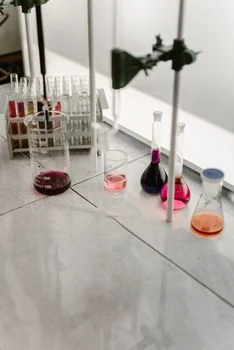
Arsenic removal in GaN fabs is complicated by the presence of two primary oxidation states: arsenite (As³⁺) and arsenate (As⁵⁺). As³⁺ is approximately 60 times more toxic and significantly more mobile than As⁵⁺, making it much harder to remove via standard adsorption or precipitation. To meet the <0.01 mg/L limits required by 2027 standards, a multi-stage treatment train is mandatory.
The first step is the oxidation of As³⁺ to As⁵⁺. While chlorine (Cl₂) is a traditional oxidant, it requires 1–5 minutes of contact time and can form harmful chlorate byproducts. Ozone (O₃) or UV/H₂O₂ advanced oxidation processes (AOP) are preferred in 2027 specs; ozone achieves complete oxidation in 30–60 seconds without chlorinated byproducts. Once oxidized, As⁵⁺ can be effectively removed through adsorption. Granular ferric hydroxide (GFH) is a standard media with a capacity of 2–5 mg As/g, but titanium dioxide (TiO₂) is emerging as the premium choice for GaN fabs, offering capacities of 10–20 mg As/g despite its higher price point ($15/kg vs. $2/kg for GFH).
Final polishing is handled by high-rejection RO systems for arsenic and gallium removal in GaN wastewater. Membrane selection is critical here: polyamide (PA) membranes are favored over cellulose acetate (CA) due to their superior rejection rates (99.5% vs. 90–95%). Field data from a 2026 installation in Hsinchu demonstrates that an O₃ + TiO₂ + PA-RO configuration can consistently reduce arsenic from 80 mg/L to below 0.005 mg/L, providing a safety margin against future regulatory tightening.
| Treatment Stage | Technology Options | Efficiency (As Removal) | Key Limitation |
|---|---|---|---|
| Oxidation | Ozone (O₃) / UV+H₂O₂ | Converts 99.9% As³⁺ to As⁵⁺ | High CapEx for ozone generators |
| Adsorption | Titanium Dioxide (TiO₂) | 98% of dissolved As⁵⁺ | Media replacement costs |
| Membrane Polishing | Polyamide (PA) RO | >99.5% rejection | Sensitivity to oxidants (requires dechlorination) |
2027 Hybrid ZLD System Design: DAF-MBR-RO-Evaporator Specs for GaN Fabs
The 2027 hybrid Zero Liquid Discharge (ZLD) system represents a shift toward higher flux, smaller footprints, and total resource circularity. The process begins with DAF systems for GaN particulate removal in semiconductor wastewater, which utilize micro-bubbles (20–50 μm) to achieve 92–97% TSS removal. This protects downstream membranes from the abrasive CMP slurries characteristic of GaN production.
Biological treatment is integrated via MBR systems for COD removal in GaN wastewater treatment trains. These units operate at high Mixed Liquor Suspended Solids (MLSS) levels of 8,000–12,000 mg/L and long Sludge Retention Times (SRT) of 20–30 days, ensuring stable nitrification of high-ammonia streams. The 2027 specs favor flat-sheet or hollow-fiber MBR modules that reduce the overall system footprint by 25% compared to 2026 designs.
The core of the ZLD system is the RO-Evaporator loop. High-flux RO membranes achieve 80–90% water recovery at fluxes of 15–25 L/m²·h. The remaining brine is processed by an evaporative crystallizer. Next-generation crystallizers in 2027 systems are designed for high energy efficiency, consuming only 0.1–0.2 kWh/kg of water evaporated, while pushing gallium recovery to its theoretical limit of >99.9%. Automation is handled by a centralized PLC system with over 500 I/O points, managing everything from anti-scalant dosing to the automated cleaning-in-place (CIP) cycles of the crystallizer.
| Unit Process | 2027 Engineering Specification | Performance Benchmark |
|---|---|---|
| DAF Pretreatment | Micro-bubble size: 20–50 μm; Loading: 8 m/h | 97% TSS Removal |
| MBR Biological | MLSS: 10,000 mg/L; SRT: 25 days | COD < 30 mg/L; NH₃-N < 1 mg/L |
| RO System | High-flux PA membranes; 90% recovery | Arsenic Rejection > 99.5% |
| Crystallizer | Mechanical Vapor Recompression (MVR) | 99.9% Ga Recovery; 95% Water Reuse |
2026 vs. 2027 Hybrid ZLD Systems: Side-by-Side Comparison of Specs, Costs, and ROI
When evaluating the transition from 2026 to 2027 technology, the primary drivers are increased recovery efficiency and significantly improved ROI. While the 2027 systems require a similar initial investment, their lower OpEx and higher resource yield create a more compelling business case for fab managers. Learn more about hybrid ZLD systems for third-generation semiconductors to understand the evolution of these technologies.
The 2027 model achieves a $2.1M ROI over 5 years, compared to $1.5M for the 2026 model. This $600,000 delta is driven by three factors: a 0.1% increase in gallium recovery (worth ~$50,000/year), a 5% increase in water recovery, and a 30% reduction in membrane replacement costs due to improved pretreatment and anti-fouling coatings. the 2027 system is designed with built-in redundancy to meet the stricter "fail-safe" requirements of GB 8978-2024, ensuring that even during maintenance, discharge limits are never breached.
| Feature | 2026 Hybrid ZLD System | 2027 Hybrid ZLD System |
|---|---|---|
| Gallium Recovery Rate | 99.8% | 99.9% |
| Water Recovery Rate | 90% | 95% |
| Arsenic Limit Compliance | < 0.01 mg/L | < 0.005 mg/L |
| Energy Consumption | 1.2 - 1.8 kWh/m³ | 0.9 - 1.4 kWh/m³ |
| 5-Year ROI (NPV) | $1.5 Million | $2.1 Million |
| System Footprint | Base (100%) | Reduced (75%) |
Vendor Selection Framework: 5 Critical Questions to Ask GaN Wastewater Treatment Suppliers
Choosing a vendor for GaN wastewater treatment requires moving beyond generic "industrial water" experience. Procurement managers should use the following framework to vet potential partners:
- Question 1: What is your gallium recovery rate at 50 mg/L vs. 500 mg/L influent? A capable vendor must demonstrate 99.9% recovery across the entire concentration range, as GaN processes often fluctuate during production cycles.
- Question 2: How do you handle arsenic speciation (As³⁺ vs. As⁵⁺) in your treatment train? If the vendor does not include a dedicated oxidation step (O₃ or AOP) before adsorption, the system will likely fail to meet 2027 arsenic limits.
- Question 3: What is your system’s water recovery rate, and how do you handle brine disposal? Look for a benchmark of 95% water recovery. Ensure the vendor provides an integrated crystallizer rather than outsourcing the ZLD component.
- Question 4: What is the CapEx and OPEX for a 100 m³/h system, including installation and startup? Expect a CapEx range of $4.2M–$6.8M. Be wary of low-CapEx bids that hide high OpEx in chemical consumption or frequent membrane replacements.
- Question 5: What are your performance guarantees for gallium recovery and arsenic removal? Guarantees should be backed by pilot testing data and include liquidated damages for non-compliance with GB 8978-2024 limits.
Red flags include vendors who offer "standard" RO systems without specialized arsenic media or those who cannot provide references from active GaN or PCB wastewater with copper recovery facilities. The complexity of GaN chemistry demands a proven track record in III/V semiconductor effluent.
Frequently Asked Questions
What is the typical purity of gallium recovered from these systems?With 2027-spec hybrid systems using D2EHPA ligands and nanofiltration, fabs can expect gallium purity of 99.5% to 99.9%. This is high enough for direct resale to gallium refiners, who can then process it back to 6N or 7N (99.9999%+) semiconductor grade, maximizing the ROI of the recovery system.
How does the 2027 system handle high fluoride and ammonia concentrations?Fluoride is typically managed via calcium chloride precipitation in the pretreatment stage, reducing levels to <20 mg/L before MBR and RO polishing. Ammonia is handled by the high-SRT MBR, where specialized nitrifying bacteria oxidize NH₃ to nitrate, which is then rejected by the RO membranes or converted to nitrogen gas via an optional anoxic zone.
Is ZLD mandatory for all GaN fabs by 2027?While not universally mandated by law, ZLD is becoming the de facto standard for GaN fabs due to the extreme difficulty of meeting 0.01 mg/L arsenic limits in surface water discharge. the high value of gallium and the rising cost of industrial water make ZLD the most economically viable choice, as shown in our $2.1M ROI model.