Why Lobito’s 2026 Wastewater Regulations Demand Hybrid Treatment Systems
Lobito’s industrial wastewater treatment requirements are tightening in 2026, with Angola’s Decree 5/95 mandating BOD < 30 mg/L, COD < 125 mg/L, and TSS < 35 mg/L. Hybrid systems combining dissolved air flotation (DAF), membrane bioreactors (MBR), and reverse osmosis (RO) achieve >95% contaminant removal, meeting these limits while handling Lobito’s seasonal flow variations (+40% during rainy season). For a 500 m³/day hospital wastewater system, CAPEX ranges from $1.2M (DAF + MBR) to $4.5M (full DAF-MBR-RO), with OPEX of $0.80–$1.50/m³. World Bank funding under the Coastal Towns Inclusive Sanitation Project can offset up to 60% of costs for compliant systems.
The urgency for selecting a high-performance sewage treatment equipment supplier in Lobito is underscored by recent enforcement actions; a local food processing plant was recently fined $50,000 for exceeding Fats, Oils, and Grease (FOG) limits. This penalty could have been avoided with a primary DAF stage, which typically removes 95% of FOG (HydropureWater field data, 2025). The ongoing expansion of the Port of Lobito has increased industrial discharge volumes by 30% since 2020, necessitating systems that can scale without sacrificing effluent quality. The National Directorate of Water and Sanitation (DNAAS) now conducts quarterly audits, requiring facility managers to provide validated performance data for both organic and pathogen removal.
Lobito’s climate introduces significant operational risks for standard biological systems. During the rainy season, hydraulic loads increase by 40%, which can lead to biomass washout in traditional activated sludge plants. Conversely, the dry season results in highly concentrated influent, with COD spikes reaching 1,500 mg/L. Hybrid designs mitigate these risks by using DAF for pretreatment of high-solid loads and MBR for stable biological treatment regardless of hydraulic retention time fluctuations. For remote port facilities or temporary industrial sites, containerized systems for Lobito’s remote or temporary sites offer a modular solution that meets these 2026 standards with minimal civil engineering requirements.
The need for effective wastewater management in Lobito is clear; now, let's examine the characteristics of the wastewater that treatment systems must handle.Lobito’s Wastewater Characteristics: What Your Treatment System Must Handle
Food processing effluent in Lobito typically exhibits FOG levels between 200–800 mg/L and TSS up to 1,200 mg/L, requiring aggressive primary clarification before biological treatment. In contrast, hospital wastewater presents a high pathogen load (500–10,000 CFU/mL) and pharmaceutical residues, including antibiotics and heavy metals like mercury (at concentrations < 0.01 mg/L). Understanding these industry-specific profiles is critical for engineering an effective technology stack that avoids membrane fouling and ensures regulatory compliance.
For port operations and surrounding industrial runoff, the presence of hydrocarbons and heavy metals (Lead < 0.1 mg/L, Chromium < 0.05 mg/L) necessitates chemical precipitation stages. Seasonal flow management is the primary engineering challenge; a 500 m³/day system requires an equalization tank with a minimum 12-hour retention capacity to buffer the +40% hydraulic surge during peak rainfall. This prevents the "washout" of the nitrifying bacteria essential for meeting Decree 5/95 nitrogen limits. Similar hospital wastewater treatment strategies for African coastal cities highlight the necessity of robust equalization and disinfection stages to manage both organic and microbiological risks.
| Parameter | Food Processing (Lobito) | Hospital Effluent (Lobito) | Port/Industrial Runoff | Decree 5/95 Limit |
|---|---|---|---|---|
| BOD (mg/L) | 300 – 800 | 100 – 800 | 50 – 150 | < 30 |
| COD (mg/L) | 600 – 1,500 | 200 – 1,500 | 150 – 400 | < 125 |
| TSS (mg/L) | 300 – 1,200 | 100 – 400 | 200 – 600 | < 35 |
| FOG (mg/L) | 200 – 800 | < 50 | 50 – 200 | < 10 |
| Pathogens (CFU/mL) | Low | 500 – 10,000 | Low | < 1,000 (Coliforms) |
Hybrid System Designs for Lobito: DAF + MBR + RO Engineering Specs
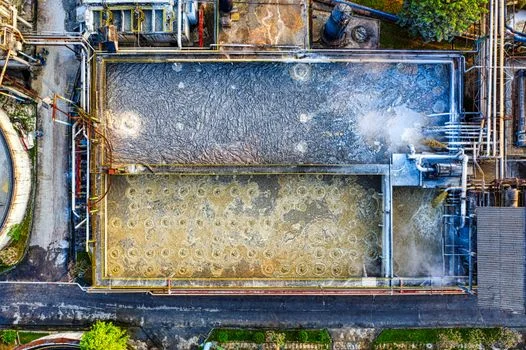
DAF systems achieve 92–97% FOG removal when micro-bubble sizes are maintained between 30–50 μm, providing the necessary protection for downstream membrane stages. For the industrial mix in Lobito, the DAF systems for Lobito’s FOG removal are engineered to handle pH fluctuations common in food processing (pH 4.5–6.5) through integrated chemical dosing of sulfuric acid or caustic soda. This primary stage reduces the organic load by up to 40% before the wastewater enters the biological reactor.
The secondary stage utilizes Membrane Bioreactors (MBR) which operate at high Mixed Liquor Suspended Solids (MLSS) concentrations of 8,000–12,000 mg/L. This high biomass density allows for a smaller footprint compared to traditional clarifiers and ensures pathogen removal of >99% for fecal coliforms. Integrated MBR systems for hospital wastewater in Lobito utilize 0.1 μm pore size membranes, effectively filtering out most bacteria and viruses without the need for high-dose chlorination. For smaller facilities, the compact medical wastewater system for Lobito clinics and small hospitals provides an all-in-one footprint that simplifies DNAAS compliance.
Tertiary treatment via Reverse Osmosis (RO) is required for port operations or facilities seeking water reuse. RO systems in this configuration typically achieve a 75–85% recovery rate with Total Dissolved Solids (TDS) rejection exceeding 98%. The energy consumption for these systems ranges from 0.8 to 1.2 kWh/m³. The following table outlines the technical parameters for a fully integrated hybrid system.
| System Component | Key Specification | Retention Time | Removal Efficiency |
|---|---|---|---|
| DAF Pretreatment | 30–50 μm Micro-bubbles | 20 – 30 Minutes | 95% FOG, 85% TSS |
| MBR Biological | 0.1 μm Pore Size | 6 – 8 Hours | 98% BOD, 99% Pathogens |
| RO Tertiary | >98% TDS Rejection | 1 – 2 Hours | 99% Heavy Metals |
| Chemical Dosing | Auto pH Adjustment | Continuous | Neutralizes pH 4.5–9.0 |
CAPEX and OPEX Breakdown for Lobito: 2026 Cost Models by System Size
The CAPEX for a 500 m³/day hybrid DAF-MBR-RO system in Lobito ranges from $1.5M to $2.8M depending on automation levels and material selection. These figures include the 14% Angolan VAT and estimated import duties of 10–25% on specialized membrane components. Procurement leads should note that World Bank funding under the Coastal Towns Inclusive Sanitation Project can cover 40–60% of these capital costs for systems that demonstrate strict adherence to Decree 5/95 and pass a DNAAS technical audit.
OPEX is primarily driven by energy consumption and chemical requirements. In Lobito, energy costs for an MBR-based system average $0.80–$1.20/m³, while the addition of RO for high-purity reuse increases this to $1.20–$2.00/m³. Skilled labor rates for wastewater technicians in the Benguela province range from $15 to $25 per hour. Budgeting for 2026 must also account for membrane replacement cycles; MBR membranes typically require replacement every 5–7 years, representing a significant periodic cost that must be amortized annually. (HydropureWater cost benchmarks, 2025).
| System Configuration | CAPEX (500 m³/day) | OPEX (per m³) | Funding Eligibility |
|---|---|---|---|
| DAF + MBR | $1.2M – $1.8M | $0.80 – $1.20 | High (World Bank) |
| DAF + MBR + RO | $1.5M – $2.8M | $1.20 – $2.00 | High (World Bank) |
| Containerized MBR | $0.8M – $1.4M | $0.90 – $1.30 | Moderate |
| Traditional Clarifier | $0.6M – $1.0M | $0.50 – $0.90 | Low (Non-compliant) |
Supplier Selection Matrix: Local vs. International Vendors for Lobito
According to 2025 DNAAS audit data, only 25% of international sewage treatment equipment suppliers in Lobito provide 24/7 on-site technical support for membrane maintenance. This service gap is a critical risk factor for industrial plants where downtime can lead to immediate regulatory fines. While international vendors often offer superior membrane technology and energy-efficient designs, local distributors may offer faster response times for spare parts like pumps, sensors, and chemical reagents.
A zero-risk procurement strategy involves selecting an international manufacturer with a proven track record in African coastal environments who can also provide a local service agreement. Key evaluation criteria should include the supplier's ability to manage the 10–25% import duty logistics and their inventory of critical spare parts within the Benguela-Lobito corridor. Using a weighted decision matrix helps facility managers balance initial capital expenditure against long-term operational reliability and compliance security.
| Selection Criteria | Local Distributors | International Manufacturers | Hybrid Partnership |
|---|---|---|---|
| Technology Sophistication | Low – Moderate | High (MBR/RO) | High |
| Lead Times | 4 – 8 Weeks | 16 – 24 Weeks | 12 –
Get a Free Quote — Tell Us About Your Project
Contact Us
|