Medical wastewater treatment system troubleshooting requires identifying symptoms like poor disinfection, sludge bulking, or system alarms and linking them to root causes such as chemical imbalance, hydraulic overload, or biofilm failure. For example, in compact ozone-based systems, achieving 99% pathogen kill requires a CT value ≥12 mg/L·min—a failure below this threshold often stems from low ozone output or insufficient contact time within the disinfection chamber.
Why Medical Wastewater Systems Fail: Unique Stressors
Hospital wastewater contains antibiotics, contrast agents, and disinfectants that inhibit biological activity, increasing the complexity of treatment compared to municipal or general industrial effluent (EU UWWTD 2024 impact assessment). Unlike typical industrial or municipal wastewater, medical effluent presents unique challenges for treatment plant operators. Pharmaceuticals, including antibiotics, chemotherapy agents, and diagnostic contrast media, along with a wide array of disinfectants used in healthcare settings, can disrupt the delicate microbial balance essential for biological treatment processes. These compounds can be recalcitrant to degradation and may even be toxic to the biomass responsible for removing organic matter.
Medical facilities, especially clinics and small hospitals, often exhibit highly intermittent flow patterns. Significant variations between day and night, or weekday and weekend operations, can lead to hydraulic shock in compact, automated systems like HydropureWater's or other package plants. These fluctuations can wash out biomass, reduce contact times, and destabilize treatment. Crucially, effluent from medical facilities must meet exceptionally strict microbial standards, such as less than 500 CFU/100mL E. coli as mandated by the EU Urban Waste Water Directive 91/271/EEC. This stringent requirement necessitates robust disinfection technologies. Ozone, often integrated into modern medical wastewater treatment systems, is critical not only in achieving a 99%+ kill rate against resistant pathogens but also in the effective oxidation and breakdown of persistent micropollutants that would otherwise pass through conventional treatment. For a comprehensive look at the regulatory landscape, consult our regulatory and technology overview for hospital systems.
Symptom 1: Poor Disinfection Despite System Running
Poor disinfection in medical wastewater treatment systems often indicates a failure in the ozone generation or contact process, directly impacting pathogen removal efficiency. When discharge tests show elevated pathogen counts, despite the disinfection unit appearing operational, a systematic diagnostic approach is required. The first step involves verifying the ozone generator output. For compact ozone-based medical wastewater treatment units, units should consistently produce at least 10 g/h of ozone for typical flow rates of 1–5 m³/day. An inline Oxidation-Reduction Potential (ORP) sensor provides real-time verification of oxidative capacity, with a target reading above 650 mV indicating effective disinfection potential (HydropureWater field data, 2025).
Another critical factor is the contact chamber retention time. To achieve a CT value (Concentration x Time) of ≥12 mg/L·min for 99% pathogen kill at 15°C, the wastewater must remain in contact with ozone for a minimum of 20 minutes. Shorter retention times, often due to hydraulic surges or improper flow distribution, will compromise disinfection. High organic load, with Chemical Oxygen Demand (COD) exceeding 300 mg/L, can scavenge ozone rapidly, reducing its availability for pathogen inactivation. Testing influent COD levels can identify this issue, suggesting the need for pre-filtration via multi-media filters or Dissolved Air Flotation (DAF) to reduce the organic burden. Finally, fouling of ozone diffusers significantly reduces ozone transfer efficiency. These diffusers should be inspected monthly for blockages and cleaned with a mild acid solution, such as citric acid, if mineral scaling or biological growth is observed. Regular maintenance of the compact ozone-based medical wastewater treatment unit is essential for consistent performance.
Symptom 2: Sludge Bulking or Floating Scum
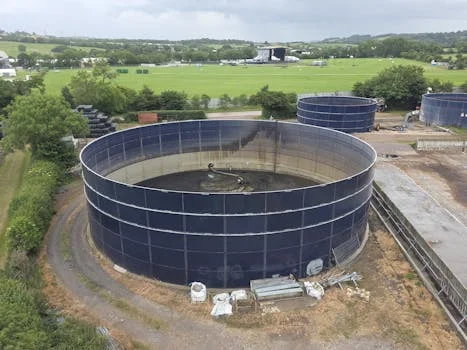
Sludge bulking, characterized by a high Sludge Volume Index (SVI) above 150 mL/g, is a common operational issue in medical wastewater's biological treatment stages, indicating an imbalance in microbial conditions. This phenomenon, where sludge fails to settle properly in the clarifier, can lead to high effluent turbidity and potential permit violations. One primary cause is filamentous bulking, often triggered by a low Food-to-Microorganism (F/M) ratio or insufficient Dissolved Oxygen (DO) levels, typically below 2 mg/L. This is particularly common in underloaded systems during weekends or holiday periods in medical facilities when influent organic load decreases significantly.
Conversely, denitrification floatation presents as sludge rising to the surface in the clarifier, usually due to nitrogen gas bubbles becoming entrapped in the floc. This occurs when nitrate (NO₃⁻) concentrations exceed 5 mg/L in the clarifier, indicating an imbalance in the anoxic/aerobic zones of an A/O (Anaerobic/Anoxic/Oxic) or MBR (Membrane Bioreactor) system. Adjusting aeration and internal recycle rates can help re-establish proper anoxic/aerobic balance. Another common issue is pin floc, characterized by small, poorly settling floc particles. This often results from insufficient polymer dosing, excessive shear in the flocculation tank, or an incorrect pH. Facility managers should verify their dosing pump output through regular jar testing and ensure flocculation zones are designed to minimize shear. The ideal Sludge Volume Index (SVI) for healthy activated sludge ranges from 80–120 mL/g; an SVI exceeding 150 mL/g is a clear indicator of bulking risk. For a deeper look into biological system issues, refer to our guide on root causes and fixes for sludge bulking in biological systems.
Symptom 3: System Alarms or Flow Blockages
System alarms and flow blockages in compact medical wastewater treatment units frequently stem from mechanical fouling by non-degradable solids or grease accumulation, impacting overall system uptime. Medical facilities generate a unique waste stream that includes wipes, gauze, and other non-biodegradable materials, which can easily clog screens and pumps. Rotary screens, such as the GX Series, are particularly susceptible to clogging from these items. Weekly inspection of the rake teeth and brush mechanism is crucial to ensure continuous operation and prevent carryover of solids into downstream processes.
Grease buildup in inlet pipes is another common problem, especially in facilities with medical kitchens or extensive cleaning zones, where FOG (Fats, Oils, and Grease) levels can exceed 100 mg/L. This accumulation reduces pipe diameter and restricts flow. Low flow alarms often trace back to clogged submersible pumps. Impeller clearance should be verified, and impellers cleaned every three months to prevent cavitation and maintain pumping efficiency. For Membrane Bioreactor (MBR) systems, a rising pressure differential across the membranes is a critical indicator of fouling. A transmembrane pressure (TMP) reading greater than 0.03 MPa typically signals significant membrane fouling, necessitating an immediate Clean-In-Place (CIP) cycle to restore flux. Regular monitoring and proactive cleaning schedules are vital for these components to prevent costly downtime.
Symptom 4: Excessive Odor or Foaming

Excessive odor, particularly a sulfide (rotten egg) smell, or persistent foaming in medical wastewater systems often signifies anaerobic conditions or high surfactant concentrations, disrupting stable operation. Foaming is commonly caused by the presence of surfactants from cleaning agents, which can accumulate in aeration tanks. To mitigate this, facility managers should limit the use of high-foaming detergents and verify that no industrial-grade cleaners are being improperly disposed of through the wastewater system. Persistent foaming can also indicate an imbalance in the F/M ratio or nutrient deficiencies, leading to the growth of foam-producing microorganisms.
A sulfide odor, reminiscent of rotten eggs, is a strong indicator of septic or anaerobic conditions within the wastewater collection or treatment system. This typically occurs when wastewater has an excessive retention time, exceeding 12 hours, in holding tanks or poorly aerated zones. Ensuring adequate mixing and preventing stagnation can alleviate this. pH imbalance, with readings typically below 6 or above 9, severely disrupts biological processes. Hospital laboratories and dialysis units can discharge highly acidic or alkaline waste, causing sudden pH spikes. Implementing a PLC-controlled chemical dosing for pH and coagulant adjustment, such as a HydropureWater chemical dosing system, is essential to maintain the optimal pH range of 6.5–8.0 for microbial health. Finally, proper aeration, maintaining a Dissolved Oxygen (DO) level of 2–4 mg/L in the aerobic zone, is crucial to prevent anaerobic odor formation and support a healthy biomass.
Medical Wastewater Troubleshooting Decision Table
A structured troubleshooting decision table provides a rapid diagnostic tool for facility managers and engineers to identify the root causes of common medical wastewater system malfunctions and implement effective solutions. This guide is optimized for quick reference in the field, enabling prompt action.
| Symptom | Likely Cause | Diagnostic Check | Immediate Fix | Prevention |
|---|---|---|---|---|
| High effluent turbidity | Membrane fouling (MBR), poor settling (biological), inadequate filtration | Transmembrane pressure (TMP) >0.03 MPa, SVI >150 mL/g, filter differential pressure | Initiate MBR backwash/CIP, adjust polymer dose, increase aeration | Regular MBR maintenance, pre-filtration, optimized chemical dosing (e.g., MBR integrated wastewater treatment) |
| Low disinfection (high E. coli) | Low ozone output, short contact time, high organic load | ORP <650 mV, ozone generator output (g/h), contact chamber retention time, influent COD >300 mg/L | Clean ozone diffusers, replace ozone generator tube, reduce flow, pre-treat high organic load | Monthly ozone unit maintenance, ORP monitoring, influent quality control |
| Sludge bulking | Filamentous growth, low F/M ratio, low DO, nutrient imbalance | SVI >150 mL/g, DO <2 mg/L, microscopic exam | Increase DO, adjust F/M, chemical addition (e.g., chlorine shock) | Maintain DO 2-4 mg/L, consistent organic loading, nutrient balancing |
| Foaming | Surfactants, high F/M, nutrient deficiency, filamentous bacteria | Visual inspection, check cleaning product usage, DO levels | Anti-foam chemical addition, reduce aeration intensity, increase wasting | Source reduction of detergents, maintain stable F/M ratio |
| Odor (H₂S - rotten egg) | Septic conditions, long retention time, low DO | Retention time in collection/holding tanks >12 hours, DO <0.5 mg/L | Increase aeration, chemical addition (e.g., nitrates), flush lines | Minimize retention time, maintain DO in aerobic zones |
| Pump alarm (low flow/overload) | Clogged impeller, grease buildup, electrical issue | Inspect impeller, check current draw, verify power supply | Clean impeller, remove grease, reset breaker, repair wiring | Quarterly pump inspection, pre-screening of solids, FOG control |
Frequently Asked Questions

Understanding common questions about medical wastewater systems helps facility managers quickly address recurring issues and optimize system performance for compliance and longevity.
What is the pH of hospital wastewater? Typically, hospital wastewater pH ranges from 6.0–8.5, but it can experience significant spikes due to discharges from laboratory sinks, dialysis units, or highly acidic/alkaline cleaning agents.
What causes pin floc in medical wastewater systems? Pin floc, characterized by small, poorly settling sludge particles, is often caused by insufficient coagulant dose, high shear forces within flocculation tanks, or an acidic pH (typically below 6.5) that inhibits proper floc formation.
How often should