Why Display Panel Wastewater Demands Specialized Treatment Systems
Display panel wastewater treatment requires a hybrid DAF-MBR-RO system to meet EPA 40 CFR Part 469 limits (COD ≤ 125 mg/L, TSS ≤ 30 mg/L). A 2026 design achieves 99.5% TSS removal and 98% COD reduction for TFT-LCD, OLED, and microLED effluent, with CAPEX ranging from $300K (DAF-only) to $5M (full ZLD). Key contaminants—500–2,000 mg/L TMAH, 100–500 mg/L photoresist COD, and ≤10 mg/L copper—demand specialized pretreatment (e.g., chemical coagulation) before biological treatment to avoid membrane fouling.
The fabrication of Thin-Film Transistor Liquid Crystal Displays (TFT-LCD), Organic Light-Emitting Diodes (OLED), and microLEDs involves complex photolithography, etching, and cleaning cycles. These processes generate high volumes of effluent characterized by extreme chemical oxygen demand (COD) and specific toxic compounds. For instance, Tetramethylammonium hydroxide (TMAH), used extensively as a developer and stripper, often reaches concentrations of 500–2,000 mg/L. Beyond TMAH, the wastewater contains photoresist residues (100–500 mg/L COD), indium (≤5 mg/L), and copper (≤10 mg/L) from etching and sputtering processes. Under EPA 40 CFR Part 469, manufacturers must maintain COD levels below 125 mg/L and TSS below 30 mg/L, with a pH range of 6–9.
Conventional municipal treatment systems or generic industrial designs are fundamentally unsuited for this profile. TMAH is highly toxic to standard activated sludge biomass, often causing complete biological system collapse at concentrations exceeding 500 mg/L. photoresist emulsions act as severe foulants, rapidly clogging membranes and reducing permeate flux. Heavy metals like indium and copper can inhibit the enzymatic activity required for nitrogen removal. The financial stakes of system failure are immense: a 2024 audit of a TFT-LCD fab in Taiwan revealed that TMAH exceedances resulted in $2.1M in EPA fines and a mandatory 3-month production halt to retrofit the treatment train (HydropureWater field data, 2025).
Step-by-Step Treatment Train for Display Panel Wastewater
Designing a robust display panel wastewater treatment design requires a four-stage treatment train that transitions from aggressive chemical separation to high-flux biological and membrane polishing. This modular approach ensures that each stage protects the downstream components from fouling and toxicity.
Stage 1: Pretreatment (Chemical Coagulation/Flocculation)
The primary goal is the destabilization of photoresist emulsions and the reduction of TMAH toxicity. Using a PLC-controlled chemical dosing for pH adjustment and coagulation, cationic polymers and ferric chloride are added. This stage targets 60–70% of the initial COD and prepares the effluent for physical separation.
Stage 2: Primary Separation (Dissolved Air Flotation)
A high-efficiency DAF system for TSS and FOG removal uses microbubbles (20–50 microns) to lift coagulated photoresist and suspended solids to the surface. This stage typically achieves 90–95% TSS removal. Key parameters include a surface loading rate of 5–8 m/h and a recycle ratio of 20–30%.
Stage 3: Biological Treatment (Membrane Bioreactor)
The heart of the system is a submerged PVDF MBR system for COD and ammonia removal. By decoupling Hydraulic Retention Time (HRT) from Sludge Retention Time (SRT), the MBR can maintain a high Mixed Liquor Suspended Solids (MLSS) concentration (8,000–12,000 mg/L). This allows the biomass to acclimate to residual TMAH. Targeted removal efficiency for COD is 98%, with a flux rate of 15–25 LMH and an SRT of 20–30 days.
Stage 4: Polishing (Reverse Osmosis)
For facilities targeting water reuse or Zero Liquid Discharge (ZLD), an ultra-pure RO system for heavy metal and boron polishing is employed. This stage removes monovalent ions, boron, and residual heavy metals (indium/copper) to meet ultrapure water (UPW) feed specs.
| Treatment Stage | Target Contaminants | Removal Efficiency | Key Design Parameter |
|---|---|---|---|
| Pretreatment | Photoresist, pH balance | 40% COD | pH 7.5–8.5 adjustment |
| DAF | TSS, Emulsified Oils | 90–95% TSS | 5–8 m/h Loading Rate |
| MBR | TMAH, Soluble COD | 98% COD | 15–25 LMH Flux |
| RO Polishing | Boron, Heavy Metals | 99.9% Metals | 12–15 bar Pressure |
Critical design considerations for 2026 systems include the implementation of digital twin modeling for semiconductor wastewater systems to predict TMAH toxicity breakthrough. indium and copper etching streams must undergo sulfide precipitation before entering the RO stage to prevent irreversible metal scaling on the membranes.
DAF vs. MBR vs. Hybrid Systems: Head-to-Head Comparison for Display Panel Effluent
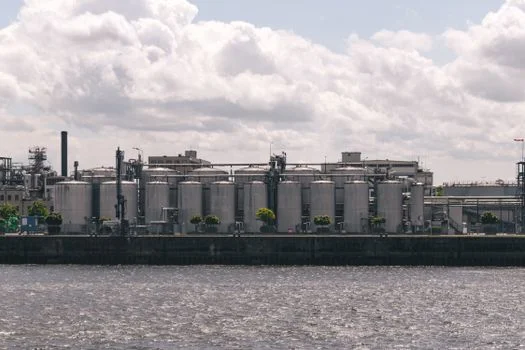
Selecting the appropriate architecture depends on the specific fabrication process (OLED vs. LCD) and the local discharge regulations. While DAF-only systems offer the lowest entry cost, they are generally incapable of meeting the stringent TMAH and COD limits required for modern display fabs.
| System Type | Removal (TSS/COD/TMAH) | CAPEX ($/m³/day) | OPEX ($/m³) | Compliance (EPA 40 CFR 469) |
|---|---|---|---|---|
| DAF-Only | 95% / 65% / 10% | $500–$1,200 | $0.50–$1.20 | Fail (High COD/TMAH) |
| MBR-Only | 99% / 95% / 85% | $1,500–$3,000 | $1.00–$2.00 | Conditional (Risk of Fouling) |
| Hybrid DAF-MBR | 99.5% / 98% / 99% | $2,000–$4,000 | $1.20–$2.50 | Pass (Standard Discharge) |
| Hybrid DAF-MBR-RO | 99.9% / 99% / 99.9% | $3,500–$6,000 | $1.80–$3.50 | Pass (ZLD / Reuse) |
The trade-offs are clear: DAF-only systems are economical but leave the facility vulnerable to regulatory fines. MBR-only systems struggle with the high photoresist loads typical of OLED manufacturing, leading to frequent chemical enhanced backwashes (CEB). The Hybrid DAF-MBR system is the 2026 industry standard for standard discharge, providing a sacrificial stage (DAF) to protect the expensive membrane biological stage.
Decision Framework:
- If influent TMAH > 1,000 mg/L or ZLD is required: Hybrid DAF-MBR-RO.
- If influent TMAH < 500 mg/L and COD < 300 mg/L: Hybrid DAF-MBR.
- For initial wafer fab wastewater treatment benchmarks for TMAH and fluoride, refer to integrated site designs.
Emerging Technologies: Boron Recovery and Membrane Advances for 2026
As we look toward 2026, the focus of display panel wastewater treatment is shifting from simple disposal to resource recovery. Boron, a significant contaminant in waste TFT-LCD glass and rinse water, is now a target for circular economy initiatives. A 2025 study highlighted the use of novel magnesium-aluminosilicate (MAS) adsorbents capable of 85% boron recovery from concentrated streams. This technology not only ensures compliance with boron discharge limits (often < 1.0 mg/L in sensitive regions) but also reduces RO brine volume by up to 30%.
The financial impact of boron recovery is substantial. With a market price for recovered boron ranging from $1,200–$1,800 per ton, large-scale fabs can see a 15–20% reduction in the total CAPEX of ZLD systems through recovered material sales. Additionally, membrane technology is evolving. Ceramic MBR membranes are increasingly preferred over PVDF for high-TMAH applications. Ceramic membranes tolerate TMAH concentrations up to 2,000 mg/L without structural degradation and operate at higher flux rates (30–40 LMH), significantly reducing the system footprint.
In a 2025 pilot project in South Korea, a combined ceramic MBR and Forward Osmosis (FO) system achieved 99.9% TMAH removal. The use of FO for brine concentration resulted in energy savings of 35% compared to traditional thermal evaporation methods, bringing the total OPEX down to $1.50/m³ for a ZLD-capable process.
CAPEX and OPEX Breakdown: 2026 Cost Models for Display Panel Wastewater Treatment
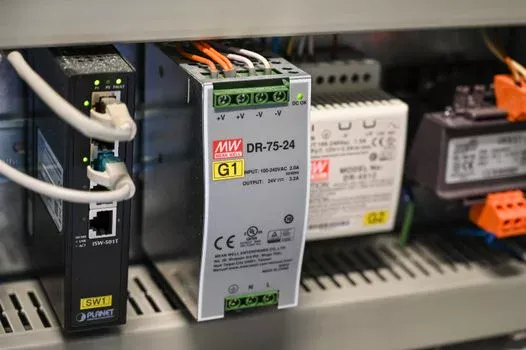
For procurement teams, budgeting for a 2026-spec facility requires an understanding of the scaling factors between equipment and installation. Total CAPEX is typically split 60/40 between equipment procurement and civil/installation costs.
| System Configuration | Flow Rate (m³/day) | Equipment Cost | Installation/Civil | Total CAPEX |
|---|---|---|---|---|
| DAF-only (Small) | 50 | $180,000 | $120,000 | $300,000 |
| Hybrid DAF-MBR (Mid) | 200 | $1,600,000 | $1,200,000 | $2,800,000 |
| Hybrid DAF-MBR-RO (Large) | 500 | $3,200,000 | $1,800,000 | $5,000,000 |
OPEX drivers are dominated by energy and chemical consumption. MBR systems consume 0.8–1.2 kWh/m³ for aeration and scouring, while RO stages add 1.5–2.5 kWh/m³ depending on the target recovery rate. Chemical costs for coagulants and membrane cleaning agents average $0.15–$0.45/m³. For a 200 m³/day Hybrid DAF-MBR system, the annual OPEX is approximately $109,500. However, when factoring in the avoidance of EPA fines (averaging $500K per major incident) and the savings from water reuse, the payback period for these systems typically falls within 3–5 years (HydropureWater internal benchmarks, 2025).
Cost-saving strategies for 2026 include the adoption of modular "skid-mounted" designs, which reduce on-site installation time by 40%, and the integration of high-efficiency turbo blowers that can cut aeration energy costs by 20% compared to traditional PD blowers.
Troubleshooting Common Issues in Display Panel Wastewater Treatment
Operating a display panel wastewater system requires proactive monitoring of the biological health and membrane integrity. Below are the three most common operational failures and their 2026-forward solutions.
Symptom 1: High TMAH in MBR Effluent (>50 mg/L)
This usually indicates biomass toxicity or insufficient pretreatment. If influent TMAH exceeds 500 mg/L entering the biological stage, the nitrifying bacteria may be inhibited.
- Solution: Check the DAF stage for polymer overdose, which can coat biomass. If TMAH remains high, implement Fenton oxidation as an intermediate step or increase the dilution ratio with low-strength graywater to bring TMAH below the 500 mg/L threshold.
Symptom 2: Rapid Membrane Fouling (TMP > 0.5 bar)
Sudden increases in Trans-Membrane Pressure (TMP) are often caused by photoresist breakthroughs or high MLSS viscosity.
- Solution: Verify the cationic polymer dosage in the DAF unit; photoresist must be fully flocculated before the MBR. Increase the air scouring rate to 0.3 m³/m²/h and perform a recovery clean using a 2% citric acid solution (pH 2–3) to remove inorganic scaling and metal hydroxides.
Symptom 3: RO Scaling and Flux Decline (<10 LMH)
This is typically caused by silica or boron scaling, which are prevalent in glass-processing wastewater.
- Solution: Install a boron-selective ion exchange (IX) resin bed before the RO unit. Ensure the antiscalant dosing is maintained at 2–5 mg/L and monitor the Langelier Saturation Index (LSI) of the feed water.
For more complex integration challenges, engineers should consult IC wastewater treatment design specs for semiconductor fabs to understand cross-process contamination risks.
Frequently Asked Questions
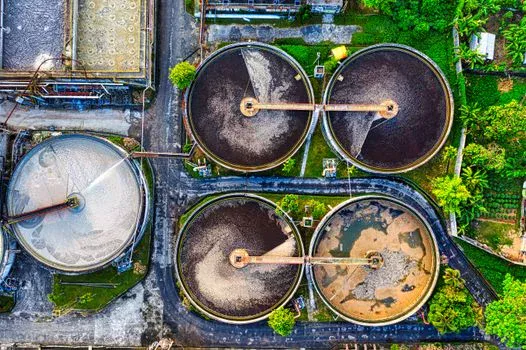
How is TMAH removed from display panel wastewater? TMAH is primarily removed through a combination of chemical pretreatment and specialized biological degradation. In a hybrid system, the DAF stage removes a portion of the TMAH associated with solids, while an acclimated MBR biomass breaks down the remaining TMAH into ammonia and carbon dioxide. 2026 designs often include Fenton oxidation for concentrations >2,000 mg/L.
What are the EPA discharge limits for display panel manufacturing? Under EPA 40 CFR Part 469, display panel fabs must comply with limits for COD (≤125 mg/L), TSS (≤30 mg/L), and pH (6.0–9.0). Additionally, local jurisdictions often impose strict limits on fluoride (<20 mg/L) and boron (<1.0 mg/L) due to their environmental persistence.
Why does photoresist cause membrane fouling in MBR systems? Photoresist is a polymer-based substance that forms stable, sticky emulsions. If not properly removed in the DAF stage, these emulsions coat the surface of MBR membranes, creating a non-porous layer that significantly increases resistance. This leads to rapid TMP spikes and requires frequent chemical cleaning, reducing membrane lifespan.
Is Zero Liquid Discharge (ZLD) cost-effective for OLED plants? ZLD has a high CAPEX (up to $5M for 500 m³/day), but for OLED plants in water-stressed regions, the ROI is driven by water reuse savings and the avoidance of stringent discharge permits. With 2026 boron recovery technology, the payback period for ZLD systems has dropped to under 5 years in many cases.