Industrial wastewater treatment in Tamale, Ghana must close a wide gap: EPA limits of COD ≤ 250 mg/L versus food-processing effluent at 1,500–3,000 mg/L, with fines from GHS 50,000 to GHS 500,000 per violation.
Wastewater Treatment in Tamale, Ghana: Industrial Compliance Specs for 2026
Ghana EPA’s 2025 Environmental Quality Standards cap industrial effluent at COD ≤ 250 mg/L, BOD ≤ 50 mg/L, TSS ≤ 50 mg/L, pH 6–9, and FOG ≤ 10 mg/L. Hybrid DAF-MBR trains deliver 95%+ COD removal at 15–25 m³/h and anchor most Tamale compliance retrofits. Sector CAPEX runs €45–€70 per capita depending on effluent strength.
Tamale’s treatment landscape is defined by three constraints that shape every design decision. Ghana EPA discharge limits (COD ≤ 250 mg/L, TSS ≤ 50 mg/L) sit far below raw industrial loads. Faecal sludge management reaches only 7–10% of Tamale’s 360,000+ residents (Hydropurewater data), and CAPEX benchmarks run €45–€70 per capita for advanced systems. Municipal reference points exist — the 1,000 m³/day Septopure® facility meets WHO surface water standards at <€10/capita/year OPEX — but municipal designs are not built to digest industrial pollutant loads.
The enforcement picture explains the urgency. Non-compliance under the 2024 Environmental Protection Agency Act draws fines from GHS 50,000 to GHS 500,000 (approximately €3,500–€35,000) per violation, and repeat offenders face shutdowns. Nationally, only 14% of Ghanaians used improved sanitation facilities as of 2010 (Wikipedia), so ambient infrastructure is thin. Industrial effluent rarely gets dilution help; it meets inspectors at full strength.
Sector loads set the design problem. Food processing generates BOD between 1,500–3,000 mg/L; textile manufacturers contend with dye toxicity and COD from 800–2,000 mg/L; pharmaceutical facilities discharge TSS of 200–500 mg/L. A Tamale textile factory learned the price of that gap: GHS 200,000 in fines for failing COD and TSS limits. After retrofitting DAF plus MBR, its effluent COD fell to 120 mg/L at 20 m³/h — the performance level this guide specifies toward.
Ghana EPA Discharge Limits vs. Tamale Effluent: the Compliance Gap
The 2025 Environmental Quality Standards set the numbers every Tamale facility must engineer against. The list: COD at 250 mg/L, BOD at 50 mg/L, TSS at 50 mg/L, pH between 6 and 9, FOG at 10 mg/L, and chromium at 0.1 mg/L. Typical 2024 Ghana Water Company data shows how far local effluent sits from those values. Food processing runs COD 1,500–3,000 mg/L with BOD 800–1,500 mg/L; textile wastewater shows COD 800–2,000 mg/L and TSS 200–500 mg/L. Pharmaceutical streams carry COD 500–1,200 mg/L and TSS 100–300 mg/L.
pH and FOG gaps deserve the same attention as COD, even though they read smaller. Food processing effluent at pH 4–6 must be neutralized before biology can work at all, and FOG at 20–80 mg/L against a 10 mg/L limit kills membranes faster than any other parameter. These two lines decide pre-treatment scope long before the biological stage is selected.
Food Processing Wastewater COD Removal in Tamale
Food processing wastewater COD removal in Tamale must reach 90–95% before discharge, because raw loads of 1,500–3,000 mg/L face a 250 mg/L ceiling. Hybrid MBR-DAF systems deliver over 95% COD removal against those loads. Conventional activated sludge typically manages 70–80%, which leaves food processors non-compliant on COD alone. The EPA’s 2025 Environmental Assessment Regulations allow 6-month compliance windows for new facilities and 12–18 months for existing plants to upgrade — a schedule that rewards early procurement.
Design to the strictest applicable table from day one. Tamale plants supplying US-bound supply chains face their own parameter-by-parameter limits, covered in our guide to industrial effluent discharge rules in the USA. Engineers who align both limit sets before ordering equipment avoid redesign fees later.
| Parameter | Ghana EPA Limit (mg/L) | Typical Tamale Food Processing Effluent (mg/L) | Typical Tamale Textile Effluent (mg/L) | Typical Tamale Pharmaceutical Effluent (mg/L) | Required Removal (%) for Food Processing |
|---|---|---|---|---|---|
| COD | ≤ 250 | 1,500 – 3,000 | 800 – 2,000 | 500 – 1,200 | 90 – 95% |
| BOD | ≤ 50 | 800 – 1,500 | N/A (variable) | N/A (variable) | > 95% |
| TSS | ≤ 50 | 100 – 300 | 200 – 500 | 100 – 300 | 70 – 85% |
| FOG | ≤ 10 | 20 – 80 | 5 – 20 | < 5 | > 75% |
| pH | 6 – 9 | 4 – 6 | 5 – 8 | 5 – 8 | N/A (adjustment required) |
Engineering Specs: MBR, DAF, and Hybrid Systems Compared
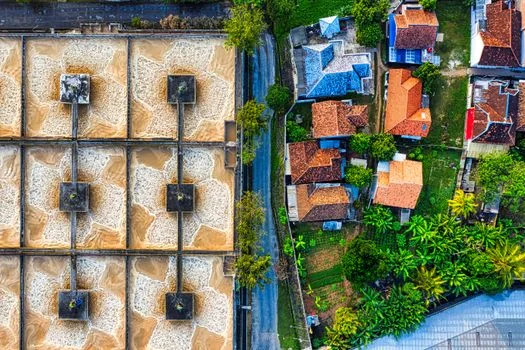
Membrane bioreactors lead the spec sheet for high-BOD food effluent. MBR systems such as HydropureWater’s DF Series use 0.1 μm PVDF membranes for 95–98% COD removal, occupy up to 60% less space than conventional plants, and run at a hydraulic retention time of 4–8 hours. That HRT range matters on Tamale’s constrained industrial plots, where tank volume is the scarce commodity.
DAF systems own the pre-treatment slot. Units like HydropureWater’s span 4 to 300 m³/h, remove 92–97% of TSS and 85–90% of FOG, and cut energy consumption about 30% versus traditional clarifiers. That combination makes DAF the default first stage for high-FOG streams from textiles and slaughterhouses, where untreated grease would blind any downstream membrane within weeks.
Hybrid DAF-MBR trains answer zero-discharge targets with up to 99% COD removal, at a price: CAPEX 2–3 times standalone systems, reaching €60–€70 per capita against €45 for basic faecal sludge management. Sludge production splits the field too — MBR at 0.2–0.4 kg TSS per kg BOD removed, DAF at 0.1–0.3 kg, conventional activated sludge at 0.5–0.7 kg. Municipal plants like Tamale’s Septopure® facility meet EU/WHO limits for domestic wastewater but are not engineered for complex industrial loads, which is why sector-specific designs exist.
| Technology | Typical COD Removal (%) | Typical TSS Removal (%) | Typical FOG Removal (%) | Footprint Reduction vs. Conventional | Ideal Application | Sludge Production (kg TSS/kg BOD) |
|---|---|---|---|---|---|---|
| MBR (e.g., HydropureWater DF Series) | 95 – 98% | 98 – 99% | 90 – 95% | ~60% smaller | High-BOD effluent (Food Processing) | 0.2 – 0.4 |
| DAF (e.g., HydropureWater) | 70 – 85% | 92 – 97% | 85 – 90% | N/A (often integrated) | Pre-treatment, High-FOG (Textiles, Slaughterhouses) | 0.1 – 0.3 |
| Hybrid (DAF + MBR) | 99%+ | 99%+ | 95%+ | Variable (optimized) | Zero-Discharge Compliance | 0.15 – 0.35 |
| Conventional Activated Sludge | 70 – 80% | 85 – 90% | 70 – 80% | Standard | General municipal/low-strength industrial | 0.5 – 0.7 |
CAPEX and OPEX for Wastewater Treatment in Ghana: Industrial Sector Benchmarks
Industrial CAPEX in Tamale runs €60–€70 per capita overall, above the €45 per capita benchmark for municipal faecal sludge management. Sector spreads matter for budgeting: food processing €50–€60, textiles €60–€70, pharmaceuticals €70–€80 per capita, tracking effluent complexity. Annual OPEX lands at €10–€15 per capita, driven by energy at 40–50% of the total, chemicals at 20–30%, labor at 15–25%, and maintenance at 10–15%. MBR systems carry about 20% higher energy costs than DAF but roughly 30% lower chemical consumption.
OPEX responds to management more than CAPEX does. Energy, the 40–50% share, moves with aeration control and pump scheduling; chemicals move with influent consistency, which pre-treatment stabilizes. Plants that log daily COD against chemical dose find their optimum within one or two quarters of commissioning.
Zero-discharge investments can pay back quickly. A Tamale textile factory that invested approximately €500,000 in a hybrid system eliminated annual fines of GHS 150,000 and reached 80% water recovery for reuse — a payback period of about three years. Cost-control levers compound: modular designs cut civil works up to 30%, solar-powered aeration trims energy costs 25%, and sludge dewatering with plate-frame filter presses for sludge dewatering cuts disposal costs up to 40% by lifting dry solids to 30–40%.
| Cost Component | Typical Range (per capita) | Breakdown (OPEX %) | Notes |
|---|---|---|---|
| CAPEX (Industrial) | €60 – €80 | N/A | Food Processing: €50-€60; Textiles: €60-€70; Pharmaceuticals: €70-€80 |
| OPEX (Annual) | €10 – €15 | N/A | |
| OPEX: Energy | N/A | 40 – 50% | MBR systems are ~20% higher than DAF |
| OPEX: Chemicals | N/A | 20 – 30% | MBR systems are ~30% lower than DAF |
| OPEX: Labor | N/A | 15 – 25% | |
| OPEX: Maintenance | N/A | 10 – 15% |
Zero-Discharge Compliance in Tamale: A Five-Step Framework for Industrial Facilities
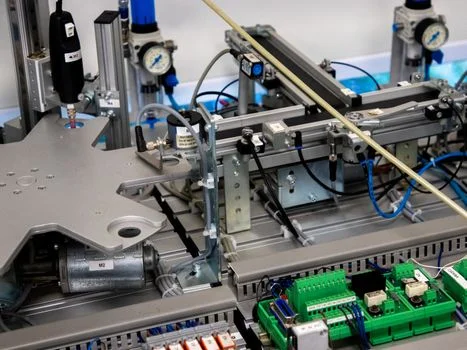
Zero-discharge compliance in Tamale follows five steps — characterize, pre-treat, treat biologically, polish, manage sludge — each with measurable exit criteria. Step 1 is influent characterization: comprehensive testing for COD, BOD, TSS, FOG, pH, heavy metals, and pathogens, as the Ghana EPA’s 2025 Environmental Quality Standards mandate. Skipping or shortening this step is the most common cause of mis-sized plants in our project files.
Step 2 is pre-treatment, and it carries two workhorses. DAF pre-treatment for Tamale’s high-FOG industrial wastewater removes FOG and TSS at 85–90% efficiency. Rotary screens such as rotary mechanical bar screens for Tamale’s industrial effluent capture over 95% of particles larger than 1 mm before they reach pumps.
Step 3 tailors biology to the influent. For high-BOD effluent, MBR systems for Tamale’s high-BOD industrial effluent deliver 95–98% COD removal; conventional activated sludge reaches 70–80% on lower-strength streams. Step 4 adds tertiary treatment for zero-discharge goals: reverse osmosis recovers up to 95% of water for full reuse, or ClO₂ disinfection for Tamale’s zero-discharge systems delivers a 99.9% pathogen kill for surface discharge.
Step 5 closes the loop on sludge: sludge dewatering to cut disposal costs in Tamale reaches 30–40% dry solids before landfill disposal, per the Ghana EPA’s 2025 Sludge Management Guidelines. Continuous monitoring holds the permit together — pH and flow meters on line, weekly COD/BOD/TSS testing, and quarterly heavy metals and pathogen analysis, as the EPA’s 2025 Environmental Monitoring Regulations stipulate. Plants that skip the monitoring line item usually fail re-inspection on paperwork, not process performance.
Next Steps for Tamale Factory Owners and EPC Teams
Tamale facilities with a characterized effluent profile can move to a firm budget in weeks rather than quarters. Pair your effluent data with the sector CAPEX bands above and a target — EPA discharge or full zero-discharge — then bid the shortlist. Our broader equipment-selection notes on industrial wastewater treatment cover sizing details for mixed industrial parks. Exporters should also track the EU Urban Wastewater Treatment Directive: Compliance, Deadlines & Tech timeline as supply-chain audits spread.
Send your flow rate and effluent analysis through our quotation desk for a technology-matched budget under Tamale conditions.
This framework fits Tamale food processors, textile mills, and pharmaceutical plants planning EPA-compliant discharge or full zero-discharge reuse. Municipal FSM planners benchmarking against €45 per capita systems will find the Septopure® reference more relevant than the hybrid specs. Exporters with EU customers should layer supply-chain audit timelines on top of EPA deadlines before locking a delivery schedule.
Frequently Asked Questions
Common questions from Tamale factory owners and EPC evaluators.
What are the Ghana EPA discharge limits for industrial wastewater in Tamale?
The Ghana EPA discharge limits, per the 2025 Environmental Quality Standards, are COD ≤ 250 mg/L, BOD ≤ 50 mg/L, TSS ≤ 50 mg/L, pH 6–9, FOG ≤ 10 mg/L, and heavy metals such as Cr ≤ 0.1 mg/L. The limits apply at the outfall, after on-site treatment. Most Tamale industrial streams need 90%+ removal across COD, BOD, and TSS to comply, so the treatment train, not the permit, carries the engineering risk.
How much does an industrial wastewater treatment plant cost in Tamale?
CAPEX for industrial systems in Tamale ranges from €50–€80 per capita depending on sector. Food processing facilities typically cost €50–€60 per capita, textiles €60–€70, and pharmaceuticals €70–€80, tracking effluent complexity. Annual OPEX adds €10–€15 per capita, dominated by energy at 40–50%. Hybrid zero-discharge trains sit at the top of the band but return value through water reuse and avoided fines.
What is the best wastewater treatment system for Tamale’s textile factories?
Hybrid DAF-MBR systems are the strongest fit for Tamale’s textile factories. They achieve over 95% COD removal and 85–90% FOG removal, meeting Ghana EPA limits for textile effluent that often carries COD between 800–2,000 mg/L. The DAF stage strips dyes, fibers, and grease before biology; the MBR stage polishes to reuse grade. One Tamale retrofit cut effluent COD to 120 mg/L at 20 m³/h after GHS 200,000 in fines.
How can Tamale’s factories achieve zero-discharge compliance?
Factories reach zero-discharge compliance by stacking reverse osmosis for up to 95% water recovery, or ClO₂ disinfection with a 99.9% pathogen kill where surface discharge is permitted. Sludge dewatering to 30–40% dry solids shrinks disposal volume and cost. The five-step framework above — characterization, DAF or screening pre-treatment, MBR biology, tertiary treatment, sludge management — sequences the work. Continuous monitoring keeps the permit defensible.
What are the penalties for non-compliance with Ghana EPA wastewater standards in Tamale?
Penalties under the 2024 Environmental Protection Agency Act run from GHS 50,000 to GHS 500,000 (approximately €3,500–€35,000) per violation, and repeat offenders risk plant shutdowns. One Tamale textile factory absorbed GHS 200,000 in fines for COD and TSS exceedances before its retrofit. Fines arrive after monitoring excursions, so continuous compliance data is the cheapest insurance a plant can buy.
What does a zero discharge wastewater system cost for a Tamale factory?
A zero discharge wastewater system for a Tamale factory costs roughly €500,000 in CAPEX at mid-scale, based on the documented textile retrofit, with hybrid CAPEX running 2–3 times standalone systems (€60–€70 per capita). Payback arrived in about three years there, through eliminated fines of GHS 150,000 per year and 80% water recovery. Energy and chemicals dominate the running cost, so size RO recovery before committing.
Further Reading
Explore these in-depth articles on related wastewater treatment topics: