The 4 Main Causes of MBR Membrane Fouling
MBR membrane fouling is primarily caused by four mechanisms: organic fouling from proteins and SMP, inorganic scaling from calcium carbonate and sulfate, biofouling via biofilm formation, and pore blocking by suspended solids. These can increase transmembrane pressure (TMP) by 20–50% within weeks without proper pretreatment or maintenance. Identifying the specific mechanism is the first step in preventing irreversible flux decline and extending the service life of submerged PVDF membranes for B2B process engineers.
Organic fouling is arguably the most persistent challenge in industrial wastewater applications. It is driven by the accumulation of Soluble Microbial Products (SMP) and Extracellular Polymeric Substances (EPS) that form a dense, gel-like layer on the membrane surface. Unlike cake layers formed by larger flocs, these organic foulants are often resistant to standard air scouring and require targeted chemical intervention.
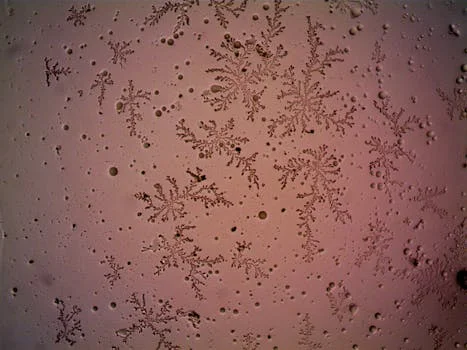
Inorganic fouling, or scaling, occurs when the solubility limits of mineral salts are exceeded within the membrane boundary layer. High pH environments or hard feedwater lead to the precipitation of calcium carbonate (CaCO₃) and calcium sulfate (CaSO₄). This mineral deposition physically narrows the membrane pores and can cement other foulants into a hard crust that is difficult to remove without acidic cleaning.
Biofouling involves the active colonization of the membrane surface by live microorganisms. Even with high-shear air scouring, certain bacteria can adhere to the PVDF surface and secrete a protective matrix, leading to a mature biofilm within days. Particulate or pore fouling occurs when suspended solids or colloids physically lodge within the membrane structure. The 0.1 μm pore size typical of the DF series modules provides a high-quality filtrate, but also makes the system vulnerable to smaller colloidal particles (100 nm to 1 μm) that bypass upstream clarification.
How Organic Fouling Degrades MBR Performance
Extracellular polymeric substances (EPS) and SMP from activated sludge are the primary organic foulants in a membrane bioreactor. HydropureWater field data (2025) indicates that SMP concentrations above 20 mg/L correlate with a rapid, non-linear rise in TMP. These substances are essentially the "glue" produced by bacteria during different growth phases. When an MBR is operated under high organic loading (COD >500 mg/L), microbial metabolism accelerates, leading to an overproduction of these polysaccharides and proteins.
The degradation of performance follows a predictable flux decline curve. Initially, organic molecules adsorb onto the internal pore walls, slightly increasing resistance. As the process continues, a gel layer forms on the surface. Without intervention, permeability typically drops 30–60% within a 30-day operational window. This layer acts as a secondary filter, which might temporarily improve filtrate quality but at the cost of significantly higher energy consumption for the permeate pumps.
Engineers must balance the Food-to-Microorganism (F/M) ratio to minimize SMP release. Utilizing a PVDF flat sheet membrane with 0.1 μm pore size and integrated aeration helps reduce the stability of this gel layer through constant physical shear. In high-strength industrial applications, an integrated MBR system provides the necessary biological stability to prevent the sudden "sludge stress" that triggers massive EPS releases.
Inorganic Scaling: When Minerals Block Membranes
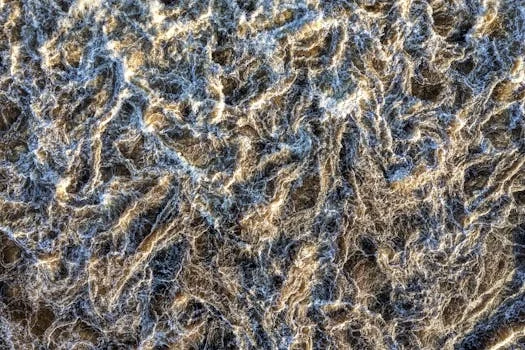
Inorganic scaling is a chemical precipitation process that can cause irreversible damage if not addressed. Calcium carbonate scaling is the most frequent culprit, occurring predominantly when the Langelier Saturation Index (LSI) exceeds +0.5. This condition is common in industrial systems where the influent pH rises above 8.2 or where high alkalinity is present. Unlike organic fouling, which often builds up gradually, scaling can manifest as a sudden TMP spike that does not respond to standard backwashing.
Calcium sulfate scaling presents a different risk profile, as its solubility is less dependent on pH but highly sensitive to concentration factors. The risk increases exponentially when the product of calcium and sulfate ions ([Ca²⁺] × [SO₄²⁻]) exceeds 10,000 (mg/L)². In extreme cases, magnesium hydroxide (Mg(OH)₂) may form if the pH exceeds 10.5, a scenario sometimes encountered in specialized industrial neutralization processes. These minerals create a white, crystalline crust on the membrane fibers, which acts as a physical barrier to water flow.
Operators can predict scaling by monitoring the LSI of the mixed liquor. If a sudden jump in TMP occurs and a 1% sodium hydroxide (NaOH) cleaning cycle fails to restore flux, mineral scaling is the likely cause. Implementing an automatic chemical dosing system for acid or antiscalant injection is the most effective prevention strategy, ensuring the mixed liquor remains in a non-scaling equilibrium regardless of influent fluctuations.
Biofouling Mechanisms in Submerged MBR Systems
Biofouling is a dynamic process that begins within hours of membrane immersion. Initial bacterial adhesion is followed by the development of a mature biofilm within 3 to 7 days if conditions are stagnant. In submerged MBR systems, the primary defense against this is air scouring. However, if the mixed liquor velocity drops below 0.5 m/s or if air scouring rates fall below 2 Nm³/h per m² of membrane area, the shear forces are insufficient to disrupt the microbial attachment.
A critical aspect of biofouling is quorum sensing—a microbial communication mechanism where bacteria coordinate the production of EPS once a certain population density is reached on the membrane surface. This makes the biofilm highly resistant to chemical cleaning agents, as the EPS matrix protects the underlying cells. Research into MBR biofilms shows that species like Pseudomonas and Zoogloea often dominate, contributing to 40–70% of the total foulant mass in heavily fouled modules.
To disrupt this cycle, operators should maintain consistent aeration and consider periodic "maintenance cleans" with low-concentration chlorine. The PVDF flat sheet membrane with 0.1 μm pore size and integrated aeration is designed to maximize the contact between air bubbles and the membrane surface, creating the high-shear environment necessary to prevent Pseudomonas colonization. Maintaining a dissolved oxygen (DO) level of 1.5–2.0 mg/L in the MBR tank also prevents the anaerobic conditions that can lead to stickier, more fouling-prone biofilms.
Physical Pore Blocking by Suspended Solids

Physical pore blocking is often the result of pretreatment failure. While MBRs are designed to handle high concentrations of Mixed Liquor Suspended Solids (MLSS), they are sensitive to specific types of debris. Suspended solids (SS) exceeding 10 mg/L in the direct feed to the MBR tank can increase the fouling rate by 2–3×. This is particularly true for fibrous materials, hair, and microplastics that can become entangled in the membrane modules, leading to "ragging" or "braiding."
Colloidal material in the 100 nm to 1 μm range is especially problematic. These particles are small enough to penetrate the sludge flocs but large enough to physically lodge within the 0.1 μm pores of the PVDF membrane. Under sustained flux levels above 15 LMH (liters/m²/hour), the pressure forces these particles deep into the membrane structure, causing irreversible mechanical blockage. This is why maintaining a conservative flux is critical for long-term stability.
The solution lies in robust upstream protection. A fine screening system for headworks protection with a 1mm or 2mm aperture is mandatory to remove fibers and hair. For industrial streams with high inorganic solids, a high-efficiency sedimentation tank should be used to reduce the solids load before the biological stage. Effective pretreatment ensures that the membrane only has to contend with biological flocs, which are much easier to manage through standard cleaning protocols.
MBR Fouling Diagnosis and Mitigation Protocol
When MBR performance declines, a systematic diagnostic approach is required to identify the foulant and apply the correct remedy. Relying on trial-and-error cleaning can waste chemicals and potentially damage the membrane structure. The following protocol is based on standard industrial engineering practices for submerged MBR maintenance.
- Monitor TMP Trends: A gradual rise over weeks suggests organic or biofouling. A sudden, sharp jump within hours usually indicates a change in feedwater chemistry (scaling) or a pretreatment failure (particulate blocking).
- Conduct Membrane Autopsy: If flux recovery is poor, a small sample of the membrane should be analyzed. FTIR (Fourier Transform Infrared) spectroscopy can distinguish between organic proteins and inorganic mineral deposits.
- Sequential Cleaning: Always clean for organics first using Sodium Hypochlorite (NaOCl) at 0.5–1%. Follow this with an acidic wash using 2% Citric Acid to remove inorganic scales that may have been "hidden" under the organic layer.
- Verify Flux Recovery: After cleaning, measure the Clean Water Flux (CWF). Recovery above 90% indicates reversible fouling. If recovery is below 70%, the fouling is likely irreversible or deep within the pores, requiring a review of the data-backed troubleshooting guide for MBR performance issues.
- Adjust Operational Parameters: If fouling persists, reduce the design flux to 12 LMH and increase the air scour rate. Ensure the sludge age (SRT) is maintained between 20–30 days to optimize sludge filterability.
| Diagnostic Step | Action Required | Target Objective |
|---|---|---|
| TMP Analysis | Review 24-hour and 30-day pressure logs | Differentiate between sudden and gradual fouling |
| Sludge Assessment | Measure SMP and EPS concentrations | Determine if biological stress is causing organic fouling |
| Chemical Soak | 1% NaOCl followed by 2% Citric Acid | Restore membrane permeability and baseline TMP |
| Process Audit | Check DO, MLSS, and Air Scour flowmeters | Ensure operating parameters match design specs |
Comparison of MBR Fouling Types and Treatment Methods
The following table provides a quick-reference guide for plant operators to match symptoms with causes and corrective actions. Effective management requires understanding that multiple fouling types often occur simultaneously.
| Fouling Type | Primary Cause | Key Indicators | Recommended Cleaning | Prevention Strategy |
|---|---|---|---|---|
| Organic | SMP/EPS from sludge | Slow TMP rise, dark gel layer | 1% NaOCl soak (30-60 min) | Optimize F/M ratio; reduce SRT |
| Inorganic | CaCO₃, CaSO₄ | White scale, poor NaOH recovery | 2% Citric acid (pH 2–3) | Acid dosing; antiscalants |
| Biofouling | Biofilm growth | Sticky surface, septic odor | NaOCl + Biocide treatment | Increase air scour; maintain DO |
| Particulate | Suspended solids | Rapid TMP spike, visible debris | Physical backwash; CIP | Improve screening; add DAF/Sedimentation |