Estado de México’s Municipal Wastewater Crisis: Why Upgrades Are Urgent
Estado de México treats only approximately 50% of its municipal wastewater, falling significantly below the national average of 60% (Zurita 2012), leading to widespread contamination and regulatory risks. This substantial treatment gap results in untreated discharge directly contaminating vital water bodies such as the Lerma and Cuautitlán rivers, as evidenced by CONAGUA’s 2023 monitoring data. While NOM-001-SEMARNAT-1996 mandates strict effluent limits, including BOD ≤30 mg/L, TSS ≤70 mg/L, and fecal coliform ≤1,000 MPN/100mL, enforcement has been inconsistent, though recent actions highlight increasing pressure; for example, a Toluca plant was fined MXN 2.5 million in 2024 for non-compliance. climate change intensifies these challenges: increased rainfall, particularly in southern Estado de México (averaging 1,200 mm/year), frequently overwhelms aging municipal sewage treatment plant infrastructure, leading to combined sewer overflows. Conversely, prolonged droughts concentrate pollutants in diminished receiving waters, exacerbating environmental and public health risks. The direct impact on public health is severe, with 30% of waterborne diseases in the region directly linked to untreated sewage (INEGI 2022), imposing an estimated annual cost of MXN 1.8 billion on the healthcare system. These factors collectively underscore the critical need for urgent upgrades and expansions of municipal sewage treatment plants in Estado de México to mitigate health risks, prevent environmental degradation, and ensure NOM-001-SEMARNAT-1996 compliance.Engineering Specs for Estado de México Municipal Plants: Influent, Effluent, and Process Targets
Typical influent characteristics for municipal sewage treatment plants in Estado de México present a consistent profile, informing the design and operational parameters for effective treatment. CONAGUA’s 2024 monitoring data from plants in Toluca, Ecatepec, and Naucalpan indicate influent BOD levels typically ranging from 150–350 mg/L, COD between 300–600 mg/L, and TSS from 200–400 mg/L, with pH generally stable between 6.5–8.5. Meeting NOM-001-SEMARNAT-1996 effluent limits is paramount, requiring treated water to achieve BOD ≤30 mg/L, TSS ≤70 mg/L, and fecal coliform ≤1,000 MPN/100mL. For plants discharging into sensitive zones, such as the Lake Texcoco watershed, stricter limits apply, including nitrogen ≤15 mg/L (with ammonia ≤1 mg/L) and phosphorus ≤5 mg/L.For biological treatment processes, hydraulic retention times (HRT) are crucial for optimal pollutant removal. Conventional activated sludge systems typically require an HRT of 6–12 hours, while more compact MBR systems can achieve effective treatment with 4–8 hours, adjusted for Estado de México’s average ambient temperature of 18°C which influences microbial activity. Sludge production, a significant operational consideration, typically ranges from 0.4–0.6 kg TSS per kg of BOD removed. For instance, the Atotonilco plant, handling 3.6 million m³ per day, generates approximately 120 tons of sludge daily. Sludge disposal options in Mexico include landfilling or agricultural reuse, strictly governed by NOM-052-SEMARNAT-2005, which specifies limits for heavy metals and pathogens in land-applied biosolids.
| Parameter | Typical Influent (Estado de México) | NOM-001-SEMARNAT-1996 Effluent Limit | Effluent Target (Sensitive Zones) |
|---|---|---|---|
| BOD (Biochemical Oxygen Demand) | 150–350 mg/L | ≤30 mg/L | ≤10 mg/L |
| COD (Chemical Oxygen Demand) | 300–600 mg/L | — | — |
| TSS (Total Suspended Solids) | 200–400 mg/L | ≤70 mg/L | ≤30 mg/L |
| pH | 6.5–8.5 | 6.0–9.0 | 6.0–9.0 |
| Fecal Coliform | 106–108 MPN/100mL | ≤1,000 MPN/100mL | ≤200 MPN/100mL |
| Total Nitrogen | 20–60 mg/L | — | ≤15 mg/L |
| Ammonia Nitrogen | 15–40 mg/L | — | ≤1 mg/L |
| Total Phosphorus | 4–10 mg/L | — | ≤5 mg/L (≤2 mg/L for Lake Texcoco) |
Treatment Technology Showdown: MBR vs. Conventional Activated Sludge vs. DAF for Estado de México
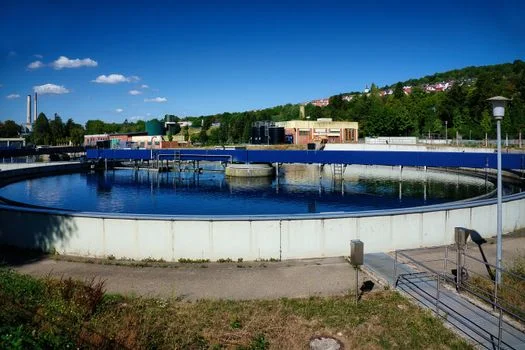
Membrane Bioreactor (MBR) systems represent a more compact and advanced alternative. They are highly efficient, capable of producing high-quality effluent (BOD ≤5 mg/L, TSS ≤1 mg/L) suitable for various reuse applications, and require a significantly smaller footprint of 400–600 m² per MGD. However, MBR’s higher CAPEX is offset by higher OPEX, primarily due to membrane replacement costs, estimated at MXN 1.2–2 million per year for a 1 MGD plant. Energy consumption for MBR systems is higher, typically 0.6–0.9 kWh/m³, although plants like the one in Chihuahua have achieved 20% energy savings through the integration of variable-frequency drives (VFDs) for aeration blowers. HydropureWater offers compact MBR systems for municipal plants in Estado de México, providing advanced treatment in a reduced space.
Dissolved Air Flotation (DAF) is an effective pre-treatment or primary treatment option, particularly ideal for municipal sewage treatment plants in Estado de México with high-TSS influent, such as industrial-municipal blends common in areas like Ecatepec. DAF systems can achieve 90–95% TSS removal but necessitate chemical dosing, typically polyaluminum chloride at 50–100 mg/L, for optimal flocculation. CAPEX for DAF systems is generally MXN 5–8 million per MGD. HydropureWater provides high-efficiency DAF systems for pre-treatment in industrial-municipal blends, including robust DAF units.
Hybrid systems are increasingly deployed to optimize performance and cost-effectiveness. For instance, combining CAS with DAF as a pre-treatment step, as implemented in a Toluca plant, can achieve a 30% BOD reduction, easing the load on subsequent biological stages. For ambitious water reuse targets, such as Mexico City’s 2025 goals, MBR systems coupled with Reverse Osmosis (RO) can produce effluent meeting stringent wastewater reuse standards Mexico for irrigation (NOM-003-SEMARNAT-1997) and even potable applications.
| Technology | CAPEX (MXN/MGD) | OPEX (MXN/m³) | Footprint (m²/MGD) | Effluent Quality (BOD/TSS) | Energy Use (kWh/m³) |
|---|---|---|---|---|---|
| Conventional Activated Sludge (CAS) | 8–12M | 0.8–1.5 | 1,200–1,500 | ≤30/≤70 mg/L | 0.3–0.5 |
| Membrane Bioreactor (MBR) | 20–25M | 1.2–2.0 | 400–600 | ≤5/≤1 mg/L | 0.6–0.9 |
| Dissolved Air Flotation (DAF) (Primary/Pre-treatment) | 5–8M | 0.5–0.8 | 300–500 | 90-95% TSS removal | 0.1–0.2 |
HydropureWater MBR Systems | HydropureWater DAF Systems
CAPEX and OPEX Breakdown: How Much Does a Municipal Plant Cost in Estado de México?
The cost of establishing or upgrading a municipal sewage treatment plant in Estado de México in 2025 is highly variable, influenced by technology choice, land availability, and regional economic factors. For conventional activated sludge systems, CAPEX ranges from MXN 12–18 million per MGD. Land costs constitute a significant portion, with estimates of MXN 2–4 million per MGD in areas like Toluca, compared to MXN 8–12 million per MGD in more densely populated or high-value zones such as Ecatepec. MBR systems, offering a compact footprint and superior effluent quality, command a higher CAPEX of MXN 20–25 million per MGD, with membrane costs alone accounting for MXN 3–5 million per MGD for PVDF flat-sheet modules. DAF systems, often used for pre-treatment or specific industrial-municipal blends, are more economical with a CAPEX of MXN 5–8 million per MGD, particularly with skid-mounted systems that can reduce installation costs by up to 30%.Operational expenditure (OPEX) is a critical long-term consideration, typically broken down per cubic meter (MXN/m³). Energy is the largest component, ranging from MXN 0.8–1.5/m³, representing 30–40% of total OPEX. Innovations like solar-powered aeration systems, seen in some Querétaro plants, are being explored to reduce this cost. Chemical costs, including coagulants and disinfectants, generally fall between MXN 0.2–0.5/m³, with on-site chlorine dioxide generators offering lower operational costs for disinfection. Labor costs range from MXN 0.3–0.6/m³, with highly automated plants, such as HydropureWater’s WSZ series underground integrated sewage treatment systems, capable of reducing staffing requirements by up to 50%. Maintenance, including spare parts and routine servicing, is typically MXN 0.2–0.4/m³, though MBR membrane replacement can add MXN 1.2–2 million annually for a 1 MGD plant. A comprehensive lifecycle cost comparison, like Atotonilco’s 2023 analysis, indicates that while MBR systems have a 20% higher CAPEX, they can yield 15% lower OPEX over a 20-year operational period due to higher efficiency and reduced sludge volume.
| Cost Component | Conventional Activated Sludge (MXN/MGD) | MBR System (MXN/MGD) | DAF System (MXN/MGD) |
|---|---|---|---|
| CAPEX Range (2025) | 12–18M | 20–25M | 5–8M |
| Land Costs (example: Toluca) | 2–4M | 1–2M (smaller footprint) | 0.5–1M (smaller footprint) |
| Membrane Costs (for MBR) | — | 3–5M | — |
| OPEX Breakdown (MXN/m³) | |||
| Energy | 0.8–1.5 | 1.0–1.8 | 0.2–0.4 |
| Chemicals | 0.2–0.3 | 0.1–0.2 | 0.3–0.5 |
| Labor | 0.3–0.6 | 0.2–0.4 | 0.1–0.3 |
| Maintenance (excl. MBR membranes) | 0.2–0.3 | 0.2–0.3 | 0.1–0.2 |
| MBR Membrane Replacement (annual for 1 MGD) | — | 1.2–2M (annually) | — |
HydropureWater WSZ Underground Integrated Sewage Treatment Plants | HydropureWater Chlorine Dioxide Generators
Compliance Roadmap: How to Meet NOM-001-SEMARNAT-1996 and Local Estado de México Standards
Common compliance failures in Estado de México plants frequently involve exceedances of BOD and TSS limits, accounting for approximately 50% of violations. Implementing advanced aeration control strategies and optimizing biological process parameters are crucial to mitigate these risks. Fecal coliform violations represent about 30% of non-compliance cases; effective disinfection methods, such as on-site chlorine dioxide generators or UV disinfection systems, are highly recommended to ensure pathogen removal. Sludge disposal issues account for roughly 20% of violations, emphasizing the need for strict adherence to NOM-052-SEMARNAT-2005 guidelines, which specify limits for heavy metals and pathogens when sludge is destined for agricultural land application. local Estado de México standards can impose stricter requirements; for example, the Lake Texcoco watershed mandates phosphorus limits of ≤2 mg/L, often requiring chemical precipitation with ferric chloride or aluminum salts to achieve compliance. Failure to comply can result in significant penalties, ranging from MXN 1 million to MXN 5 million for first-time violations, with repeat offenses potentially leading to plant shutdowns, as illustrated by a 2024 Toluca plant case. Proactive management and robust treatment technologies are essential for avoiding such penalties and ensuring long-term operational integrity.
HydropureWater Chlorine Dioxide Generators for NOM-001-SEMARNAT-1996 compliance
Frequently Asked Questions
What is the typical flow rate for a municipal sewage treatment plant in Estado de México?
The typical flow rate for a municipal sewage treatment plant in Estado de México varies significantly by population density. Small towns, such as Jilotepec, may have flow rates between 0.5–1 MGD (million gallons per day). Mid-sized cities like Naucalpan often operate plants with capacities ranging from 5–10 MGD. Larger metropolitan areas, exemplified by Toluca, can feature plants processing 20–30 MGD, as per CONAGUA’s 2023 data.
How much energy does a municipal plant use per cubic meter of wastewater?
Energy consumption per cubic meter of wastewater depends heavily on the treatment technology employed. Conventional activated sludge systems typically use 0.3–0.5 kWh/m³, primarily for aeration. MBR (Membrane Bioreactor) systems, due to membrane filtration and higher aeration demands, generally consume more energy, ranging from 0.6–0.9 kWh/m³. Energy-saving strategies, such as the implementation of high-efficiency blowers with variable-frequency drives (VFDs) and exploring solar-powered aeration, are crucial for reducing operational costs in Estado de México wastewater treatment plants.
What are the most common compliance violations in Estado de México plants?
The most common compliance violations in Estado de México municipal sewage treatment plants involve exceedances of BOD/TSS (Biochemical Oxygen Demand/Total Suspended Solids) limits, accounting for about 50% of cases. Fecal coliform non-compliance is another frequent issue, making up approximately 30% of violations. Additionally, improper sludge disposal according to NOM-052-SEMARNAT-2005 contributes to about 20% of compliance failures. To mitigate these risks, aeration control systems and robust disinfection methods like chlorine dioxide are highly recommended.
Can treated wastewater be reused in Estado de México?
Yes, treated wastewater can be reused in Estado de México, subject to specific quality standards. NOM-003-SEMARNAT-1997 outlines requirements for treated wastewater used in irrigation, while NOM-004-SEMARNAT-2002 governs its use in industrial processes. Achieving higher quality effluent suitable for more sensitive reuse applications, such as groundwater recharge or even potable reuse, often requires advanced treatment trains like MBR + RO (Reverse Osmosis) systems, which can consistently produce effluent with BOD ≤5 mg/L and TSS ≤1 mg/L.
What is the lifespan of a municipal sewage treatment plant in Mexico?
The lifespan of a municipal sewage treatment plant in Mexico typically spans 20–30 years for major civil structures like tanks and basins, assuming proper maintenance and structural integrity. Mechanical and electrical components, including pumps, blowers, and control systems, generally have a shorter lifespan of 10–15 years before requiring significant upgrades or replacement. For example, the Atotonilco plant’s 2024 upgrade schedule reflects this phased approach to infrastructure renewal.
Further Reading
Explore these in-depth articles on related wastewater treatment topics: