Industrial Wastewater Treatment in Nuevo León Mexico: 2025 Engineering Specs, Compliance & Zero-Risk Equipment Guide
In Nuevo León, industrial wastewater treatment is governed by NOM-002-SEMARNAT (federal) and state-level permits, with enforcement prioritizing water reuse due to +86.9% lower recycling efficiency vs. national benchmarks. Manufacturers must achieve COD <150 mg/L and TSS <50 mg/L for discharge or reuse, with MBR and DAF systems delivering 92–97% removal rates. CAPEX for a 100 m³/h system ranges from $500K–$1.2M, depending on technology and pretreatment needs. Understanding how U.S. industrial wastewater regulations compare to Mexico’s NOM-002-SEMARNAT is critical for multinational firms standardizing environmental protocols across North American facilities.
Why Nuevo León’s Industrial Wastewater Crisis Demands Immediate Action
Nuevo León’s industrial water demand grew 22% from 2018–2023, while groundwater levels dropped 1.5m/year according to CONAGUA 2024 data. This hydro-geological deficit has transformed wastewater from a disposal liability into a strategic operational asset. For facility managers in Monterrey, Santa Catarina, and Apodaca, the scarcity of fresh water is no longer a seasonal concern but a permanent constraint on production capacity. The state’s industrial sectors currently demonstrate a recycling efficiency that is 86.9% lower than national benchmarks, a gap that regulatory bodies are now closing through aggressive enforcement and mandatory reuse targets.
The financial impact of water stress is manifested in rising utility costs. Industrial water tariffs in Nuevo León have seen annual increases of approximately 18%, significantly outpacing general inflation. When groundwater concessions are restricted, manufacturers are forced to purchase water from private tankers, which can cost 5 to 10 times more than piped municipal supply. the risk of operational shutdowns due to water shortages is a reality; during the 2022 water crisis, several manufacturing plants were forced to reduce shifts or halt production entirely due to insufficient process water.
Regulatory pressure is equally acute. A case study of a Tier-1 automotive supplier in Monterrey illustrates the risk: the plant faced $250,000 in federal fines after an unannounced inspection revealed heavy metal concentrations exceeding NOM-002 limits. The resulting "Clausura" (shutdown) order lasted 15 days, costing the facility millions in lost revenue and triggering a mandatory 6-month compliance overhaul. To mitigate these risks, industrial facilities are now required to treat and reuse 30–50% of their effluent to avoid penalties and ensure supply chain continuity. This shift toward circularity is the only viable path for sustaining industrial growth in the semi-arid climate of Northern Mexico.
Nuevo León’s Wastewater Regulations: NOM-002-SEMARNAT, State Permits & Enforcement Risks
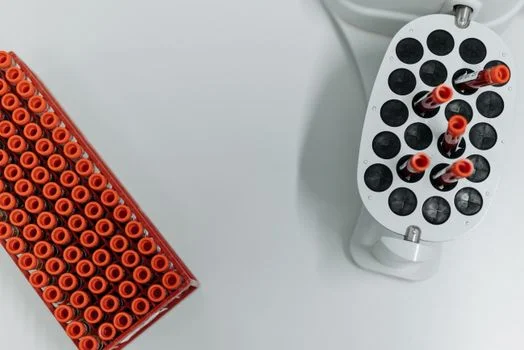
NOM-002-SEMARNAT establishes the mandatory federal limits for wastewater discharge into urban sewer systems, requiring Chemical Oxygen Demand (COD) levels below 150 mg/L and Total Suspended Solids (TSS) below 50 mg/L. While federal law provides the baseline, Nuevo León’s state authorities, specifically Servicios de Agua y Drenaje de Monterrey (SADM), impose additional constraints tailored to the region's specific water scarcity. For industries seeking to reuse water in cooling towers or boilers, state permits often mandate TSS levels below 10 mg/L and strict limits on silica and hardness to prevent equipment scaling.
The permit approval timeline for new or upgraded treatment systems typically spans 6 to 12 months. This process requires a comprehensive Environmental Impact Assessment (EIA) for any system handling flows greater than 50 m³/h. Engineers must submit detailed process flow diagrams (PFDs) and mass balances that demonstrate the system's ability to handle peak loading events. Failure to secure these permits prior to construction can lead to immediate work stoppages and significant legal fees.
Enforcement in 2024 and 2025 has moved toward a "real-time" monitoring model. SEMARNAT and state inspectors now utilize unannounced sampling protocols, and high-risk industries—such as metal finishing and food processing—are subject to annual audits. Fines for non-compliance can reach up to 2% of a company's annual revenue, a catastrophic penalty designed to ensure that wastewater treatment is prioritized at the executive level. However, the regulatory landscape also offers incentives: the state’s "Zero-Discharge" program provides tax credits of up to 30% for manufacturers that implement systems achieving greater than 70% water recovery.
| Parameter | NOM-002-SEMARNAT Limit | SADM Reuse Target (Cooling) | Typical Enforcement Risk |
|---|---|---|---|
| COD (mg/L) | < 150 | < 40 | High (Daily Monitoring) |
| TSS (mg/L) | < 50 | < 10 | Moderate (Weekly) |
| pH | 6.0 - 9.0 | 7.0 - 8.5 | Critical (Continuous) |
| Grease & Oil (mg/L) | < 15 | < 5 | High for Food/Auto |
| Heavy Metals (Pb, Cr) | < 0.5 (varies) | < 0.1 | Extreme (Legal/Criminal) |
Engineering Specs for Nuevo León’s Top 3 Industrial Sectors: Automotive, Food Processing & Metal Finishing
Automotive manufacturing in Nuevo León, driven by major hubs like the Tesla Gigafactory and Kia, generates complex effluent containing emulsified oils, surfactants, and heavy metals from painting and degreasing lines. Typical influent profiles show COD between 500 and 2,000 mg/L and TSS up to 800 mg/L. To meet reuse standards for cooling towers, a technology stack utilizing MBR systems for zero-discharge compliance in Nuevo León’s automotive industry is standard. MBR systems provide a physical barrier to solids and bacteria, ensuring a permeate quality that exceeds federal discharge requirements.
Food processing facilities, including major players like Sigma Alimentos, face high organic loads with Biological Oxygen Demand (BOD) often exceeding 3,000 mg/L and Fats, Oils, and Grease (FOG) levels up to 1,000 mg/L. The engineering solution typically begins with a Dissolved Air Flotation (DAF) unit for primary solids and grease removal. Implementing DAF systems for high-FOG effluent in Nuevo León’s food processing plants allows for 90% removal of insoluble organics before secondary biological treatment. For disinfection, ClO₂ generators for hospital and food processing effluent in Nuevo León are preferred over traditional chlorine due to their superior performance in high-pH environments and reduced formation of toxic by-products.
Metal finishing and steel production (e.g., Ternium, Nemak) require specialized chemical precipitation and Reverse Osmosis (RO) to manage heavy metals and high salinity. These systems must be designed for hydraulic loading rates of 0.5–1.5 m³/m²/h for primary clarification. Because of the aggressive nature of the wastewater, structural components such as DAF tanks must be constructed from 304 or 316L stainless steel to ensure a service life exceeding 15 years. For specialized guidance on high-strength organic loads, engineers should reference food processing wastewater treatment specs for high-BOD effluent to understand the nuances of anaerobic vs. aerobic biological design.
| Sector | Primary Pollutants | Recommended Technology Stack | Target Removal Rate |
|---|---|---|---|
| Automotive | Oils, COD, Metals | DAF + MBR + RO | 95% COD / 99% TSS |
| Food Processing | BOD, FOG, TSS | DAF + Anaerobic + ClO₂ | 92% BOD / 98% FOG |
| Metal Finishing | Cr, Ni, Acid/Base | Physico-Chemical + RO | 99% Metals / 95% TDS |
Cost Breakdown: CAPEX, OPEX & ROI for Wastewater Treatment Systems in Nuevo León
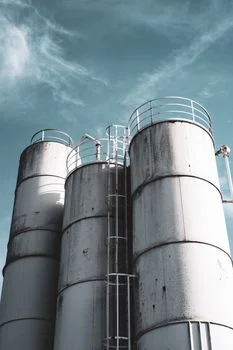
Capital expenditure (CAPEX) for a 100 m³/h wastewater treatment system in Nuevo León is primarily driven by the required effluent quality and the degree of automation. A standard DAF-based system for primary treatment typically costs between $350,000 and $500,000. For facilities aiming for zero-discharge through MBR technology, the CAPEX increases to $800,000–$1.2 million, which includes civil works, membrane modules, and sophisticated PLC-based control systems. Adding a tertiary Reverse Osmosis (RO) stage for high-purity reuse adds another $200,000 to $400,000 to the total investment.
Operating expenditure (OPEX) in Nuevo León is influenced by electricity costs, which range from $0.08 to $0.15 per kWh for industrial users. Energy consumption for MBR systems typically falls between 0.6 and 1.2 kWh/m³ of treated water. Chemical costs, including coagulants for DAF and cleaning agents for membranes, add $0.03 to $0.10 per m³. Sludge disposal is an often-overlooked OPEX driver; transporting and disposing of non-hazardous industrial sludge in certified landfills costs between $0.05 and $0.15 per m³ of treated effluent.
The Return on Investment (ROI) for these systems is increasingly favorable. With municipal water and discharge fees combined reaching $2.50/m³ in some industrial parks, a system that reuses 70% of its water can achieve a payback period of 3 to 5 years. This ROI is further accelerated by Nuevo León’s 2025 tax incentives, which allow for an accelerated depreciation of environmental assets and direct credits for water recovery. (HydropureWater field data, 2025).
| Technology | CAPEX (100 m³/h) | OPEX (per m³) | Estimated Payback |
|---|---|---|---|
| DAF (Primary) | $350K - $500K | $0.12 - $0.18 | 2.0 - 3.0 Years |
| MBR (Secondary) | $800K - $1.2M | $0.25 - $0.45 | 3.5 - 5.0 Years |
| RO (Tertiary) | $200K - $400K | $0.30 - $0.60 | 4.0 - 6.0 Years |
Zero-Risk Equipment Selection: A Checklist for Nuevo León Manufacturers
Selecting a wastewater treatment supplier in Nuevo León requires verification of SEMARNAT-approved designs and a minimum of 24 months of local performance data for similar industrial applications. To avoid the common pitfall of under-sizing, facility managers should mandate pilot testing for any effluent with BOD concentrations exceeding 3,000 mg/L or complex chemical matrices. A pilot study typically lasts 4 to 8 weeks and provides the empirical data necessary to guarantee full-scale performance.
- Verify Local Support: Ensure the supplier has a certified service team based in Monterrey or the surrounding metro area for 24-hour emergency response.
- Automation Requirements: Systems must include remote monitoring capabilities (SCADA/IoT) to allow for unmanned operation during night shifts, a standard requirement in modern industrial parks.
- Warranty Terms: Demand a minimum 2-year warranty on membranes (MBR/RO) and a 5-year structural warranty on DAF tanks and clarifiers.
- Regulatory Certification: All equipment must be accompanied by documentation proving compliance with NOM-002-SEMARNAT and SADM standards.
- Red Flags: Be cautious of suppliers who cannot provide a detailed sludge management plan or those who offer generic systems without industry-specific parameter adjustments.
Frequently Asked Questions
What are the specific COD limits for industrial discharge in Monterrey?
Under NOM-002-SEMARNAT, the federal limit is <150 mg/L for discharge into the municipal sewer. However, SADM may impose stricter local limits depending on the industrial park's infrastructure and the final destination of the water.
How long does it take to get a wastewater permit in Nuevo León?
The process typically takes 6 to 12 months. It involves an initial design review, an Environmental Impact Assessment (EIA), and a final inspection by state authorities once the system is commissioned.
Can MBR systems handle the high temperatures of automotive wastewater?
Standard MBR membranes operate best below 35°C. For automotive painting lines where effluent can reach 45°C, a cooling heat exchanger or an equalized cooling tank is required to protect the biological process and membrane integrity.
What are the fines for non-compliance with NOM-002 in 2025?
Fines have increased to up to 2% of annual gross revenue. Additionally, SEMARNAT has the authority to issue permanent closure orders for facilities that repeatedly fail to meet heavy metal or toxic pollutant limits.
Is there a tax incentive for water reuse in Mexico?
Yes, Nuevo León offers a "Zero-Discharge" incentive that provides up to a 30% tax credit on the investment cost for systems that recover and reuse more than 70% of their process water.