Electroplating wastewater treatment removes heavy metals (Cr, Ni, Cu, Zn) and cyanide so effluent meets EPA, EU, or China discharge limits. Chemical precipitation with lime or NaOH typically achieves 90-98% heavy-metal removal at controlled pH. Hybrid trains that combine DAF, RO, and MBR can support zero-discharge goals with permeate often below 50 mg/L COD and 1 mg/L TSS when pre-treatment is stable. Published industry cost ranges for treated water remain about $0.50–$3.00/m³, depending on influent strength and train complexity.
How Electroplating Wastewater Is Treated
Electroplating rinse and dump streams are treated by reducing Cr(VI), oxidizing cyanide, precipitating metals at controlled pH, then clarifying solids. Chemical precipitation typically removes 90-98% of Cr, Ni, Cu, and Zn at pH 8.5-11.0. Hybrid DAF+RO+MBR trains can reach reuse-grade water near <50 mg/L COD and <1 mg/L TSS when pretreatment is stable.
Why Electroplating Plants Miss Discharge Limits
Plating shops miss compliance most often when Cr(VI) reduction or cyanide oxidation is incomplete. A medium chrome-plating shop recently reported 2.5 mg/L Cr(VI) against a local limit of 0.1 mg/L, plus 1.5 mg/L total cyanide against a 0.5 mg/L limit. Inconsistent reductant dosing and poor pH control left incomplete reactions and contaminant breakthrough. Hazardous sludge handling consumed nearly 30% of that plant’s annual treatment budget. Membrane trains can also lose flux when floc and oil reach RO or MBR without adequate clarification.
Plants that fix dosing control, cyanide contact time, and solids removal usually recover compliance before they add membranes. The practical path is to lock chemical and physical unit operations first, then size hybrid reuse stages against measured metal and salt loads.
Chemical Treatment Methods: Specs and Process Parameters
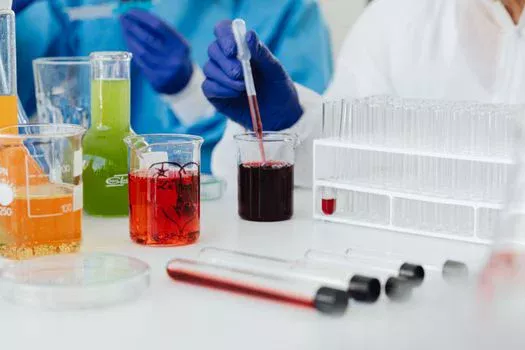
Chemical treatment methods remove dissolved metals and cyanide before solids separation. Neutralization and hydroxide precipitation adjust pH so metal hydroxides drop out of solution. Typical setpoints are pH 8.5–10.0 for chromium and copper, and pH 9.0–11.0 for nickel and zinc, using lime (Ca(OH)₂) or caustic soda (NaOH). NaOH demand is often about 1.2–1.5 kg per kg of Cr(III) precipitated, and sludge volume commonly runs 0.5–1.0% of treated flow.
Hexavalent chromium reduction to Cr(III) uses sodium bisulfite at about a 3:1 molar ratio to Cr(VI), or ferrous sulfate at about 6:1, with 15–30 minutes contact at pH 2.0–3.0. Residual Cr(VI) is checked with EPA Method 7196A. Cyanide oxidation by breakpoint chlorination doses chlorine (NaOCl or Cl₂) at 3–5 mg/L per mg CN⁻ at pH above 10.5, with 10–15 minutes contact for destruction. A PLC-controlled chemical dosing for electroplating wastewater system keeps these ratios and pH windows stable under load swings.
Chemical trains alone leave high dissolved solids and hazardous sludge. Sludge disposal often costs $150–$300 per ton. Corrosive reagent handling adds safety risk, and the clarified water rarely meets rinse-reuse or zero-discharge purity without membranes or evaporators.
| Chemical Treatment Method | Target Contaminant | Key Process Parameters | Typical Removal Efficiency | Limitations |
|---|---|---|---|---|
| Neutralization/Precipitation | Heavy Metals (Cr, Ni, Cu, Zn) | pH 8.5-11.0; Dosing: 1.2-1.5 kg NaOH/kg metal; Sludge: 0.5-1.0% of volume | 90-98% (metals) | High sludge volume, disposal costs |
| Chemical Reduction | Cr(VI) to Cr(III) | Reducing agent: NaHSO₃ (3:1 molar) or FeSO₄ (6:1 molar); pH 2.0-3.0; Reaction time: 15-30 min | >99% (Cr(VI)) | Requires subsequent precipitation, chemical handling |
| Cyanide Oxidation | Cyanide (CN⁻) | pH >10.5; Cl₂ dosing: 3-5 mg/L per mg CN⁻; Contact time: 10-15 min | >99% (CN⁻) | Chlorine residual management, potential for disinfection byproducts |
Physical Treatment Methods: Removal Efficiency and Design
Physical treatment methods polish chemically treated electroplating wastewater by separating solids, oils, and dissolved salts. Dissolved air flotation (DAF) removes TSS and FOG after precipitation, with typical TSS removal of 92–97% and FOG removal near 95% at hydraulic loadings of 4–8 m/h and microbubbles of 20–50 μm. A high-efficiency DAF system for electroplating wastewater protects downstream membranes from floc carryover.
Reverse osmosis rejects dissolved metals and salts at about 95–99% for Cr, Ni, and Cu under clean feed. Permeate flux is commonly 15–25 L/m²·h, with recovery of 70–90% when pretreatment is adequate. Activated carbon can polish residual cyanide at roughly 0.1–0.3 g CN⁻ per gram carbon, and metals at about 0.2–0.5 g metal per gram carbon, with regeneration often every 50–100 cycles. Evaporation of high-TDS concentrates recovers water for zero-liquid-discharge paths but uses about 50–100 kWh/m³ of evaporated water and needs scale control.
| Physical Treatment Method | Target Contaminant | Key Process Parameters | Typical Removal Efficiency | System Design Considerations |
|---|---|---|---|---|
| Dissolved Air Flotation (DAF) | TSS, FOG, Heavy Metal Flocks | Hydraulic loading: 4-8 m/h; Microbubble size: 20-50 μm | TSS: 92-97%; FOG: 95% | Effective pre-treatment for membranes, sludge skimming |
| Reverse Osmosis (RO) | Dissolved Heavy Metals, Salts | Permeate flux: 15-25 L/m²·h; Recovery: 70-90% | Heavy Metals: 95-99% | Requires robust pre-treatment to prevent fouling, concentrate disposal |
| Activated Carbon Adsorption | Trace Cyanide, Organic Pollutants, Heavy Metals | Capacity: 0.1-0.3 g CN⁻/g carbon; Regeneration: Every 50-100 cycles | CN⁻: 80-95%; Organics: 70-90% | Periodic regeneration or replacement, pressure drop management |
| Evaporation Concentration | High-TDS Wastewater, Concentrates | Energy consumption: 50-100 kWh/m³ | Water recovery: >95%; ZLD potential | High energy cost, scaling prevention, concentrate handling |
Hybrid Systems for Zero-Discharge: DAF + RO + MBR
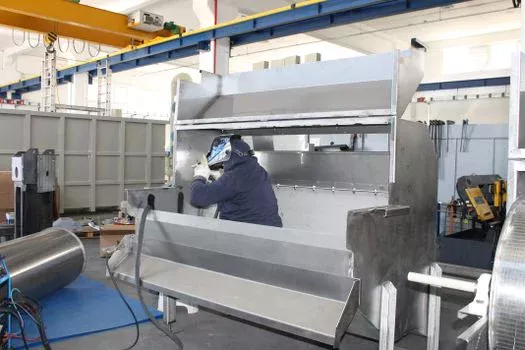
Hybrid DAF + RO + MBR trains are built for plating shops that need zero liquid discharge or high-purity rinse reuse. DAF first removes TSS, FOG, and precipitated metal flocs. RO then rejects dissolved metals and salts. An MBR modules for zero-discharge plating reuse can polish organics and solids toward roughly <1 mg/L TSS and <50 mg/L COD when the upstream chemistry is stable, supporting reuse in rinses or makeup.
Compliance targets still reference China GB 21900-2008, US EPA 40 CFR Part 413, and the EU Industrial Emissions Directive (2010/75/EU). Earlier article shorthand cited EPA Part 413 as <1.0 mg/L CN⁻. According to 40 CFR 413.14 for common-metals plants at or above 38,000 L/d, total cyanide PSES are 1.9 mg/L daily maximum and 1.0 mg/L as a four-day average (eCFR, current). China GB 21900-2008 remains the national electroplating pollutant discharge standard issued by MEE (2008). A reported 200 m³/h Shenzhen plating project using DAF + RO + MBR achieved about 99.8% heavy-metal removal and 95% water recovery, with CapEx near $1.8 million and OPEX about $0.85/m³. Fouling control typically uses chemical cleans every 3–6 months, cross-flow near 1.5–2.0 m/s, and antiscalant at 2–5 mg/L.
| Hybrid System Component | Primary Function | Key Performance Indicator | Typical Effluent Quality | Compliance Standards Achieved |
|---|---|---|---|---|
| DAF (Pre-treatment) | TSS, FOG, Heavy Metal Flocks removal | TSS removal: 92-97% | TSS < 50 mg/L | Prepares for downstream membrane processes |
| RO (Primary Treatment) | Dissolved Heavy Metals, Salts removal | Metal rejection: 95-99% | TDS < 200 mg/L; Metals < 0.1 mg/L | EPA 40 CFR Part 413, EU IED (Metals) |
| MBR (Polishing/Reuse) | Organic matter, suspended solids removal | TSS < 1 mg/L; COD < 50 mg/L | TSS < 1 mg/L; COD < 50 mg/L | China GB 21900-2008 (general discharge & reuse) |
| Overall Hybrid System | Zero-Discharge, High Water Recovery | Water Recovery: 90-95% | Meets potable or process water standards | Zero-Liquid Discharge (ZLD) pathway, high-purity water reuse |
What Limits Semiconductor ZLD Reclaim Recovery?
Semiconductor campus plating and wet-etch streams hit reclaim recovery limits when silica, fluoride, and metal-salt concentrates drive RO scaling and evaporator fouling. Recovery above about 90–95% usually needs staged concentration, antiscalant control, and a brine destination. Plating rinse reclaim follows the same constraint: metals and TDS set the ceiling before membranes or crystallizers become uneconomic.
What Challenges Scale Semiconductor ZLD Systems?
Semiconductor ZLD scale-up fails when rinse variability, photoresist organics, and high-TDS concentrates overwhelm a train sized on average loads. Cross-contamination between cyanide, Cr(VI), and acid-alkaline drains multiplies chemical demand and sludge. Pilot data on peak metal spikes, not only daily averages, should set tank, DAF, and RO sizing before campus expansion.
Cost Breakdown: CapEx, OPEX, and ROI
Capital cost for chemical-only electroplating wastewater systems on medium shops typically falls between $150,000 and $300,000 for tanks, pumps, and dosing. Hybrid DAF + RO + MBR packages more often land at $500,000–$1.2 million in published 2025 industry benchmarks, reflecting membranes, automation, and civil works.
OPEX splits across chemicals ($0.10–$0.50/m³ for chemical-only; often $0.05–$0.20/m³ on hybrids), energy ($0.05–$0.30/m³), labor ($0.10–$0.20/m³), and sludge disposal ($0.05–$0.15/m³ chemical-only; often $0.02–$0.08/m³ hybrid). Chemical-only payback is often 1–2 years when driven by avoided fines. Hybrid reuse systems commonly show 3–5 year payback when recycled water displaces $0.50–$1.50/m³ of makeup. Annual membrane replacement can run $10,000–$50,000; DAF solids handling $5,000–$15,000; dosing sensors and calibration $2,000–$5,000.Next, fix the discharge or reuse target—municipal sewer limits, national rules (EPA, EU, China GB), or true zero discharge. Compare chemical, physical, and hybrid options on removal, footprint, CapEx, and OPEX using the tables above. Pilot the top two or three options with jar tests and small DAF trials on real rinse mixes. Score vendor bids with weighted criteria such as compliance 40%, cost 30%, footprint 20%, and energy 10%.
Selection checklist for plant engineers:
- Segregate cyanide, Cr(VI), and acid-alkaline drains before mixing.
- Confirm local metal and cyanide limits, not only national averages.
- Size sludge handling and hazardous-waste contracts early.
- Require RO/MBR fouling guarantees tied to feed turbidity and SDI.
- Model water reuse credit in $/m³ against makeup and sewer fees.
- Demand 30–90 day pilot data on peak, not average, metal loads.
How Do CETP Discharge Standards Affect Compliance?
CETP discharge standards in India set the sewer acceptance limits plating shops must meet before common effluent treatment plants will take the flow. Plants that miss CETP metal or cyanide gates face rejection, trucking costs, or forced on-site upgrades. Treat to the CETP contract first; only then decide whether RO reuse or ZLD is justified by water price and brine disposal options.
Who this is for: plating job shops, captive finish lines, and EPC teams sizing chemical or hybrid trains. Who should look elsewhere: sites with no metals or cyanide, or municipal-only organics plants. Next step: send flow, metal speciation, and discharge limits with a Request a free quote so equipment sizing matches your rinse schedule.
Frequently Asked Questions
What heavy metals dominate electroplating wastewater?
Hexavalent chromium, nickel, copper, and zinc dominate most plating rinse and dump streams. Chromium often appears as both Cr(III) and Cr(VI), so Cr(VI) must be reduced before hydroxide precipitation. Untreated metals drive both permit violations and hazardous sludge classification. Design sampling should separate bath dumps from continuous rinses.
How does zero-discharge compliance help a plating plant?
Zero-discharge compliance cuts sewer fees and reduces fine exposure when local limits tighten. Hybrid trains can reclaim up to about 95% of process water when recovery targets match concentrate handling capacity. Freshwater purchase and discharge risk both fall when rinse reclaim is stable. CapEx is higher, so payback depends on local water and sludge prices.
What does DAF do in a plating wastewater train?
DAF clarifies precipitated metal flocs, oils, and suspended solids before membranes. Typical TSS removal of 92–97% at 4–8 m/h loading lowers RO and MBR fouling risk. Without DAF or equivalent solids capture, permeate flux drops and cleaning frequency rises. It is a pretreatment unit, not a dissolved-metal remover by itself.
Can treated electroplating wastewater return to rinses?
Yes, when RO and polishing stages meet rinse conductivity and metal specs for the process. DAF + RO + MBR trains are commonly used to produce high-purity rinse water and cut makeup demand. Bath makeup still needs tighter ionic control than most reclaim loops provide. Always verify against process chemistry, not only discharge limits.
What EPA cyanide limit applies to larger plating shops?
For common-metals electroplaters discharging 38,000 L/d or more to a POTW, 40 CFR 413.14 sets total cyanide at 1.9 mg/L maximum for any one day and 1.0 mg/L as a four-day average. Smaller shops below that flow have different cyanide amenable limits. Always confirm whether Part 413 or Part 433 Metal Finishing applies to the facility.