The industrial wastewater treatment Paris cost picture is set by permit limits, flow, and the process train, not by one citywide tariff. Planning numbers in this guide hold direct-discharge COD below 125 mg/L and TSS below 35 mg/L for a 100 m³/day factory.
Industrial Wastewater Treatment Paris Cost in 2026
For a 100 m³/day Paris factory, dissolved air flotation equipment costs €50,000–€150,000 to buy and €0.45–€0.94 per m³ to run. A membrane bioreactor at the same flow costs €300,000–€700,000 to buy and €0.54–€1.02 per m³ to run. Energy in those bands is priced at €0.18/kWh, and civil works add 20-40% to capital cost.
Equipment-only capital cost, before civil works, still spans €50,000 to €300,000 for DAF, €200,000 to €1,000,000 for MBR, and €20,000 to €100,000 for an automatic dosing skid. Those wider bands are the 2025 market set for industrial-scale systems, not the 100 m³/day column alone. Most plants we size near Paris sit at the lower end when flow is about 100 m³/day and the waste is not a solvent dump.
Power is the line that moves first. This guide uses €0.18/kWh for Île-de-France industrial supply, against an earlier EU comparison of €0.12/kWh. Energy on the treated cubic metre therefore still lands near €0.10–€0.20/m³ when specific consumption stays in the bands below.
Chemical spend tracks the influent, not the logo on the pump. Expect €0.05–€0.30/m³ across a mixed Paris factory, with food plants toward the top when coagulant and polymer doses climb. MBR membrane replacement in this guide is €15–€30/m² per year. Skilled technician time in Paris is €50–€80/hour, which is why a PLC skid beats a manual day tank once the plant runs more than one shift.
A worked example in this guide is a Paris food plant that cut discharge fees by €120,000 a year after a DAF install. Payback was 2.5 years against DAF capital cost of €300,000. ADEME grants, as stated here for water-reuse systems, can cover up to 30% of CAPEX. Read that 30% as a program ceiling on a reuse file, not as a discount already approved.
Use the industrial wastewater treatment Paris cost bands in Table 3 before you lock a vendor, and re-price energy if the contract is not near €0.18/kWh. The same capital-versus-operating split is set out in the Wastewater Treatment Plant Cost in Fortaleza 2026: CAPEX, OPEX & Tech-, which uses another city and another tariff.
| Cost Category | DAF System (100 m³/day) | MBR System (100 m³/day) | Chemical Dosing Skid (Automated) |
|---|---|---|---|
| CAPEX Range | €50,000–€150,000 | €300,000–€700,000 | €30,000–€70,000 |
| OPEX per m³ (Estimated) | |||
| Energy Cost (€0.18/kWh) | €0.05–€0.09 | €0.14–€0.22 | €0.01–€0.02 |
| Chemicals | €0.10–€0.25 | €0.05–€0.15 | €0.15–€0.40 |
| Sludge Disposal | €0.20–€0.40 | €0.10–€0.25 | €0.05–€0.15 |
| Maintenance (Labor & Parts) | €0.10–€0.20 | €0.25–€0.40 (incl. membrane) | €0.05–€0.10 |
| Total OPEX/m³ | €0.45–€0.94 | €0.54–€1.02 | €0.26–€0.67 |
| ROI Example (Food Plant) | Annual Savings from reduced discharge fees: €120,000/year (DAF, CAPEX €300,000) → Payback: 2.5 years | ||
Table 3 prices a 100 m³/day case. The wider equipment ranges above cover other industrial sizes, so do not paste the €300,000 top of the all-size DAF band into a 100 m³/day cell that stops at €150,000. The payback cell uses its own DAF CAPEX of €300,000 and a €120,000/year fee cut. Check the flow before you mix that cell with the 100 m³/day column.
Paris Industrial Wastewater Discharge Limits 2025
Paris industrial wastewater discharge limits for 2025 in this guide set direct-discharge COD below 125 mg/L, TSS below 35 mg/L, and pH between 6.5 and 9.0. The Seine-Normandie Water Agency is the basin authority named for direct discharges to surface water. French Environmental Code R.211-12 is the citation this guide uses for the pH window of 6.5–9.0.
Sensitive zones, especially near drinking-water intakes, tighten the same planning table. COD drops below 90 mg/L, TSS below 20 mg/L, and pH to 6.5–8.5. FOG moves from below 10 mg/L on a general direct discharge to below 5 mg/L in the sensitive column. Most plants we size for a first permit in this basin design to the sensitive column until the agency letter says otherwise.
Directive 2020/2184, the Drinking Water Directive, is cited here because source protection is what pushes those tighter numbers. Urban collection and secondary treatment sit under a different instrument. Earlier guidance in this article used a secondary-treatment trigger above 2,000 population equivalent (PE) under Directive 91/271/EEC. According to the European Commission, Directive (EU) 2024/3019 entered into force on 1 January 2025 and requires collection and treatment in all urban areas of more than 1,000 inhabitants.
Member States keep reporting under Directive 91/271/EEC until 2028. Directive 98/15/EC still clarifies urban-plant discharges into sensitive areas that eutrophy. A factory pretreatment skid is not that urban plant. Fines in this guide reach €150,000, and the authority can order temporary or permanent production halts, under Article L216-6 of the 2024 French Environmental Code. Repeat or serious harm can bring criminal charges under the same article.
According to the European Commission, IED 2.0 (Directive 2010/75/EU, amended by Directive 2024/1785) has applied since 4 August 2024. It is the main EU instrument for water emissions from large sites, and about 37,000 industrial installations fall under it, with inspections at least every 1 to 3 years. For the worst infringements the penalty floor is at least 3% of the legal person's annual EU turnover, and the authority can suspend the installation. Permits must also set binding quantitative resource-efficiency requirements for water and energy where that fits the activity.
| Parameter | General Paris Discharge Limit (Direct) | Sensitive Zone Limit (Example) | Typical Untreated Industrial Range (Food Processing) |
|---|---|---|---|
| COD | <125 mg/L | <90 mg/L | 3,000–8,000 mg/L |
| TSS | <35 mg/L | <20 mg/L | 500–1,500 mg/L |
| pH | 6.5–9.0 | 6.5–8.5 | 3.0–11.0 |
| FOG | <10 mg/L | <5 mg/L | 100–1,000 mg/L |
| Heavy Metals (e.g., Lead) | <0.1 mg/L | <0.05 mg/L | 0.1–5 mg/L |
Île-de-France Industrial Effluent COD Compliance
Île-de-France industrial effluent COD compliance, in this guide, means taking 3,000–8,000 mg/L food-plant influent down to under 125 mg/L for a general direct discharge, or under 90 mg/L in a sensitive zone. Food plants also carry FOG from 100–1,000 mg/L and TSS from 500–1,500 mg/L, so grease pretreatment is not optional. Untreated pH on that duty can swing from 3.0–11.0.
A 40-60% COD cut, which is the DAF band in Table 2, does not land a 3,000–8,000 mg/L influent below 125 mg/L. Biology has to follow. MBR at 95%+ COD, or conventional activated sludge at 80-90% COD/TSS, is the second step on most food sites we size. Most food plants we size in Île-de-France miss COD on the first sample round because a single grab misses the Friday wash-down.
Sector rules narrow the same table. Food plants face tight FOG limits and need specialized pretreatment because the organic load is high. Chemical plants must handle lead, chromium, nickel, and sulfates, which means dosing and precipitation, not biology alone. Semiconductor fabrication plants in the greater Paris region see fluorides, ammonia, and other inorganic contaminants that need advanced separation.
According to the European Commission, the revised urban directive also requires more nutrient removal, quaternary treatment for micropollutants paid through extended producer responsibility, and energy-neutral treatment plants by 2045. Those duties fall on urban wastewater plants. They do not automatically land on a factory skid. If the factory discharges to a city sewer rather than the river, ask the sewer utility for its acceptance limit before you copy Table 1.
DAF System for Food Processing Wastewater France
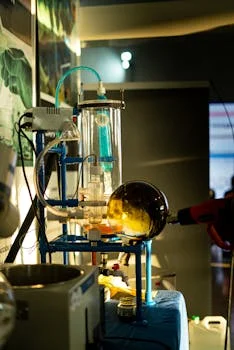
A DAF system for food processing wastewater in France, on the duty in this guide, removes 90–98% of FOG and 70–90% of TSS at 0.3–0.5 kWh/m³. Fine air bubbles attach to suspended particles, the solids float, and a skimmer takes them off. Slaughterhouses, dairy plants, and bakeries are the usual Paris-region duties, and the unit is primary treatment, not the final permit step.
Plants with a heavy FOG load specify a DAF system for Paris food processing plants ahead of biology. Energy at 0.3–0.5 kWh/m³ is the low end of Table 2, which is why DAF stays first when the bill is driven by solids and grease rather than dissolved COD. Table 2 also lists only 40-60% COD removal on that same DAF, so do not quote the FOG percentage as a COD certainty.
Most dairy plants we size need the polymer dose tuned on a Friday fat peak, or the 90–98% FOG figure falls off within a week. Sludge disposal then becomes the operating line people forget, at €0.20–€0.40 per m³ in the 100 m³/day DAF column. Chemical addition is part of the duty, not an extra.
MBR System Cost Paris Semiconductor Fab
MBR system cost for a Paris semiconductor fab, at 100 m³/day in Table 3, is €300,000–€700,000 in capital cost and €0.54–€1.02 per m³ to operate. The wider all-size MBR band in this guide is €200,000 to €1,000,000 before civil works. The Table 3 energy line of €0.14–€0.22 per m³ is the 0.8–1.2 kWh/m³ band priced at €0.18/kWh.
An MBR combines biological treatment with membrane filtration (<1 μm) and reaches over 95% COD removal, with Table 2 stating 95%+ COD and 99%+ TSS. Effluent at that quality can go to direct discharge or on to reuse after the extra approval step. Fluoride and ammonia are the contaminants that push a fab toward this train, and membrane aeration plus filtration are why power sits at 0.8–1.2 kWh/m³ rather than the DAF band.
Space-saving MBR systems for Paris semiconductor fabs cut footprint by up to 60% versus conventional activated sludge. Use that cut when the building offers 20–30% less yard than a typical EU site. Fouling and membrane replacement at €15–€30/m² per year are the two costs that erase the footprint win if nobody owns the clean-in-place cycle.
Where even the MBR tank will not fit, read how skid-mounted systems work for Paris’s space-constrained factories before you pour a new pit. Most semiconductor lines we size still pick MBR over activated sludge when fluoride and ammonia must fall in one step and the yard is already full.
Chemical Dosing System for Heavy Metal Removal
A chemical dosing system for heavy metal removal, on the Paris chemical-plant duty in this guide, is what drops lead, chromium, nickel, and sulfates into a precipitate the clarifier can catch. The same skid trims pH and boosts coagulation and flocculation ahead of DAF or a settler. Table 2 rates that duty at 90%+ on heavy metals, with pump and control power at 0.05–0.1 kWh/m³.
A PLC-controlled chemical dosing system for Paris chemical plants holds pH inside 6.5–9.0 when the raw waste swings from 3.0–11.0. All-size skid prices in this guide run from €20,000 to €100,000, while the automated 100 m³/day column in Table 3 is €30,000–€70,000. Operating cost on that column totals €0.26–€0.67 per m³, and chemicals alone are €0.15–€0.40 per m³.
Where the metal is hexavalent chromium, read Paris chemical plants’ chromium compliance strategies before you lock the reductant. This guide's ceiling is total chromium below 0.5 mg/L, lead below 0.1 mg/L on a general direct discharge, and lead below 0.05 mg/L in a sensitive zone. Raw metal on the food-processing comparison column can already sit at 0.1–5 mg/L, so precipitation is in the train from day one.
A Paris chemical plant in this guide cut COD from 5,000 mg/L to 80 mg/L with DAF followed by chemical dosing, on HydropureWater's DAF hardware. Most metal plants we size still miss the first month if the pH loop and the metal dose are not interlocked, because a correct mass at the wrong pH leaves the metal dissolved. Sludge from that precipitation is a disposal line, not a free by-product.
Conventional activated sludge still removes 80-90% of COD and TSS at 0.6–1.0 kWh/m³. Its footprint is the large one. On a Paris lot that is already 20–30% tighter than a typical EU yard, that footprint is usually why a new build picks MBR, or DAF plus a compact biological step, instead of a classic aeration basin.
| Technology | Primary Application in Paris | Key Advantages | Key Disadvantages | Typical Removal Rates (COD/TSS) | Energy Consumption (kWh/m³) | Footprint (Relative) |
|---|---|---|---|---|---|---|
| Dissolved Air Flotation (DAF) | Food Processing (FOG, TSS) | High FOG/TSS removal, robust, lower CAPEX | Requires chemical addition, sludge disposal | 70-90% TSS, 40-60% COD | 0.3–0.5 | Medium |
| Membrane Bioreactor (MBR) | Semiconductor Fabs, Space-Constrained Sites | High effluent quality, small footprint, robust against shock loads | Higher CAPEX/OPEX, membrane fouling | 95%+ COD, 99%+ TSS | 0.8–1.2 | Small (60% less than CAS) |
| Chemical Dosing Systems | Chemical Plants (Heavy Metals, pH) | Precise pH control, heavy metal precipitation, enhanced coagulation | Chemical costs, sludge generation, operator intervention | Varies (e.g., 90%+ heavy metals) | 0.05–0.1 (for pumps/controls) | Small (skid-mounted) |
| Conventional Activated Sludge (CAS) | General Biological Treatment | Proven technology, good biological removal | Large footprint, lower effluent quality than MBR | 80-90% COD/TSS | 0.6–1.0 | Large |
How to Select Wastewater Treatment Equipment for Paris Factories
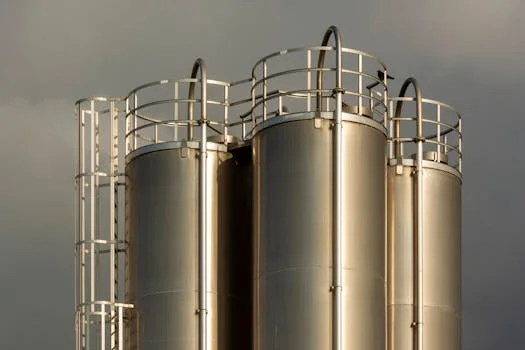
Selecting wastewater treatment equipment for a Paris factory starts with a composite sample, not with a catalogue. Step 1 is a lab profile for COD, TSS, pH, FOG, heavy metals, and flow, often run by an accredited Paris lab such as Eurofins. Step 2 matches the contaminant to the train: high FOG and TSS point to DAF, while a space-tight fab that needs very low residuals points to MBR. Buyers still name that sequence the industrial waste treatment process in france, from the composite sample through pretreatment, polishing, and the permitted discharge.
Step 3 checks the yard. Paris factories in this guide operate with 20–30% less available space than their EU counterparts, and an MBR can save up to 60% of the footprint of conventional activated sludge. Step 4 prices automation. PLC control can cut labor cost by up to 40% where technician time is €50–€80/hour. Most plants we size skip the labor line and then wonder why the skid payback slipped.
Step 5 is total cost of ownership over a 10-year period, with CAPEX, OPEX, and the cost of a missed permit, including fines up to €150,000. Step 6 is a pilot. A 3–6 month trial is the right length when the influent changes by shift, which is common on Paris food and chemical sites. Do not scale a one-day jar test to a full train.
A buyer who needs the same capital and operating split for another country can open the industrial waste treatment plant breakdown, then return to the Paris euro bands in Table 3. Do not copy a Brazilian tariff into a Seine-basin power price.
Where the duty is domestic sewage from a factory campus, or a small mixed stream in a buried tank, price the Underground Package Sewage Treatment Plant (WSZ Series) against an open pit. It is not the first choice for a high-fluoride fab waste or for a food influent at 3,000–8,000 mg/L COD. Use it when the load is sewage-strength and the yard has no room for an open basin.
- Take a 24-hour composite for COD, TSS, pH, FOG, metals, and flow, not a single grab.
- State river discharge versus sewer acceptance before you lock 125 mg/L or 90 mg/L.
- Use the 60% footprint cut only if MBR is actually on the shortlist.
- Price power from €0.18/kWh in this guide, and check it against the Eurostat EU average of €0.1837/kWh.
- Add 20-40% for civil works before you compare vendor skid prices.
- Run a 3–6 month pilot when the influent swings across shifts.
Who This Paris Cost Guide Is For
Plant engineers, EPC estimators, and procurement managers use these Paris cost bands to price DAF, MBR, or dosing equipment against a direct-discharge permit. The bands assume euro equipment, €0.18/kWh power, and the Table 1 limits. Most inquiries we see from Île-de-France fail the first pass because the stated flow is a pump nameplate, not a measured composite.
A town utility sizing an urban plant for more than 1,000 inhabitants should follow Directive (EU) 2024/3019, not these factory skid prices. A project whose only question is a full plant cost in another country should use the linked breakdown for that country. Forcing the Paris euro bands onto a different tariff will not survive a bid review. For a Gulf-side example, the Ajman Industrial Effluent Guide: 2026 Specs and Compliance applies the same permit-first structure to Emirati effluent rules.
Send flow, a composite COD, TSS, FOG, metals, pH, and the permit limits with the request for a Paris equipment quotation. The useful reply is a sized train at your €/kWh, not a second copy of Table 3.
Frequently Asked Questions
Paris factory buyers usually ask the five questions below before they sign a purchase order. Most plants we size get the metal limit wrong on the first pass by using the general column when the outfall is in a sensitive zone.
What are the heavy metal discharge limits in Paris?
The guide sets lead below 0.1 mg/L on a general direct discharge and below 0.05 mg/L in a sensitive zone, with total chromium below 0.5 mg/L. The Seine-Normandie Water Agency is the basin body named for those ceilings, and a sensitive receiving water can be tighter than the general column. Chemical plants that carry lead, chromium, nickel, or sulfates need precipitation before biology, or the metal passes a DAF that was built for grease.
Can a Paris factory reuse treated wastewater?
Yes, a Paris factory can reuse treated wastewater after tertiary treatment and written DRIEE Île-de-France approval. The authority named in this guide is the Direction Régionale et Interdépartementale de l'Environnement, de l'Aménagement et des Transports (DRIEE) Île-de-France. Accepted uses are cooling tower make-up, industrial cleaning, and non-potable irrigation. Reverse osmosis or advanced oxidation is the tertiary step this guide names, and a discharge permit alone does not authorize product-contact reuse.
How much does it cost to treat 1 m³ of industrial wastewater in Paris?
Primary treatment with DAF costs €1.50–€4.00/m³ in this guide, and advanced MBR treatment costs €3.00–€7.00/m³. The guide states that those figures include energy, chemicals, and sludge disposal. Table 3 still shows a lower line-item sum, €0.45–€0.94/m³ for DAF and €0.54–€1.02/m³ for MBR at €0.18/kWh, so ask the bidder which basis the quote uses. Keep both ranges in the comparison until the quote states its boundary.
What penalties apply if a Paris discharge breaks its permit?
Fines in this guide reach €150,000, and the authority can halt production, with criminal exposure under Article L216-6 of the French Environmental Code for repeat or serious harm. According to the European Commission, IED 2.0 has also applied since 4 August 2024 and sets a floor of at least 3% of annual EU turnover for the worst infringements. The Commission also states that the authority can suspend a non-compliant installation.
Are there local suppliers for wastewater equipment in Paris?
Yes, Paris has local suppliers, including Europelec near the city and Veolia, plus HydropureWater for EU-partnered systems with local support. Choice of supplier does not change the permit numbers in Table 1 or the 100 m³/day cost bands in Table 3. Ask bidders to price DAF, MBR, and dosing on the same flow, the same COD, and the same €0.18/kWh power price. A quote that omits sludge disposal or membrane replacement is not comparable to the operating lines above.
Further Reading
Explore these in-depth articles on related wastewater treatment topics: