Acid-Alkaline Wastewater Treatment System: 2025 Engineering Specs, Hybrid Designs & Zero-Discharge Compliance
An acid-alkaline wastewater treatment system neutralizes industrial effluents to a pH range of 6.5–8.5 using automated chemical dosing, typically employing sodium hydroxide (NaOH) for acidic streams and sulfuric acid (H₂SO₄) for alkaline streams. Modern industrial systems integrate equalization tanks with retention times of 15–60 minutes, inline pH sensors featuring ±0.1 accuracy, and PLC-controlled dosing pumps to ensure strict compliance with EPA 40 CFR 403 (pH 5–9) or EU Directive 91/271/EEC (pH 6–9). Hybrid designs, which combine neutralization with dissolved air flotation (DAF) or membrane bioreactors (MBR), are increasingly utilized for zero-discharge applications, capable of reducing chemical consumption by up to 30% compared to traditional standalone systems.
Why Acid-Alkaline Wastewater Treatment Fails: A Compliance Nightmare Case Study
Industrial pH compliance is frequently compromised by the dynamic nature of manufacturing effluents, where rapid fluctuations in acidity or alkalinity overwhelm under-engineered systems. A notable example occurred at a metal finishing plant in Jiangsu, China, which was fined ¥80,000 for discharging effluent with a pH of 3.2, violating China’s GB 8978-1996 standard (pH 6–9). The failure was traced to a combination of manual pH adjustment and inadequate equalization, which allowed a concentrated batch of pickling acid to bypass the treatment process entirely.
Common failure points in industrial settings include sensor drift, where electrodes lose calibration by more than ±0.5 pH units due to scaling or oil fouling, and inadequate retention time in neutralization reactors. When the equalization tank is undersized, the system lacks the buffering capacity to dampen "slug loads" of high-concentration waste. chemical overdosing is a chronic issue; without precise feedback loops, systems often oscillate between over-acidification and over-alkalization, leading to excessive chemical costs and high Total Dissolved Solids (TDS) in the final effluent.
Data from the EPA 2023 enforcement report indicates that 65% of industrial pH violations are attributable to operator error or manual system overrides. To mitigate these risks, modern acid-alkaline wastewater treatment systems prioritize automation and redundancy. This includes dual-redundant pH sensors with automatic cleaning cycles and fail-safe dosing pumps that default to a closed position during power or signal loss. Integrating these components ensures that even during production spikes, the effluent remains within the narrow regulatory window required for municipal discharge or environmental release.
pH Adjustment Chemistry: How Acids and Bases Neutralize Industrial Wastewater
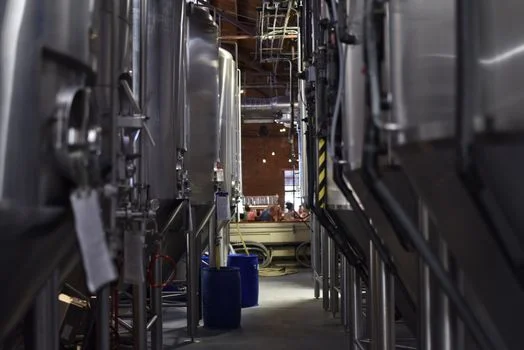
The neutralization of industrial wastewater is governed by the logarithmic pH scale, where a single unit change represents a ten-fold increase or decrease in hydrogen ion [H+] concentration. Effective system design requires a deep understanding of the reaction kinetics between the specific contaminants and the neutralizing reagents. For instance, the reaction between sodium hydroxide and hydrochloric acid (NaOH + HCl → NaCl + H₂O) is highly exothermic; in concentrated streams, this can lead to significant temperature spikes that may damage downstream membrane systems or plastic piping.
Selecting the right reagent involves a trade-off between reaction speed, sludge production, and cost. Sodium hydroxide (NaOH) is the industry standard for raising pH due to its high solubility and rapid reaction rate, making it ideal for automated PLC-controlled chemical dosing systems for precise pH adjustment. However, it is significantly more expensive than calcium hydroxide (Ca(OH)₂), or lime. While lime is cost-effective, it has lower solubility and generates substantial amounts of chemical sludge, necessitating robust solids handling equipment. Conversely, sulfuric acid (H₂SO₄) is the preferred reagent for lowering pH in alkaline streams due to its high normality, though it carries a risk of "overshooting" the target pH if dosing is not precisely modulated.
Buffering capacity also plays a critical role. Wastewater containing high concentrations of carbonates or phosphates resists pH changes, requiring higher chemical dosages than pure water to achieve the same pH shift. Engineers must calculate the "titration curve" of the specific waste stream to program the dosing logic effectively.
| Reagent | Reaction Speed | Sludge Generation | Typical Dosing Rate | Primary Application |
|---|---|---|---|---|
| Sodium Hydroxide (NaOH) | Very Fast | Very Low | 1–5% w/v | Precise pH 2 → 7 adjustment |
| Calcium Hydroxide (Lime) | Slow | High | 5–10% slurry | Bulk neutralization; metal precipitation |
| Sulfuric Acid (H₂SO₄) | Fast | Low | 0.5–2% w/v | pH 12 → 7 adjustment; alkaline waste |
| Magnesium Hydroxide | Very Slow | Low | Variable | Safe, non-corrosive pH boosting |
Core Components of an Acid-Alkaline Wastewater Treatment System
An effective acid-alkaline wastewater treatment system is composed of several high-precision engineering modules designed to work in concert. The process begins in the equalization tank, which serves as a hydraulic buffer. Per industry patents (CN200967783Y), these tanks should maintain a retention time of 15–60 minutes and utilize mixing energy of 0.1–0.3 kW/m³ to ensure a homogeneous influent concentration before it reaches the dosing station.
The heart of the system is the neutralization reactor, typically a baffled tank designed to prevent short-circuiting. Within this reactor, high-accuracy inline pH sensors (±0.1 accuracy) provide real-time data to the PLC. These sensors must be equipped with 4–20 mA outputs for seamless integration into a PLC-controlled chemical dosing system for precise pH adjustment. To prevent sensor drift caused by the "poisoning" of the reference electrode, modern systems often employ differential pH sensors or automatic air-blast cleaning systems.
Chemical storage and delivery are equally critical. Reagents like NaOH and H₂SO₄ are stored in high-density polyethylene (HDPE) or cross-linked polyethylene (XLPE) tanks equipped with secondary containment bunds. Dosing is performed by peristaltic or diaphragm pumps with flow rates ranging from 0.1 to 10 L/h, depending on the plant's total flow. Safety protocols include emergency shutdown valves that trigger if the effluent pH drops below 4 or rises above 10, preventing untreated discharge during a system failure (per ALMAWATECH benchmarks).
| Component | Engineering Specification | Material of Construction | Function |
|---|---|---|---|
| Equalization Tank | 15–60 min retention; 0.2 kW/m³ mixing | FRP or Coated Steel | Hydraulic & concentration buffering |
| Neutralization Reactor | 5–10 min retention; Baffled design | Polypropylene / 316L SS | Active chemical reaction zone |
| pH Dosing Pumps | 0.1–10 L/h; Digital control | PVDF / PTFE | Precision reagent delivery |
| Inline Sensors | ±0.1 pH accuracy; ATC enabled | Glass / Epoxy body | Real-time feedback loop |
Hybrid System Designs: Combining Neutralization with Downstream Treatment for Zero-Discharge
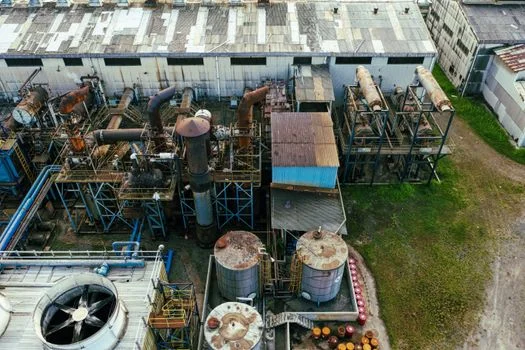
Standalone neutralization is often insufficient for modern environmental standards, especially when heavy metals, oils, or high COD (Chemical Oxygen Demand) are present. Hybrid system designs integrate pH adjustment with advanced separation technologies to achieve zero-liquid discharge (ZLD) or high-quality water reuse. For instance, combining neutralization with a DAF system for TSS and heavy metal removal post-neutralization is the standard for metalworking and electroplating industries. By adjusting the pH to the point of minimum solubility for specific metals (e.g., pH 8.5–9.2 for copper and nickel), the DAF can remove 90–95% of Total Suspended Solids (TSS) and precipitated metal hydroxides.
For industries with high organic loads, such as food processing or pharmaceuticals, an MBR system for zero-discharge compliance in pharmaceutical and food processing is employed after the neutralization stage. The MBR process uses microfiltration or ultrafiltration membranes to replace conventional secondary clarifiers, resulting in an effluent with COD <50 mg/L and a footprint 60% smaller than traditional biological systems. This setup is particularly effective because the MBR membranes are protected from pH-induced damage by the upstream neutralization reactor.
For true zero-discharge applications, the final stage often involves a RO system for TDS reduction and water reuse. This produces a permeate with TDS <50 mg/L, which can be recycled back into the manufacturing process, reducing freshwater intake by 75–90%. Hybrid systems are not only more compliant but also more efficient, often reducing total chemical consumption by 20–30% through optimized dosing and the recovery of process chemicals (HydropureWater field data, 2025).
| Hybrid Configuration | Target Pollutants | Efficiency Metric | Compliance Target |
|---|---|---|---|
| Neutralization + DAF | Heavy metals, FOG, TSS | 95% Metal removal | Pre-treatment for sewer |
| Neutralization + MBR | Organic COD, BOD, Bacteria | COD <50 mg/L | Direct river discharge |
| Neutralization + RO | TDS, Dissolved salts | 90% Water recovery | Zero-Liquid Discharge (ZLD) |
For more detailed information on specific industrial applications, see how electroplating plants achieve zero-discharge with acid-alkaline systems or explore combining pH neutralization with solvent wastewater treatment.
Compliance Standards and Discharge Limits for Acid-Alkaline Wastewater
Navigating the global regulatory landscape requires strict adherence to regional discharge limits, which are becoming increasingly stringent. In the United States, the EPA 40 CFR 403 sets the general pretreatment standard for pH between 5.0 and 9.0 for discharge to Publicly Owned Treatment Works (POTW). However, local limits often impose stricter ranges (e.g., 6.0–8.5) and include specific caps on heavy metals like Copper (Cu < 1.3 mg/L) and Lead (Pb < 0.1 mg/L), which are highly dependent on pH for effective removal.
In the European Union, Directive 91/271/EEC mandates a pH range of 6–9 for industrial wastewater, with additional requirements for TSS (<35 mg/L) and COD (<125 mg/L). China’s GB 8978-1996 remains one of the most rigorously enforced standards, with fines for pH violations reaching up to ¥100,000 per incident. In India, the CPCB (Central Pollution Control Board) guidelines specify a pH range of 5.5–9.0 and increasingly mandate zero-liquid discharge for "Red Category" industries like textiles and chemicals.
Compliance is not just about the final discharge; it also involves monitoring and data retention. Most jurisdictions now require continuous pH logging with data stored for at least three years. Automated systems that generate digital compliance reports significantly reduce the risk during environmental audits by providing a verifiable "paper trail" of every pH adjustment made (per EPA 2023 guidelines).
| Region/Standard | pH Limit | TSS Limit | Heavy Metal Focus | Monitoring Frequency |
|---|---|---|---|---|
| EPA (USA) | 5.0 – 9.0 | Local limits | Cu, Ni, Zn, Cr | Continuous (pH) |
| EU (91/271/EEC) | 6.0 – 9.0 | <35 mg/L | Varies by industry | Daily sampling |
| China (GB 8978) | 6.0 – 9.0 | <70 mg/L | Pb, Cd, Hg (Class 1) | Continuous / Real-time |
| India (CPCB) | 5.5 – 9.0 | <100 mg/L | As, Cr, Cu | Online monitoring |
Cost Models: CAPEX, OPEX, and ROI for Acid-Alkaline Treatment Systems
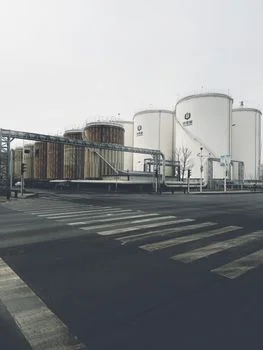
Evaluating an acid-alkaline wastewater treatment system requires a comprehensive analysis of both initial capital expenditure (CAPEX) and long-term operating expenses (OPEX). CAPEX for skid-mounted neutralization systems typically ranges from $50,000 to $500,000, while large-scale turnkey plants for high-flow manufacturing facilities can exceed $1M to $5M. The primary cost drivers are the level of automation (PLC vs. manual), the material of construction (e.g., stainless steel vs. HDPE), and the inclusion of hybrid components like MBR or RO.
OPEX is dominated by chemical consumption, which accounts for approximately 60–70% of the total operating cost. Sodium hydroxide prices fluctuate between $400 and $600 per ton, while sulfuric acid is generally more affordable at $150 to $300 per ton. Energy costs are relatively low, averaging $0.10–$0.30/m³ of treated water, primarily used for mixing and pumping. Maintenance, including sensor replacement and pump seal kits, typically adds another $0.05–$0.15/m³.
The return on investment (ROI) is driven by three main factors: chemical savings, avoided fines, and water reuse. A case study of a 100 m³/h system in Shanghai demonstrated a 2.5-year payback period. The plant achieved this by switching to a high-precision automated dosing system that reduced NaOH consumption by 25% and by recycling RO-treated permeate, which slashed freshwater procurement costs by 75%. the elimination of environmental fines (averaging ¥90,000 per year previously) significantly bolstered the project's financial viability.
| Cost Category | Estimated Range | Primary Variables |
|---|---|---|
| CAPEX (Skid-mounted) | $50,000 – $500,000 | Flow rate, Automation level |
| OPEX (Chemicals) | $0.50 – $2.00 / m³ | Influent pH, Buffering capacity |
| OPEX (Energy) | $0.10 – $0.30 / m³ | Mixing energy, Pump head |
| Maintenance | $5,000 – $15,000 / yr | Sensor life, Pump wear parts |
Frequently Asked Questions
How do I choose between Sodium Hydroxide and Lime for pH adjustment?The choice depends on your flow rate and sludge handling capabilities. Sodium hydroxide (NaOH) is ideal for systems requiring high precision and minimal sludge, making it perfect for automated chemical dosing for wastewater. Lime (Ca(OH)₂) is significantly cheaper but produces large volumes of calcium sulfate or calcium phosphate sludge, which requires a filter press for dewatering. If your plant has limited space for sludge management, NaOH is the superior choice despite the higher chemical cost.
What is the ideal retention time for a neutralization tank?For most industrial applications, a retention time of 15–60 minutes in the equalization tank is necessary to dampen concentration spikes. The active neutralization reactor should have a retention time of 5–10 minutes with high-intensity mixing to ensure the chemical reaction reaches equilibrium before the effluent passes the monitoring sensor. Shorter retention times often lead to "pH hunting," where the system over-corrects and fails to maintain a steady output.
Can an acid-alkaline system handle heavy metals?While a standard neutralization system can precipitate heavy metals by raising the pH, it cannot effectively remove the resulting solids. To achieve compliance for metals like Copper, Zinc, or Chrome, you must use a hybrid design. Integrating a DAF system for TSS and heavy metal removal post-neutralization is the most common solution, as it uses micro-bubbles to float the precipitated metal hydroxides to the surface for mechanical removal.
How often do pH sensors need to be calibrated?In industrial wastewater environments, pH sensors should be checked weekly and calibrated monthly. However, if the wastewater contains high levels of oils, fats, or scaling minerals (like calcium carbonate), sensors may require daily cleaning. Using a system with automatic air-blast or chemical cleaning cycles can extend calibration intervals and ensure the ±0.1 accuracy required for regulatory compliance.
What are the benefits of a hybrid MBR-neutralization system?A hybrid MBR system for zero-discharge compliance in pharmaceutical and food processing provides superior effluent quality compared to standalone neutralization. While neutralization only adjusts the pH, the MBR removes organic matter (COD/BOD) and bacteria. This allows the treated water to meet strict direct-discharge standards or serve as high-quality feed for an RO system, enabling a zero-liquid discharge (ZLD) strategy.