Why Luanda’s Wastewater Treatment Failures Cost Factories Millions: A Refinery’s $250K Lesson
A Luanda refinery was recently fined $250,000 for consistently exceeding Chemical Oxygen Demand (COD) discharge limits, highlighting the severe financial and operational risks of inadequate wastewater treatment in Angola. This specific facility struggled with influent COD levels often spiking above 1,500 mg/L, significantly surpassing Angola Decree 7/09’s limit of 250 mg/L. Beyond the substantial fine, non-compliance led to production halts that cost the refinery an estimated $10,000 per hour in lost output, underscoring the critical need for robust and compliant sewage treatment equipment in Luanda’s industrial sector. Industrial facilities in Luanda face unique environmental challenges that exacerbate wastewater treatment complexities. Laterite soils, prevalent across Angola, contribute significantly to high suspended solids (TSS) in both stormwater runoff and process water, with influent TSS concentrations often exceeding 500 mg/L. These high solids loads can rapidly overwhelm legacy wastewater treatment systems not designed for such conditions, leading to poor effluent quality and compliance failures. Luanda’s water sources exhibit variable water hardness, typically ranging from moderately hard (100 mg/L CaCO₃) to very hard (300 mg/L CaCO₃) depending on the season and source, which can lead to scaling in pipes and equipment, reducing efficiency and lifespan if not properly addressed with tailored pretreatment. Navigating the Luanda Municipal Water Authority’s discharge permit process adds another layer of complexity. The application timeline typically ranges from 6 to 12 months, requiring detailed engineering plans, influent and effluent characterization data, and operational protocols. Common reasons for permit rejection include insufficient data on influent variability, inadequate contingency plans for system upsets, and proposed treatment schemes that do not explicitly address local challenges like laterite soil mitigation or variable water hardness. Securing and maintaining these permits is non-negotiable for industrial operations in Luanda.Angola Decree 7/09 and Luanda’s Discharge Permits: What Your Equipment Must Achieve
Angola Decree 7/09 establishes stringent effluent limits that industrial wastewater treatment equipment in Luanda must consistently meet to avoid significant penalties. For general industrial discharge, key parameters include Chemical Oxygen Demand (COD) below 250 mg/L, Total Suspended Solids (TSS) below 60 mg/L, and a pH range of 6–9. Specific industries face additional, tighter restrictions; for instance, refineries must achieve oil/grease levels below 10 mg/L, while municipal wastewater typically targets Biological Oxygen Demand (BOD) below 30 mg/L.| Parameter | Angola Decree 7/09 Limit | Typical Influent (Industrial) | Impact of Non-Compliance |
|---|---|---|---|
| COD | <250 mg/L | 500–2,000 mg/L | Fines ($250K+), production halts |
| TSS | <60 mg/L | 100–1,000 mg/L (laterite impact) | Equipment damage, permit revocation |
| pH | 6–9 | 4–11 (chemical dosing variations) | Corrosion, biological upset, environmental damage |
| Oil/Grease | <10 mg/L (Refineries) | 500–2,000 mg/L (Refineries) | Environmental pollution, fines |
| BOD | <30 mg/L (Municipal) | 150–400 mg/L (Municipal) | Eutrophication, oxygen depletion |
How to Choose a Sewage Treatment Equipment Supplier in Luanda: 5 Zero-Risk Criteria
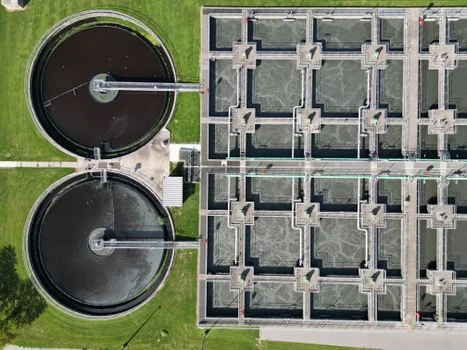
DAF vs. MBR vs. Underground Systems: Head-to-Head Comparison for Luanda’s Industries
Matching the right wastewater treatment technology to your specific industrial needs in Luanda is critical for achieving compliance and cost-efficiency. Dissolved Air Flotation (DAF) systems are exceptionally effective for primary treatment in refineries, achieving up to 95% oil/grease removal from influent concentrations of 500–2,000 mg/L. A typical DAF system for 50–300 m³/h has a CAPEX ranging from $500,000 to $2 million, with OPEX between $0.20–$0.40/m³ primarily due to chemical and energy consumption. Membrane Bioreactor (MBR) systems offer superior effluent quality, making them ideal for food processing plants aiming for water reuse, as they can achieve BOD levels below 10 mg/L. MBR systems also boast a significantly smaller footprint, up to 60% less than conventional activated sludge systems. CAPEX for MBR systems typically ranges from $1 million to $3 million for capacities of 10–2,000 m³/day, with OPEX at $0.30–$0.60/m³ largely influenced by membrane replacement costs every 5–7 years. For facilities requiring compact, low-maintenance solutions, underground systems for hotels and hospitals (1–80 m³/h), such as the WSZ Series, are highly suitable. These systems are designed for minimal operator intervention, with CAPEX from $200,000 to $800,000 and low OPEX of $0.10–$0.25/m³ due to minimal energy use. Reverse Osmosis (RO) systems are reserved for high-purity water reuse applications, particularly in pharmaceuticals or textiles, where treated water must meet stringent quality standards. RO systems typically have a CAPEX of $800,000–$2.5 million for 10–200 m³/h and OPEX of $0.50–$1.00/m³, with membrane fouling being a significant risk in high-TDS (Total Dissolved Solids) influent.| Technology | Best For | Key Benefit | CAPEX (Approx.) | OPEX (Approx.) | Laterite Impact |
|---|---|---|---|---|---|
| DAF Systems | Refineries, Heavy Oil/Grease | 95% oil/grease removal | $500K–$2M (50–300 m³/h) | $0.20–$0.40/m³ | Requires pre-filtration (e.g., rotary bar screens) for TSS spikes. |
| MBR Systems | Food Processing, Reuse | BOD <10 mg/L, 60% smaller footprint | $1M–$3M (10–2,000 m³/day) | $0.30–$0.60/m³ | Requires robust pre-filtration to protect membranes from laterite TSS. |
| Underground Systems (WSZ Series) | Hotels, Hospitals, Municipal | Low footprint, minimal operator input | $200K–$800K (1–80 m³/h) | $0.10–$0.25/m³ | Requires robust pre-treatment to prevent solids accumulation. |
| RO Systems | Pharmaceuticals, Textiles (High Purity Reuse) | High purity water for critical reuse | $800K–$2.5M (10–200 m³/h) | $0.50–$1.00/m³ | Highly susceptible to fouling from laterite TSS and hardness; requires advanced pre-treatment. |
Luanda Wastewater Treatment Costs 2025: CAPEX, OPEX, and Payback by Industry
| Industry | Typical System (Capacity) | CAPEX (Approx.) | OPEX (Approx.) | Payback Period (Approx.) |
|---|---|---|---|---|
| Refineries | DAF + Biological + Disinfection (500 m³/h) | $5M–$8.5M | $0.40–$0.70/m³ | 3–5 years (via fines avoided) |
| Food Processing | MBR System (50–200 m³/h) | $1.2M–$3M | $0.30–$0.60/m³ | 4–6 years (via water reuse savings) |
| Textiles | DAF + Chemical Dosing (100–300 m³/h) | $800K–$2M | $0.50–$0.90/m³ | 5–7 years (via compliance) |
| Municipal | Underground Systems (200–500 m³/h) | $2M–$5M | $0.10–$0.25/m³ | 7–10 years (longer ROI, lower fines) |
Step-by-Step Procurement Checklist for Luanda Industrial Buyers
A structured procurement process is essential for Luanda industrial buyers to successfully implement compliant and cost-effective wastewater treatment solutions.- Audit Influent: Conduct a comprehensive influent analysis, testing for COD, TSS, pH, oil/grease, and water hardness. For laterite-affected areas, additional sampling for seasonal variations in TSS and turbidity is critical to accurately characterize the wastewater.
- Match Equipment to Industry: Utilize the provided comparison table to shortlist appropriate technologies. Select DAF for refineries with high oil/grease, MBR for food processing aiming for water reuse, or underground systems for municipal or institutional applications requiring minimal footprint and operator input. Consider hybrid DAF-RO-MB systems for industrial reuse.
- Request Supplier Proposals: Demand detailed proposals from shortlisted suppliers that include a comprehensive CAPEX/OPEX breakdown, clear compliance guarantees (supported by Angola Decree 7/09 effluent data), and specifics on local support (operator training, spare parts inventory in Luanda, emergency response times).
- Pilot Test: Where feasible, conduct a 3-month pilot test using real influent wastewater. This step is crucial in Luanda to observe how the system handles laterite soil impacts, allowing for adjustments to chemical dosing, backwash frequency, and sludge management protocols before full-scale deployment.
- Secure Permits: Initiate the discharge permit application process with the Luanda Municipal Water Authority early, as it typically takes 6–12 months. Submit all required documentation, including supplier-provided compliance data and engineering plans, ensuring they explicitly address local environmental challenges.
- Train Operators: Invest in thorough operator training that focuses on the specifics of the installed system, laterite soil mitigation (e.g., pre-filtration maintenance, proper backwashing techniques), and emergency protocols for common issues like pH spikes from chemical dosing failures or unexpected influent load variations.
Frequently Asked Questions
What are the most common reasons for wastewater treatment system failures in Luanda?
The most common reasons for wastewater treatment system failures in Luanda are laterite soil-induced TSS spikes, with influent TSS often exceeding 500 mg/L, and variable water hardness, which leads to scaling risks and reduced equipment efficiency. Suppliers should provide robust pre-filtration solutions like rotary bar screens and PLC-controlled chemical dosing systems to manage these fluctuations effectively.
How do I verify a supplier’s compliance with Angola Decree 7/09?
To verify compliance, request detailed case studies from the supplier showcasing effluent data (COD, TSS, pH) from similar industrial facilities in Luanda. Always ask for third-party lab reports (e.g., SGS or Bureau Veritas) and copies of Luanda Municipal Water Authority permit approvals from their previous projects.
What’s the typical payback period for a wastewater treatment system in Luanda?
The typical payback period for a wastewater treatment system in Luanda ranges from 3–7 years, depending on the industry. Refineries often see faster payback (3–5 years) due to the high cost of fines (e.g., $250,000 per violation). Municipal systems may take longer, typically 7–10 years. Water reuse savings, such as for cooling towers or irrigation, can shorten the payback by 1–2 years.
Can I reuse treated wastewater in my facility?
Yes, treated wastewater can be reused, but only if the effluent consistently meets specific reuse standards, typically BOD <10 mg/L and turbidity <2 NTU. MBR systems are ideal for achieving high-quality effluent suitable for food processing reuse (e.g., cooling, irrigation), while RO systems are necessary for more stringent applications like pharmaceuticals or textiles. Always consult Luanda Municipal Water Authority’s reuse guidelines before implementing a reuse strategy.
What maintenance is required for DAF and MBR systems in Luanda’s conditions?
DAF systems in Luanda require weekly skimming to remove oil/grease buildup and monthly chemical dosing calibration, as laterite soils can affect flocculation efficiency. MBR systems need bi-weekly membrane cleaning (chemical backwash) and annual membrane replacement, with a typical lifespan of 5–7 years. Reputable suppliers should offer local maintenance contracts, typically costing $0.05–$0.15/m³, to ensure optimal performance and longevity.