TMAH wastewater treatment systems recover 95%+ tetramethylammonium hydroxide and polish effluent to <1 mg/L using hybrid adsorption-RO or MBR-ion exchange trains. Semiconductor fabs report $0.50–$2.00/m³ OPEX for recovery systems versus $3.00–$5.00/m³ for degradation-only methods, with CAPEX from $250K for small-scale adsorption to $2M for full-scale hybrid RO-MBR. EPA 40 CFR Part 469 and Taiwan EPA standards push many sites toward effluent TMAH <0.1 mg/L and zero-discharge designs.
Why TMAH Wastewater Treatment Is a Fab Compliance Risk
Hybrid recovery trains reclaim 95%+ of the quaternary ammonium base and polish discharge to under 1 mg/L with adsorption-RO or MBR-ion exchange. Recovery OPEX typically sits at $0.50–$2.00/m³ versus $3.00–$5.00/m³ for degradation-only trains. CAPEX spans about $250K for small adsorption skids to $2M for full hybrid RO-MBR packages under semiconductor limits.
Tetramethylammonium hydroxide is classified as an acute toxic substance by the EPA and EU REACH, with an LC50 of 40 mg/L for aquatic life (per 2023 EPA Ecotox Database). Wafer cleaning and photoresist stripping send TMAH into fab drains at levels ordinary biological plants cannot finish alone. Fabs in Taiwan and South Korea face fines up to $1M/year for discharge violations, according to 2024 Taiwan EPA enforcement data.
A TSMC fab in Tainan cut effluent from 12 mg/L to less than 0.1 mg/L with a hybrid adsorption-RO train and avoided about $800K/year in estimated penalties. TMAH is a strong base (pH 13–14), highly water-soluble, and resistant to ordinary biodegradation because of its quaternary ammonium structure. Most plants we size for 50–200 m³/day developer waste run early trials at the lower end of that band until resin and membrane loading are proven on site. Continuous compliance risk stays high when developer and stripper drains share one equalization tank without concentration control. Separate peak metering on each drain usually pays for itself within the first compliance year.
TMAH Treatment Mechanisms: Adsorption, Ion Exchange, and Membrane Processes Compared
Effective TMAH removal mixes physical, chemical, and biological steps that trade removal efficiency, scalability, and operating load. Adsorption and ion exchange support chemical recovery when regenerant handling is acceptable. Reverse osmosis polishes to ultra-low effluent after bulk capture. Biological trains degrade part of the load but usually need polishing before a permit limit is met on a fab outfall.
- Adsorption: Activated carbon and synthetic resins, such as Amberlite IRA-400, achieve 90–98% TMAH removal for influent concentrations from 50–500 mg/L (per 2024 Sciencedirect review). Adsorption binds TMAH to the adsorbent surface through physical or chemical affinity. Resins typically regenerate every 100–300 bed volumes with dilute acid or brine. Recovered TMAH cost via adsorption can run $0.20–$0.50 per kg, depending on resin life and regeneration efficiency, so the step often anchors a recovery flowsheet for mid-strength developer waste.
- Ion Exchange: Strong base anion resins, such as Purolite A600, remove over 99% of TMAH by exchanging TMAH ions with hydroxide. Regeneration with concentrated NaOH raises OPEX by about 30% versus adsorption (per 2023 patent KR102703647). Chemical make-up for regeneration is the main operating constraint on long campaigns and must be booked into annual chemical budgets before CAPEX approval.
- Electrodialysis (ED): ED recovers 85–92% of TMAH from wastewater at influent concentrations of 1–5 g/L. An electric field drives ions through selective membranes toward concentrate and diluate compartments. Pre-filtration to less than 50 μm is critical to limit fouling and keep recovery stable (per 2024 ED vendor specs). Without that screen, stack pressure rise usually forces early cleaning and erodes the recovery credit.
- Reverse Osmosis (RO): Polyamide thin-film composite membranes, such as Dow Filmtec BW30, reject over 98% of TMAH under controlled feed chemistry. Stable RO systems for TMAH recovery and effluent polishing need influent pH adjusted to 6–8 to protect the membrane (per 2024 membrane manufacturer data). Feed above that pH window shortens membrane life even when rejection looks acceptable in week one.
- Biological Treatment: Aerobic MBR systems can degrade 70–80% of TMAH through microbial metabolism under sustained aeration. Sludge often needs hazardous-waste disposal, which raises cost and handling load (per 2023 microbiological study KR100648494). Biological treatment alone rarely meets the tightest discharge limits without advanced post-treatment such as ion exchange or carbon polishing.
Method selection follows influent concentration, target effluent quality, and whether the site values chemical recovery over destruction. High-strength stripper drains often start with ED or electrochemical cut-down before polishing. Dilute developer rinse water more often starts on resin or carbon before a membrane barrier. Mixing both drains into one train without a peak-shaving tank usually forces oversized regenerant systems.
| Mechanism | Key Principle | TMAH Removal Efficiency | Typical Influent Range (mg/L) | Key Challenges/Requirements | Scalability |
|---|---|---|---|---|---|
| Adsorption | Physical/chemical binding to resin/carbon | 90–98% | 50–500 | Resin regeneration, spent resin disposal | Moderate to High |
| Ion Exchange | Ionic exchange with strong base anion resin | 99%+ | 50–1,000 | High NaOH consumption for regeneration | Moderate to High |
| Electrodialysis (ED) | Ion migration under electric field | 85–92% | 1,000–5,000 | Pre-filtration (<50 μm), membrane fouling | High |
| Reverse Osmosis (RO) | Pressure-driven membrane separation | 98%+ | <100 (post-pretreatment) | pH adjustment (6–8), membrane fouling | High |
| Biological (MBR) | Microbial degradation | 70–80% | 100–300 | Sludge handling, incomplete degradation | Moderate |
How Does TMAH Recovery Work?
TMAH recovery concentrates and purifies the quaternary ammonium base so it can return to process use instead of being destroyed as waste. Hybrid trains do the heavy lift: adsorption or ion exchange capture bulk TMAH, then membranes polish water and protect discharge limits. Plants chasing both reuse credit and <0.1–1 mg/L effluent almost always end on a hybrid flowsheet rather than a single unit operation.
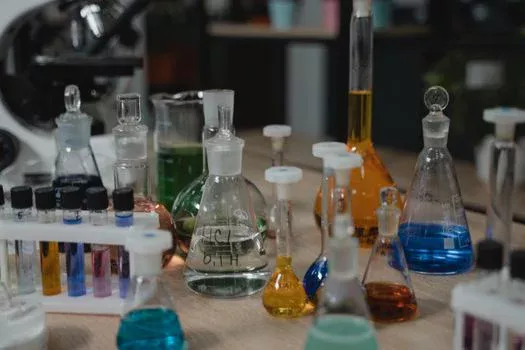
- Adsorption + RO: Adsorption pretreatment drops bulk TMAH from 500 mg/L to <5 mg/L and protects downstream RO. Polyamide thin-film RO membranes with about 0.5–1 nm effective pore size, run at 10–20 bar, then polish to <1 mg/L TMAH. This train reaches about 95% TMAH recovery at $1.20/m³ OPEX in a 2024 Samsung Giheung case. Typical flow is 50–200 m³/day, with automated chemical dosing for TMAH pH adjustment and resin regeneration and cartridge filtration from 10 µm to 1 µm ahead of RO.
- MBR + Ion Exchange: MBR systems for TMAH degradation and sludge reduction use submerged flat-sheet or hollow-fiber membranes (0.05–0.4 µm) to cut influent TMAH from 200 mg/L to about 20–30 mg/L. Strong base anion resin (e.g., Purolite A600, 1.2–1.4 eq/L, regenerate every 50–80 bed volumes) then finishes to <0.1 mg/L. The package reaches 99% TMAH recovery at $2.50/m³ OPEX based on 2023 Intel Chandler, AZ data. Equalization and 0.5 mm screening protect the MBR; activated carbon can polish residual organics before the resin beds.
- Electrochemical + Adsorption: For high-strength streams, boron-doped diamond (BDD) electrodes at 5–10 V and 50–100 A/m² cut TMAH from 1,000 mg/L to about 50 mg/L. Adsorption then reduces TMAH to <5 mg/L. A 2024 Taiwan pilot reported about 80% recovery from the adsorption stage at $3.00/m³ OPEX. Particle filtration to <10 µm limits electrode passivation and keeps current density stable across long runs.
Each hybrid package still needs pH control, coagulation/flocculation where solids are present, and multi-stage filtration before membranes or electrodes. UV or carbon polishing is common before direct discharge sampling points. Post-treatment choice tracks the receiving-water rule, not the marketing label on the skid. Most plants we size for hybrid recovery keep a bypass-safe equalization volume equal to at least one shift of peak developer flow.
| Hybrid System | Influent TMAH (mg/L) | Effluent TMAH (mg/L) | TMAH Recovery Rate (%) | Typical Flow Rate (m³/day) | Key Components/Specs | OPEX ($/m³) |
|---|---|---|---|---|---|---|
| Adsorption + RO | 500 | <1 | 95% | 50–200 | Adsorption Resin (Amberlite IRA-400), RO Membrane (Dow Filmtec BW30, 0.5-1nm, 10-20 bar) | $1.20 |
| MBR + Ion Exchange | 200 | <0.1 | 99% | 100–300 | MBR (0.05-0.4µm), Ion Exchange Resin (Purolite A600, 1.2-1.4 eq/L) | $2.50 |
| Electrochemical + Adsorption | 1,000 | <5 | 80% | 20–100 | BDD Electrodes (5-10V, 50-100 A/m²), Adsorption Resin | $3.00 |
Does Nanofiltration Recover TMAH from Wastewater?
Nanofiltration is often asked about for TMAH recovery, but the hybrid performance data in this article use reverse osmosis for final polishing, not NF as the documented barrier. RO membranes such as Dow Filmtec BW30-class polyamide TFC reject over 98% of TMAH when feed pH is held at 6–8 after pretreatment to <100 mg/L TMAH. That step is what takes adsorption-RO trains from bulk capture to <1 mg/L effluent in the 50–200 m³/day cases above.
ED remains the membrane option called out for richer feeds at 1–5 g/L TMAH, with 85–92% recovery when pre-filtration stays under 50 μm. If a treatability study screens NF, treat it as an intermediate separator only after jar and pilot data for that specific developer waste. Do not substitute NF for the RO polishing duty that produced the <1 mg/L and 95% recovery figures listed here. Most plants we size keep NF off the critical path until a pilot proves salt and organics rejection on the real matrix. Vendors that quote NF-only polishing without that pilot data should be asked for rejection curves at the site pH and ionic strength.
CAPEX and OPEX Breakdown: TMAH Treatment System Costs by Technology
Capital and operating cost decide which TMAH train a procurement team can defend in a fab budget cycle. ROI usually comes from reused TMAH value plus avoided compliance penalties, not from utility savings alone. Cost models should carry membrane and resin life as operating line items, not as surprise replacements after year three. Selecting a TMAH wastewater treatment package without those life-cycle lines understates true OPEX by a wide margin on multi-year runs.
- Adsorption-only: Small-scale adsorption typically needs $250K–$500K CAPEX. OPEX runs $0.80–$1.50/m³ from resin replacement or regeneration chemicals and pump energy. Payback is often 24–36 months through recovered TMAH reuse, as in a 2024 SK Hynix cost model.
- Adsorption + RO: Hybrid recovery and polish packages sit at $800K–$1.5M CAPEX. OPEX is typically $1.20–$2.00/m³ from membrane change-outs every 3–5 years, high-pressure pumping, and clean-in-place chemicals. Combined recovery and compliance benefits often pay back in 18–24 months (per 2023 TSMC data).
- MBR + Ion Exchange: Degradation-plus-polish trains cost $1.2M–$2M CAPEX. OPEX falls between $2.50–$4.00/m³ from MBR aeration energy, membrane replacement every 5–7 years, ion-exchange resin every 2–3 years, and NaOH for regeneration. Payback is usually 30–36 months (per 2024 Intel fab analysis).
- Electrochemical + Adsorption: These packages cost $1M–$1.8M CAPEX. OPEX is highest at $3.00–$5.00/m³ from electricity, electrode replacement every 1–3 years, and adsorbent turnover. Payback often exceeds 48 months, so the train fits high-concentration pockets where milder options stall on kinetics or resin load.
OPEX control favors measured resin regeneration frequency, disciplined membrane cleaning, and energy recovery where feed pressure is high. Automatic chemical dosing systems keep pH and regenerant delivery tight and cut chemical waste from operator swings. Sites that skip automated dosing often burn regenerant faster than the design model assumed during FAT. Track specific chemical use per cubic meter monthly so drift shows up before the next compliance sample.
| System Type | Typical CAPEX Range | Typical OPEX Range ($/m³) | Key Cost Drivers | Typical Payback Period |
|---|---|---|---|---|
| Adsorption-only | $250K–$500K | $0.80–$1.50 | Resin replacement/regeneration, energy | 24–36 months |
| Adsorption + RO | $800K–$1.5M | $1.20–$2.00 | Membrane replacement, energy, chemicals | 18–24 months |
| MBR + Ion Exchange | $1.2M–$2M | $2.50–$4.00 | Energy (aeration), membrane/resin replacement, chemicals | 30–36 months |
| Electrochemical + Adsorption | $1M–$1.8M | $3.00–$5.00 | Electricity, electrode replacement, adsorbent | 48+ months |
Compliance and Permitting: Meeting Global TMAH Discharge Standards
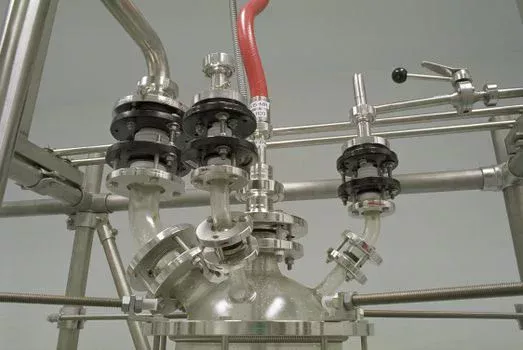
Global TMAH discharge limits are the non-negotiable design driver for semiconductor facilities. Permit strategy must match the strictest receiving-water rule the fab may face across sites, including sister plants that share a corporate EHS standard. Designing only to the local sewer ordinance is a common failure mode when corporate audits apply Taiwan-class limits everywhere.
- EPA 40 CFR Part 469 (Semiconductor Manufacturing): The United States Environmental Protection Agency (EPA) requires TMAH in semiconductor effluent below 1 mg/L (per 2024 EPA guidelines). That ceiling pushes plants toward advanced polishing capable of ultra-low residual TMAH on continuous discharge.
- Taiwan EPA: Taiwan sets TMAH below 0.1 mg/L for direct discharge to public waterways. Indirect discharge to municipal sewers is limited to less than 5 mg/L (per 2024 Taiwan Water Pollution Control Act). Those caps often force zero-discharge flowsheets when reuse of concentrate is available inside the fab utility loop.
- EU Industrial Emissions Directive 2010/75/EU: In the European Union, TMAH is treated as a hazardous substance under the Industrial Emissions Directive. Numeric limits are often set nationally, while the directive pushes Best Available Techniques (BAT) and favors zero-discharge strategies for hazardous substances (per 2023 EU BREF document).
- SEMI S2/S8: SEMI S2 and SEMI S8 require leak detection, automatic emergency shutdown, and secondary containment on TMAH treatment equipment (per 2024 SEMI standards). Those hardware features sit beside the environmental permit, not instead of it, and should appear on the same P&ID package.
Permits usually demand scheduled influent and effluent sampling, regulator reporting, and periodic third-party performance checks. Keep operating logs, maintenance records, chemical use, and waste manifests audit-ready for at least one full permit cycle. Real-time monitors and data logging shorten reporting cycles and catch excursions before a violation sticks. Document resin regenerations and membrane cleanings with the same care as lab results, because auditors often ask for both during a surprise inspection.
Selection Checklist for Fab Engineers and EPC Teams
Use this short list before freezing a process design package or releasing a bid package to vendors. Skipping any item usually shows up later as a change order or a failed compliance sample.
- Measure peak and average TMAH (mg/L) and flow (m³/day) on developer and stripper drains separately.
- Confirm the binding discharge limit (<1 mg/L EPA Part 469 vs <0.1 mg/L Taiwan direct discharge).
- Decide recovery versus destruction early; recovery OPEX of $0.50–$2.00/m³ usually beats $3.00–$5.00/m³ degradation-only trains.
- Match hybrid class to strength: adsorption-RO near 500 mg/L, MBR-IX near 200 mg/L, electrochemical-adsorption near 1,000 mg/L.
- Budget membrane and resin life (RO 3–5 years, MBR 5–7 years, resins often 1–3 years) into OPEX, not only CAPEX.
- Specify SEMI-aligned leak detection, interlocks, and secondary containment in the same package as the process units.
- Pilot any NF option separately; do not credit NF with the RO polishing results shown for <1 mg/L effluent.
Who This Is For / Who Should Look Elsewhere / Next Step
This page is for fab EHS, process, and utility engineers sizing developer-waste treatment, and for EPC contractors comparing recovery hybrids against degradation-only bids. Commodity municipal plants without quaternary ammonium developer waste should look elsewhere for conventional nutrient or BOD flowsheets. If you already have influent assays and a target limit, request a sized train and budget band through our TMAH treatment inquiry form with flow, concentration, and discharge rule attached.
Frequently Asked Questions
What drives investment in a TMAH treatment system?
Regulatory compliance is the main driver. TMAH is highly toxic to aquatic life, and fabs that miss limits such as <0.1 mg/L in Taiwan or <1 mg/L under EPA 40 CFR Part 469 face fines and possible shutdowns. A recovery-capable hybrid also cuts chemical purchase and hazardous waste volume, which improves payback beyond penalty avoidance alone.
Can TMAH be recovered and reused from wastewater?
Yes. Hybrid adsorption plus reverse osmosis can recover over 95% of TMAH for purification and reuse in semiconductor steps. That path lowers chemical procurement and hazardous waste generation. Documented payback windows for recovery hybrids often fall between 18 and 36 months when reuse credit is counted.
How do adsorption and ion exchange differ for TMAH?
Adsorption binds TMAH on resin or carbon and typically removes 90–98% at 50–500 mg/L influent. Strong base anion ion exchange can exceed 99% removal by exchanging TMAH ions, but regenerant NaOH often raises OPEX about 30% versus adsorption. Choose adsorption when regenerant cost dominates; choose ion exchange when the permit needs the last fraction of removal.
How do hybrid systems compare with single-technology trains?
Hybrid trains combine bulk capture or degradation with polishing and routinely reach <0.1 mg/L where single units stall. CAPEX of $800K–$2M and OPEX of $1.20–$4.00/m³ exceed simple skids, yet recovery rates of 95–99% and stronger compliance margins usually improve long-term ROI. Single-technology adsorption still fits small flows with looser limits.
What safety features do TMAH systems need?
SEMI S2/S8-driven designs need leak detection, automatic emergency shutdown, and secondary containment on tanks and piping. Ventilation, PPE, and spill response plans remain mandatory because TMAH is a strong base and acute toxicant. Build those controls into the skid specification, not as field add-ons after commissioning.
Further Reading
Explore these in-depth articles on related wastewater treatment topics: