Chemical mechanical polishing (CMP) wastewater contains ultra-fine (<150 nm) silica and metal particles that resist conventional treatment, costing semiconductor fabs $100M/year in water waste. Hybrid systems combining crossflow membranes (99% TSS removal), ion exchange (copper <0.1 mg/L), and reverse osmosis (95% water recovery) achieve zero-discharge compliance with EPA 40 CFR Part 469 and Taiwan EPA NIEA W201.54C standards, reducing capital costs by 30% compared to standalone chemical precipitation.
Why CMP Wastewater Breaks Conventional Treatment Systems
Chemical mechanical polishing (CMP) slurry contains 5–20% solids by weight, with 90% of particles measuring less than 150 nm, rendering traditional sedimentation tanks 60–70% less effective than in standard industrial applications. According to Pall Corporation data, these ultra-fine particles, primarily silica, alumina, and ceria, carry high negative surface charges with a zeta potential ranging from -30 to -50 mV. This electrostatic repulsion prevents natural agglomeration, meaning that without precise pH adjustment and high-dosage coagulants, the solids remain in a stable colloidal state that bypasses standard clarifiers.
Standard chemical precipitation often fails because the required dosage of NaOH or HCl to reach the isoelectric point (where zeta potential is zero) creates a massive volume of sludge that is difficult to dewater. The presence of complexing agents and surfactants in the slurry stabilizes dissolved metals like copper. While EPA 40 CFR Part 469 and EU Directive 2010/75/EU set copper discharge limits as low as 0.3 to 0.5 mg/L, raw CMP wastewater frequently exceeds 50 mg/L. A 2023 audit of a Taiwan-based fab revealed that 68% of their discharge violations were directly linked to undersized sedimentation tanks that could not handle the hydraulic load of sub-micron particles.
| Parameter | CMP Wastewater Characteristic | Conventional Treatment Limit | Impact on System Performance |
|---|---|---|---|
| Particle Size | 50 nm – 150 nm | >10,000 nm (10 μm) | Bypasses clarifiers; fouls standard filters |
| Zeta Potential | -30 to -50 mV | -5 to +5 mV (target) | Resists flocculation; requires high chemical load |
| Copper Concentration | 10 – 60 mg/L | <0.5 mg/L (EPA) | Requires tertiary chelating ion exchange |
| Silica Content | 300 – 800 mg/L | <50 mg/L (RO feed) | Rapid scaling of reverse osmosis membranes |
Core Treatment Technologies: How Each Stage Handles CMP Contaminants
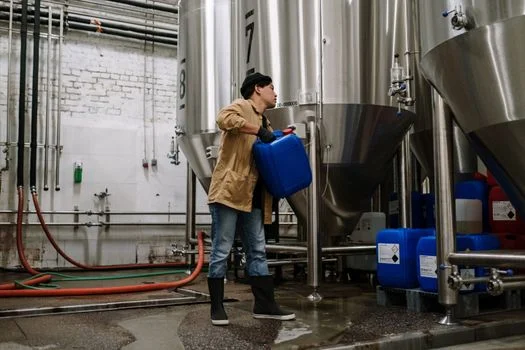
Crossflow microfiltration and ultrafiltration membranes, particularly those utilizing submerged PVDF membrane systems for ultra-fine particle removal, serve as the primary barrier against colloidal silica and alumina. These membranes operate at a pore size of 0.01–0.1 μm, achieving 92–98% Total Suspended Solids (TSS) removal at a flux rate of 50–100 LMH. Unlike dead-end filtration, the crossflow mechanism creates high shear forces at the membrane surface, preventing the "cake" layer of 100 nm particles from becoming irreversible. However, flux rates are highly sensitive to particle concentration; once TSS exceeds 200 mg/L, energy consumption increases exponentially to maintain turbulence.
For dissolved metal removal, particularly copper, ion exchange (IX) is the industry standard for meeting stringent semiconductor effluent limits. Using chelating resins like Purolite S930, systems can reduce copper levels from 50 mg/L to less than 0.1 mg/L. The process typically requires a flow rate of 10–15 Bed Volumes per hour (BV/h) and a specific pH window of 4–6 for optimal binding. For broader removal of heavy metals, integrating heavy metal removal techniques for semiconductor wastewater ensures that copper and other trace metals are sequestered before the water reaches the recycling stage. The regeneration of these resins requires a two-step process involving H₂SO₄ for metal stripping followed by NaOH for site reactivation.
The final stage for water reclamation involves high-recovery RO systems for CMP water recycling. While RO can achieve 95% water recovery, the high silica content in CMP wastewater (often >500 mg/L) poses a severe scaling risk. This necessitates a PLC-controlled dosing for pH adjustment and antiscalant addition to keep silica in a soluble form. Without precise dosing, silica scales the RO membranes within 48 hours, leading to a 30% drop in permeate production.
| Technology | Removal Mechanism | Efficiency (TSS/Cu) | Primary Limitation |
|---|---|---|---|
| Crossflow Membrane | Size Exclusion (0.05 μm) | 99% TSS / 5% Cu | Fouling at high surfactant concentrations |
| Electro-coagulation (ECF) | Electrolytic destabilization | 80% TSS / 60% Cu | Efficiency drops 30% if SDS > 50 mg/L |
| Chelating Ion Exchange | Selective Adsorption | <1% TSS / 99.9% Cu | Requires strict pH control (4.0–6.0) |
| Reverse Osmosis | Diffusion / Osmotic Pressure | 99.9% TSS / 99% Cu | Silica scaling risk above 150 mg/L in concentrate |
Hybrid System Designs: Performance vs. Cost for Zero-Discharge Compliance
Capital expenditure (CAPEX) and operating expenditure (OPEX) are critical considerations for CMP wastewater treatment systems.Capital expenditure (CAPEX) for a 50 m³/h zero-discharge CMP wastewater system is projected to range between $5M and $8M in 2026, driven primarily by the high membrane surface area and evaporator capacity required for total liquid discharge (ZLD) compliance. For facilities not requiring full ZLD, hybrid configurations offer a more balanced ROI. A "Basic" tier system, utilizing microfiltration and ion exchange, focuses purely on discharge compliance, whereas "Advanced" and "Zero-Discharge" tiers focus on water scarcity mitigation and total resource recovery.
Operating expenditure (OPEX) is heavily influenced by energy and chemical consumption. In a Zero-Discharge setup, the thermal evaporator accounts for nearly 60% of the total OPEX due to the latent heat of evaporation required to process the RO concentrate. However, for fabs in regions with high municipal water costs (averaging $1.50/m³), the Advanced system—which utilizes dissolved air flotation (DAF) for pre-treatment to protect RO membranes—often achieves a payback period of 18 to 36 months. This is calculated based on the reduction in both fresh water intake and wastewater discharge surcharges.
| System Tier | Configuration | CAPEX (50 m³/h) | OPEX ($/m³) | Water Recovery |
|---|---|---|---|---|
| Basic | Membrane + Ion Exchange | $800K – $1.5M | $0.80 – $1.20 | 0% (Compliance only) |
| Advanced | Membrane + RO + IX | $2.5M – $4.0M | $1.50 – $2.20 | 80% – 85% |
| Zero-Discharge | Membrane + RO + IX + Evaporator | $5.0M – $8.0M | $2.80 – $4.00 | 98% – 99% |
The transition from Advanced to Zero-Discharge is often mandated by local land-use permits or "Water Neutrality" goals set by global semiconductor leaders. For instance, new fabs in water-stressed regions like Arizona or Taiwan are increasingly adopting hybrid systems for copper and silica removal to ensure that every gallon of CMP water is recycled back into cooling towers or scrubbers, effectively decoupling fab expansion from local water utility limits.
Regulatory Compliance: EPA, EU, and Semiconductor-Specific Standards
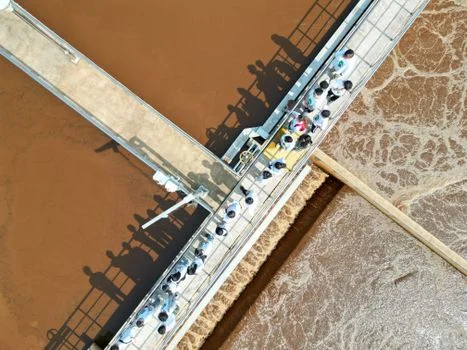
EPA 40 CFR Part 469 mandates a copper discharge limit of <0.5 mg/L for semiconductor subcategories, a threshold that 42% of fabs fail to meet consistently using primary treatment alone. In the European Union, the Industrial Emissions Directive (IED) 2010/75/EU often pushes these limits even lower, with some local jurisdictions requiring copper levels below 0.3 mg/L. Compliance is not merely about average values; regulatory audits focus on peak exceedances, which often occur during slurry change-overs when solids and metal concentrations spike by 400%.
In Taiwan, the NIEA W201.54C standard requires rigorous monitoring of both dissolved copper and reactive silica. Advanced treatment systems meet these by employing redundant ion exchange columns (lead-lag configuration) to ensure that even if the primary column reaches breakthrough, the secondary column maintains effluent quality below 0.1 mg/L. The SEMI S23-0717 standard for environmental, health, and safety (EHS) encourages fabs to achieve water reuse rates exceeding 70%. Zero-discharge systems naturally exceed this, but even Advanced hybrid systems can hit this mark by utilizing the RO permeate for non-critical fab processes.
| Standard | Copper Limit | TSS Limit | Key Compliance Strategy |
|---|---|---|---|
| EPA 40 CFR 469 | <0.5 mg/L | <30 mg/L | Chelating IX + UF Membrane |
| EU Directive 2010/75/EU | <0.3 mg/L | <20 mg/L | Tertiary filtration + polishing IX |
| Taiwan EPA NIEA | <0.2 mg/L | <10 mg/L | Crossflow UF + RO + Polishing |
| SEMI S23-0717 | N/A | N/A | Requires >70% water reuse rate |
Mitigation of audit risk requires more than just high-performance equipment; it requires integrated data logging. Modern PLC-controlled dosing for pH