Why Backgrinding Wastewater Demands Specialized Treatment
Backgrinding wastewater, a significant byproduct of semiconductor wafer thinning, presents a unique set of challenges that render conventional treatment methods insufficient. This wastewater stream is characterized by a high concentration of fine silicon particles, typically ranging from 1 to 10 µm, and colloidal silica. The backgrinding process itself consumes substantial volumes of ultrapure water, often between 50–100 L per wafer, which then becomes laden with these abrasive and fouling contaminants. The sharp nature of silicon particles poses a direct threat to standard reverse osmosis (RO) membranes, which are commonly constructed from polyamide. These particles can abrade the membrane surface, drastically reducing their operational lifespan from the typical 3–5 years to as little as 6–12 months. colloidal silica, known for its amorphous and sticky properties, readily clogs membrane pores, leading to decreased recovery rates that can fall below 80% without effective pre-treatment. Addressing these issues is not merely an environmental concern but also an economic imperative; leading semiconductor plants like TSMC and Samsung have demonstrated that by effectively treating and reusing this wastewater, they can achieve a 30–40% reduction in ultrapure water costs by routing treated water to intermediate purification stages.
Step-by-Step Treatment Process: From Collection to Reuse
A robust treatment strategy for backgrinding wastewater involves a meticulously designed, multi-stage process to ensure both high recovery rates and compliance with stringent discharge standards. This systematic approach begins with the initial collection and segregation of waste streams to optimize subsequent treatment steps.
- Step 1: Collection and Sorting: Wastewater is initially collected and sorted based on its composition. This involves separating distinct streams such as silicon slurry, epoxy resin, and coolant, as implemented in systems like those by BW Water.
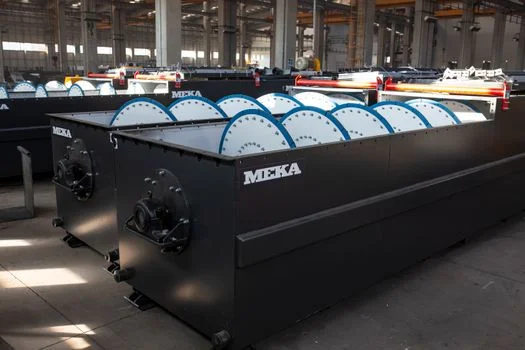
- Step 2: Pre-treatment (Mechanical Screening): The first line of defense against larger solids is mechanical screening. A GX Series rotary mechanical bar screen is employed to remove over 95% of suspended solids larger than 50 µm, significantly reducing the load on downstream processes.
- Step 3: Primary Treatment (DAF): To address colloidal silica and emulsified oils, a dissolved air flotation (DAF) system, such as HydropureWater's, is crucial. This stage effectively removes 90–95% of colloidal silica and FOG (fats, oils, and grease), which are primary culprits for RO membrane fouling.
- Step 4: Secondary Treatment (RO): Following DAF, a high-efficiency Industrial RO System is utilized. With the incorporation of specialized zero-fouling membranes and advanced pre-treatment, this stage achieves an impressive 98% water recovery rate.
- Step 5: Polishing: For polishing, either a DF Series MBR membrane bioreactor or ion exchange is employed to further reduce contaminants and achieve a conductivity target of less than 50 µS/cm. The MBR membranes, with a pore size of 0.1 µm, provide an additional barrier against fine particles.
- Step 6: Disinfection: To ensure microbial control for water reuse applications, a chlorine dioxide generator is used for disinfection, maintaining water quality and safety for intermediate process stages.
This comprehensive approach ensures that backgrinding wastewater is not only treated to meet discharge regulations but is also purified to a standard suitable for reuse, thereby maximizing water conservation and reducing operational costs.
Hybrid System Comparison: DAF-RO vs. TMF-RO vs. MBR-RO for Backgrinding Wastewater
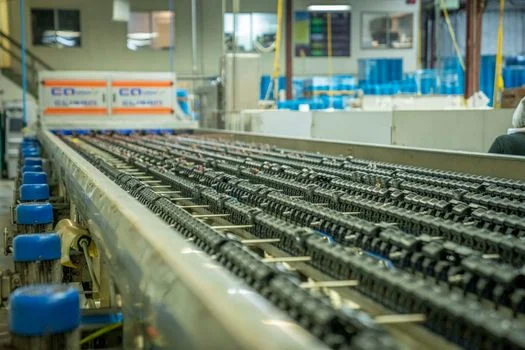
Selecting the optimal treatment configuration for backgrinding wastewater hinges on a careful evaluation of system performance, capital expenditure (CAPEX), operational expenditure (OPEX), and the specific demands of the semiconductor plant. Hybrid systems, combining multiple technologies, offer superior results compared to single-stage processes.
DAF-RO Systems are particularly well-suited for facilities dealing with high concentrations of colloidal silica. These systems leverage the DAF's ability to remove up to 95% of colloidal silica and FOG, significantly protecting the subsequent RO membranes. A typical DAF-RO setup for a flow rate of 100 m³/h can achieve a recovery rate of around 95% and falls within a CAPEX range of $1.2M–$1.8M. The DAF units are designed for robust performance in these demanding applications.
TMF-RO Systems, utilizing tubular membrane filtration (TMF) as a pre-treatment to RO, are ideal for effectively handling the sharp silicon particles characteristic of backgrinding wastewater. TMF's robust tubular structure and appropriate cross-flow velocities (3–5 m/s) prevent particle deposition and abrasion. These systems also achieve approximately 95% recovery. The CAPEX for a TMF-RO configuration is typically higher, ranging from $1.5M–$2.2M for a comparable flow rate, reflecting the advanced filtration technology.
MBR-RO Systems offer a compact footprint, making them an attractive option for plants with limited space. The MBR stage, employing membranes with pore sizes of <1 µm, provides effective pre-treatment for RO, achieving high recovery rates of up to 98%. The CAPEX for an MBR-RO system is generally the highest among these configurations, ranging from $1.8M–$2.5M for a 100 m³/h system, though the DF Series MBR modules exhibit efficient energy consumption of 0.3–0.5 kWh/m³.
The choice between these hybrid systems depends on a detailed analysis of the wastewater's specific characteristics, the desired recovery rate, available space, and budget constraints. Each configuration offers a pathway to compliance with EPA and EU discharge standards, with the DAF-RO often favored for colloidal silica challenges, TMF-RO for abrasive particle mitigation, and MBR-RO for space efficiency and high recovery.
| System Configuration | Primary Application | Typical Recovery Rate | Estimated CAPEX (100 m³/h) | Estimated OPEX (per m³) | Footprint | Compliance Readiness |
|---|---|---|---|---|---|---|
| DAF-RO | High Colloidal Silica Loads | 95% | $1.2M–$1.8M | $0.60–$1.00 | Medium | High (EPA/EU) |
| TMF-RO | Sharp Silicon Particle Mitigation | 95% | $1.5M–$2.2M | $0.70–$1.10 | Medium-Large | High (EPA/EU) |
| MBR-RO | Compact Footprint, High Recovery | 98% | $1.8M–$2.5M | $0.50–$0.90 | Small | High (EPA/EU) |
Zero-Fouling Membrane Designs: Engineering Specs for 2026
To achieve the high recovery rates and long-term operational reliability required for backgrinding wastewater treatment, the selection of advanced, zero-fouling membrane technologies is paramount. These innovations address the specific challenges posed by silicon particles and colloidal silica, ensuring consistent performance and reduced maintenance.
Ceramic Pre-filters are a critical component in preventing premature membrane failure. Featuring pore sizes ranging from 0.5 to 1 µm and capable of withstanding pressures up to 10 bar, these filters are typically constructed from durable materials like alumina or zirconia. Their robust nature ensures a lifespan of 5+ years, providing a reliable barrier against larger contaminants before they reach more sensitive membrane stages.
Zero-Fouling RO Membranes represent a significant advancement in RO technology. These membranes incorporate advanced surface modification techniques, such as zwitterionic coatings, which impart a strong negative charge. This surface charge actively repels negatively charged silica particles, significantly reducing fouling and extending membrane life. These are engineered to maintain performance even under challenging conditions typical of semiconductor wastewater.
Tubular Membranes (TMF), with pore sizes between 0.05–0.1 µm, are designed for high cross-flow velocities, typically between 3–5 m/s. This high velocity creates a scouring effect that prevents particle deposition on the membrane surface, a key factor in mitigating fouling from silicon slurry and colloidal silica. Their robust structure also offers superior resistance to mechanical abrasion compared to hollow fiber membranes.
MBR Flat Sheet Membranes (DF Series), designed with a precise 0.1 µm pore size, are integrated into compact bioreactor systems. They feature an optimized air scouring system, with an air scouring rate of 0.2–0.4 m³/m²/h, which continuously cleans the membrane surface. This integrated aeration mechanism is essential for maintaining flux and preventing the build-up of biomass and fine particles, ensuring consistent effluent quality for reuse.
| Membrane Type | Pore Size | Pressure Tolerance | Typical Lifespan | Fouling Resistance (Silica/Particles) |
|---|---|---|---|---|
| Ceramic Pre-filters | 0.5–1 µm | 10 bar | 5+ years | Excellent |
| Zero-Fouling RO Membranes (Surface Modified) | ~0.001 µm (rejection) | 15–30 bar | 3–5 years (extended) | Excellent |
| Tubular Membranes (TMF) | 0.05–0.1 µm | 5–10 bar | 5+ years | Very Good (with high cross-flow) |
| MBR Flat Sheet Membranes (DF Series) | 0.1 µm | ~1 bar | 5–7 years | Good (with integrated aeration) |
Compliance and Discharge Standards: EPA, EU, and Semiconductor-Specific Limits
Meeting environmental regulations is a critical aspect of operating a semiconductor manufacturing facility. The wastewater generated from backgrinding processes must adhere to specific discharge limits set by regulatory bodies like the EPA and EU directives, as well as industry-specific standards for water reuse.
The U.S. Environmental Protection Agency (EPA) has established limits for industrial wastewater discharge. For semiconductor wastewater, these typically include a maximum of 30 mg/L for Total Suspended Solids (TSS) and 125 mg/L for Chemical Oxygen Demand (COD), with a pH range of 6 to 9, as outlined in 40 CFR Part 469. These parameters ensure that discharged water does not cause significant environmental harm.
In the European Union, the Industrial Emissions Directive (2010/75/EU) sets stringent standards for industrial discharges. While specific limits can vary by region and permit, general guidelines for silicon content in discharged wastewater are often below 10 mg/L, and conductivity limits can be as low as 100 µS/cm to protect receiving water bodies.
Beyond regulatory discharge, the semiconductor industry itself has established high standards for water reuse. Leading manufacturers, such as TSMC, aim for treated water with conductivity below 50 µS/cm. This level of purity is essential for reusing the water in intermediate purification stages within the ultrapure water (UPW) production cycle, thereby significantly reducing the demand for fresh UPW. TSMC's pioneering work in physical regeneration techniques, which avoids chemical additives, exemplifies the industry's move towards sustainable and efficient wastewater management.
Facilities must also consider potential local variances and specific plant permits that may impose even stricter requirements. A comprehensive understanding of these regulations is crucial for designing and operating a compliant and cost-effective wastewater treatment system. For those seeking to treat challenging wastewater streams, exploring heavy metal wastewater treatment strategies or ammonia-nitrogen treatment for semiconductor effluent polishing can provide additional context for advanced water management.
Cost Breakdown: CAPEX, OPEX, and ROI for Backgrinding Wastewater Systems
Investing in a backgrinding wastewater treatment system requires a clear understanding of the associated capital expenditures (CAPEX), operational expenditures (OPEX), and the potential return on investment (ROI) driven by water reuse and reduced discharge fees. These financial considerations are paramount for procurement teams and plant managers.
The initial CAPEX for a comprehensive treatment system designed to handle backgrinding wastewater, typically for a flow rate of 100 m³/h, can vary significantly based on the chosen hybrid configuration. A DAF-RO system generally represents the lower end of the spectrum, with CAPEX ranging from $1.2M to $1.8M. TMF-RO systems, offering enhanced particle protection, fall in the mid-range at $1.5M to $2.2M. MBR-RO systems, known for their compact footprint and high recovery, typically have the highest CAPEX, from $1.8M to $2.5M.
OPEX is a critical factor in the long-term economic viability of any treatment system. For backgrinding wastewater treatment, OPEX typically ranges from $0.50 to $1.20 per cubic meter of treated water. This cost is broken down into several components: energy consumption, which can range from 0.8–1.5 kWh/m³ depending on the technologies employed; membrane replacement, estimated at $0.10–$0.30/m³ annually, factoring in the advanced materials and expected lifespan; and labor costs for operation and maintenance, which can be between $0.10–$0.20/m³.
The ROI for these systems is primarily driven by the significant savings achieved through water reuse. By recovering up to 98% of the backgrinding wastewater and reusing it in intermediate purification stages, semiconductor plants can reduce their reliance on expensive ultrapure water production. As noted by leading manufacturers, this can lead to a 30–40% reduction in UPW costs. Consequently, the payback period for a well-designed system typically ranges from 2 to 4 years, offering a compelling financial incentive for investment.
| System Type | Estimated CAPEX | Estimated OPEX (per m³) | Typical Payback Period | Maintenance Frequency |
|---|---|---|---|---|
| DAF-RO | $1.2M–$1.8M | $0.60–$1.00 | 2.5–4 years | Moderate |
| TMF-RO | $1.5M–$2.2M | $0.70–$1.10 | 2–3.5 years | Moderate |
| MBR-RO | $1.8M–$2.5M | $0.50–$0.90 | 2–3 years | Low-Moderate |
Frequently Asked Questions
What are the primary contaminants in backgrinding wastewater?
The primary contaminants are fine silicon particles (1–10 µm) and colloidal silica, along with small amounts of grinding additives and coolant.
What is the typical water recovery rate achievable for backgrinding wastewater?
With advanced hybrid systems like DAF-RO or MBR-RO, recovery rates of up to 98% are achievable.
How do sharp silicon particles affect RO membranes?
Sharp silicon particles can abrade and damage the surface of standard polyamide RO membranes, significantly reducing their lifespan from 3–5 years to 6–12 months.
What is the target conductivity for reused backgrinding wastewater in semiconductor plants?
Leading semiconductor plants aim for a conductivity of less than 50 µS/cm for reuse in intermediate purification stages.
What are the EPA discharge limits for semiconductor wastewater?
Typical EPA limits include TSS <30 mg/L, COD <125 mg/L, and a pH range of 6–9.
Can treated backgrinding wastewater be reused in ultrapure water production?
Yes, treated water can be reused in intermediate purification stages of ultrapure water production, leading to significant cost savings.
What is the average cost of treating backgrinding wastewater?
OPEX typically ranges from $0.50 to $1.20 per cubic meter, depending on the treatment system and operational efficiency.
What is the payback period for a backgrinding wastewater treatment system?
The payback period is generally between 2 to 4 years, driven by savings from reduced UPW consumption.