Why Industrial Plants Replace Conventional Clarifiers with Tube Settlers
The tube settler clarifier working principle shortens particle settling from 1.5–3 m in open tanks to 50–100 mm inside 60° tubes spaced 50–80 mm. At about 100 m³/h, HRT falls from 2–4 hours to 30–60 minutes and footprint from about 100 m² to 20–30 m², with 92–97% TSS removal at 50–500 NTU under laminar flow (Reynolds number <500).
Conventional clarifiers still need HRT of 2–4 hours for 80–90% TSS removal at the same 50–500 NTU band. With 2025 construction data indicating civil costs of $50–$150/m², a 100 m² basin can dominate CAPEX on space-limited sites. Gravity settling over long vertical paths also raises turbulence risk and chemical demand, often $0.10–$0.30/m³ for coagulants and flocculants on high-solids streams such as food processing and pulp & paper. A 2024 Shandong pulp & paper plant cut TSS from 450 NTU to below 30 NTU with tube settlers, dropping HRT from 3.5 hours to 45 minutes (HydropureWater case study).
Tube Settler Clarifier Working Principle: Shallow-Depth Mechanics
Tube settlers confine settling inside modular inclined channels so particles travel only 50–100 mm before contacting a surface, then slide down into a sludge hopper. Modules are commonly set at 60° with 50–80 mm spacing to raise effective settling area per tank volume. As flow rises through the tubes, solids adhere to the walls; the incline returns them to a hopper holding about 1–2% solids. Hopper walls are typically pitched 55–60° for gravity discharge. Tubes are usually PVC or PP, 0.5–1.0 mm thick, often UV-stabilized for outdoor duty, and suited to wastewater pH from 2 to 12. PP is preferred where temperature approaches 80°C.
| Parameter | Specification Range | Significance |
|---|---|---|
| Tube Angle | 60° (Optimal) | Maximizes settling efficiency and solids slide-off. |
| Tube Spacing | 50–80 mm | Balances surface area for settling with risk of clogging. |
| Tube Material | PVC, PP | Corrosion resistance, UV stability, temperature tolerance (PP up to 80°C). |
| Tube Thickness | 0.5–1.0 mm | Structural integrity and durability. |
| Sludge Hopper Angle | 55–60° | Ensures effective gravity-driven sludge removal. |
| Sludge Concentration | 1–2% solids | Typical concentration for efficient sludge pumping. |
| Flow Regime | Laminar (Re < 500) | Minimizes turbulence and re-suspension of settled solids. |
For compact high-solids duty, many plants pair tube modules with a HydropureWater High-Efficiency Sedimentation Tank (Lamella Clarifier) so plate or tube packs sit in a shop-fabricated shell with controlled inlet baffles.
Tube Settler vs. Conventional Clarifier vs. DAF: Performance Comparison
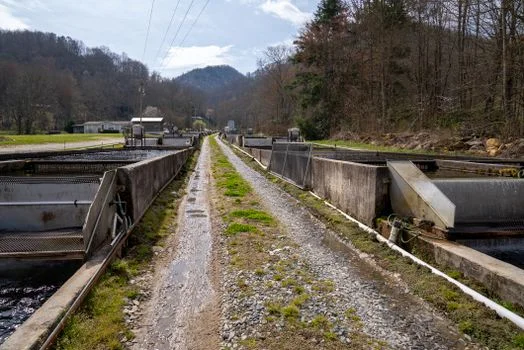
Clarifier choice turns on TSS removal, HRT, footprint, and life-cycle cost for the solids and FOG load you actually treat. Tube settlers sit between conventional basins and DAF when gravity settling can handle most solids and land is scarce. DAF remains stronger for free oil, grease, and very fine floatable solids, but CAPEX and OPEX usually run higher when flotation is not required.
| Metric | Tube Settler | Conventional Clarifier | DAF System |
|---|---|---|---|
| TSS Removal (%) | 92–97% (at 50–500 NTU) | 80–90% (at 50–500 NTU) | 95–99% (highly effective for FOG/oil) |
| Hydraulic Retention Time (HRT) | 30–60 minutes | 2–4 hours | 15–30 minutes |
| Footprint (approx. for 100 m³/h) | 20–30 m² | 100 m² | 30–50 m² |
| CAPEX ($/m³/h) | $800–$1,500 | $300–$600 | $1,200–$2,500 |
| OPEX ($/m³) | $0.05–$0.15 | $0.10–$0.30 | $0.10–$0.25 |
| Chemical Dosing Requirements | Moderate (coagulants/flocculants) | High (coagulants/flocculants) | Moderate (coagulants/flocculants) + Air |
| Maintenance Frequency | Low to Moderate | Moderate | Moderate to High |
Note: Tube settlers excel for high-solids wastewater (50–500 NTU); DAF systems are better for FOG/oil removal; conventional clarifiers are cost-effective for low-flow, low-solids applications.
Where FOG and free oil dominate, HydropureWater DAF systems usually outperform gravity tube packs alone.
Design Parameters Engineers Must Fix Before Ordering Tubes
Tube settler design starts with angle, spacing, surface loading, inlet distribution, and hopper geometry matched to measured solids. A 60° tube angle remains the usual optimum: angles below 50° invite sludge bridging, while angles above 70° shrink projected settling area. Spacing near 50 mm raises area per volume but raises clogging risk at high solids loading; 80 mm eases cleaning at the cost of area. Surface loading typically sits at 20–40 m/h; exceeding that band risks solids carryover, while much lower rates waste steel and civil volume. Uniform distribution through baffles, perforated pipes, or weirs prevents short-circuiting across the pack. Progressive cavity pumps often handle the 1–2% hopper solids without excess dilution. PVC covers general service; PP is preferred for hotter or more aggressive chemical plant streams up to 80°C.
How Do You Select an Industrial Wastewater Clarifier?
Industrial wastewater clarifier selection begins with influent TSS (mg/L), flow (m³/h), and particle size, then maps those data to discharge limits and available footprint. Tube settlers perform best when a large share of solids exceeds about 100 μm. China's GB 8978-1996 still cites TSS <70 mg/L for many discharges, while EU Urban Waste Water Directive 91/271/EEC sets total suspended solids at 35 mg/L (optional in some plant classes). According to the EUR-Lex summary of Directive 91/271/EEC (updated 24 January 2025), that directive remains the EU baseline until 1 August 2027, when Directive (EU) 2024/3019 replaces it. According to US EPA 40 CFR 133.102, secondary treatment requires a 30-day average suspended solids limit of 30 mg/L (7-day average 45 mg/L, with ≥85% removal). At a surface loading of 20–40 m/h, a 100 m³/h plant needs about 100 m³/h ÷ 30 m/h = 3.33 m² of effective tube area. Tube settler CAPEX commonly runs $800–$1,500/m³/h with OPEX $0.05–$0.15/m³, versus DAF at $1,200–$2,500/m³/h CAPEX and $0.10–$0.25/m³ OPEX. Footprint cuts of up to 70% versus conventional clarifiers matter most on urban or retrofit sites. Many EPC packages therefore specify a packaged High-Efficiency Sedimentation Tank (Lamella Clarifier) when tube or plate packs must ship as one skid.
| Step | Action | Considerations |
|---|---|---|
| 1 | Influent Characterization | TSS (mg/L), Flow Rate (m³/h), Particle Size Distribution (>50% >100 μm for optimal performance) |
| 2 | Compliance Standards | Local/National discharge limits (e.g., GB 8978-1996, EU Directive 91/271/EEC) |
| 3 | Calculate Required Surface Area | Flow Rate / Surface Loading Rate (e.g., 100 m³/h ÷ 30 m/h = 3.33 m²) |
| 4 | CAPEX/OPEX Comparison | Tube Settlers: $800–$1,500/m³ CAPEX, $0.05–$0.15/m³ OPEX vs. DAF: $1,200–$2,500/m³ CAPEX, $0.10–$0.25/m³ OPEX |
| 5 | Space Constraints | Footprint reduction up to 70% vs. conventional clarifiers |
What Criteria Matter for Clarifier Sizing and Sludge Handling?
Clarifier sizing criteria cover hydraulic loading, solids flux, energy use, and how sludge leaves the hopper without diluting the process train. Check these items before freezing a datasheet:
- Measured TSS, turbidity, and share of particles >100 μm at design flow (m³/h).
- Target effluent TSS against local permits (for example EPA SS 30 mg/L 30-day average, or EU TSS 35 mg/L under 91/271/EEC).
- Surface loading held inside 20–40 m/h with documented inlet equalization.
- Tube angle near 60°, spacing 50–80 mm, and hopper angle 55–60°.
- Sludge at 1–2% solids with pumps rated for that concentration.
- Chemical dose path sized for coagulants/flocculants, preferably with automated chemical dosing for coagulation and flocculation.
- Energy and FOG screen: if free oil dominates, score DAF ahead of gravity tubes.
UK and other water-stressed industrial campuses, including data-centre campuses seeking higher water reuse, often need compact secondary clarification so recycled streams meet site discharge or reuse specs without expanding the civil envelope. Tube packs help when solids are settleable and land or structural load is limited; they do not replace abstraction-licence water-efficiency plans or process cooling controls.
Where Tube Settlers Outperform Other Clarifiers
Tube settlers show strong results wherever high solids and tight plots coincide across food, pulp, municipal, and textile trains. In dairy and meat plants, tube settlers can reach about 95% TSS removal from influents near 300 NTU and cut downstream filtration cost by roughly 40%, per HydropureWater case studies. Pulp & paper mills often see about 92% TSS removal at 450 NTU with about 30% lower chemical dosing cost. Municipal plants can reach about 97% TSS removal at 200 NTU, supporting secondary effluent near the EPA 30 mg/L SS 30-day average in 40 CFR 133.102. Textile dyeing trains with coagulants can approach 85% color removal at 500 NTU and cut RO membrane fouling by about 50%. Tube settlers are a poor primary choice for free FOG, where DAF fits better, and they rarely beat simple conventional basins when solids stay below about 50 NTU. Heavy-metal or PCB streams need tailored chemistry; clarifiers then sit inside broader trains such as cost-optimized ZLD systems that report up to 99.9% Cr(VI) removal in specialized configurations.
Who this is for: plant engineers and EPC teams sizing primary or secondary clarification for 50–500 NTU settleable solids on constrained plots.
Who should look elsewhere: sites dominated by free oil/FOG, or very low-solids water (<50 NTU) where a conventional basin is enough.
Next step: send flow, TSS, and permit limits for a duty-specific tube or lamella layout; you can request a free quote with those parameters.
Frequently Asked Questions
How does a tube settler remove suspended solids?
Tube settlers use shallow inclined channels so particles settle across 50–100 mm instead of 1.5–3 m, then slide into a hopper under laminar flow. Modules are usually set near 60° with 50–80 mm spacing, which raises effective settling area inside a small tank volume. HRT commonly falls to 30–60 minutes at industrial rates around 100 m³/h, versus 2–4 hours in open clarifiers treating the same 50–500 NTU solids band.
What TSS removal and footprint should buyers expect?
Tube settlers typically deliver 92–97% TSS removal at 50–500 NTU influent turbidity when loading stays near 20–40 m/h and coagulation is adequate. At about 100 m³/h, footprint often shrinks to 20–30 m² versus about 100 m² for a conventional clarifier, a cut of up to 70%. Those gains hold for settleable solids; free FOG still favors DAF performance of 95–99% on oil-bearing streams.
Which discharge limits should clarifier selection track?
Buyers should match clarifier effluent to the permit that governs the outfall, not to a generic brochure claim. According to US EPA 40 CFR 133.102, secondary treatment sets a 30-day average SS limit of 30 mg/L. EU plants still work to Directive 91/271/EEC TSS of 35 mg/L until Directive (EU) 2024/3019 takes over on 1 August 2027, while many Chinese discharges still reference GB 8978-1996 TSS <70 mg/L.
Do tube settlers need chemicals, and can they retrofit existing tanks?
Most industrial applications still need coagulants and flocculants so flocs settle inside the short tube path, though dose is often lower than in deep conventional basins. Modules frequently retrofit into existing clarifier shells when inlet baffles and sludge withdrawal are upgraded, as outlined when integrated wastewater treatment plants incorporate tube settlers. Confirm structural loads, weir hydraulics, and hopper volume before packing tubes into an old basin.
When should a plant choose DAF instead of a tube settler?
Choose DAF when free oil, grease, or very fine floatables drive the load, or when HRT must stay near 15–30 minutes with flotation assist. Tube settlers remain the leaner choice for high settleable TSS at 50–500 NTU when CAPEX targets $800–$1,500/m³/h and OPEX near $0.05–$0.15/m³. Many sites run tubes for bulk solids and keep a smaller DAF for FOG polishing rather than forcing one unit to do both jobs.