Grinding Wastewater Treatment System: 2026 Engineering Specs, Cost Models & Zero-Clog Compliance
A grinding wastewater treatment system reduces solids like rags, grit, and plastics to <6 mm particles, preventing clogs in pumps and pipes while meeting EPA TSS discharge limits (typically <30 mg/L for industrial effluent). Twin-shaft grinders achieve 95% TSS reduction at flow rates up to 1,200 m³/h, while grinder pumps handle smaller flows (50–300 m³/h) in submersible applications. CAPEX ranges from $80,000 for a single grinder pump to $450,000 for a high-flow channel grinder system with redundant cutters. For industrial engineers, the integration of these systems is no longer optional; it is a critical safeguard against the catastrophic failure of downstream membranes and high-pressure pumps.
Why Industrial Plants Need Grinding Wastewater Treatment Systems
Pump failures due to unground solids represent the primary cause of unplanned downtime in industrial effluent management. A metalworking plant in Ohio recently documented an 87% reduction in centrifugal pump failures after installing a twin-shaft grinder to process heavy coolant and metal-fines-laden wastewater. Prior to the installation, the facility faced weekly maintenance interventions to clear "ragging" from pump impellers, a common issue where fibrous materials intertwine with grit to form impenetrable masses.
The financial impact of these failures is significant. According to 2023 EPA estimates, the cost of downtime for industrial plants ranges from $12,000 to $50,000 per incident, factoring in labor, emergency parts procurement, and lost production capacity. Beyond operational costs, compliance risks pose a threat to the bottom line. EPA fines for Total Suspended Solids (TSS) violations under 40 CFR Part 434 average $37,500 per day. Implementing a grinding wastewater treatment system allows facilities to reduce TSS by 92–97% before the effluent reaches secondary treatment stages, ensuring that EU compliance for grinding wastewater treatment and North American standards are consistently met.
Industrial wastewater typically contains a volatile mix of rags, plastics, grit, and metal shavings. These solids trigger pump cavitation—where air bubbles form and implode, pitting the metal—and cause valve jamming or pipe abrasion. By reducing these materials to a uniform, small particle size, the grinding system transforms a hazardous slurry into a manageable fluid, protecting the mechanical integrity of the entire treatment train.
How Wastewater Grinders Work: Cutter Mechanisms and Particle Size Outputs
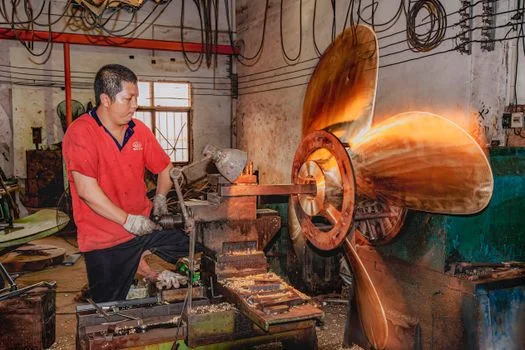
The core of a grinding wastewater treatment system is the cutter mechanism, which determines the efficiency of solids reduction and the longevity of the equipment. Engineers must evaluate torque, cutter speed, and material hardness to match the system to the specific waste stream.
Twin-shaft grinders utilize two rows of intermeshing cutters rotating at low speeds (40–60 RPM). This low-speed, high-torque approach (ranging from 1,200 to 3,500 Nm) allows the machine to "nibble" through tough solids rather than attempting to high-speed impact them. This produces a consistent particle size of <6 mm. High torque is essential for handling non-homogenous solids; when a jam is sensed, the PLC triggers an auto-reverse sequence to clear the cutters before attempting to grind the material again.
Pipeline and Grinder Pumps serve different hydraulic needs. Pipeline grinders are single-shaft designs optimized for inline applications with flow rates of 100–500 m³/h, typically producing 3–5 mm particles. Submersible grinder pumps are the standard for wet wells, handling lower flows (50–300 m³/h) but producing the finest output at 2–4 mm, which is necessary for small-diameter discharge lines.
Material compatibility is a critical spec for wear life. For corrosive effluents, 316L stainless steel is the standard, exhibiting wear rates of 0.1–0.3 mm/year. In contrast, applications involving abrasive grit require hardened alloy steel, which, while tougher, may see wear rates of 0.5–1 mm/year if not properly maintained. Using 5 mm rotary bar screens to prevent ragging in grinding systems can significantly extend the life of these cutters by removing the bulk of fibrous materials before they reach the grinder.
| Feature | Twin-Shaft Grinder | Pipeline Grinder | Grinder Pump |
|---|---|---|---|
| Rotational Speed | 40–60 RPM | 1,200–1,800 RPM | 2,900–3,600 RPM |
| Torque Range | 1,200–3,500 Nm | 200–600 Nm | 50–150 Nm |
| Output Particle Size | <6 mm | 3–5 mm | 2–4 mm |
| Max Flow Rate | 1,200 m³/h | 500 m³/h | 300 m³/h |
Grinder Types Compared: Channel vs. Inline vs. Submersible Pumps
Selecting the correct configuration depends on the plant layout and the point of installation within the treatment process. Channel grinders are designed for open-channel headworks where high volumes of raw influent enter the plant. These systems often feature dual motors and stainless steel frames to handle flow rates up to 1,200 m³/h. CAPEX for these units is the highest, ranging from $120,000 to $450,000, but they offer the most robust protection for downstream primary clarifiers.
Inline grinders are integrated directly into closed-pipe systems, typically on sludge return lines or before heat exchangers. They are rated for pressures between 6 and 10 bar, making them suitable for industrial pressurized lines. With a CAPEX of $80,000 to $250,000, they are a mid-range solution for targeted equipment protection. For those managing heavy metal wastewater treatment after grinding, inline units are often preferred to keep the process contained and pressurized.
Grinder pumps are the most economical option ($25,000–$80,000) and are ideal for submersible applications in wet wells up to 20 meters deep. They are best suited for smaller flows where solids concentration is below 5% TSS. If the flow exceeds 500 m³/h and solids content is high, a channel grinder with 316L housing is the engineering recommendation.
| System Type | Best Use Case | Flow Capacity | Pressure Rating |
|---|---|---|---|
| Channel Grinder | Plant Headworks | 500–1,200 m³/h | Atmospheric |
| Inline Grinder | Sludge/Process Lines | 100–500 m³/h | 6–10 Bar |
| Grinder Pump | Submersible Wet Wells | 50–300 m³/h | Up to 4 Bar |
Engineering Specs for Grinding Wastewater Treatment Systems
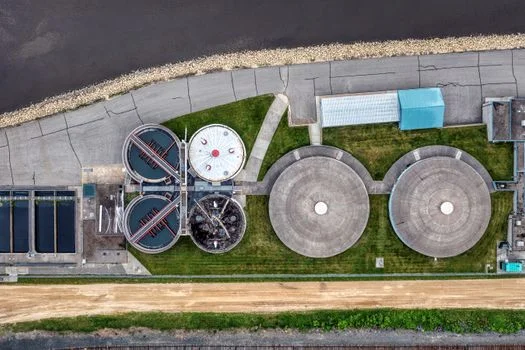
Sizing a grinding wastewater treatment system requires a calculation of the peak hourly flow rate plus a 20% safety buffer to account for storm surges or production spikes. Power requirements for these systems range from 5.5 kW for small inline units to 30 kW for heavy-duty channel grinders. Notably, twin-shaft grinders are roughly 20% more energy-efficient than single-shaft grinders because the intermeshing action requires less force to shear solids.
The control system is where modern grinders separate themselves from legacy equipment. A standard 2026 spec includes a PLC with an integrated auto-reverse function. This function monitors motor amperage; if a spike occurs (indicating a jam), the motor reverses for 3–5 seconds before attempting to grind again. Integration with SCADA via Modbus or Profibus allows for remote monitoring of torque and vibration, which are leading indicators of cutter wear. For optimal performance, pair the grinder with an PLC-controlled coagulant dosing for grinding system optimization to enhance the flocculation of the newly ground particles.
| Specification | Standard Duty | Heavy Duty |
|---|---|---|
| Motor Power | 5.5–11 kW | 15–30 kW |
| Cutter Material | Hardened Alloy Steel | Tungsten Carbide Tipped |
| Housing Material | Ductile Iron / 304 SS | 316L / Duplex SS |
| Control Interface | Local Manual | PLC with SCADA/Modbus |
CAPEX and OPEX Breakdown: Grinding System Costs for Industrial Plants
Budgeting for a grinding system involves more than the initial purchase price. CAPEX ranges from $25,000 for a basic submersible grinder pump to $450,000 for a redundant, high-flow channel system. Installation costs typically add 15–25% to the CAPEX, covering civil works (such as channel modifications), electrical wiring, and PLC integration into the plant’s central control room.
OPEX is dominated by cutter replacement and energy consumption. Cutter teeth should be budgeted for replacement every 12–18 months, costing between $1,200 and $4,000 per set depending on the material. Energy costs remain relatively low ($800–$3,000/year) due to the intermittent nature of grinding and the efficiency of low-RPM motors. Labor for routine inspections and seal checks adds another $1,000–$8,000 annually. Despite these costs, the ROI is often realized within 3–5 years because the system reduces pump maintenance costs by 40% and virtually eliminates the $50,000-per-incident downtime events.
| Cost Category | Annual Estimate (USD) | Notes |
|---|---|---|
| Cutter Replacement | $1,200 – $4,000 | Based on 12–18 month intervals |
| Energy Consumption | $800 – $3,000 | Variable based on flow/solids |
| Maintenance Labor | $1,000 – $8,000 | Includes seal and oil checks |
| Total OPEX | $3,000 – $15,000 | Excludes emergency repairs |
Compliance and Discharge Standards for Ground Wastewater
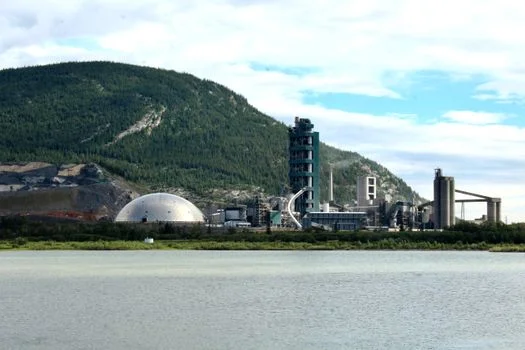
Grinding is the first step in a multi-stage compliance strategy. For metalworking plants, EPA 40 CFR Part 434 mandates TSS limits of <30 mg/L. While a grinder alone does not remove TSS, it conditions the solids so that DAF systems for post-grinding TSS removal to meet EPA limits can operate at peak efficiency. Small, uniform particles are much easier to float or settle than large, irregular rags.
ISO 14001 standards emphasize waste reduction. Grinding systems can reduce total sludge volume by 30–50% by breaking down bulky solids, which directly lowers landfill and incineration costs. In food processing (TSS <50 mg/L) or pulp and paper (TSS <100 mg/L), grinding ensures that the effluent is compatible with biological treatments like MBR systems for near-reuse-quality effluent after grinding. Monitoring is typically handled via online TSS meters with an accuracy of ±2 mg/L, ensuring that any deviation from discharge permits is caught before fines are incurred.
Common Failure Modes and Troubleshooting Guide
Even the most robust grinding wastewater treatment system requires proactive maintenance to avoid failure. The most common failure mode is cutter wear. Symptoms include increased motor amperage as the machine struggles to shear solids and an observable increase in particle size in the effluent. Cutters should be inspected every 6 months and replaced every 12–18 months. If processing highly abrasive grit, consider tungsten carbide-tipped cutters.
Motor overload is another frequent issue, often caused by a "non-grindable" object like a large piece of tramp metal. While the auto-reverse function protects the motor, persistent overloads require an upstream inspection of the bar screens. Ragging can still occur if the grinder is undersized for the fiber load; in these cases, installing 5 mm rotary bar screens to prevent ragging in grinding systems is the best corrective action. Vibration monitoring is also essential; if levels exceed 0.15 mm/s RMS, the cutters may be out of balance or the shaft may be misaligned, requiring the use of laser alignment tools.
How to Select the Right Grinding Wastewater Treatment System
Engineers should follow a structured decision framework to ensure the selected system meets both current and future plant needs. The first step is to measure the peak hourly flow rate and the solids load by volume. If the TSS is consistently above 5%, a heavy-duty twin-shaft design is mandatory.
- Step 1: Determine hydraulic requirements (Peak Flow + 20% safety margin).
- Step 2: Identify installation point (Open channel = Channel Grinder; Closed pipe = Inline Grinder; Wet well = Grinder Pump).
- Step 3: Select materials based on pH and abrasiveness (316L for low pH, Hardened Alloy for high grit).
- Step 4: Define control requirements (SCADA integration, auto-reverse, remote monitoring).
- Step 5: Evaluate downstream compatibility. For example, if moving toward zero-discharge, ensure the grinder output is fine enough for phosphorus removal after grinding and DAF processes.
A simple decision flowchart: If flow >500 m³/h and solids >5% TSS, use a channel grinder with 316L housing. If flow <300 m³/h and the application is a lift station, a submersible grinder pump is the more cost-effective choice.
Frequently Asked Questions
What’s the difference between a grinder and a shredder?
Grinders use intermeshing cutters to produce fine particles (<6 mm) suitable for protecting pumps and membranes. Shredders typically use high-speed impact or larger blades to produce 10–50 mm strips, which are used for volume reduction in landfill applications but are insufficient for protecting sensitive wastewater equipment.
How often should cutter teeth be replaced?
In most industrial applications, stainless steel cutters last 12–18 months. Hardened carbon steel cutters may need replacement every 6–12 months if the wastewater contains high concentrations of sand or grit. Monitoring motor amperage is the best way to track wear levels.
Can grinder pumps handle fibrous materials like rags?
Yes, grinder pumps are specifically designed for "ragging" materials. However, for extreme loads, it is recommended to install a bar screen upstream to prevent the pump from operating in a constant state of auto-reverse, which increases energy costs and wear.
What’s the CAPEX for a high-flow channel grinder?
A high-flow system (1,000+ m³/h) with redundant motors, 316L stainless steel construction, and full PLC controls typically ranges from $120,000 to $450,000 depending on the specific customization and civil engineering requirements.
Do grinding systems meet EPA TSS limits?
Grinding is a conditioning step, not a removal step. While it can reduce measured TSS by 92–97% by breaking down large solids, it must be paired with a DAF or MBR system to consistently meet the <30 mg/L limit required by EPA 40 CFR Part 434.