CMP Slurry Wastewater Treatment: 2025 Engineering Specs, Hybrid Systems & Zero-Discharge Compliance
CMP slurry wastewater treatment requires a multi-stage system to remove fine particles (<150 nm), soluble copper (5–100 ppm), and oxidizing agents like peroxides. Hybrid systems combining dissolved air flotation (DAF), microfiltration (MF), ion exchange, and reverse osmosis (RO) achieve 99% TSS removal, <0.1 ppm Cu, and 85% water reuse—meeting EPA and semiconductor fab discharge limits (e.g., Cu < 1.3 ppm per 40 CFR 469). Key specs: MF flux rates of 50–150 LMH, ion exchange resin capacity of 1.2–2.0 eq/L, and RO recovery rates up to 90%.
Why CMP Slurry Wastewater Treatment Fails Discharge Tests (And How to Fix It)
Failing discharge tests in semiconductor manufacturing often stems from the inability of conventional sedimentation systems to address the sub-micron nature of chemical mechanical polishing (CMP) byproducts. CMP slurry contains alumina, silica, or ceria particles typically smaller than 150 nm, soluble copper concentrations ranging from 5 to 100 ppm, and high concentrations of oxidizing agents such as hydrogen peroxide. Because these nanoparticles are stabilized by surfactants and specific pH buffers, they do not settle through gravity alone, leading to persistent Total Suspended Solids (TSS) and turbidity violations.
Many fabs struggle to meet EPA 40 CFR 469 limits, which mandate copper levels below 1.3 ppm and TSS below 30 mg/L, often relying on Publicly Owned Treatment Works (POTW) dilution rather than effective onsite removal. This strategy is increasingly risky as local regulators tighten local limits to <0.5 ppm Cu in regions like the EU or Taiwan. A primary failure point is the degradation of downstream components; for instance, residual peroxide in the wastewater stream aggressively oxidizes and degrades ion exchange resins, reducing their lifespan by up to 60% if not neutralized (HydropureWater field data, 2025). To prevent this, upstream reduction using sodium bisulfite at a 1:1 molar ratio to the peroxide concentration is required.
A 2024 case study from a 300 mm fab in Taiwan highlights the necessity of a hybrid approach. The facility faced frequent fines as their legacy treatment system could not lower copper levels below 80 ppm. By implementing a multi-stage DAF system for CMP slurry pretreatment followed by microfiltration and ion exchange, they reduced effluent copper to 0.05 ppm. This upgrade avoided approximately $250,000 per year in regulatory fines and enabled the fab to reclaim 82% of its process water, significantly reducing its environmental footprint.
CMP Slurry Wastewater Composition: What’s Really in Your Effluent?
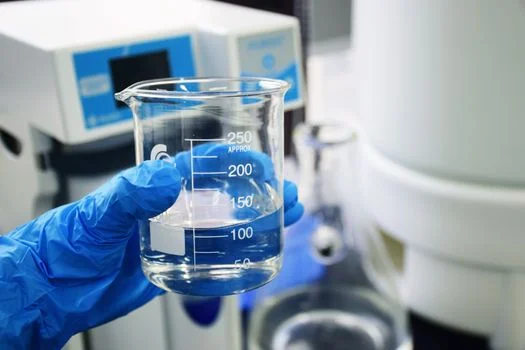
Effective treatment design begins with an accurate characterization of the CMP waste stream, which varies significantly between oxide, tungsten, and copper polishing processes. The particles used—primarily fumed silica (SiO2), colloidal silica, or calcined alumina (Al2O3)—exhibit a size distribution from <50 nm to 150 nm. These particles possess a high surface area and are often chemically stabilized to prevent agglomeration, which complicates traditional coagulation-flocculation processes.
Beyond solids, the dissolved chemistry is complex. Effluent typically contains dissolved metals such as Cu (5–100 ppm), Fe (often from ferric nitrate oxidizers), and trace amounts of Au or Ag. Oxidizing agents like H2O2 are present at concentrations of 0.1% to 1.0% v/v, alongside organic chelants such as citric acid or EDTA. These chelants complex with copper ions, preventing them from precipitating as hydroxides even at high pH levels. buffers like KOH, NH4OH, and monoethanolamine (MEA) typically raise the influent pH to 9–11, necessitating precise chemical dosing for CMP wastewater pH adjustment using H2SO4 or HCl to reach the optimal range for solids removal.
| Parameter | Typical Concentration Range | Primary Treatment Challenge |
|---|---|---|
| Particle Size (Silica/Alumina) | 30 nm – 150 nm | Stable colloidal suspension; bypasses sand filters. |
| Total Suspended Solids (TSS) | 500 – 3,000 mg/L | High loading fouls membranes quickly. |
| Dissolved Copper (Cu2+) | 5 – 100 ppm | Chelated by organic acids; requires ion exchange. |
| Hydrogen Peroxide (H2O2) | 1,000 – 10,000 mg/L | Oxidizes RO membranes and IX resins. |
| pH Range | 9.0 – 11.5 | Requires neutralization for biological/membrane safety. |
Treatment Methods Compared: DAF vs. Microfiltration vs. Ion Exchange vs. RO
Selecting the appropriate technology stack requires balancing removal efficiency against CapEx and OpEx. Dissolved Air Flotation (DAF) is the preferred pretreatment for high-solids CMP waste. By injecting micro-bubbles (20–50 μm), DAF lifts flocculated particles to the surface. It typically removes 80–90% of TSS and 50–70% of copper when paired with coagulants like Polyaluminum Chloride (PAC) at 50–100 ppm. For a 50 m³/h flow rate, DAF CapEx ranges from $200,000 to $500,000, offering a robust first line of defense against membrane fouling.
Microfiltration (MF) provides a more absolute barrier, utilizing membranes with pore sizes of 0.1–0.2 μm. MF systems operate at flux rates of 50–150 LMH and can remove 99% of TSS without the heavy chemical dosing required by DAF. However, MF is susceptible to fouling from the slurry’s chemical additives, requiring automated backwashing every 30–60 minutes. While more expensive than DAF ($300,000–$800,000 for 50 m³/h), MF is essential for protecting downstream RO systems.
Ion exchange (IX) is the gold standard for polishing copper to sub-ppb levels. Using strong acid cation (SAC) resins with a capacity of 1.2–2.0 eq/L, IX systems capture Cu2+ ions that remain in solution after solids removal. The main constraint is the presence of oxidizers; as noted, peroxide must be removed to prevent resin bead fragmentation. For water reuse applications, RO systems for CMP water reuse are employed to remove 90–95% of Total Dissolved Solids (TDS), achieving recovery rates of up to 90% when the influent is properly pre-treated by MF and IX.
| Technology | Removal Efficiency (Cu/TSS) | Engineering Specs | 2025 CapEx (50 m³/h) |
|---|---|---|---|
| DAF | 60% Cu / 85% TSS | Bubble size: 20–50 μm; PAC: 75 ppm | $200K – $500K |
| Microfiltration | 40% Cu / 99% TSS | Flux: 100 LMH; Pore: 0.1 μm | $300K – $800K |
| Ion Exchange | 99% Cu / 0% TSS | Resin Capacity: 1.5 eq/L | $150K – $400K |
| Reverse Osmosis | 99% Cu / 99% TDS | Recovery: 75–90% | $500K – $1.2M |
Hybrid System Design: Step-by-Step Process for Zero-Discharge Compliance
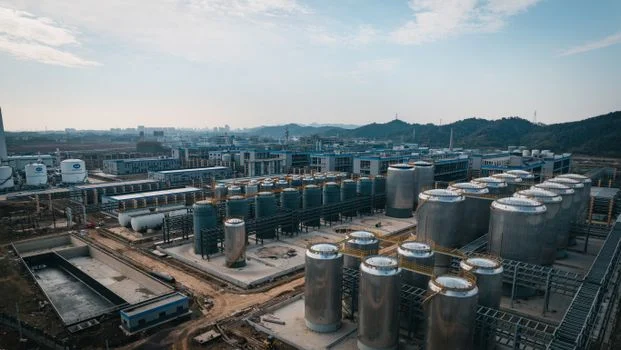
A reliable hybrid system design integrates these technologies into a seamless process flow, ensuring each stage optimizes the performance of the next. The following five-step process is the current industry benchmark for zero-discharge or high-reuse compliance in semiconductor manufacturing:
- Equalization and Peroxide Neutralization: Influent is collected in an equalization tank with a 2–4 hour Hydraulic Retention Time (HRT). A mixer ensures homogenization while an ORP-controlled dosing system injects sodium bisulfite at a 1:1 molar ratio to neutralize H2O2, protecting downstream resins and membranes.
- DAF Pretreatment: The waste is pumped to a DAF unit where PAC (50–100 ppm) and anionic polyacrylamide (1–3 ppm) are dosed. This removes the bulk of the solids, reducing the TSS load from >1,000 mg/L to <100 mg/L.
- Microfiltration (MF): The DAF effluent passes through 0.1 μm hollow fiber MF membranes. Operating at a flux of 100 LMH, this stage removes remaining fine particles. Automated backwashing is triggered by transmembrane pressure (TMP) or a 45-minute timer.
- Copper Polishing (Ion Exchange): The MF permeate, now clear of solids, enters dual-stage ion exchange columns. Strong acid cation resins capture dissolved copper. Once the lead column reaches a breakthrough threshold (e.g., >0.5 ppm Cu), it is regenerated with 5–10% H2SO4.
- Reverse Osmosis (RO) Reuse: For fabs targeting water reuse, the IX effluent is processed through RO. This removes dissolved salts and organic buffers. The permeate is sent back to the fab's UPW (Ultrapure Water) system or used for cooling towers, while the concentrate is managed through evaporation or controlled discharge.
Continuous monitoring is critical. Monitoring points for pH, ORP, TSS, and Cu must be integrated with an SCADA system. For example, an alarm threshold for TSS >100 mg/L at the DAF outlet should automatically increase coagulant dosing or trigger an MF backwash cycle to prevent downstream fouling.
CapEx and OPEX Breakdown: How Much Does a CMP Wastewater System Cost?
Budgeting for a CMP treatment system requires a distinction between initial capital investment and the long-term cost of ownership. For a standard 50 m³/h hybrid system (DAF + MF + IX + RO), the CapEx in 2025 typically ranges from $1.2 million to $3.5 million. This range accounts for the level of automation, materials of construction (e.g., high-grade stainless steel vs. FRP), and the specific slurry types being treated. Fabs producing 300 mm wafers generally require 2–3 times higher flow rates than older 200 mm facilities, scaling costs proportionally.
The OPEX for such a system usually falls between $250,000 and $500,000 annually. Chemical consumption—including PAC, polymers, sodium bisulfite, and regeneration acids—accounts for the largest share (30%). Energy usage for high-pressure RO pumps and DAF air saturation systems follows at 25%. Membrane replacement is a significant periodic cost; RO membranes typically last 3–5 years, while MF membranes may last 5–7 years depending on cleaning efficacy. When water reuse rates exceed 70%, the savings on raw water procurement and discharge surcharges ($0.50–$2.00/m³) often result in a payback period of 3 to 5 years.
| Cost Category | Percentage of Annual OPEX | Typical Annual Cost (50 m³/h) |
|---|---|---|
| Chemicals (Coagulants, Bisulfite, Acids) | 30% | $75,000 – $150,000 |
| Energy (Pumps, Compressors) | 25% | $62,500 – $125,000 |
| Membrane Replacement (MF/RO) | 20% | $50,000 – $100,000 |
| Labor & Maintenance | 15% | $37,500 – $75,000 |
| Resin Replacement/Regeneration | 10% | $25,000 – $50,000 |
Case Study: Reducing Cu from 80 ppm to 0.05 ppm in a 300 mm Fab
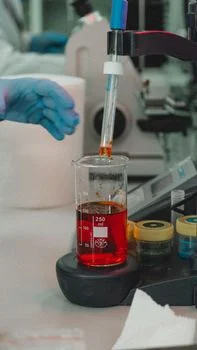
In 2024, a major semiconductor manufacturer in Taiwan faced a critical compliance challenge. Their existing treatment process, which relied on simple pH adjustment and settling, could not consistently meet the local EPA limit of 1.0 ppm Cu. The influent CMP waste from their copper interconnect process contained 80 ppm of soluble copper and over 2,000 mg/L of silica-based TSS. high peroxide levels were causing rapid degradation of their municipal discharge pipes.
The solution implemented was a four-stage hybrid system designed for 100 m³/h. Pretreatment involved DAF with 50 ppm PAC dosing, followed by two parallel MF trains utilizing 0.1 μm membranes. The MF permeate was then passed through three ion exchange columns (two in series, one on standby) loaded with 1.5 eq/L capacity resin. Finally, an RO system was installed to facilitate water reuse. The results were immediate: copper levels dropped to 0.05 ppm—well below the 1.0 ppm limit—and TSS was reduced to <5 mg/L. The facility achieved an 82% water reuse rate, significantly lowering their daily water intake.
Key lessons learned from this installation included the vital role of sodium bisulfite. By precisely controlling the bisulfite dose via ORP sensors, the fab extended the ion exchange resin life by 40% compared to previous pilot tests. Additionally, optimizing the MF backwash frequency to every 45 minutes allowed the system to maintain a stable flux of 100 LMH, even during peak slurry discharge events. The total CapEx for this 100 m³/h system was $2.8 million, with an annual OPEX of approximately $320,000.
Compliance Checklist: How to Ensure Your CMP Wastewater Meets Global Standards
EHS managers must navigate a complex web of regional and international regulations. While the US EPA 40 CFR 469 provides a baseline, many international fabs must adhere to stricter local standards to maintain their "green" certifications and operating permits. For comprehensive guidance on broader metal removal, engineers can refer to heavy metal wastewater treatment methods used in similar industrial sectors.
| Regulatory Body | Copper (Cu) Limit | TSS Limit | pH Range |
|---|---|---|---|
| US EPA (40 CFR 469) | < 1.3 ppm | < 30 mg/L | 6.0 – 9.0 |
| EU (Directive 2010/75/EU) | < 0.5 ppm | < 20 mg/L | 6.5 – 8.5 |
| Taiwan EPA | < 1.0 ppm | < 25 mg/L | 6.0 – 9.0 |
| China (GB 30484-2013) | < 0.5 ppm | < 20 mg/L | 6.0 – 9.0 |
To ensure ongoing compliance, facilities should implement continuous monitoring for pH and ORP. Daily composite sampling for TSS and Cu is recommended, alongside quarterly comprehensive testing for COD and BOD. Documentation is equally important; maintaining a strict chain of custody for offsite sludge disposal and detailed lab reports for POTW discharge is essential for passing regulatory audits. For those operating in Europe, understanding EU compliance for semiconductor wastewater is particularly important as standards for "Best Available Techniques" (BAT) continue to evolve.
Frequently Asked Questions
How do you remove copper from CMP slurry wastewater?
Copper removal requires a two-step approach: first, removing the solids that may have adsorbed copper using DAF or MF, and second, using ion exchange resins or chelating precipitants to remove soluble copper. Because copper is often chelated in CMP slurry, standard hydroxide precipitation is usually insufficient.
What is the typical flux rate for MF in CMP wastewater treatment?
Typical flux rates for microfiltration in CMP applications range from 50 to 150 LMH (Liters per Square Meter per Hour). The specific rate depends on the particle concentration and the frequency of backwashing and Clean-in-Place (CIP) cycles.
Can CMP wastewater be reused in the fab?
Yes, with a hybrid DAF-MF-IX-RO system, up to 85% of CMP wastewater can be reclaimed. The RO permeate typically meets the standards for cooling tower makeup or can be further polished for use as UPW (Ultrapure Water) makeup.
Why does hydrogen peroxide affect CMP wastewater treatment?
Hydrogen peroxide is a strong oxidizer that can chemically attack and degrade the polymer structure of ion exchange resins and RO membranes. It must be neutralized upstream using a reducing agent like sodium bisulfite or by passing the water through granular activated carbon (GAC).