An ammonia wastewater treatment system must cut effluent ammonia-N to roughly 1–10 mg/L to meet EPA and EU discharge permits, depending on industry and receiving water. Hybrid MBR-RO trains combine biological nitrification/denitrification (90–98% removal under stable load) with reverse osmosis (95%+ rejection of residual ammonia) so plants can recover concentrate while producing reusable permeate. When influent ammonia exceeds about 200 mg/L as N, physicochemical steps such as stripping or struvite precipitation (80–95% removal) are usually placed upstream to protect nitrifiers.
What Specs and Costs Define Ammonia Treatment in 2026?
Industrial ammonia treatment in 2026 uses biological nitrification below about 200 mg/L as N, physicochemical pretreatment for higher spikes, and hybrid MBR-RO when effluent must stay below 1 mg/L. Typical industrial CAPEX spans about $250,000–$5 million. OPEX usually runs from about $0.35/m³ to more than $1.20/m³.
Most plants we size for petrochemical or fertilizer sidestreams run biological stages at the lower end of the ammonia load band. They add equalization or stripping when spikes hit 300–800 mg/L as N. Wrong boundary conditions cause more permit failures than membrane brand choice.
Why Biological Ammonia Treatment Fails Under Load Spikes
A 2024 Gulf Coast petrochemical incident produced $2.1M in EPA fines and a 45-day shutdown after biological treatment collapsed under ammonia spikes. The plant saw influent ammonia-N swing between 300–800 mg/L while its conventional activated sludge (CAS) train was sized for typical loads of 20–50 mg/L as N. Free ammonia toxicity knocked out Nitrosomonas and Nitrobacter, so nitrification stopped and the permit was breached.
Conventional biological systems depend on a narrow balance of load, pH, and temperature. Ammonia above about 200 mg/L as N can inhibit ammonia-oxidizing bacteria and block conversion to nitrate. Under that stress, effluent ammonia rises fast and recovery can take weeks of reseeding and aeration control.
Standalone biology is rarely enough for plants with chronic high or swinging ammonia. Hybrid trains—MBR plus RO, or stripping ahead of biology—give a wider operating window. For MBR-focused ammonia design detail, see ammonia wastewater treatment by MBR engineering specs. CAPEX and OPEX still trade off against resilience, so engineers should size for the 95th-percentile load, not the average day.
Ammonia Wastewater Treatment System Methods Compared
Ammonia removal methods fall into biological, physicochemical, and hybrid classes, each matched to influent range and effluent target. Biological routes include CAS nitrification/denitrification and anammox. Physicochemical routes include stripping, RO, ion exchange, and struvite precipitation. Hybrid trains combine both when loads are high or reuse limits are tight.
Selection turns on influent ammonia, effluent limit, CAPEX, OPEX, energy, and sludge yield. Biology is usually preferred below about 200 mg/L as N because unit cost is lower. Streams above about 500 mg/L as N typically need physicochemical pretreatment. Struvite can recover 80–95% of ammonia as fertilizer solids when Mg and phosphate are available; RO is used when effluent must fall below 1 mg/L as N or when concentrate recovery is the goal.
The table below compares common ammonia treatment methods on load range, effluent, cost, energy, and sludge.
| Method | Influent Ammonia Range (mg/L) | Effluent Ammonia (mg/L) | CAPEX ($/m³/day) | OPEX ($/m³) | Energy Use (kWh/m³) | Sludge Production (kg/m³) | Key Limitations |
|---|---|---|---|---|---|---|---|
| Nitrification/Denitrification (CAS) | 20–200 | 5–15 | 500–1,500 | 0.20–0.45 | 0.3–0.6 | 0.3–0.6 | Sensitive to spikes, large footprint, high sludge |
| Anammox | 50–1,000 | 5–10 | 800–2,000 | 0.15–0.35 | 0.1–0.3 | 0.05–0.15 | Slow start-up, sensitive to oxygen, specific conditions |
| Ammonia Stripping | 500–5,000 | 50–200 | 1,000–2,500 | 0.80–1.50 | 1.0–2.5 | <0.01 | High energy, air pollution, scaling, pH adjustment |
| Reverse Osmosis (RO) | 100–1,000 | <0.1–5 | 1,500–4,000 | 0.60–1.20 | 1.5–3.0 | <0.01 | Pretreatment needed, membrane fouling, concentrate disposal |
| Struvite Precipitation | 200–2,000 | 50–200 | 800–1,800 | 0.40–0.70 | 0.1–0.2 | 0.2–0.4 | Requires Mg & P, pH control, scaling risk |
| MBR + RO (Hybrid) | 100–1,500 | <0.1–1 | 2,000–5,000 | 0.70–1.30 | 1.8–3.5 | 0.05–0.2 | Higher CAPEX, membrane management |
| Stripping + Biological (Hybrid) | 500–5,000 | 5–15 | 1,500–3,500 | 0.70–1.40 | 1.2–2.8 | 0.1–0.3 | Energy for stripping, air treatment for stripped ammonia |
Engineering Specs for Biological Ammonia Treatment: Nitrification, Denitrification & Anammox
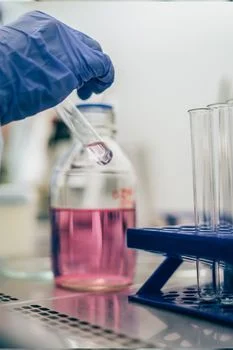
Biological ammonia removal needs tight control of DO, pH, HRT, and SRT for nitrification, denitrification, and anammox. Nitrification is a two-step aerobic path: ammonia-oxidizing bacteria (AOB) form nitrite, then nitrite-oxidizing bacteria (NOB) form nitrate. Plant design ranges commonly used in practice include DO 2–4 mg/L, pH 7.5–8.5, HRT 6–12 hours, SRT 10–20 days, and mixed-liquor temperatures of 25–35°C. Earlier citations labeled these as an “EPA Nitrogen Control Manual 2023” set; the EPA Nutrient Control Design Manual itself is dated August 2010 (EPA/600/R-10/100). According to that EPA manual (2010), with DO generally ≥2 mg/L and pH ≥6.8, typical design SRT for nitrification is 10–20 days at 10°C and 4–7 days at 20°C.
Denitrification then converts nitrate to nitrogen gas under anoxic conditions. Operators hold DO below about 0.5 mg/L, pH near 7–8, and HRT about 2–4 hours. An external carbon source such as methanol or acetate is often dosed to a C:N ratio of 4:1–6:1 so denitrifiers have enough electron donor.
Anammox converts ammonia and nitrite directly to nitrogen gas under anaerobic conditions. Typical operating windows are 30–40°C, pH 7.5–8, and HRT of 1–2 days. Anammox can cut sludge production by about 60% versus full nitrification/denitrification when the nitrite pathway is stable, which lowers solids handling cost on sidestreams.
Membrane bioreactors tighten biological ammonia control by retaining slow-growing nitrifiers. An MBR Membrane Bioreactor Wastewater Treatment System for ammonia removal (90–98% under stable load) commonly uses submerged PVDF membranes at about 0.1 μm pore size and flux of 15–25 LMH. Higher SRT without washout keeps AOB active. Aeration plus membrane scouring usually draws about 0.4–0.8 kWh/m³ on industrial ammonia trains we commission.
How do you test ammonia oxidation rate in MBR?
Ammonia oxidation rate testing in an MBR measures how fast retained biomass converts NH₄-N at controlled DO and temperature. Spike mixed liquor with a known ammonia dose, hold DO near 2–4 mg/L, and track NH₄-N decline over 1–4 hours. Report mg N oxidized per g MLVSS per hour, then compare with design load (kg N/d) divided by aerobic mass.
Rates far below design usually signal inhibition, short SRT, or DO limitation. Most plants we size for industrial ammonia keep a monthly rate check during pilot and the first year of operation. Fix biology before raising membrane flux.
Membrane pore size near 0.1 μm and flux of 15–25 LMH matter more for solids retention than brand labels alone. Keep MLSS and SRT in the design band so AOB inventory matches the ammonia load used in the oxidation-rate test.
Physicochemical Ammonia Removal: Stripping, RO, and Struvite
Physicochemical methods handle high-strength ammonia streams and often deliver over 80% removal when chemistry is controlled. Ammonia stripping converts NH₄⁺ to NH₃ at high pH, then strips the gas with air or steam in a packed tower. Typical design sets pH at 11–12 with NaOH, air-to-water ratios of 2,000–5,000:1, and temperatures of 30–50°C, yielding about 85–95% ammonia removal. Energy for heat and air often lands near $0.80–$1.50/m³, and CaCO₃ scaling at high pH must be managed.
RO concentrates residual ammonia when reuse or ultra-low discharge is required. Low-pH RO (pH 5–6) keeps ammonia as NH₄⁺, which membranes reject more readily. Industrial RO for ammonia concentration and water reuse typically runs 75–90% recovery, 15–25 LMH flux, and over 95% ammonia rejection when pretreatment holds SDI below 3 and turbidity below 0.5 NTU. Details on membrane trains are on the Industrial Reverse Osmosis (RO) Water Treatment System page.
Struvite precipitation recovers ammonia as MgNH₄PO₄·6H₂O by dosing magnesium and phosphate at pH 8.5–9.5. A Mg:NH₄:PO₄ molar ratio near 1:1:1 supports 80–95% ammonia removal when kinetics are right. Product struvite can sell near $200–$400/ton and offset reagent cost. pH control for stripping and struvite is usually handled by Automatic Chemical Dosing Systems.
Key physicochemical setpoints are summarized below.
| Method | Key Parameter | Typical Range/Value | Removal Efficiency |
|---|---|---|---|
| Ammonia Stripping | pH | 11–12 (NaOH dosing) | 85–95% |
| Ammonia Stripping | Air-to-Water Ratio | 2,000–5,000:1 | 85–95% |
| Reverse Osmosis | pH (for ammonia rejection) | 5–6 | 95%+ |
| Reverse Osmosis | Flux Rate | 15–25 LMH | 95%+ |
| Struvite Precipitation | pH | 8.5–9.5 | 80–95% |
| Struvite Precipitation | Mg:NH₄:PO₄ Ratio | 1:1:1 | 80–95% |
Hybrid Ammonia Treatment: MBR + RO and Stripping + Biological
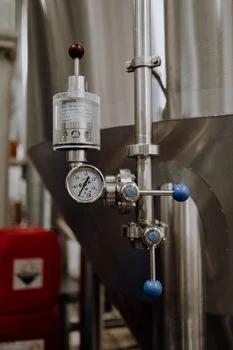
Hybrid trains combine biology and physicochemical unit operations when influent is high and effluent or reuse limits are strict. In an MBR + RO layout, the MBR first removes about 90–95% of ammonia-N through nitrification/denitrification. Low-solids MBR effluent then feeds RO, which concentrates residual ammonia for recovery while producing reuse-grade permeate. MBR flux is typically 15–25 LMH; downstream RO often runs 15–20 LMH, with overall water recovery around 85–95% when scaling control is sound.
Stripping plus biological treatment fits very high influent ammonia. A stripping tower can remove 80–90% of the ammonia load so the downstream biological reactor sees less than about 50 mg/L as N. That cut reduces aeration volume and protects nitrifiers. CAPEX is often lower than building a biological reactor sized for the raw peak load, though air treatment for stripped ammonia remains an OPEX line item.
A 2024 fertilizer plant case in India used MBR + RO on 500 m³/day of wastewater at 1,200 mg/L ammonia-N. The train reached about 99.8% ammonia removal with reuse-quality permeate. Concentrated RO reject was converted to struvite, generating roughly $1.2M/year in fertilizer revenue in that reported project. Resource recovery does not erase energy cost, but it can change the payback math on hybrid CAPEX.
When we compare bids, we score hybrid options on peak ammonia load, not average day flow. A train that looks cheap at 200 mg/L as N can fail at 800 mg/L without equalization or stripping. Document the 95th-percentile ammonia mass load in the design basis before locking membrane area.
What CAPEX and OPEX apply to MBR systems?
Industrial ammonia treatment CAPEX typically ranges from $250,000 to over $5 million, while OPEX tracks energy, chemicals, labor, maintenance, and membrane life. RO membranes are commonly replaced every 3–5 years; MBR membranes often last 5–8 years under controlled fouling. Petrochemical and fertilizer sites with high ammonia usually need hybrid equipment, so upfront cost rises, but struvite or water reuse can offset OPEX over time.
MBR-centered cost curves for small industrial trains are driven more by aeration and membrane replacement than by civil volume. At roughly 100–500 m³/day, OPEX often sits near $0.70–$1.30/m³ for MBR + RO hybrids, while simpler municipal MBR duties at lower ammonia can approach $0.35/m³. Always separate CAPEX per m³/day of capacity from OPEX per m³ treated; mixing the two units is a common bid error.
| Industry | System Type | Capacity (m³/day) | CAPEX ($) | OPEX ($/m³) | Notes |
|---|---|---|---|---|---|
| Petrochemical | MBR + RO | 200 | $2.1M | $0.90 | Ammonia recovery as struvite, high water reuse potential. |
| Fertilizer | Stripping + Biological | 1,000 | $3.8M | $0.60 | Energy-intensive stripping, lower biological load. |
| Municipal | MBR | 5,000 | $12M | $0.35 | Lower influent ammonia levels, high effluent quality. |
| Electronics | RO + Ion Exchange | 100 | $1.5M | $1.20 | Ultra-pure water reuse for manufacturing processes. |
These figures are order-of-magnitude estimates. Site labor, civil works, and pretreatment can move totals by a wide margin. For related metals treatment context in petrochemical water, see How to Treat Nickel Wastewater.
Compliance Standards for Ammonia Discharge: EPA, EU, and Industry Limits
Regulatory frameworks such as EPA effluent guidelines and the EU Urban Waste Water Directive 91/271/EEC set ammonia-N limits that drive process selection. Permit breaches still trigger fines and forced outages, as in the petrochemical case above. Designers should read the subcategory text, not a generic “ammonia number,” before freezing CAPEX.
Under EPA 40 CFR Part 415 for inorganic chemicals manufacturing, ammonia-N limits cited for some subcategories fall near 1.9–6.8 mg/L, depending on process. Petroleum refining limits are often summarized near 2.1–4.2 mg/L ammonia-N. Fertilizer plants are often discussed with ammonia-N bands of 10–20 mg/L in permits. Production-normalized new-source standards under 40 CFR 418.35 for urea list ammonia-N maxima of 0.53 kg per 1,000 kg of product (eCFR §418.35).
In the EU, Directive 91/271/EEC sets an annual average of 15 mg/L ammonia-N for discharges to sensitive areas such as the Baltic or Black Sea. China’s GB 18918-2002 Class 1A limit of 5 mg/L ammonia-N remains a common municipal benchmark for surface-water discharge.
Reuse specs can be stricter than discharge permits. Semiconductor plants often need ammonia-N below 0.1 mg/L in ultrapure make-up water; see Ultra-pure water reuse systems for semiconductor plants. Municipal plants frequently target effluent below 1 mg/L ammonia-N. MBR effluent commonly reaches below 1 mg/L as N; advanced RO can reach below 0.1 mg/L as N when pretreatment is clean.
How to Select an Ammonia Treatment Train: A 5-Step Checklist
Selecting an ammonia train works best as a five-step engineering checklist, from characterization through pilot testing. Skipping characterization is the fastest path to an undersized aeration basin.
- Characterize wastewater thoroughly. Measure influent ammonia-N, flow, pH, temperature, COD, and TSS across peak weeks. If the stream sits near 800 mg/L ammonia-N, skip standalone CAS and shortlist hybrid or physicochemical options.
- Define effluent targets precisely. State discharge versus reuse and list every applicable limit. Targets below 1 mg/L as N for discharge, or below 0.1 mg/L for ultrapure reuse, usually require MBR, RO, or both.
- Compare CAPEX/OPEX trade-offs. For a 500 m³/day facility, an MBR + RO package may land near $2.5M CAPEX and $0.70/m³ OPEX, while stripping plus biology may show about $1.8M CAPEX but $0.90/m³ OPEX from energy. Include recovery credits only when product quality and offtake are real.
- Assess site constraints. Check footprint, power, staffing, and chemical storage. Stripping towers often need two to three times the plot space of a compact MBR skid on the same hydraulic duty.
- Pilot the shortlist. Run continuous ammonia-N sampling, measure kWh/m³, track NaOH or carbon dose, log membrane fouling and cleaning intervals, and quantify sludge yield before freezing the full-scale design.
Who This Is For / Next Step
This guidance is for plant engineers, EPC process leads, and procurement managers sizing industrial or municipal ammonia controls where permits sit near 1–10 mg/L as N. Look elsewhere if your only need is low-strength municipal polishing with no spike risk and no reuse target. To size a hybrid MBR-RO or stripping-biology package against your load profile, request a project-specific ammonia treatment quote with influent data and permit limits attached.
Frequently Asked Questions
What are the primary methods for ammonia removal in industrial wastewater?
Primary ammonia removal methods are biological nitrification/denitrification and anammox, plus physicochemical stripping, reverse osmosis, and struvite precipitation. Biology is usually cost-effective below about 200 mg/L ammonia-N. Physicochemical or hybrid trains are required above that band, or when effluent must fall below 1 mg/L as N for discharge or reuse. Match the method to peak load, not average day.
How do hybrid MBR-RO systems enhance ammonia treatment?
Hybrid MBR-RO systems pair MBR biological removal of about 90–95% ammonia-N with RO rejection above 95% on the residual. Effluent can reach below 0.1 mg/L as N for reuse, while RO concentrate can feed struvite recovery. A 2024 fertilizer plant case treating 500 m³/day at 1,200 mg/L ammonia-N reported about 99.8% overall removal using this layout.
What are typical CAPEX and OPEX for an industrial ammonia treatment system?
Industrial ammonia treatment CAPEX commonly spans about $250,000 to more than $5 million, depending on capacity and hybrid complexity. OPEX often ranges from about $0.35/m³ for lower-strength municipal MBR duty to more than $1.20/m³ for electronics reuse trains. Energy, chemical dose, labor, and membrane replacement every 3–5 years (RO) or 5–8 years (MBR) dominate the operating budget.
What challenges appear when treating high-concentration ammonia wastewater?
Ammonia above about 200 mg/L as N can inhibit nitrifiers and collapse biological treatment. Other failure modes include high stripping energy, RO fouling when SDI exceeds 3, and poor pH control during struvite or stripping. Upstream equalization or physicochemical pretreatment is usually required before biology on spiked petrochemical and fertilizer streams.
What EPA limits apply to ammonia discharge across industries?
EPA subcategory limits vary. Chemical manufacturing citations often fall near 1.9–6.8 mg/L ammonia-N; petroleum refining summaries often cite 2.1–4.2 mg/L; fertilizer plants are frequently discussed at 10–20 mg/L in concentration terms. Urea new-source standards in 40 CFR 418.35 are production-normalized, with ammonia-N maxima of 0.53 kg per 1,000 kg product for listed urea operations (eCFR §418.35).