Printed Circuit Board Organic Wastewater Treatment: 2025 Engineering Specs, 99% COD Removal & Zero-Risk Compliance Guide
Printed circuit board (PCB) organic wastewater treatment requires specialized systems to remove 90–99% of COD (500–5,000 mg/L influent), surfactants, and ammonia while meeting China’s GB 39731-2020 limits (COD ≤ 80 mg/L, NH₃-N ≤ 15 mg/L). Membrane bioreactors (MBRs) and dissolved air flotation (DAF) systems achieve 95%+ TSS removal, while reverse osmosis (RO) and zero liquid discharge (ZLD) systems recover 85–95% of process water. Key challenges include membrane fouling from organic dispersants and ammonia toxicity in biological treatment, addressed via pre-treatment with chemical coagulation or ion exchange.
Achieving these stringent discharge standards necessitates a multi-stage approach, often integrating physical, chemical, and biological processes. MBR systems, for instance, combine conventional activated sludge treatment with membrane filtration, offering superior effluent quality, reduced footprint, and higher biomass concentrations compared to traditional methods. This allows for more efficient degradation of complex organic compounds and robust nitrification-denitrification for ammonia removal. DAF systems are crucial in the initial stages, effectively removing suspended solids, oils, greases, and colloidal particles that can otherwise impede downstream processes and contribute to high COD. Their ability to handle fluctuating influent quality makes them an invaluable pre-treatment step.
The challenge of membrane fouling, particularly in RO systems, stems from the complex matrix of organic dispersants, surfactants, and colloidal particles found in PCB wastewater. These substances can adhere to membrane surfaces, forming a dense gel layer that reduces permeability and increases operational pressure, leading to frequent cleaning cycles and reduced membrane lifespan. Advanced pre-treatment strategies, such as enhanced coagulation-flocculation, ultrafiltration, or specific adsorbent resins, are often deployed to mitigate these fouling precursors. Similarly, ammonia toxicity in biological systems is a significant concern. High concentrations of free ammonia (NH₃) can inhibit the activity of nitrifying bacteria (Nitrosomonas and Nitrobacter), which are essential for converting ammonia to nitrates. This inhibition can lead to incomplete nitrification, resulting in elevated ammonia levels in the treated effluent. Solutions involve careful pH control, nutrient balancing, and sometimes the introduction of specialized microbial cultures (bioaugmentation) or anoxic/anaerobic zones to facilitate denitrification, converting nitrates into harmless nitrogen gas.
The drive towards Zero Liquid Discharge (ZLD) is increasingly important, not only for environmental compliance but also for water resource conservation and operational cost savings. ZLD systems, typically employing a combination of RO, evaporators, and crystallizers, allow for the recovery of a significant portion of process water, reducing fresh water demand and eliminating liquid waste discharge. This approach not only ensures "zero-risk compliance" by preventing any discharge but also positions facilities for long-term sustainability and resilience against water scarcity challenges. The recovered water quality from ZLD systems is often high enough for reuse in various non-contact processes or even some critical manufacturing steps, thereby closing the loop on water usage within the facility.
Why PCB Organic Wastewater Treatment Fails Compliance Tests (And How to Fix It)
PCB manufacturing wastewater frequently exceeds discharge limits due to high concentrations of organic contaminants, heavy metals, and ammonia. Raw PCB wastewater typically contains 500–5,000 mg/L of Chemical Oxygen Demand (COD) from process chemicals such as surfactants, inks, and photoresists, significantly surpassing China's GB 39731-2020 discharge limit of 80 mg/L. Additionally, ammonia concentrations ranging from 50–300 mg/L and cyanide at 1–10 mg/L can severely inhibit biological treatment processes, leading to 30–50% efficiency drops in conventional activated sludge systems by poisoning nitrifying bacteria responsible for ammonia conversion.
The organic contaminants in PCB wastewater are particularly challenging. Surfactants, such as non-ionic ethoxylates or anionic sulfates, are used in various cleaning and etching steps and contribute significantly to COD. They can also cause foaming in aeration tanks and interfere with flocculation processes. Photoresists, complex polymeric compounds used to define circuit patterns, and various ink formulations, containing pigments and binders, are highly recalcitrant and biodegradable slowly, if at all, in conventional biological systems. Their complex chemical structures demand advanced oxidation processes (AOPs) or specialized biological strains for effective degradation. For instance, the presence of aromatic compounds within inks and photoresists can be particularly resistant to microbial breakdown, necessitating pre-treatment with ozone, UV-peroxide, or Fenton processes to break down these complex molecules into more biodegradable forms.
The toxicity of ammonia and cyanide to biological systems is a critical failure point. Free ammonia (NH₃) is particularly toxic to nitrifying bacteria, even at concentrations as low as 10-20 mg/L, depending on pH and temperature. It can penetrate bacterial cell membranes, disrupting metabolic functions and enzyme activity, leading to a complete halt in nitrification. Cyanide, even at trace levels, is a potent enzyme inhibitor, affecting the cytochrome oxidase system in many microorganisms, including those responsible for COD removal and nitrification. To mitigate this, strategies include pH adjustment to convert free ammonia to less toxic ammonium ions (NH₄⁺), pre-treatment for cyanide destruction (e.g., alkaline chlorination), and optimizing aeration and nutrient conditions to support robust nitrifier populations. Some facilities also employ anoxic zones for denitrification to reduce nitrate levels, which can also be toxic at high concentrations.
A real-world scenario from a Shenzhen PCB plant illustrates a common failure mode: the facility consistently failed compliance tests four times a year due to persistent organic dispersants fouling its reverse osmosis (RO) membranes. These dispersants, often present at 50–200 mg/L, formed a tenacious gel layer on the membrane surface, drastically reducing flux and requiring frequent chemical cleaning. The issue was ultimately resolved by implementing a dedicated DAF pre-treatment system for PCB wastewater, which achieved over 95% TSS removal, effectively mitigating the fouling precursors. The DAF system operated with an optimized coagulant and flocculant dosage, along with a carefully controlled recycle flow and air saturation pressure, allowing for the efficient removal of colloidal particles, suspended solids, and emulsified oils. By removing these fine particles and organic aggregates, the DAF effectively prevented their accumulation on the RO membranes, extending membrane lifespan, reducing cleaning frequency, and significantly improving the overall reliability and performance of the downstream RO system. This not only ensured compliance but also led to substantial savings in membrane replacement and chemical cleaning costs.
Beyond membrane fouling and ammonia toxicity, other key failure modes include interference from chelating agents like EDTA and ammonia, which complex heavy metals and prevent their precipitation, and rapid pH swings caused by acid and alkaline etching solutions, which disrupt biological activity and metal solubility if not properly buffered. Chelating agents such as EDTA (ethylenediaminetetraacetic acid), NTA (nitrilotriacetic acid), and DTPA (diethylenetriaminepentaacetic acid) are commonly used in plating baths to stabilize metal ions. When discharged, these agents form stable, soluble complexes with heavy metals (e.g., copper, nickel), preventing their removal by conventional chemical precipitation methods (e.g., hydroxide precipitation). To address this, advanced methods like sulfide precipitation, ion exchange, or sophisticated pH adjustment (e.g., at very high pH to break complexes) or even advanced oxidation processes are required to break down the chelating agents themselves before metal removal. Furthermore, unbuffered pH swings, often from highly acidic etching solutions (pH 1-2) or alkaline cleaning baths (pH 10-12), can shock biological systems, killing off sensitive microbial populations and drastically reducing treatment efficiency. Such fluctuations also affect the solubility of heavy metals; for example, amphoteric metals like zinc and aluminum can redissolve at very high or very low pH, leading to their discharge. Robust pH control systems, including equalization tanks with automated acid/alkali dosing, are therefore essential to maintain a stable environment suitable for both biological treatment and efficient metal precipitation.
Engineering Specs for PCB Organic Wastewater Treatment: COD, TSS, and Heavy Metal Removal
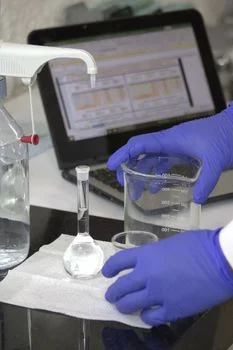
Achieving stringent discharge limits for printed circuit board (PCB) wastewater requires a meticulously engineered treatment system, designed to handle complex and highly variable influent characteristics. The primary contaminants of concern include high Chemical Oxygen Demand (COD), Total Suspended Solids (TSS), ammonia nitrogen (NH₃-N), and various heavy metals such as copper (Cu), nickel (Ni), lead (Pb), and tin (Sn), alongside recalcitrant organic compounds like surfactants, photoresists, and chelating agents.
Influent Characteristics (Typical Ranges):
- COD: 500 – 5,000 mg/L (can spike to 10,000 mg/L during process upsets)
- BOD₅: 200 – 2,000 mg/L
- TSS: 100 – 1,000 mg/L
- NH₃-N: 50 – 300 mg/L
- Total Nitrogen (TN): 100 – 500 mg/L
- Heavy Metals (e.g., Cu): 5 – 50 mg/L (can be higher for specific waste streams)
- pH: 2 – 12 (highly variable, requiring equalization)
- Temperature: 15 – 45 °C
- Conductivity: 1,000 – 10,000 µS/cm
- Specific Organics: Surfactants (50-200 mg/L), Chelating Agents (e.g., EDTA, NTA 10-100 mg/L), Photoresists, Inks.
Effluent Requirements (China GB 39731-2020 for PCB Industry):
- COD: ≤ 80 mg/L (Class I) or ≤ 100 mg/L (Class II)
- BOD₅: ≤ 20 mg/L
- TSS: ≤ 20 mg/L
- NH₃-N: ≤ 15 mg/L (Class I) or ≤ 25 mg/L (Class II)
- Total Nitrogen (TN): ≤ 40 mg/L
- Total Phosphorus (TP): ≤ 0.5 mg/L
- Heavy Metals (e.g., Cu): ≤ 0.3 mg/L
- pH: 6 – 9
Achieving these targets typically involves a robust multi-stage treatment train:
1. Pre-treatment and Equalization:
- Purpose: To homogenize flow and pollutant loads, remove large solids, and provide initial pH adjustment.
- Equipment: Screens, equalization tanks (typically sized for 8-24 hours HRT), pH adjustment systems (automated dosing of acid/alkali).
- Performance: Stabilizes pH to 6-9 range, reduces peak loads to downstream systems.
2. Chemical Coagulation & Flocculation:
- Purpose: To destabilize suspended solids, colloids, and precipitate heavy metals.
- Chemicals: Coagulants (e.g., Polyaluminum Chloride (PAC) 50-200 mg/L, Ferric Chloride 30-150 mg/L), Flocculants (e.g., Anionic/Cationic Polyacrylamide 1-5 mg/L).
- Equipment: Rapid mix tank, slow mix/flocculation tank.
- Performance: >70% TSS removal, >90% heavy metal removal (if chelating agents are absent or pre-treated).
3. Primary Clarification / Dissolved Air Flotation (DAF):
- Purpose: Physical separation of flocculated particles, oils, and greases. DAF is preferred for its ability to handle high solids loads and remove fine, light particles.
- DAF Design Specs:
- Surface Loading Rate: 2 – 6 m³/m²/hr
- Air-to-Solids Ratio: 0.02 – 0.05 kg air/kg solids
- Hydraulic Retention Time (HRT): 20 – 60 minutes
- Operating Pressure: 4 – 6 bar (for air saturation)
- Performance: >95% TSS removal, >90% oil & grease removal, significant reduction in colloidal COD.
4. Biological Treatment (e.g., Membrane Bioreactor - MBR):
- Purpose: Biodegradation of soluble organic compounds (COD, BOD) and nitrification/denitrification for ammonia and total nitrogen removal. MBRs are highly effective due to high MLSS and excellent biomass retention.
- MBR Design Specs:
- MLSS Concentration: 8,000 – 15,000 mg/L
- Sludge Retention Time (SRT): 20 – 60 days
- Hydraulic Retention Time (HRT): 6 – 12 hours (aerobic), 2 – 4 hours (anoxic)
- Membrane Flux: 15 – 30 LMH (Liters per Square Meter per Hour)
- Membrane Pore Size: 0.05 – 0.4 µm (ultrafiltration)
- Dissolved Oxygen (DO): 1.5 – 3.0 mg/L (aerobic zone)
- Performance: >90% COD removal (total system), >95% BOD₅ removal, >90% NH₃-N removal, >70% TN removal. Produces high-quality effluent, virtually free of suspended solids and pathogens.
5. Tertiary Treatment (Polishing & Water Recovery):
- Purpose: Further polishing for discharge compliance or advanced treatment for water recovery (ZLD).
- Options:
- Activated Carbon Filtration: For residual COD, color, and odor removal.
- Ion Exchange: For specific heavy metal polishing or ammonia removal.
- Reverse Osmosis (RO): For high-purity water recovery and ZLD. RO systems typically achieve >95% rejection of dissolved solids. Requires robust pre-treatment (e.g., MBR effluent, ultrafiltration) to prevent fouling.
- Evaporators/Crystallizers: For ZLD, concentrating RO brine to recover salts and achieve zero liquid discharge.
- Performance (RO/ZLD):
- Water Recovery: 85 – 95% of treated effluent.
- Effluent Conductivity: < 50 µS/cm (for reuse).
- Heavy Metals: Non-detectable levels for ZLD streams.
Each stage of the treatment process must be carefully selected and optimized based on the specific influent characteristics and target effluent quality. Robust monitoring and control systems (SCADA, online sensors for pH, ORP, DO, turbidity, flow) are crucial for ensuring stable operation, compliance, and process optimization.
Related Equipment
- MBR systems for COD and ammonia removal — view specifications, capacity range, and technical data
- RO systems for ZLD and discharge compliance — view specifications, capacity range, and technical data
- chemical dosing systems for pH adjustment and coagulation — view specifications, capacity range, and technical data
Need a customized solution? Request a free quote with your specific flow rate and pollutant parameters.
Further Reading
Explore these in-depth articles on related wastewater treatment topics: