Fluoride wastewater treatment for semiconductor, PCB, TFT-LCD, and inorganic-chemical plants typically combines calcium precipitation with solids separation, then polishing when the permit is tighter than CaF₂ solubility allows. Lime (Ca(OH)₂) or calcium chloride (CaCl₂) drives dissolved fluoride toward CaF₂’s practical solubility floor near 16 mg/L at 25°C, while DAF, electrocoagulation, or RO can push removal to 95–99% under controlled pH and ionic strength. CapEx spans about $80K for small precipitation trains to $2M for zero-discharge RO packages; OPEX is usually dominated by reagents ($0.50–$3.00/m³) and membrane replacement ($10–$30/m²/year).
Why Fluoride Wastewater Treatment Fails: Three Plant Pitfalls
Fluoride wastewater treatment fails when CaF₂ scaling, pH drift, or cold kinetics push effluent above the permit. Precipitation alone floors near 16 mg/L at 25°C; DAF or RO is needed for tighter limits. Poor pretreatment commonly cuts RO flux about 30% within six months in fab plants (HydropureWater field data, 2025).
Calcium fluoride scaling in transfer piping and RO membranes is the leading cause of unplanned downtime in fab wastewater rooms. High ionic strength and competing sulfate or phosphate ions slow crystal growth even when theoretical solubility looks favorable.
pH control is the second failure mode. Effective CaF₂ precipitation needs a window near 10.0–12.0; a drop to pH 8.0 can raise residual fluoride about threefold and trigger an immediate exceedance. Temperature is the third. Site data show a 5–10% drop in removal efficiency for every 10°C decrease in wastewater temperature, because CaF₂ nucleation slows in cold climates.
| Region/Standard | Regulatory Limit (mg/L) | Primary Application | Compliance Authority |
|---|---|---|---|
| USA (EPA 40 CFR 415) | 20.0 | Metal Finishing / Inorganic Chemicals | U.S. EPA |
| European Union | 15.0 | Industrial Emissions (IED) | EU Directive 2010/75/EU |
| China (GB 8978-1996) | 10.0 | New Source Industrial Plants | MEP (Ministry of Environmental Protection) |
| India (CPCB) | 2.0 | Inland Surface Water Discharge | Central Pollution Control Board |
| Taiwan (EPA) | 15.0 | Semiconductor & Optoelectronics | Environmental Protection Admin |
Many U.S. municipal permits still write a 20 mg/L total-fluoride ceiling, which is why Table 1 lists that value. Category rules under 40 CFR Part 415 are narrower: sodium-fluoride production pretreatment sets a one-day maximum of 50 mg/L fluoride (eCFR Subpart BC), and hydrofluoric-acid new-source pretreatment lists 100 mg/L fluoride (T) (eCFR Subpart H). In the EU, Directive 2010/75/EU as amended by Directive (EU) 2024/1785 requires BAT-based emission limit values rather than one continent-wide fluoride number, so the 15 mg/L figure remains a common permit target, not a single IED numeric standard.
Generic clarification trains miss fluoride because they ignore CaF₂ solubility-product kinetics. High turbidity or organic load can coat nuclei, leave dissolved fluoride above 20 mg/L, and fail municipal discharge permits even when TSS looks acceptable.
Fluoride Removal Mechanisms: How Each Method Works
Chemical precipitation forms CaF₂ when calcium salts are dosed, governed by Ksp ≈ 3.9 × 10⁻¹¹ at 25°C. Influent above 1,000 mg/L F⁻ usually needs lime at 1.2–1.5× stoichiometry to finish the reaction. Lime supplies Ca²⁺ and raises pH, but yields more sludge (0.2–0.5 kg sludge per kg F⁻ removed) than CaCl₂.
Dissolved air flotation is used as polishing or primary solids capture for low-density CaF₂ flocs. Microbubbles of 20–50 μm attach to flocs, so fluoride-optimized DAF systems for semiconductor wastewater can outrun gravity clarifiers on rise rate. Most trains dose 50–150 mg/L PAC before flotation to stabilize the floc.
Electrocoagulation releases Al³⁺ or Fe coagulants from sacrificial anodes. The Al³⁺ + 3F⁻ path typically draws 0.5–1.5 kWh/m³. EC fits low-turbidity streams where chemical dosing is hard to hold, and it pairs well when optimizing DAF systems for low-turbidity fluoride streams.
| Method | Removal Efficiency | Typical Influent | Key Limitation |
|---|---|---|---|
| Precipitation (Lime) | 80–90% | >500 mg/L | High sludge production; 15 mg/L floor |
| DAF Polishing | 90–95% | 50–500 mg/L | Requires precise polymer dosing |
| Electrocoagulation | 95–98% | 10–100 mg/L | Electrode passivation/replacement costs |
| Reverse Osmosis | 99% + | <50 mg/L | High scaling risk; concentrate management |
| Activated Alumina | 90–97% | 5–50 mg/L | Regeneration waste streams (NaOH/H₂SO₄) |
RO and nanofiltration are the reliable path below 1 mg/L. Dense polyamide RO layers reject fluoride near 99%, but silica or sulfate in fab water scales membranes fast without strong pretreatment. Activated alumina suits low-flow polishing; capacity often falls about 50% after five regeneration cycles, which limits high-volume plants.
Can Semiconductor Plants Recover Fluoride with ZLD?
Semiconductor ZLD fluoride trains recover water for reuse and concentrate fluoride-bearing brine for further precipitation or off-site recovery, not as a first-step substitute for lime precipitation. Most fabs we size still precipitate to the CaF₂ floor, float or filter the solids, then polish with RO when reuse or sub-10 mg/L limits apply. Concentrate must be managed; otherwise scaling returns fluoride to the front of the plant.
For fluoride treatment in PCB manufacturing wastewater, a two-stage reactor is standard: rapid mix with calcium (G-value > 300 s⁻¹), then flocculation (G-value 20–50 s⁻¹) for 45–60 minutes total retention. That crystal age is what keeps RO feed below the CaF₂ supersaturation that ruins membranes.
Engineering Specs: Design Parameters for Fluoride Systems
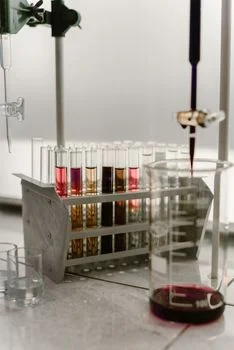
Precipitation reactors must hold retention time and mixing energy long enough for crystal growth. DAF air-to-solids ratios usually sit between 0.02 and 0.06, with 20–30% recycle saturated at 4–6 bar. Clarifier surface loading should stay at or below 1.5 m/h for CaF₂ because the solids are lighter than most metal hydroxides.
| Parameter | Precipitation System | DAF System | RO/NF System |
|---|---|---|---|
| pH Window | 10.5 – 11.5 | 7.0 – 8.5 | 6.5 – 7.5 (Pre-treat) |
| Retention Time | 30 – 60 min | 15 – 25 min | Continuous Flow |
| Hydraulic Loading | 1.0 – 2.0 m/h | 5.0 – 10.0 m/h | 15 – 25 LMH (Flux) |
| Chemical Dosing | Lime/CaCl₂ | PAC/Polymer | Antiscalant/Acid |
| Sludge Yield | 0.3 kg/kg F⁻ | 0.1 kg/kg F⁻ | N/A (Brine) |
In fluoride removal in TFT-LCD wastewater, flows often exceed 500 m³/day, so PLC-controlled lime dosing for CaF₂ precipitation with ISE feedback is needed to track influent swings. Over-dosing lime is the usual root of pipe scale and excess sludge in those rooms.
What Does a Calcium Fluoride Precipitation Plant Cost?
A mid-sized calcium fluoride precipitation plant for about 50 m³/h typically carries CapEx near $150,000, while annual OPEX can exceed $80,000 from reagents and sludge landfill fees of $150–$300/ton. Membrane ZLD shifts cost to CapEx: high-rejection RO membranes for zero-discharge fluoride treatment often run $500,000–$1.2M at similar flow, with energy at 1.2–2.5 kWh/m³ and membrane replacement at $10–$30/m²/year.
| System Type | CapEx (Initial) | Annual OPEX | 5-Year TCO | Cost per m³ Treated |
|---|---|---|---|---|
| Chemical Precipitation | $85,000 | $42,000 | $295,000 | $0.45 – $0.90 |
| DAF + Precipitation | $160,000 | $55,000 | $435,000 | $0.70 – $1.30 |
| Electrocoagulation | $110,000 | $48,000 | $350,000 | $0.60 – $1.10 |
| RO (Zero Discharge) | $650,000 | $95,000 | $1,125,000 | $1.80 – $3.50 |
Electrocoagulation sits between those poles: about $110,000 CapEx for a 20 m³/h skid, with OPEX mostly electrodes and power. Where chemical logistics are expensive, EC often pays back in 18–24 months versus lime-only trains.
Selection checklist before you freeze CapEx
- Confirm permit metric: total vs dissolved fluoride, and the numeric limit in mg/L.
- Map influent F⁻, sulfate, phosphate, silica, and temperature at design minima.
- Decide whether the CaF₂ solubility floor (~16 mg/L) meets discharge or reuse needs.
- Size solids separation (DAF or clarifier) for CaF₂ rise rates, not metal-hydroxide defaults.
- Budget sludge handling at $150–$300/ton landfill unless a reuse outlet exists.
- If reuse or <10 mg/L is required, add RO/NF and a concentrate plan on day one.
- Specify online F⁻ and pH with TISAB-ready sampling for ISE accuracy.
Compliance Checklist: Meeting Global Fluoride Discharge Standards
Regulators increasingly write total fluoride, not dissolved fluoride alone, so suspended CaF₂ that escapes a clarifier can still fail a grab sample. Under the U.S. Clean Water Act, civil penalties cited in plant EHS programs still reference up to $37,500 per day per violation, which is why continuous monitoring is treated as CapEx, not optional instrumentation.
EHS teams should run daily grabs plus online analyzers. On RO trains, place conductivity and fluoride electrodes on the permeate header to catch breakthrough early. EU and Chinese programs often add TCLP-style leach tests on sludge so landfilled CaF₂ does not remobilize.
| Region | Monitoring Frequency | Standard Metric | Non-Compliance Penalty |
|---|---|---|---|
| USA | Daily / Weekly Grab | Total Fluoride | Up to $37,500/day |
| EU | Continuous (Online) | Dissolved Fluoride | Facility Shutdown / Fines |
| China | Real-time Telemetry | Total Fluoride | "Daily Fine" System |
| India | Monthly Lab Report | Total Fluoride | Criminal Liability (Environment Act) |
Troubleshooting Guide: Fixing Fluoride Treatment Failures
Symptom: Effluent fluoride concentration exceeds 20 mg/L in a precipitation system.
Root Cause: pH drift or insufficient calcium ions. If the pH is below 10.0, CaF₂ solubility increases sharply.
Action: Recalibrate pH probes and increase Ca(OH)₂ dosing by 15–20% above stoichiometric requirements to ensure excess calcium (common ion effect).
Symptom: Rapid pressure increase and flux decline in RO membranes.
Root Cause: Calcium fluoride or silica scaling. CaF₂ is abrasive and hard to remove once crystallized on membrane surfaces.
Action: Implement a Clean-In-Place (CIP) cycle using a 2% citric acid solution (pH 2–3) to dissolve inorganic scales. Increase antiscalant dosage to 5–8 ppm in the feed stream.
Symptom: Poor floc formation and cloudy effluent from the clarifier/DAF.
Root Cause: Low temperature or improper coagulant/flocculant selection. CaF₂ flocs are naturally small and fragile.
Action: Switch to a high-molecular-weight anionic polymer (0.5–2.0 mg/L) and ensure the recycle ratio in the DAF unit is at least 25% to provide sufficient bubble surface area.
Symptom: Electrocoagulation system voltage increases while current drops.
Root Cause: Electrode passivation (oxide layer formation on the aluminum plates).
Action: Program the PLC to reverse electrode polarity every 10–15 minutes. If passivation persists, perform a mechanical cleaning or an acid wash with 5% HCl.
Who This Is For / Next Step
This guide is for plant engineers, EPC contractors, and procurement managers sizing fluoride trains for fabs, PCB shops, TFT-LCD lines, and inorganic-chemical units. Look elsewhere if your only need is potable defluoridation at <5 mg/L influent with no industrial solids load. To match precipitation, DAF, and RO options to your permit and flow sheet, request a fluoride treatment design review with influent F⁻, pH, and discharge limit.
Frequently Asked Questions
What is the ideal calcium-to-fluoride ratio for precipitation?
Industrial wastewater usually needs a Ca:F stoichiometric ratio of 1.2:1 to 1.5:1. Slight calcium excess uses the common ion effect to push residual fluoride toward or below the practical CaF₂ solubility near 16 mg/L at 25°C. Dose from real influent titration, not from a fixed recipe, because sulfate and phosphate compete for calcium and raise the required excess.
Can I use lime and PAC together in the same reactor?
Yes. Lime precipitates fluoride as CaF₂, while PAC gathers micro-fine crystals into larger flocs that settle or float. Most high-rate DAF fluoride trains use that sequence: calcium first at high pH, then PAC at 50–150 mg/L before flotation. Keep polymer addition after the primary reaction so you do not coat nuclei too early.
Is reverse osmosis required for all semiconductor wastewater?
No. RO is required when the local limit is below about 10 mg/L or when the plant reuses permeate. For a municipal discharge near 20 mg/L, precipitation plus DAF is usually enough and cheaper on five-year TCO. Add RO only after you have a concentrate and CIP plan, because CaF₂ scale is expensive to reverse.
How do I handle sludge from fluoride treatment?
Fluoride sludge is mainly CaF₂ plus unreacted lime. It is often classified non-hazardous but bulky. A filter press to 35–45% solids cuts haulage cost sharply versus thin slurry. Some regions accept high-purity CaF₂ cake in cement kilns; otherwise budget landfill at $150–$300/ton and verify leach stability where TCLP-style tests apply.
Why is my fluoride sensor giving inconsistent readings?
Ion-selective electrodes drift with pH and ionic strength. Buffer samples with TISAB to a stable pH near 5.5 before measurement, and clean the sensing membrane weekly to remove scale. Online probes on untreated alkaline precipitation effluent will read high or noisy unless the sample is conditioned the same way as the lab method.